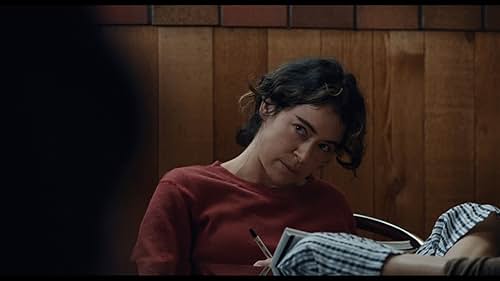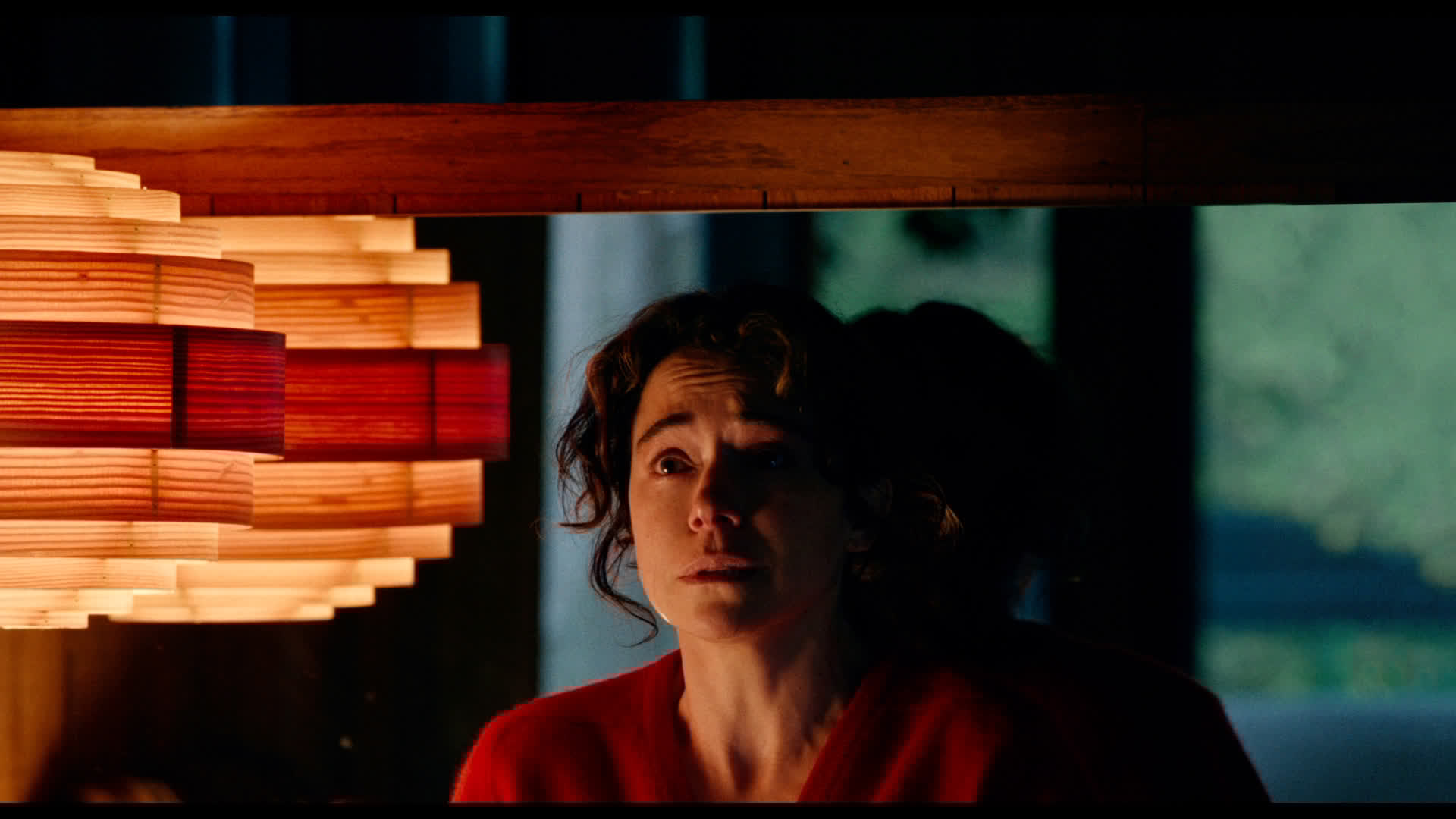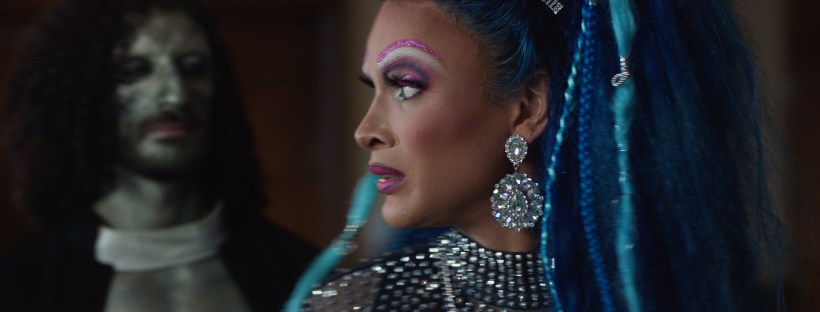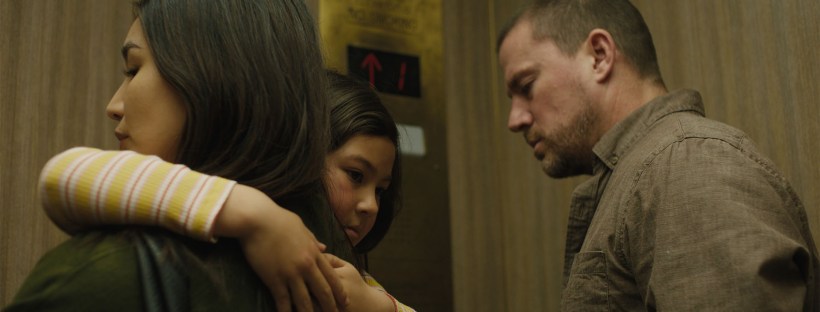
A production still from the movie Josephine

Sundance 2026 Recap

I was fortunate enough to review movies again this year for Sundance 2026. While I didn’t watch as many films compared to other years (mostly due to the fact my spring semester started the same week as Sundance and we also had a giant snowstorm), I still saw plenty of cool films. Here are some of my favorites, with links to the reviews.

Rock Springs

Rock Springs is a harrowing and sobering ghost story that was a Midnight feature. It’s based upon the Rock Springs Massacre of 1885 in which 28 Chinese immigrant miners were killed by white European immigrants, who feared the Chinese immigrants were taking their jobs. Sound familiar?

The movie isn’t told in chronological order, and it begins by following the young Gracie (Aria Kim), who moves with her family to Rock Springs. The movie then shifts to the late 19th Century and eventually shows the massacre. Another standout here is Kelly Marie Tran’s performance as Gracie’s mother. She’s tough and resilient.

Read the full review here.

Josephine

Every year, Sundance has that one film that people can’t stop talking about. This year, it was Josephine, from writer/director Beth de Araújo (Soft and Quiet). This movie follows 8-year-old Josephine (Mason Reeves) who witnesses a rape in Golden Gate Park and then deals with the aftermath of it for entirety of the runtime. She sees and imagines the rapist (Philip Ettinger) everywhere, even in her new bedroom once her family moves. Reeves is really good in this, as are Channing Tatum as her father and Gemma Chan as her mom. Josephine is a gut punch of a movie and my favorite from this year’s festival. Really powerful and harrowing stuff. This is a movie about finding the courage to slay the monsters.

Read the review here.

Night Nurse

Even though I already wrote my review, I’m still unsure what I think about Night Nurse. it feels like it belongs in the 1990s as a late-night erotic thriller. Yet its retirement community setting also thwarts a viewer’s expectations about what’s to come. There’s also a weird subplot about scam phone calls. Still, Cemre Paksoy, who plays the young and idealistic caregiver Eleni, gives a strong performance as the lead. The same could be said for Bruce McKenzie, who plays the much older Douglas and the source of Eleni’s infatuation. In short, Night Nurse is a very strange psychosexual thriller.

Read the full review here.

Nuisance Bear

Oh man, Nuisance Bear really hit me in the feels. It’s an A24-produced documentary about a polar bear whose habit has drastically changed, due to climate change. The bear needs to remain on land for a greater period of time because the ice takes longer arrive following spring and summer. Meanwhile, tourists keep taking photos of the creature, and there’s just something so alarming and devastating about the scenes, specially coupled with the unnamed Inuit narrator’s poetic and thoughtful commentary. This is must-see and quite different from other nature documentaries.

Read the full review here.

Bedford Park

Next to Josephine, Bedford Park, which was just acquired by Sony Pictures, was my other favorite Sundance watch this year. It’s a movie about two Korean Americans who find each other through very unlikely circumstances. This is also a movie focused on working and middle-class people, and it never strays from that. Yet, it also has some really, really beautiful moments. Go see Bedford Park when it eventually hits theaters. It’s a heck of a debut from writer/director Stephanie Ahn.

Read the full review here.

Ghost in the Machine

Ghost in the Machine is a documentary about AI, but not the sort of AI documentary you’d expect it to be. Instead, it’s about how the theories behind AI came from eugenics philosophy and some pro-eugenics thinkers. The movie also digs deep into the insidious beginnings of Silicon Valley. This documentary does have some flaws and tries to do a lot in under two hours, but it’s still worth a watch and pretty eye-opening.

Read my review here.

Other Sundance movies I saw/reviewed:

Public Access (Really cool documentary about the start of the public access station Manhattan Cable. It also includes some great queer history, but this probably would have been better as a multi-part series).

The Huntress (Pretty strong revenge thriller about disappeared Latin American women).

The Best Summer (90s alt rock fans should dig this one for the concert footage and behind-the-scenes B roll with the Beastie Boys, Bikini Kill, very early Foo Fighters, Rancid, and lots more).

Prime (Really freakin’ gnarly short film! This deserves to be a feature-length movie).
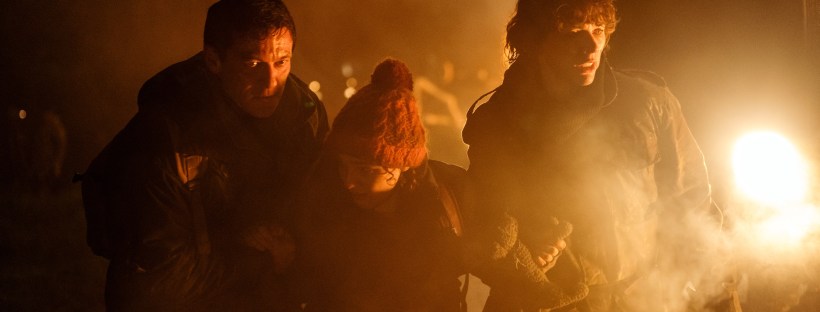
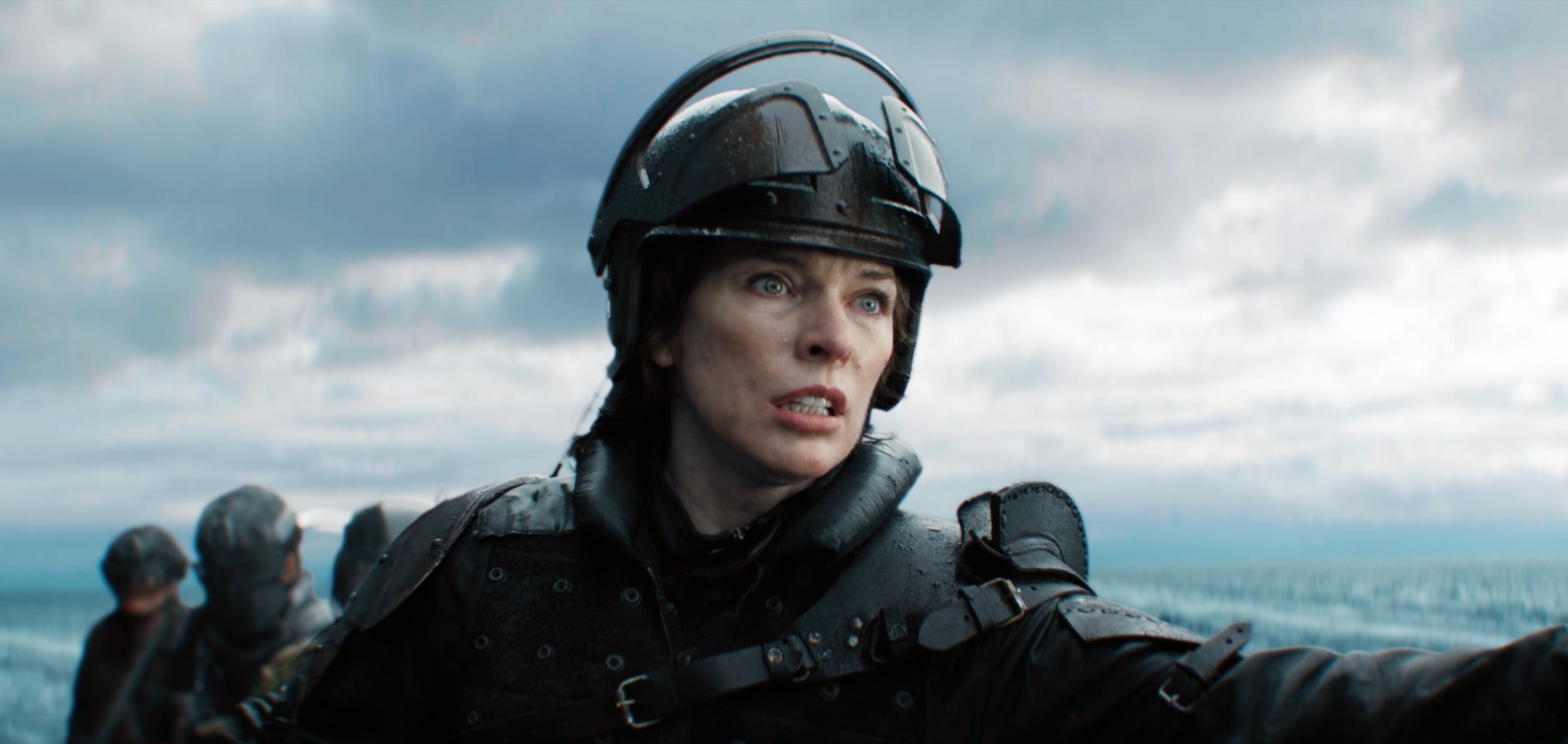
A production still from the movie Worldbreaker

Director Brad Andreson (Session 9, The Machinist) talks new post-apocalyptic movie Worldbreaker

For The Horror Lounge, I interviewed director Brad Anderson about his latest film Worldbreaker, a post-apocalyptic movie starring Luke Evans and Milla Jovovich. You can read the full interview here. I included some of it below. Worldbreaker hits theaters tomorrow.

The Horror Lounge: You have a long filmography. What made you want to return to the horror genre for Worldbreaker?

Brad Anderson: I genre hop, I guess, maybe that’s the way to put it in terms of the kinds of movies I’ve done. My first few films were romantic comedies. They weren’t anything in the horror department. Then, I did Session 9, which was me wanting to embrace my darker angels and darker side. From that point on, I’ve been drawn to darker stories, but darker stories that have some kind of heart to them. In Worldbreaker, it has the genre tropes, like the monster moments, the thrills, scares, and moments of dread and suspense, but it also has at its heart, this relationship between a father and daughter and this idea of a parent trying to keep his child safe in a world that’s falling apart. As a father myself and parent, that appeals to me more and more. It’s not just thrills for the sake of thrills. You want to hope and care for these characters.

That’s what resonated with me in Josh’s [Rollins] script. I was moved when I read it. It was creepy and I loved the monster element. I hadn’t really done a creature feature, per say, so doing something like that was fun, but the thing that really made it stick for me was the relationship between the dad and Willa. I just liked that and the combination of genre, drama, and emotion. They all have to mesh together, and it did.

It’s also a world that’s not quite our own. It’s some kind of quasi-near future, or maybe alternative reality world. The warriors use swords and use armor, but they have guns. It’s a strange mix that I thought was interesting. It’s a little original in that respect, and I was intrigued. It’s not like The Last of Us, but somewhere in a different world.

My next movie could be something totally different. I like to keep myself engaged and not always feel like I’m doing the same thing, even if it’s the same genre.

The Horror Lounge: At the beginning of the movie, we get some background information about how the world ended up in its current situation. Climate change and war are mentioned. I thought that aspect of the movie felt relevant for the present moment. When you filmed this, did you find that aspect at all relevant?

Brad Anderson: I like the mythology of the story and how the world breaks. In the beginning, we’re told that the world broke throughout the course of history, for various reasons. Sometimes, it’s a climatic catastrophe or a human-related catastrophe. I like that idea that’s at the core of it. It does feel relevant. The reason these post-apocalyptic stories are so popular among audiences is because people like to dwell on it. They have a weird, morbid curiosity. How will it all end? Some of that was woven into the story to give a bit of context, and it does feel topical. I think that was on purpose, to a degree.

The idea that some creature would be unleashed because of our stupidity as a species or our short-sightedness is interesting, too. It’s like payback in a way. Josh teed all of that up in the script.

It’s also a story about storytelling. The movie opens with the dad telling his daughter about how the world broke and how we have to find our heroes in order to save the world. Then, Willa ends up telling stories to another character about how to find your heroes. It’s almost about the power of storytelling being able to give us hope, strength, and faith in ourselves and the future. It’s a story in a story in a way.

The Horror Lounge: The setting is another aspect of this film that really stood out to me. What was it like shooting in Ireland?

Brad Anderson: We shot it in Belfast and in Northern Ireland, north of Belfast, along the coast. It’s super dramatic. It’s beautiful beyond belief. You can’t really go wrong. You can just put a camera on a tripod and it’s amazing. We wanted those big epic landscapes. We also wanted landscapes that weren’t lush but were a little dark and spare. They’re on an island in our story as a way to survive. It’s still a place that’s not Eden. It’s not this lush garden. It’s still a struggle to survive. Northern Ireland has a lot of that. It’s barren. It matched the world we tried to create for those sequences.

This is why the whole AI thing worries me and the idea of not going on location anymore. Whenever you’re on a location, it informs the actors and informs the scenes. You react to real things. It injects the scenes with the world around it. For that reason, shooting there was ideal. It gave our actors something to play off of, the dramatic, dark, epic landscapes.

The Horror Lounge: We’re used to seeing Milla Jovovich in an action role from the Resident Evil movies. What was it like working with her on set? She’s quite fierce in this.

Brad Anderson: She was great. We sort of tried to co-opt a bit of her Resident Evil vibe, but also show her as a mother, a mother who will fight for her family, who’s fierce and strong. Milla herself is a mother, and I think maybe that’s part of what drew her to this, the idea of being a heroine, but also being part of this family and the mother to this child that she’ll do anything to protect. It’s not just about saving the world, but it’s about saving her daughter. I think she personally responded to this. She brings the realism of being a warrior, but she also brought the poignancy of being a mother.

A photo for the website The Horror Lounge

Introducing The Horror Lounge!

After years of writing for various websites and publications, I, along with Carla Davis, my former editor at 1428 Elm, launched The Horror Lounge! The site will feature horror news, reviews, lists, deep dives, and more. We’re fortunate to already have a small team of writers in place who have started helping with our coverage. For the most part, we plan to post at least one new article daily, and so far, we’ve been sticking to that. So if you’re into horror, make sure to check the site frequently. We also have a Facebook page, which can be accessed here. We’ll slowly spread out on other social media platforms, too.

In the meantime, I’ll continue utilizing this blog and posting some articles from The Horror Lounge, or other writings. I hope that everyone has a fantastic 2026!

Influencers: A Bigger and Bolder Sequel (Review)

Writer/director Kurtis David Harder’s 2023 film Influencer is a tight thriller with a dose of social commentary. His sequel, Influencers, is much broader in scope, especially regarding its characterization, commentary, and the overall stakes. It’s rare for a sequel to match the original, but Influencers breaks the mold in that regard. Though the film has some flaws, it’s an entertaining romp that leads to a knock-down, drag-out finale.

At the end of Influencer, the villain, CW (Cassandra Naud), was left for dead on an island, while Madison (Emily Tennant) barely escaped. The sequel picks up a few years later. CW somehow survived and moved to southern France. She masks her past, tries to bury her homicidal tendencies, and falls in love with Diane (Lisa Delamar). Initially, CW succeeds in starting over. That all changes, however, when Diane and CW meet a British influencer named Charlotte, played by Georgina Campbell, at a posh resort. CW doesn’t like the attention Charlotte bestows upon Diane, and well, anyone who has seen the first film likely knows that CW can’t subdue her murderous impulses for too long.

Madison, meanwhile, was arrested by police in Thailand and blamed for the murders that CW committed. Eventually, she, too, tries to start over and buries her online persona. However, that doesn’t stop the harassment or stalking. She’s even questioned about the murders on a true crime podcast. Madison just can’t quite clear her name or escape her past. Eventually, she realizes that CW survived and tracks her to France to finish things off once and for all.

In the meantime, there’s another subplot regarding a right-wing bro influencer, Jacob (Jonathan Whitesell), and his girlfriend, Ariana (Veronica Long). It’s she who tells Jacob that he has to be more radical online to drive likes and subscribers. It’s a bit of a half-baked commentary on the rise of the Joe Rogan-type podcasters and the white male insecurity and radicalization crisis. Eventually, Jacob and Ariana get swept up in Madison and CW’s crossfire.

A still from the film Influences

It can’t be understated just how damn good Naud is once again as CW. She’s makes for a sly and cunning villain. But in the sequel, she’s given far more backstory, and for the most part, the film is shown from her perspective. In this film, CW has grown far more savvy, utilizing all sorts of technology and tracking to avoid culpability for her previous actions and to keep tabs on Madison. Tennant’s Maidson, on the other hand, is far more vulnerable this time around, facing increased online backlash, before developing a steely determination to stop CW.

One of the film’s major flaws is the suspension of disbelief it requires. For instance, it’s never stated how exactly CW escaped the island in the first place. There’s no plausible explanation for it, and it’s a gaping hole that the script never fills. At one point, Diane asks CW about it, but CW skirts around the answer. It’s simply a little too unbelievable. Additionally, though the film touches upon the explosive rise of far-right bro influencers, not enough is done with this, despite Jacob and Ariana’s storyline.

That said, the film reaches an explosive conclusion and a bloody showdown between CW and Madison. It’s one hell of a payoff, too. There’s also potential here for yet another sequel. Maybe a trilogy? I wouldn’t mind seeing that. Overall, Influencers maintains the tension of the first film, while pushing the characterization deeper. There are some major plot holes, but still, this is a worthy follow-up that addresses the pressure of influencer culture, before arriving at a fisticuffs finale.

Influencers will stream on Shudder beginning December 12.

A production still from the found footage film Man Finds Tape.

Man Finds Tape: An Intriguing Found Footage Nightmare (Review)

Something sinister is afoot in the small town of Larkin, Texas, and popular YouTuber Lucas Page (William Magnunson) is determined to unravel the eerie mystery. That’s the general premise of co-directors/writers Paul Gandersman and Peter S. Hall’s feature debut Man Finds Tape, a film that combines found footage, mockumentary, and even cosmic horror. For a first film, the directors crafted an unsettling narrative, and though the movie is a bit uneven overall, it’s worth the ride.

Early in the film, we learn that Lucas found a tape with his name on it after cleaning out his parents’ home and old barn. It should be noted that his parents died of a mysterious illness, but prior to that, they passed on their love of filmmaking to Lucas and his sister, Lynn (Kelsey Pribilski). The tape shows a stranger entering Lucas’ childhood bedroom. It’s a hair-raising sequence that drives the rest of the film and leads to a much larger plot. Lucas wants to discover who the heck the stranger is, and he consistently enlists the help of Lynn to unravel the mystery, though she’s reluctant at first. The popularity of Lucas’ YouTube channel, Man Finds Tape, earned Lynn unwanted attention. Lucas made a name for himself by showing graphic videos.

For the most part, the film is shot in a mockumentary style, with Lynn handling most of the voiceovers and narration. The feature shifts to found footage and analog when Lucas or Lynn show off what they’ve filmed or what they’ve discovered on older tapes, like the recording of the stranger entering Lucas’ bedroom when he was a kid. These grainy videos avoid the shaky, handheld effects of other found footage movies, most notably The Blair Witch Project. The old tapes also show everything, and I mean everything. They don’t cut away. There’s one video Lucas constantly shows on his channel of a van running over and killing a person

A Production still from Man Finds Tape.

By the halfway point, Lucas and Lynn draw a connection between the stranger, played by
Brian Villalobos, and Reverand Endicott Carr (John Gholson). For years, the reverend hosted a public access, faith-based TV show. Lucas and Lynn’s parents filmed the show for a while. During parts of his taped sermons, viewers, including Lucas, nod off. The feature does a stellar job keeping the viewer in the dark until the last act about who’s responsible for what’s going on in the town. It’s not clear if the stranger or the reverend is part of some larger diabolical plan to control the town and infect its residents.

The constant shifts between mockumentary-style filmmaking and found footage can be a little bit jarring, and the film’s ultimate explanation doesn’t quite land, including a convoluted plot regarding Lucas’ ex-girlfriend, Wendy (Nell Kessler). That said, the final 30 minutes feature some impressive special effects and veer into cosmic horror territory. Meanwhile, Pribilski and Magnunson’s performances really sell the film, especially when the premise grows more and more bonkers. Pribilski’s character is not quite the believer that Magnunson’s Lucas is, and the dynamic between the two characters strikes some conflict early on.

The film also touches briefly on internet fame and YouTube influencers, especially within the first 20 minutes. The more Lucas’ channel grows in likes and subscribers, the harder it is on his mental health. It even has ramifications that affect Lynn, since it brings her unwanted notoriety, including people filming her on the street. That said, a lot more could have been done with this premise.

Man Finds Tape, though uneven at times, is still an impressive feature debut from Gandersman and Hall. If you like found footage or cosmic horror, this is definitely worth a watch. It’s a slow-burn mystery that eventually evolves into an otherworldly nightmare.

Man Finds Tape is now playing in limited theaters and available on VOD.

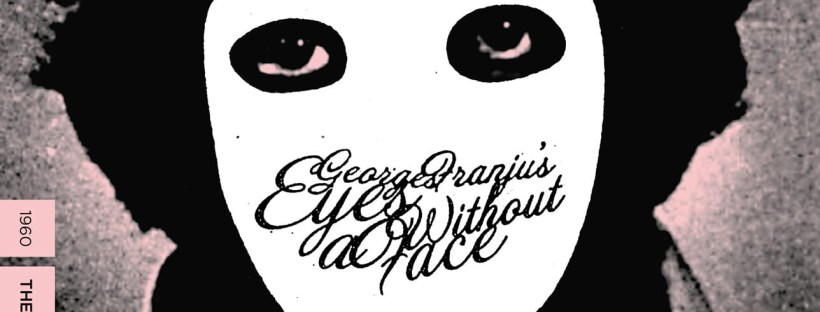
The Criterion Collection's cover art for Eyes Without a Face

Five Criterion Horror Recommendations (For the Barnes & Noble Sale)

For physical media collectors, July and November mark the Barnes & Noble Criterion Collection 50 percent off sale, the only time of the year, other than the one-day Criterion flash sales, when Criterion movies are actually affordable. The current sale lasts until December 7. In honor of the sale, I wanted to share five of my favorite horror movies within the collection.

Eyes Without a Face

This 1960 French film, directed by Georges Franju, is a masterclass in Gothic aesthetic and tone. A surgeon, played by Pierre Brasseur, kidnaps women to graft their faces onto his disfigured daughter, Christine, played by Edith Scob. This movie works so well in part because of Scob’s performance. She’s strangely mesmerizing and arresting on screen. She has some of the most expressive and haunting eyes that you’ll ever see in a film, and the thing is, she wears a blank mask through much of the film, but you’ll never forget her performance.

Additional Criterion suggestion: if you like Eyes Without a Face, also check out the black and white 1955 French mystery/horror movie Diabolique.

Night of the Living Dead

George A. Romero’s Night of the Living Dead was released on physical media a lot over the years, and it’s available to stream virtually everywhere. That said, Criterion’s recent 4K restoration looks damn good. There’s also a LOT of special features, including a radio interview with Duane Jones, who played the lead Ben. There aren’t many interviews of Jones talking about the film, so that alone makes this a must-have pick-up.

Additional Criterion suggestion: if you like Night of the Living Dead, check out 1962’s Carnival of Souls, one of the biggest influences on Romero’s film.

The Uninvited

Other than Robert Wise’s stellar The Haunting, The Uninvited is one of my favorite haunted house movies. The 1944 film follows a pair of siblings from London (Ray Milland and Ruth Hussey). They purchase an affordable cliff-top house in Cornwall, and well, soon discover the house was so affordable because it’s haunted. This film is incredibly atmospheric, eerie, and features an unforgettable score by Victor Young.

Additional Criterion suggestion: if you like The Uninvited, then check out The Innocents, which is an adaptation of Henry James’ famous ghost story “The Turn of the Screw.” Robert Eggers has frequently cited The Innocents as one of his biggest visual influences.

Cure

Few movies have crawled under my skin as much as the Japanese film Cure. Directed by Kiyoshi Kurosawa, who would direct the equally eerie Pulse just a few years later, the movie follows detective Takabe (Koji Yakusho) as he tracks a series of identical murders, committed under similar uncanny circumstances. However, nothing seems to connect the murders, despite their commonality. This is a deeply unsettling and philosophical movie about the nature of evil itself. This, along with some of Kurosawa’s other movies, are absolute must-sees.

Additional Criterion suggestion: It was just announced that Kurosawa’s latest movie, Cloud, will be released to the Criterion Collection in February. You can read my review of the film from this year’s Overlook Film Festival here.

Haxan

This silent film is important to the history of horror generally. It’s essentially a history of witchcraft and has some utterly striking visuals, including witches lining up to kiss Satan’s booty. The Criterion edition is loaded with special features, including a reedited 1968 version narrated by Beat author William S. Burroughs. Put this one on and get lost in the hypnotic visuals.

Additional Criterion suggestions: if you dig early horror, then make sure to also check out Cat People, Freaks, Vampyr, and I Walked with a Zombie, all released within the last few years. Like Haxan, these are all must-watches.

And yes, I know, I know that I didn’t include any of David Lynch’s films on this list. Almost his entire catalogue is now in the Criterion Collection, but here’s the thing, how do you pick just ONE Lynch movie to include on such a list? His movies also combine a lot of genres, including neo-film noir, drama, dark comedy, and yes, horror. So that’s why I didn’t include his work on the list, but Eraserhead, Lost Highway, Twin Peaks: Fire Walk with Me, Blue Velvet, Mulholland Drive, and Inland Empire are now all Criterion releases, many recently remastered in 4K, and they’re all horror adjacent. If you’re looking for a good place to start with Lynch, I recommend Mulholland Drive or Blue Velvet.

I also didn’t include anything from David Cronenberg because most of his films are in the collection, and I can’t pick just one. I recommend Videodrome and Scanners as starting points. Unfortunately, The Fly is not in the collection.

The Barnes & Noble Criterion sale runs until December 7.

A production still from the movie Keeper

Keeper Plays Out as a Creepy, but Flawed Dark Fairytale (Review)

Osgood Perkins has been on a real winning streak lately, with the massive success of Longlegs and The Monkey. His multi-picture deal with NEON has paid off so far. The director’s latest, Keeper, contains some of the most chilling imagery out of any horror film this year. Perkins spins a dark fairytale and a warning about toxic relationships. Yet, for all of the frightening imagery, the movie feels a bit too paper-thin, especially in its second half.

Keeper stars Tatiana Maslany as big city girl Liz and Rossif Sutherland as her boyfriend Malcolm. Hoping for a romantic weekend, Malcolm takes Liz to his remote cabin in the woods, and well, because this is a horror movie, things go horribly, horribly wrong. Before the horror kicks into overdrive, Perkins spends some time with Liz and Malcolm, and I’d argue the film’s first act may be its strongest. There’s unspoken tension between the two, though the source of it isn’t quite clear. Maybe it’s simply the different lifestyles and Liz’s love of big cities. Maybe she simply distrusts men. Regardless, she doesn’t fully embrace Malcolm, and this is most evident when they’re alone together, be it sipping wine over dinner or driving to the cabin. Something about the relationship feels off, though the source of Liz’s suspicion isn’t quite clear. Malcolm seems like a sweet enough guy.

The film enters typical Perkins territory once Malcolm’s reclusive cousin Darren (Birkett Turton) shows up, with an Eastern European girlfriend who Darren claims doesn’t speak English. This deepens Liz’s discomfort and rightfully so, especially when she warns Liz that the chocolate cake Malcolm purchased for her “tastes like shit.” Yet, once Darren and his latest arm candy leave, Liz devours the cake, even though she tells Malcolm that she hates chocolate.

At that point, the film gets really weird, even by Perkins’ standards. It feels like a fever dream into hell, as Liz grows increasingly paranoid and continually sees strange women in the background or out of the corner of her eye. Even worse, Malcolm, a doctor, claims he has to return to the city to suddenly see a patient, leaving Liz alone with her hallucinations and creepy cousin Darren next door.

A production still from the movie Keeper

By the film’s second half, Perkins barrages viewers with a series of unsettling imagery and a brooding atmosphere. There’s even a woman with multiple faces crawling around in the basement. Trust me, you don’t want her to remove that bag from her head. The film also edges dark fairytale territory once the source of the scares is explained, all involving Malcolm. This is where the film falters. The lore isn’t built up enough and some of it comes across as too absurd, even for a horror movie. The film works better when it’s more grounded in reality and when Perkins explores the growing tension between Liz and Malcolm. The film’s main weak point is the script, penned by Nick Lepard. There’s too much explanation suddenly crammed into the film’s second half, and a lot of it is given by one of Malcolm’s monologues.

All of that aside, the film does ramp up to quite a great ending. I’ll never be able to look at honey the same way again. Overall, Keeper isn’t quite as strong as Perkins’ last few films, or even his earlier work, like The Blackcoat’s Daughter, but it continues to prove he’s one of the most effective directors at creating nightmarish sequences and atmospheres that invoke dread. Keeper succeeds when it’s more based in reality and explores a strained relationship. Its second half is hampered by poor explanation and weaker writing.

Keeper is currently playing in theaters.

A promotional poster for the Creature Feature Weekend Horror Convention in Scranton, PA

What I’m Most Excited for at Creature Feature Weekend

For several years, Creature Feature has hosted an awesome horror convention in Gettysburg, celebrating the actors, directors, writers, and artists who bring the genre to life. Creature Feature will still hold conventions in Gettysburg every March, but for the first time ever, they’re going to host a convention at the Hilton in downtown Scranton!

Creature Feature Scranton will take place from November 7-9. The guest list is pretty stacked and includes Jerry Wallace, one of the actors who played Jason in Friday the 13th Pt. 2, Quinn Lord (Sam from Trick ‘r Treat), Bill Moseley (Texas Chainsaw Massacre 2, House of 1000 Corpses, The Devil’s Rejects, 3 from Hell), Clint Howard (Ice Cream Man), John Dugan (grandpa from the OG Texas Chainsaw Massacre), Edwin Neal (the hitchhiker from the OG Texas Chainsaw Massacre), and several others.

A production still of Quinn Lord as Sam from Trick 'r Treat

What makes Creature Feature specifically unique is that besides the usual actor photo-ops, autograph tables, and vendor fair, they host several other events. Here’s a few I’m most excited about:

  • Live commentary screening of The Texas Chainsaw Massacre. With some of The Texas Chainsaw Massacre cast in attendance, along with the film’s cinematographer Daniel Pearl, this should be an unforgettable and eye-opening screening. It will take place Saturday, Nov. 8 at 6 pm at the Scranton Art Haus movie theater. A weekend or VIP pass is required.

  • Live commentary screening of My Bloody Valentine. Again, this sounds like a really fun and unique event. Considering director George Mihalka and the miner actor Peter Cowper are convention guests, I assume they’ll be handling the live commentary. This event takes place on Saturday, November 8 at 8 pm, also at the Scranton Art Haus. A weekend pass or VIP ticket is required.

  • Film panels: some of the film discussion panels include Friday the 13th Pt. 2, The Texas Chainsaw Massacre, and solo Q & As with Quinn Lord, Clint Howard, and Bill Moseley. For film lovers, these panels are always one of the best aspects of any convention. You never know what behind-the-scenes tidbits and stories the actors/directors/screenwriters may share.

  • Pumpkin carving contest: I just think this sounds rad. I’ve never been to a convention that had a pumpkin carving contest. This takes place November 8 at 2 pm.

  • Costume contest: horror conventions aren’t complete without a costume contest. It’s always a good time watching these and seeing the craft and creativity that goes into the costumes and cosplay. This will occur on November 8 at 5 pm.

These are only my must-sees at Creature Feature Weekend, but there are a ton of other events occurring over the weekend. For a full event schedule and to purchase tickets, click here. I can’t stress enough the importance of supporting this event, so it becomes a yearly occurrence in the area.

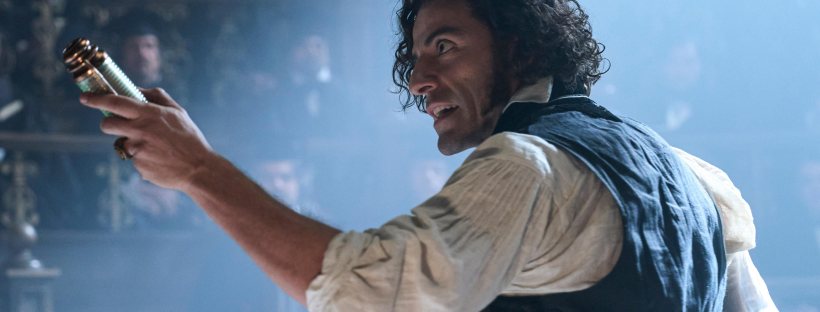
Frankenstein production skill of Oscar Isaac as Victor Frankenstein

Review: Guillermo del Toro’s Frankenstein (2025)

Writer/director Guillermo del Toro has declared himself a proud monster kid over the years in a number of interviews. His obsession with classic monsters and their representation of the “other” is well-known. He even has a massive collection of props from the films that influenced his career, including James Whale’s iconic 1931 take on Mary Shelley’s Frankenstein for Universal.

With this in mind, it’s no surprise that he’s finally adapted Shelley’s novel. This is the movie he always wanted to make. For the most part, and for better or worse, del Toro remains incredibly faithful to Shelley’s text, including the shifting narrations between Victor Frankenstein (Oscar Isaac) and the Monster (Jacob Elordi). Yet, he does make some radical changes to the book, especially regarding Elizabeth (Mia Goth) and the final face-off between creator and creation. Such changes, though, enhance and serve this particular adaptation.

This latest rendition of Shelley’s tale begins in the Arctic, just like the novel. Here, we find the Monster, who rages and hunts down his maker. Victor is on the cusp of death and saved by a group of explorers, led by a sympathetic Captain Anderson (Lars Mikkelsen), a stand-in for Captain Walton from the novel, who, like Victor, pushes the limits of knowledge and exploration until it nearly causes his own undoing and that of his crew.

del Toro kicks off his lengthy film with high-octane action. The Monster Hulks out, downing one man after the other, throwing them against the ship or into the ice. It looks a bit silly, but it does underscore the Monster’s rage. After that action-heavy opening, we’re introduced to Victor’s tale, which lasts for about half of the runtime.

There are some high notes in the film’s first half and also some bloat. Isaac relishes playing the cocksure scientist, refusing to listen to his colleagues about the dangers of his experiments. This is most apparent during a trial among his peers when he expresses his desire to conquer death itself and unveils a half-animated corpse, a preview of his larger experiment to come. Of course, this draws disdain from his peers and his expulsion from his teaching gig. Isaac really shines in this sequence, and his eyes contain a fervency that matches Victor’s mighty ambitions. At his best moments, the actor exudes Victor’s all-consuming passion to defeat death. It wouldn’t surprise me if he earns an Oscar nomination for this performance.

Additionally, del Toro handled well the father/son thread that’s apparent in Shelley’s novel, the constant conflict between maker and son. Even at a young age, Victor wants to escape his father’s shadow and push the Frankenstein name to new heights. Later on, he separates himself from his younger and more morally-sound brother, William (Felix Kammerer), who is much older than the child William that’s strangled to death by the Monster in Shelley’s text. I do think William’s death in the novel has far more weight because by murdering a child, it shows how far the Monster will go to unleash misery upon Victor. Even today, that death remains quite shocking.

The creation scene comes a bit too late in the runtime, and the first half tends to drag, but the set designs of Victor’s laboratory are quite breathtaking and give a nice nod to some of Whale’s most iconic moments in his 1931 rendition. I have no doubt the set and costume designs will earn Oscar nominations. del Toro’s always great at making his visions come to life for the screen. The film’s first half also centers around the relationship between Victor and Elizabeth, who, in this take, is slated to marry William, not Victor.

Adorned in flowing 19th Century Gothic dresses, Goth gives Elizabeth a confidence and willingness to challenge Victor that’s not evident in the novel or earlier adaptations. Here, Elizabeth plays a much more active role. It both frustrates Victor and causes him to fall in love with her. She tries to pull him back from the brink, but we all know how the tale ends.

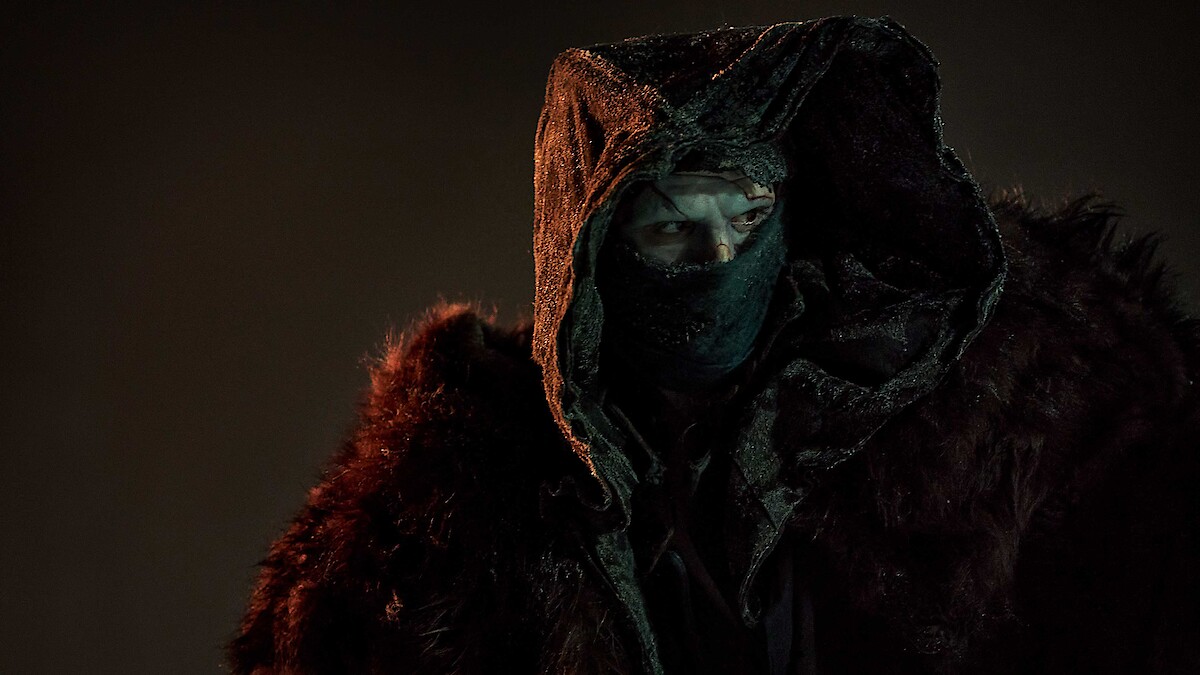
Jacob Elordi as the Monster in Frankenstein

Eventually, the Captain invites the Creature to share his tale, once he boards the ship, eager to snuff out his maker’s waning breaths. The film’s second half is much more powerful and richer in terms of its storytelling. We learn why and how the Monster transformed into the raging brute seen in the first few moments of the film.

Elordi gives the Monster the complexity and knowledge that exists within Shelley’s novel. He learns language. He reads classic literature with a blind man, his only friend, but he also learns about violence and humankind’s capacity to destroy each other. Elordi really carries much of this film, and though his performance isn’t as iconic as Boris Karloff’s, it’s still quite noteworthy. He conveys the Monster’s softer side and also his rage. He also develops a touching friendship with Elizabeth, a major shift form Shelley’s novel, but one that adds more weight and stakes to del Toro’s film. Once Victor denies the Creature a mate, the Monster fully transforms into a character driven by vengeance.

All of this circles back to the Arctic, to the final confrontation between the maker and the creation. The last ten minutes mark the most radical shift from Shelley’s novel and a far more optimistic conclusion. Without spoiling anything, I will say that del Toro reminds us to lean into sunlight, appreciate natural beauty, and feel grateful for each day we’re given. This is a far softer ending than we’re given in the text, but at this moment, with the world on fire, maybe this is the ending we need. It’s a celebration of life itself, punctuated with a gorgeous and poetic final shot of the Monster.

It feels like del Toro’s entire career has led to this film. All around, Frankenstein contains strong and compelling performances. Isaac, Goth, and Elordi clearly understood the assignment of inhabiting such iconic characters and bringing the director’s passion project to life. Like all of del Toro’s work, the feature contains stunning visuals that animate the Victorian setting. The first half of the film does feel a bit too long, but it’s worth the wait for the Monster to finally tell his tale.

Frankenstein is currently playing in limited theaters and will stream on Netflix starting November 7.