Revisiting Horror Noire: A History of Black Horror

In honor of Black History Month, I thought I’d repost this interview that my wife and I did a few years ago with Xavier Burgin, director of the documentary Horror Noire: A History of Black Horror. If you’re a film fan of any kind, I highly recommend this documentary.

If you want to read the interview in full, initially published by HorrOrigins, click here. This is a shortened version.

Xavier Burgin’s documentary Horror Noire is a must-see not only for horror fans but film fans in general. The Shudder exclusive is based on Robin R. Means Coleman’s book of the same name. It covers over 100 years of film history, starting with Birth of a Nation and the negative stereotypes it perpetuated about black Americans. From there, it analyzes the tropes that exist within horror, while also highlighting innovative black filmmakers like Blacula director William Crain and Ganja & Hess director Bill Gunn. All of this leads to the massive success of Jordan Peele’s Get Out. Featuring interviews with Tony Todd (Candyman), Ken Foree (Dawn of the Dead), and Rachel True (The Craft), among many others, Horror Noire truly is a comprehensive doc about black horror cinema. Burgin talked to us about the success of his film and how it’s changed the conversation about black cinema, while acknowledging that the negative tropes the doc highlights still persist in Hollywood. He also chatted about some of his favorite horror flicks and his plans post-Horror Noire.


What has the past year been like for you after the success of Horror Noire?

Essentially, since finishing Horror Noire, there’s been an intersection between black horror fans and general horror fans who really love the movie. It’s opened up a lot of discussion about what it means to be black and a POC in the horror genre and how we’ve always been a part of it from the beginning. I’m really happy we put a spotlight on it and that folks are paying attention. They want more, so I’m hoping to see more. There will be another documentary on Shudder about LGBT people in horror. I think that’s awesome. I hope we see more of that regarding minority representation in genre film, especially the horror genre.

It’s still been a push to get my work off the ground. It’s absolutely amazing to have such an extremely successful documentary under my belt, but I’m also looking to do work in the narrative space. Horror Noire has gotten me into rooms, but I’m still fighting to get my first narrative project off the ground. It’s a marathon, not a race.

How do you think Horror Noire has changed the conversation about Black cinema since its release?

Horror Noire has put a spotlight on black horror. To the black people and horror fans who appreciate black cinema, they’ve already known about these amazing films we talk about. To a larger audience, this was a deep dive into a part of horror many don’t see or learn. Horror Noire has helped a large swath of horror fans (and film fans in general) understand black people have always been a part of your favorite genre. It’s just that our contributions are not always recognized. 

I think our documentary is important in terms of teaching and reaching people, but I’m not sure if the people who have the infrastructural power and money were very much swayed by it. Unfortunately, Hollywood is very stubborn when it comes to giving black and brown creators chances within any genre. Horror is no different in that way. We’re still fighting to get our work out there. On an educational level, it’s made a huge difference for folks that care, but I’m not sure if the gatekeepers have paid attention in the way that’s necessary to make change.

What do you think needs to happen to change the minds of film industry gatekeepers?

The gatekeepers of Hollywood still tend to be primarily old, rich, and white. This means they usually do not have black and brown people around them. They tend not to know these individuals or understand where we’re coming from and the necessity of our stories. I want to see more black and brown folks in positions to get things off the ground, but at the same time, these individuals have to get a yes from a higher-up who tends to be white, older, and richer. The type of risk they can take, unfortunately, isn’t as big as what they would like. When I say risk, I mean taking a risk on underrepresented filmmakers who are not seen as lucrative. In my opinion, the only way we’ll see a change is if more of the direct funding comes from producers and executives who don’t have the specter of getting fired or losing their livelihood over their head. 

Out of all the films covered in Horror Noire, which is your favorite?

Blacula. For me, it’s less about the movie and more about the director, William Crain. He was a black man in his twenties, in the 70s, helming one of the biggest projects of that era. Everyone (even his own financiers and crew) were against him, so it’s a miracle he pulled this off. William didn’t get the career he deserved due to exclusion and racism, but I’m always reminded without him, the black directors of today wouldn’t have the chances they receive now. I wouldn’t be making this documentary if not for him, so that’s why Blacula is the most important topic in the documentary for me. 

Given how times have changed even since Get Out, what do you think the future of Black cinema is? What story would you like to see that hasn’t been told yet?

Every story about the black experience (both within and outside of horror) still needs to be told. When you look at the overall history of film, it’s still relatively young, and black people are still struggling to make films about us without interference. I do believe black cinema has gone through a mini renaissance recently, but there are still too many creatives fighting to make their projects to say there’s been real, significant improvement in the industry after Horror Noire

I hope that post-Get Out, we’re going to see more horror films that deal with our lived experience from black and brown directors. I also hope we get to see more films that are helmed by black and brown directors that aren’t primarily about race. We can direct anything. We just need the opportunities. 

Why do you think Get Out was able to break through in the way it did to such a large audience?

Jordan Peele is a phenomenal writer and director. That script should be taught in every single screenwriting classroom. I also think that Blumhouse and Monkeypaw made sure that Jordan had the creative control that he needed to make this in the way he felt was right to him. 

For a very long time, a running joke in the black film community is that we’re only allowed to make hood or slave movies. There’s a looming truth to this assessment. The people who hold infrastructural power in Hollywood are majority white, older people. Their idea of black people works in a binary. They love hood movies because it’s their current view of the black populace. They love slave movies because they can pat themselves on the back for not being the horrible racists their ancestors were. 

Get Out did something different. It didn’t perpetuate the idea racism was an exclusively Southern, conservative problem. It told us the white liberal who puts on a nice face, votes for Obama twice, but is still willing to exploit black people for profit is just as (if not more) dangerous. This type of message should have gotten shot down in Hollywood, but Jordan was able to make it. It felt like his full vision. We need to see more of this. 

DANIEL KALUUYA as Chris Washington in “Get Out,” a speculative thriller from Blumhouse (producers of “The Visit,” “Insidious” series and “The Gift”) and the mind of Jordan Peele, when a young African-American man visits his white girlfriend’s family estate, he becomes ensnared in a more sinister real reason for the invitation.

Which Black directors and/or writers should we be paying attention to?

Nia DaCosta, who is directing the new Candyman movie. You should keep up with Gerard McMurrary, who directed the latest Purge movie. Of course, we all know to keep up with Jordan Peele’s work within the genre. Outside and inside horror, I’m keeping up with the work of Terence Nance, Nijla Mu’min, Tananarive Due, Tina Mabry, and an assortment of talented creators who I believe will be in the industry for a long time. 

In the Horror Noire syllabus, put together by Dr. Robin R. Means Coleman, [author/educator] Tananarive Due, and Graveyard Shift Sisters’ Ashlee Blackwell, all producers for Horror Noire, there are black filmmakers listed who are doing not only short horror films but also feature-length horror. They’re also doing stuff within the written world. 

Which film covered in the documentary do you think people should immediately stream after reading this interview?

You should watch all of them, but if I had to narrow it down, I’d recommend watching BlaculaGanja & HessTales from The Hood, and Get Out.  I definitely recommend that you watch everything we cover, but not everyone has that amount of time. I won’t recommend that anyone watch Birth of a Nation. I think it’s a racist and horrible film, but I will say if you want to understand where so much of the racism and white supremacist antics we see in America comes from, that’s a film to watch. I’ll go further and say that one of the biggest problems we have in film education is that we’re so willing to talk about the technical direction of this film, but not give the context. It infuriates me whenever I hear about a class somewhere watching Birth of a Nation and the professor says how revolutionary it was as a filmmaking device. You can’t put the politics and racism aside. You need to talk about everything. That’s how you educate the next generation of filmmakers to understand what they’re making, but on a bigger level, there is no such thing as a film that isn’t political. All films are inherently political. It’s up to you as a filmmaker whether or not you acknowledge it and use it to your advantage.

Steven Soderbergh Attempts to Upend the Haunted House Genre

Steven Soderbergh has dozens of film credits to his name. Yet, he’s never tackled a proper horror film, that is, until his latest feature, Presence. However, for those seeking a good old-fashioned ghost story or haunted house tale, this isn’t quite it. In true Soderbergh fashion, Presence does something slightly different with the genre, while offering a meditation on grief.

The film follows a family who moves into a new suburban home. Lucy Liu plays the mom Rebekah. Chris Sullivan stars as dad Chris, while Eddy Maday plays their son Tyler, and Callina Liang plays their troubled daughter Chloe, who lost two of her best friends, Nadia and Simone. The parents hope that the move will spark a fresh start and help their troubled daughter’s mental health.

The haunted house film has long served as a vehicle to address deeper issues. The Amityville Horror, for instance, deals with the Lutz family’s financial woes at the end of the 1970s. They purchase a house that needs major renovations they can’t quite afford. The Haunting of Hill House is a story about its protagonist Eleanor’s grief and loneliness. She wants so badly to fit in, to have a family that accepts her.

In that regard, Presence works well when it focuses on the family’s tension, be it Chloe’s justified pain, or Chris’ stress and feeling that his family is coming undone. In fact, I wish that the film focused more on this and fleshed out its central cast more.

Presence veers from the genre’s typical formula by often showing the POV of the ghost(s). Convinced the spirits of her friends followed her, Chloe never feels right in the house. Objects suddenly move in her bedroom. The dresser shakes, and the ghosts bang on the walls. Yet, none of this is all that frightening. However, that’s not really the point of this movie. It’s more about the family’s struggles and Chloe’s grief especially.

The film takes another turn when Ryan (West Muholland) is introduced and acts like he has a general interest in Chloe. This leads to a major twist in the last act, but like the rest of the film, this plot point feels a bit too rushed and never fully realized.

I have to give credit to Soderbergh for upending the haunted house genre and showing us the POV of ghost(s). Though the film never reaches its full potential, and the last act especially feels too abrupt, at least Presence offers a different kind of ghost story.

Presence releases in theaters today.

Leigh Whannell’s Wolf Man Doesn’t Respond to Much of Anything (And That’s Its Central Flaw)

Let me preface this by stating that I’m never a fan of tearing down movies. A lot of time, work, and money goes into filmmaking. The intention of this post isn’t to shred the latest reimagining of a classic Universal Monster, that being The Wolf Man, directed by Leigh Whannell. Rather, I’m more interested in exploring why Whannell’s film just didn’t work for me, especially when compared to his 2020 remake of The Invisible Man. While The Wolf Man certainly maintained the tragic aspect of the character, especially through the earnest performance of Christopher Abbott, who plays Blake, the film falls flat because, well, it doesn’t respond to anything. It’s a major missed opportunity to tap into at least some deeper cultural and social anxieties.

Whannell’s film is set in Oregon, and Abbott stars alongside Julia Garner, who plays his wife Charlotte, and Matilda Firth, who plays their daughter Ginger. Oregon, with its deep forests and lush greenery, is the perfect setting for this film. The state, especially its natural landscapes, just has a strangeness to it. Heck, think of the opening credits of “Twin Peaks.” It’s a great setting for a werewolf movie.

Initially, the film sets up a promising concept, that of generational trauma. The opening introduces us to a very young Blake and his domineering father, Grady (Sam Jaeger). Grady frequently snaps at his son, all in the name of protecting him from what’s essentially a werewolf lurking in the woods, which, for whatever reason, can also attack and lurk during the day, without a full moon. Yes, Whannell changes up some of the werewolf lure, but that’s fine. Let him do his own thing.

This interesting opening, however, never fully blooms into a more interesting storyline. In the present day, 30 years after the opening scene, Blake and his family leave NYC and trek to his father’s farm, after Blake receives notice that his father is likely dead. Blake does exhibit flashes of his dad’s anger and temper, lashing out at Ginger and Charlotte a few times, but again, this is an underutilized character point. There are hints that Blake’s dad was at least verbally and mentally abusive, and we do see some of that in the opening, but again, it’s never fleshed out.

What I had really hoped for, and what the trailer sort of hinted at, was a deeper exploration of masculinity. There are shades of it with the poor relationship between father and son, but it’s terribly underwritten. We’re currently living in a time where everyone is asking what’s wrong with young men, why they’re socially isolated, why they’ve drifted hard right, why they helped propel Trump back to the White House, etc., etc. The werewolf is a great metaphor and vehicle to explore this very issue, but Whannell doesn’t do much of anything with it.

This marks quite a contrast from his take on The Invisible Man, a film that fully tapped into the anxieties of the #MeToo/Women’s March era, a film that also addresses rapid advances in technology, much like James Whale’s 1933 film. In contrast, The Wolf Man just feels so culturally and socially impotent.

Even the toxic father/son dynamic is weak. The father/son werewolves even come to blows at one point, but that’s another part of the script that feels way too undercooked. I don’t blame any of the actors in this film. As already stated, Abbott does a fine job in the lead role, giving his character the sort of pathos and tragedy that Lon Chaney J. had in the 1941 film. There’s a sense that Garner wanted to give more to her character, but there’s just not much in the script.

The initial Wolf Man holds up for so many reasons, including Chaney Jr.’s performance, the awesome Gothic set designs, and most importantly, because it’s a response to the anxieties of WW II. I just wrote about this for 1428 Elm, but the film’s writer, Curt Siodmak, was a Jewish man, forced to flee Germany in the 1930s to escape the Nazis. The parallels between his story and Larry Talbot’s (Chaney Jr.) are obvious. Even the werewolf mark that afflicts Talbot resembles the Star of David.

While Whannell’s Wolf Man is a decent monster movie, it’s just not much more than that. It falls flat because it doesn’t respond to anything, be it otherness, masculinity, or any other issue, really. It feels like a rushed script with too many underbaked elements.

Why the Wolf Man (1941) remains a sympathetic symbol of otherness

***This essay was first published at 1428 Elm. You can read it in full here.***

While other Universal Monsters have sympathetic stories, especially Frankenstein’s Monster, few convey otherness as much as Larry Talbot, also known as The Wolf Man (Lon Chaney Jr.). With Leigh Whannell’s Wolf Man set to howl in theaters this weekend, now’s a great time to revisit the 1941 film and explore its themes of otherness, including the impact of WWII on its writer, Curt Siodmak, a Jewish man who fled to the U.S. to escape persecution.

From the outset, the parallels between what Jewish people faced in Nazi Germany and Larry’s plight are evident. The film opens with a close-up of an ancient text detailing the mark of the werewolf. It includes a five-pointed star, similar to the Star of David. When Larry is bitten early in the film, he eventually bears the mark on his chest, making him an outcast and drawing the townspeople’s suspicion.

Even prior to the bite, Larry is associated with the symbol. While flirting with his love interest, Gwen (Evelyn Ankers), at an antique shop, he purchases a cane with the wolf symbol. Gwen warns him that the image is associated with the werewolf, but he doesn’t care and dismisses it.

The Wolf Man‘saddress of otherness is no coincidence. Siodmak’s New York Times obituary includes a quote from him that states, “I am the Wolf Man,” before adding, “I was forced into a fate I didn’t want: to be a Jew in Germany. I would not have chosen that as my fate. The swastika represents the moon. When the moon comes up, the man doesn’t want to murder, but he knows he cannot escape it, the Wolf Man destiny.”

Siodmak’s quote is interesting because it depicts the Wolf Man as both victim and murderer. Larry Talbot can’t escape his fate, nor can he quell his murderous impulses. Even before he transforms into a wolf, he kills a Romani fortune teller named Bela (Bela Lugosi) by brutally bludgeoning him with the cane, which causes the bite. To be fair, Bela was in wolf form, but the scene is prolonged and quite shocking.

Unfortunately, there is no escape for Larry Talbot. His story begins and ends in sorrow. He only returns to his family’s estate because his older brother died in a hunting accident, so the care of the estate falls upon him. At one point, Gwen’s actual fiancé, Frank Andrews (Patric Knowles), notes that there’s something very tragic about Talbot. He also refuses to shake his hand, again othering Larry, before he tells Gwen that he couldn’t help but notice the wolf handle and star on Larry’s cane.

Larry’s fate only worsens when the townspeople hunt him down in the woods, in true Universal Monsters fashion. He dies at the hands of his very own father (Claude Rains), who doesn’t know that the Wolf Man is his son. Larry’s struck down by the same cane that he used to kill Bela. It’s a haunting, poetic, and sad ending for one of Universal’s most well-known monsters.

Besides Larry’s association with otherness, there’s also the depiction of the Romani people. As soon as they’re introduced, they’re linked to the Old World and superstitions. In fact, the set design changes from city streets to a foggy landscape with gnarled trees and stunning gothic backdrops. Larry then meets Bela and his mother, Maleva (Maria Ouspenskaya), who eventually explains the werewolf curse.

Like Larry, the Romani people are scorned by some townspeople, who decry their traditions. Similar to the Jewish people, Nazis targeted the Romani people for extermination. According to the Holocaust Encyclopedia, a resource of the United States Holocaust Memorial Museum, beginning in 1933, the Nazis started persecuting the Romani people in Germany, forcing them into internment camps. It’s estimated that the Nazis murdered at least 250,000 European Roma, but the number could be as high as 500,000.

Considering these facts, it’s no surprise that Siodmak created Romani characters and used them as an integral part of the story. Larry Talbot eventually has more in common with them than his flesh-and-blood family. He learns the full extent of the curse and his otherness through them. Meanwhile, Maleva, more than any other character, tries to protect and save Larry, giving him a pendant at first to break the curse before encouraging him to run. She understands the danger Larry poses but also how their society shuns anyone deemed different.

Lon Chaney Jr.’s performance as the Wolf Man remains a horror staple because he’s a tragic figure who embodies otherness. The film works well because it draws upon Siodmak’s lived experience as a Jewish man living during World War II. Larry Talbot’s story and curse is heartbreaking, and Chaney Jr. plays it perfectly with great pathos.

The Damned Unleashes an Icy Sense of Dread

This review was first published over at Horror Buzz.

The Damned is such a fitting movie for the beginning of January. Inspired by Icelandic folklore and featuring countless snowy backdrops, the film is a frigid slow burn that truly creates a sense of dread. It also addresses the consequences of decisions rendered.

Set in a remote fishing outpost during the 19th Century, the film stars Odessa Young as a widow named Eva. In charge of the outpost, she has to make a decision after a shipwreck close to the crew’s shoreline. She can either allow her fishermen to risk venturing out into the choppy waters to try to save some of the ship’s men, or she can opt to do nothing and preserve what limited supplies the group has during an especially harsh winter. She decides to do nothing.

Eva’s decision haunts the crew for the rest of the runtime. More specifically, director Thordur Palsson’s debut draws on the Norse myth of the Draugur, a creature that’s like a part-ghost, part-zombie. As one character describes it, the Draugur is like a returned person with flesh and blood. It torments every character in the film, causing them to hear voices, turn on each other, and commit horrid acts of violence. The creature is shown a few times and feels omnipresent. I actually think the film would have worked slightly better if the monster was shown a bit less, creating greater ambiguity and mystery.

The Draugur functions as an unshakeable curse that befalls the characters due to their decision not to save the men, lost to the frigid ocean’s depths. Meanwhile, Young gives a memorable performance, especially through the expressive look of her eyes and the way she conveys her character’s breaking point, caused by the curse and the weight of her decision. She’s really at the front and center of this movie and outshines just about all of the men. In fact, too many of the fisherman feel like background characters, without their own storylines.

While this film certainly works as an eerie morality tale, the visuals really make The Damned stand out. Thordur grew up in the Icelandic landscapes, and it really shows. Everything about this movie feels cold. The wind howls. Eva constantly treks through snow. The sea looks inky and menacing. Yet, the visuals stun at times, thanks, in part, to the film’s director of photography, Eli Arenson, who previously worked on Lamb, another visually rich film. The Damned lends itself well to the big screen, and the striking natural landscape becomes a character.

There does come a point where questions about the plot and direction arise. For instance, if the group has such limited supplies, why do they bother building coffins for the drowned? Where are they getting the wood and nails? However, a startling moment in the last act saves the narrative. It makes the rest of the pieces fit, and it’s one heck of a pay-off.

The Damned is an unsettling period piece with awe-striking landscapes and a performance by Young that shines against the bleak and isolated setting. This is a perfect film to watch in winter because it evokes such an icy sense of dread.

The Damned releases in theaters today.

Best Horror Movies of 2024

2024 was a heck of a year for horror, with films like The Substance, Longlegs, In a Violent Nature, and Strange Darling generating buzz and discussion. Beyond 2024, some of the films on this list seem likely to become cult favorites, garnering new viewers and fans well beyond this year and their initial theatrical runs.

Here are my favorite/top horror movies of the year.

*Please note that many of these films are western/American films. However, for 1428 Elm, I published a list of my favorite foreign horror films of the year. You can check that out here.*

Runner-up: Nosferatu

Robert Eggers’ take on F.W. Murnau’s German Expressionist classic looks fantastic on the big screen, and that’s really how it should be seen. The cast is great, too, especially Nicholas Hoult as Thomas Hutter and Lily-Rose Depp as Ellen Hutter. The creature/monster design for Bill Skarsgard’s Count Orlok is bone-chilling. Eggers captured the Gothic mood and tone, but this was a strong year for original horror films that pushed the genre in exciting new directions. This is now the third take we’ve had on Nosferatu, hence why, for as good as this movie is, it’s a runner-up.

Tiger Stripes

This Malaysian film was censored in its home country prior to its festival run and VOD release in the U.S. The film follows 11-year-old Zaffan (Zafreen Zairizal), who’s bullied at school as she undergoes physical changes. Yes, this is a body horror movie about puberty. It’s also a drama and comedy, but to be clear, it does have some gross-out moments and one heck of an exorcism scene that lampoons the very concept.

When I first saw this film at the Jim Thorpe International Film Festival last spring, I couldn’t stop telling people about it. Hopefully, as more time passes, this one will find a bigger audience. Here’s my initial review of the film from Horror Buzz, and here’s an interview I did with writer/director Amanda Nell Eu for 1428 Elm.

Tiger Stripes is available on VOD.

Oddity
Director Damian Mc Carthy’s follow-up to his feature debut Caveat is a moody, Gothic film largely set in a creepy old house. There’s also a wooden mannequin in this Irish film that’s the stuff of nightmares. Meanwhile, Carolyn Bracken turns in a heck of a dual performance, playing both Dani, who’s killed mysteriously early in the film, and her blind sister Darcy, who runs an oddities shop and is determined to solve her sister’s murder.

Oddity is one of the most atmospheric films on this list. It’s also proof that Mc Carthy is one of the most interesting directors working in the genre today. You can check out my full review from earlier this fall over at Signal Horizon.

The film is currently streaming on Shudder.

Longlegs

Few films received as much hype this year as Longlegs. This is, in part, due to Neon’s stellar marketing campaign, giving very little away about the film’s plot, while sharing eerie posters and very vague trailers. In writer/director Osgood Perkins’ film, Maika Monroe (It Follows) stars as Agent Lee Harker, who becomes obsessed with a series of grisly occult murders. Nicolas Cages plays the hair-raising villain Longlegs and gives one heck of an unsettling performance.

Longlegs didn’t fully stick the landing for me, and a lot of this feels like Silence of the Lambs with an occult element, but both Monroe and Cage are great in this film. Like Perkins’ other work, this film evokes a grim mood and just feels cold. Unlike his other films, this one does a bit better balancing the substance and story with the atmosphere and imagery.

Longlegs is currently available on VOD.

In a Violent Nature

Writer/director Chris Nash’s In a Violent Nature is a bit polarizing. The entire film is shot from the POV of a slasher named Johnny (Ry Barrett). Because of this, much of the film takes place in the woods and features a lot of walking and nature shots. Still, this film includes some of the gnarliest kills out of any film on this list, especially the yoga scene near the halfway point.

Yes, the nature walks are tiresome at times, but give Nash credit for doing something different with the tired slasher genre. Also, Johnny looks really, really cool in his antique firefighter mask. You can read my full review of the film over at Signal Horizon.

In A Violent Nature is currently streaming on Shudder.

Immaculate

In the first half of the year, we had two theatrical releases that dealt with a woman’s bodily autonomy, fitting for a post-Dobbs world. The First Omen and Immaculate released about a month apart. Both films focus on nuns who birth the anti-Christ. The First Omen is a solid prequel, much better than it deserves to be, with a strong performance by Nell Tiger Free (The Servant) as Damian’s birth mother.

However, Immaculate made this list simply for its ending, which is so wild and raw that it really has to be seen. Sydney Sweeney also turned in one of the year’s best horror performances as Sister Cecilia. This is another banger from Neon. Read my full review over at 1428 Elm.

Immaculate can be streamed on Hulu, and it’s also available on VOD.

Late Night with the Devil

Like In a Violent Nature, Late Night with the Devil takes a tired subgenre, in this case possession movies, and injects it with much-needed creativity and freshness. David Dastmalchian stars as Jack Delroy, a TV host who lost his wife to cancer and whose show struggles in ratings. To save his program, he hosts a Halloween special and interviews Dr. June Ross-Mitchell (Laura Gordon) and her patient Lily (Ingrid Torelli). Both claim that Lily is possessed by a demon after surviving a Satanic cult.

Late Night with the Devil is a freakin’ blast and good time, especially Dastmalchian’s performance. Most likely, this film will become a Halloween favorite in future years. The movie is currently streaming on Shudder.

Strange Darling

Writer/director JT Mollner’s film looks freakin’ gorgeous. If you ever get a chance to see this film on a big screen, please do so. This film also contains my two favorite performances of the year, Willa Fitzberald as The Lady and Kyle Gallner as The Demon. This film addresses serial killers and the culture’s fascination with them. It’s also told in non-linear fashion, beginning in the middle, before arriving at its startling conclusion.

I really can’t say enough positive things about this film. If you want to read my full review, check it out over at Horror Buzz. The film is available on VOD.

Red Rooms

Red Rooms is probably the most disturbing film on this list, and it’s certainly not as bloody and gory as a few of these other movies. Even more than Strange Darling, this French-Canadian thriller comments on serial killer obsession. Juliette Gariépy plays Kelly-Anne. She looks like one of Ludovic Chevalier’s (Maxwell McCabe-Lokos) victims, all of which were young women. Kelly-Anne attends every trial date, as Ludovic sits behind glass, not uttering a single word.

Kelly-Anne then meets Clementine (Laurie Babin), who’s convinced Ludovic is innocent. Clementine leads Kelly-Anne down the dark web, where she watches countless snuff videos. Trust me, Red Rooms will creep under your skin. You can check out my full review of the film over at Horror Buzz.

Currently, Red Rooms is available on VOD.

I Saw the TV Glow

Writer/director Jane Schoenbrun’s I Saw the TV Glow is my favorite film on the list, other than the next one on the list. I couldn’t stop thinking about this one weeks after I first watched it. It’s also visually stunning. Both Justin Smith, as Owen, and Brigette Lundy Paine, as Maddy, give heart wrenching performances as two outcasts who bond over the Buffy the Vampire Slayer-like TV show called The Pink Opaque.

I Saw the TV Glow is very much about nostalgia and memory, but more than anything, it’s a trans allegory. Yet, the feature will resonate for anyone who’s ever felt different or questioned their identity. In short, Schoenbrun’s film is a gorgeous and poetic work whose central message “There’s still time,” feels like a potent rallying cry at the dawn of Trump 2.0 to be yourself and comfortable in with your identity. Oh, and this film has the best soundtrack out of any film on this list.

I Saw the TV Glow is currently streaming on Max and also available on VOD.

The Substance

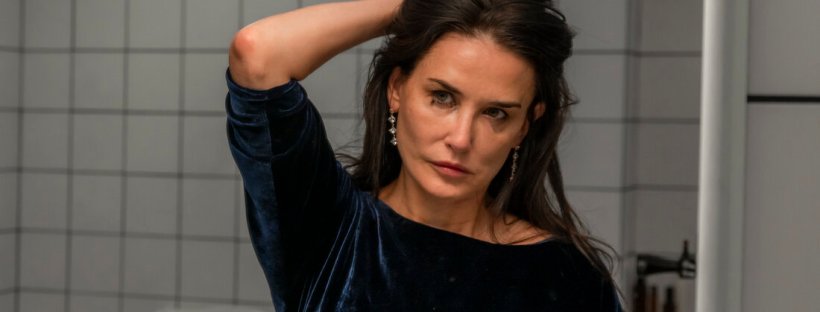
In a perfect world, Demi Moore would earn a much-deserved Oscar nomination for her role as Elisabeth in The Substance, an aging celebrity who’s essentially iced out of Hollywood. To regain her youth, she takes a mysterious drug that causes her to morph into a younger, more attractive self named Sue, played by Margaret Qualley. Of course, this doesn’t go well and the two try to kill each other.

Writer/director Coralie Fargeat’s second feature isn’t subtle in its messaging. It also has the most bonkers final act out of any horror film this year. This is pure body horror a-la Cronenberg with a sharp feminist message. You can check out an interview I did with Fargeat from a few years ago over at Signal Horizon about her first film, Revenge.

The Substance can be streamed on MUBI and VOD.

Black Christmas at 50 and Why the Film Remains So Relevant

For 1428 Elm, I penned an article sharing my love of Black Christmas, how it pioneered many of the slasher tropes, and why, in a post-Dobbs world, the film feels so relevant on its 50-year anniversary. I linked the article and pasted it below.

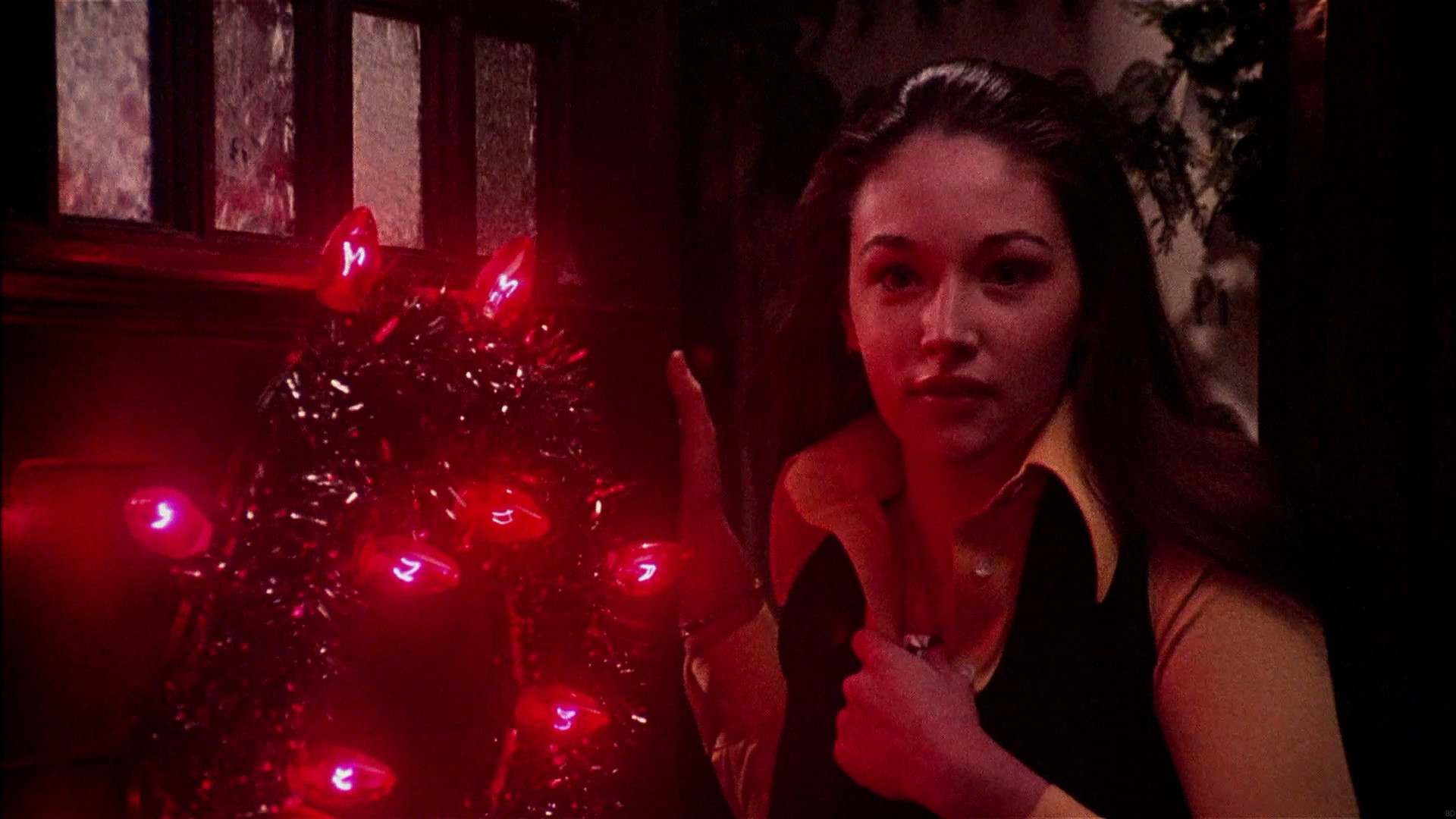
No matter how many times I’ve watched Black Christmas, the film remains chilling. Yes, it contains some dark humor that foreshadows the comedic films director Bob Clark would helm later, especially Porky’s and A Christmas Story, but the film remains a resonant and powerful slasher, and its influence stretched into the late 1970s and the 1980s slasher craze. Fifty years on, Black Christmas’ themes of female autonomy and agency, especially Jess’ (Olivia Hussey) pregnancy and her decision to abort the child, and the masculine attacks on a female sorority, feel all too relevant at the conclusion of 2024.

From the get-go, the sorority house, which should serve as a safe space for the women, comes under attack through a series of phone calls by killer Billy. Some of his calls sound like garbled, incoherent jibberish. At their core, however, the calls assault the women’s sense of safety. In some of the first calls we hear, he threatens to sexually assault the women. His words are too explicit to reprint here, but the violence stands out more than his other ramblings.

To be clear, the women don’t act defenseless against Billy. In one of the most notable early scenes, Barb, played by the wonderful Margot Kidder, responds to Billy’s threats with the famous line, “Oh, why don’t you go find a wall socket and stick your tongue in it? That’ll give you a charge.” Yes, the line draws laughs, but it also underscores these women aren’t pushovers. They’re also much stronger together, providing greater resolve and defense when united.

However, Billy picks several of them off one by one, including the alcoholic house mother Mrs. Mac (Marian Waldman). The killings start with Clare (Lynne Griffin), who Billy strangles and suffocates with a plastic bag and leaves in the attic, specifically in a rocking chair for the duration of the film. Clare’s murder triggers much of the plot and rattles the sorority sisters, who assume she’s gone missing. Suddenly, their sense of safety shatters.

Of all the deaths, though, Barb’s feels most tragic. Other than Jess, she’s the strongest of the bunch. Yes, her sisters roll their eyes at her, and yes, she boozes as much as Mrs. Mac, but she has the best, most forceful responses to Billy. She successfully rattles him over the phone to the point he threatens to kill her.

Unfortunately, this foreshadows her death a bit past the film’s halfway point. The scene guts me each time, especially since Barb feels like the black sheep of the bunch, as well as the most outspoken. There’s the feeling she’s unwanted, not only by her sisters, but by her family. Who’s coming to pick her up for the Christmas holiday? The fact she dies alone in her bedroom reinforces her isolation.

Black Christmas’ major influence on the slasher genre

Black Christmas isn’t the first slasher. That credit really goes to Psycho and Peeping Tom, both from 1960, but the killer’s POV shots certainly influenced John Carpenter’s Halloween, which released four years after Clark’s film. Just watch the first ten minutes of Black Christmas and then the first ten minutes of Halloween. In both cases, you’re placed in the killer’s POV, as he enters the house. The influence is undeniable. Like Billy, Michael Myers is rarely shown fully in frame. He lurks in the shadows. We catch glimpses and images of him. He’s there, and then he’s not, but he’s an ever-present threat.

Further, the conclusions of Halloween and Black Christmas aren’t too dissimilar. Both boogeymen survive. After Dr. Loomis (Donald Pleasence) shoots Michael several times and he falls from the second floor into the yard, he soon vanishes. Cue the famous Halloween theme, as well as several shots of everywhere Michael’s been in the film, coupled with the sound of his breathing.

At the conclusion of Black Christmas, the police leave Jess alone in the house to sleep and recover. As the credits roll, the phone rings again. It’s clear Billy’s not dead, leaving Jess’ fate uncertain. Clark refused to direct a sequel to Black Christmas, but the film still established the trope that the bad guy isn’t killed off.

Additionally, in both Halloween and Black Christmas, authority figures are pretty inept. This is true of Mrs. Mac, but also the police in both films. In fact, they dismiss the obscene phone calls initially in Black Christmas and then leave Jess alone. In Halloween, they do little to stop Michael and initially ignore Dr. Loomis’ warnings. This is even true of Haddonfield’s sherif, Leigh Brackett (Charles Cyphers). His denial of what Loomis tells him leads to the death of his daughter, Annie (Nancy Kyes). He could have stopped Michael but didn’t. Likewise, in Black Christmas, the police should have listened to the women much sooner about the calls, which could have stopped Billy.

Black Christmas and female autonomy and agency

Besides its influence on slashers, Clark’s feature was way ahead of its time because of Jess’ storyline. Like Barb, she maintains and defends her sense of agency. This is most apparent regarding her abortion storyline. She informs her boyfriend Peter (Keir Dullea) that she’s pregnant but plans to seek an abortion. Peter, who studies to become a concert pianist, freaks out and demands she keep the kid. At one point, he tells her he’s going to quit school and marry her. Of course, he thinks she should drop all her plans, too. In response, Jess maintains her resolve that she’s not getting married, she plans to finish school, and she’s moving forward with the abortion.

Though Peter doesn’t kill anyone, he’s the film’s other antagonist, a threat against Jess’ agency and dreams. His response to her decision is both childish and downright unnerving. He accuses her of being selfish and complains he hasn’t been consulted regarding the abortion. It’s no surprise that Clark uses Peter as a red herring for the killer. At one point, he smashes his piano and lurks around the sorority house. He’s a menace.

Fifty years later, Black Christmas remains as effective and timely as ever. Clark and writer Roy Moore crafted fully realized female characters, especially Jess and Barb, that do their best to defend against attacks on what should be a safe female space. It goes without saying that in a post-Dobbs era, the film feels all too relevant.

Black Christmas is currently streaming for free on Tubi and Crackle. It’s also available on Peacock, Shudder, and Prime Video.

7 Favorite Christmas Horror Movies

Now that Thanksgiving has come and gone, the holiday songs have started playing in every store. While some folks enjoy traditional Christmas movies, such as Home Alone or It’s a Wonderful Life, the horror community has a slew of films to pick from to watch this holiday season. In fact, holiday horror has really become its own subgenre. If you’re looking for something spooky to watch this season, here are my personal favorites.

Gremlins

Director Joe Dante’s 1984 monster movie Gremlins is a classic. Yes, the mogwai known as Gizmo is hella cute, especially in one scene where he sports a Santa hat and plays the keyboard in Billy’s (Zach Galligan) bedroom. Gizmo even purrs, sings, and makes all sorts of cuddly noises. However, if the rules are broken (don’t feed him after midnight, don’t get him wet, avoid bright lights) then the little adorable fuzzball spawns the vicious Gremlins.

Gremlins is really the perfect gateway horror movie for kids. It’s not too scary, but it’s still a top-notch creature feature from one of America’s best contemporary horror directors. Oh, and who can forget that scene where Phoebe Cates’ Kate tells Billy all about the worst thing that ever happened to her at Christmas. In case there’s actually someone out there who hasn’t seen Gremlins, I don’t want to spoil Cates’ monologue, but it’s a doozie.

Silent Night, Deadly Night

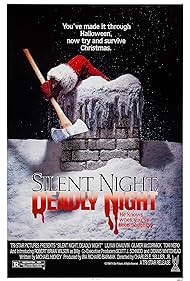
While Gremlins was a box office hit in 1984, Silent Night, Deadly Night was not. Released by Tri-Star Pictures, it was yanked from theaters about a week after its release because of controversy. In particular, the religious right threw a hissy fit about the promotional material, in particular the poster of a killer Santa in the chimney, holding an axe. And well, generally, they simply didn’t like Chris Kringle depicted as a murderer

Controversy aside, Silent Night, Deadly Night is a fun slasher that follows Billy Chapman (Robert Brian Wilson). Traumatized by his parents’ murder on Christmas Eve, and then tormented by sadistic nuns in an orphanage, little Billy grows up to embark on a yuletide rampage as a deadly Santa.

Terrifier 3

Writer/director Damien Leone’s Terrifier 3 just may be the most popular horror movie of 2024. Art the Clown is everywhere. He’s even a Spirit Halloween animatronic. In the third installment, Art returns to once again terrorize his arch nemesis, the stellar Final Girl Sienna, played by modern day scream queen Lauren LaVera. Some time has passed since the horrific events of the second movie, and Sienna isn’t doing too well, suffering from PTSD. Yet, she finds the strength to go toe to toe with the maniacal demon clown yet again.

This film has so many gruesome scenes, from the opening to a sequence involving a chainsaw, to an encounter Art has with a Santa in a bar. Meanwhile, Sienna has one hell of a Final Girl sequence in the last act. Art gives Billy from Silent Night, Deadly Night a real run for his money in terms of killer Santas.

Rare Exports

The Finnish movie Rare Exports is all sorts of wonderfully strange. A young boy named Pietari (Onni Tommila) and his friend Juuso (Ilmari Järvenpää) believe that a secret mountain drilling project near their home uncovered the tomb of Santa. However, this isn’t a Jolly ‘Ol St. Nick they encounter. Instead, it’s an evil, monstrous Santa.

Meanwhile, when Pietari’s father (Jorma Tommila) captures a feral old man (Peeter Jakobi) in his wolf trap, the man may hold the key to why reindeer are being slaughtered and children are disappearing. If you’re looking for something a little different this holiday season, give Rare Exports a chance.

Anna and the Apocalypse

Every Thanksgiving night, after we’re done visiting family, and loaded up on way too many carbs, my wife and I watch Anna and the Apocalypse as a way to start the holiday season. Imagine if the cast of
“Glee” starred in a zombie movie at Christmas time. Well, that’s Anna and the Apocalypse.

No, this movie isn’t for everyone. That said, the Scottish film has a lot of heart, great storytelling, and one kickass final girl in Ella Hunt’s Anna. The songs serve to push the narrative forward and also underscore some of the movie’s themes. Trust me, you haven’t seen a zombie movie like this. If you do give this a chance, be warned that songs like “Turning My Life Around” and “Hollywood Ending” will likely get stuck in your head.

Christmas Evil

Yes, here’s another killer Santa Clause movie. Christmas Evil, set in suburban NJ, is wonderfully weird. Directed by Lewis Jackson, it stars Brandon Maggart as Harry. Tired of everyone’s cynicism and berated and belittled at his toy factory job, Harry turns into a vengeful Santa. Over the years, the film gained a cult following, much like Silent Night, Deadly Night. It also faced controversy and was seized as part of the Video Nasty period in the UK in the 1980s.

Oh, and did I mention that Harry spies on children to see if they’re being naughty and nice? He also watched his mom get sexually groped by his father, dressed up as Santa, when he was a kid. Yet, this is also the story about a fed-up worker more than anything else.

Black Christmas

Not only is Bob Clark’s Canadian film Black Christmas an iconic holiday movie, but it’s an incredibly important slasher film, specifically one of the biggest influences on John Carpenter’s Halloween because of the killer’s first person POV shots. A group of sorority women are terrorized by a killer named Billy. He continually calls them and makes obscene phone calls. Then, the murders start.

This film has a heck of a cast too, especially Margot Kidder as the foul-mouthed Barb and Olivia Hussey as Final Girl Jess. Horror fans will also recognize John Saxon as Lt. Fuller. Saxon would later play Nancy’s dad in Nightmare on Elm Street and Nightmare on Elm Street 3: Dream Warriors. Nearly a decade after Black Christmas, Clark would go on to direct another seasonal staple, A Christmas Story. Both films certainly have doses of dark humor.

Black Christmas was also quite progressive for its time because of the abortion storyline that impacts Jess. She’s determined to make her own decisions about her body, despite the crazed reactions from her overbearing boyfriend, Peter (Keir Dullea). In terms of subject matter, slasher tropes, and tone, Black Christmas was way ahead of its time and one of the major influences on the genre. Skip the two remakes. Watch the OG. It’s a must-see.

Why John Carpenter’s They Live speaks to our current political landscape

Since the recent U.S. election, I’ve been struggling how to process the result. I don’t know what shape a “resistance” will take this time. I was at the Women’s March in 2017 and organized near- weekly visits to the local offices of our two PA senators to oppose the worst of the initial Trump cabinet picks and policies. As a whole, the groundswell of activism that occurred in 2017 likely stopped the worst of it, but this feels different. The cabinet picks are most definitely worse, and the incoming far-right government trifecta seems more intent on passing sweeping legislation, at least within the first year, before they campaign for the 2026 midterms.

We also have the issue of billionaires like Elon Musk spending unlimited funds to influence an outcome. I don’t know how we deal with that, but I’m turning to writing both as a solace and maybe as a means to offer some paths forward.

In that regard, my first post-election piece is on John Carpenter’s 1988 political satire They Live. There’s a lot of lessons to learn from it, including the power of worker organization. This article was initially published at 1428 Elm this week, and I am reposting it here.

While John Carpenter’s 1988 political satire They Live may have been a response to Ronald Reagan’s America, with direct references to his campaign slogan “morning in America,” the film feels increasingly timely now. Considering the involvement of billionaires in the recent presidential election, with Elon Musk playing an outsized role, Carpenter’s critique of capitalism makes They Live the most relevant of his films for this precarious moment.

Set in LA in the late 1980s, They Live follows a drifter named Nada (Roddy Piper). Within the first 15 minutes, he ends up in a shantytown. Skyscrapers loom in the distance, drawing his gaze and underscoring a setting that shows the divide between the haves and the haves-nots. Initially, Nada isn’t bothered by this.  He’s simply looking for work and believes in the promise of America.

At the shantytown, Nada encounters Frank (Keith David). During their first conversation, their differing views on class become apparent. Frank, like the countless working-class voters from PA, MI, and WI interviewed in 2016 and then again in 2024, laments the loss of well-paying factory jobs. He’s hardened and ready for action, but even more importantly, desperate for a job. He’s ready to tear down the system if he doesn’t find one.

During this first exchange between the men, we learn a lot about Frank and his challenging plight. He tells Nada, “We gave the steel companies a break when they needed it. Know what they gave themselves? Raises,” before reciting one of the film’s most famous lines about the golden rule, “He who has the gold, makes the rules.”

Frank’s justified anger is the most relevant of the two characters. It’s palpable. He, like too many other workers, has been stiffed. Following an election that hinged, at least in part, on economic issues, such as the cost of housing and the skyrocketing cost of everyday goods post-COVID, Frank’s rage feels righteous and warranted. He’s prepared to take a sledgehammer to the whole system.

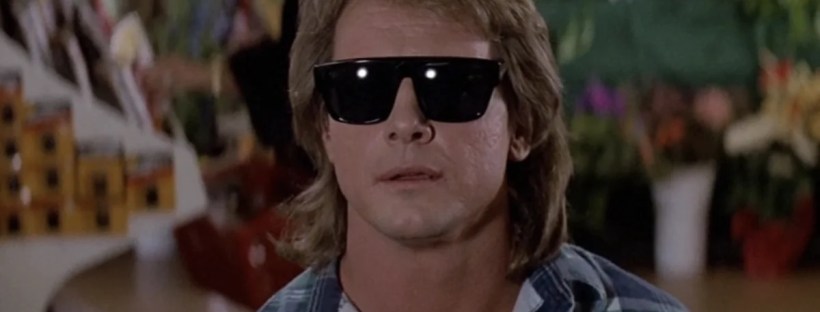
Nada’s response to Frank’s simmering anger feels naïve at best.  He says, “You know, you ought to have a little more patience with life.” With his blue jeans, flannel shirt, and mullet, Nada looks ready to recite a Bruce Springsteen or John Mellencamp song without really listening to the lyrics.

It would likely have been easier for Nada to brush off Frank’s gripes and maintain his simplistic worldview. However, his character evolves the moment riot police and bulldozers utterly obliterate the shantytown. The scene is one of the film’s most harrowing. Nada looks on in shock and horror as this occurs seemingly for no good reason. He evades the police, only to find a pair of sunglasses that allow him to see the world as it truly is. Thus begins Nada’s political and social awakening.

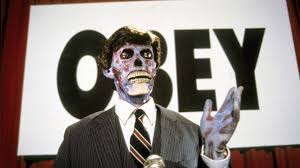
The glasses empower Nada, making him less susceptible to hyper-consumerism and control. When he puts them on, he sees aliens determined to keep people asleep in a fog of consumerism as they overtake Earth. With the glasses on, Nada sees billboards that say Obey, Consume, and other slogans. When he fixes his gaze on money, he encounters the phrase, “This is your god.”

Carpenter’s political critique isn’t exactly subtle, but it’s incredibly effective. When you have Musk paling around with the new president-elect or the barrage of celebrity endorsements secured by VP Kamala Harris, They Live’s over-the-top political satire speaks to the moment. In 2017, speaking out against a bizarre Neo-Nazi claim that the film traffics in stereotypes, Carpenter made clear that’s not the point of the film, tweeting that it is about “yuppies and unrestrained capitalism.”

Besides the blatant critique of consumerism and capitalism, They Live offers a more subtle message, that of worker power and organizing. For at least half the film, Frank and Nada, two men with working-class backgrounds, stand at a divide. Nada initially dismisses Frank’s anger with a dose of foolish optimism. Later in the film, Frank does the same to Nada, though for different reasons.

When Nada encounters Frank much later in the film, he implores him to try on the glasses and see the world as it truly is. However, Frank landed a job in construction. With Nada’s face plastered all over the news, after killing a few of the aliens, he wants nothing to do with him. Frank wants to protect his job. He has no choice.

The men brawl with each other in an alley. The scene is absurd and also plays up Piper’s wrestling background. However, the sequence, silly as it is, highlights the divide between the men, specifically between different members of the working class. As long as they remain divided, those in power maintain and accumulate wealth. This class division is also maintained because the aliens continually promise workers that they can advance up the social and economic ladder if they submit and assist with the takeover.

Eventually, Frank and Nada, along with other members of a pocket resistance, come together to fight the aliens. This underscores the power of organizing, perhaps as the only means to create a more equitable society.

Upcoming Literary Events

I’m taking a break from the film reviewing this week to spread the word about two literary events.

Currents in the Electric City Reading, Nov. 2 at 7 pm, The Gathering Place

This event will be another reading/book signing to celebrate Currents in the Electric City: A Scranton Anthology. Featured readers include Mandy Pennington, David Elliott, Ted LoRusso, Jess Meoni, Amye Archer, Bonnie Markowski, Daryl Fanelli, Barbara J. Taylor, fellow co-editor Joe Kraus, and I. This event is free and will take place at the Gathering Place in Clarks Summit, PA.

Open Mic at the Albright Memorial Library, Thursday, Nov. 7 at 6 pm

Lackawanna College’s Professional Writing Program, in conjunction with the Albright Memorial Library, is hosting an open mic. This will feature student and faculty readings, but it’s also open to the public! Bring a piece to share. Admission is free, and there will be food, too.