Barnes and Noble Moving Forward with Closings

A few weeks ago, I wrote a blog post about the trouble facing Barnes and Noble. Not long after that post, the company’s executive, Mitchell Klipper, told the Wall Street Journal that 20 stores will close every year over the next decade. The article points out that since 2003 15 stores per year has closed; however, the company opened more than 30 per year. During the last fiscal year, the company closed 14 stores and didn’t open any.

Without any new openings, the closures would reduce the number of stores by a third. As I’ve said in the previous blog post, all of these closings make it unclear how long Barnes  & Noble will be able to stick around, especially since the sale of print books is rapidly dropping (22 percent over the last five years, according to Nielsen Bookscan).

The irony of all this is that Borders and Barnes & Noble led to the closure of countless community indie bookstores, and now if Barnes & Noble ultimately meets the fate of Borders, then no bookstores will be left.


Hillary Clinton to Pen Another Book

Not long after the confetti fell during Obama’s re-election speech, speculation already started about 2016. Even the president quipped during a “60 Minutes” interview on Sunday that he wasn’t even inaugurated yet before everyone started asking whether or not Hillary is going to run in 2016.  In that joint interview, she didn’t say what her plans are, though she is certainly the  favorite. Her popularity among the base has skyrocketed since the 2008 primary defeat, and if she decides to run again, the Democratic nomination will surely be hers. But 2016 is still a while away. While Hillary decides whether or not she’s up for another presidential campaign, she’ll also be hard at work on a new memoir, according to a report from Buzzfeed this week.

Clinton is already the author of one bestselling memoir, Living History. Published in 2003, it focuses on her middle-class upbringing and her time as First Lady. However, I’m much more excited about the follow-up. Clinton has led a fascinating life post-2003, and her career’s more recent chapters are more interesting  to me than her time as First Lady. I’m sure she has plenty to write about regarding her time as a U.S. senator and even more pages to fill about the primary battle with Obama in 2007/08. That primary season was ugly. Bill Clinton accused Obama of creating a “fairy tale” story regarding his opposition to the Iraq war, and then the Obama campaign subtly accused the Clintons of racism. Yet, after it was all over, Hillary was invited to serve in the Obama White House as Secretary of State. The book should be fascinating for political junkies and non-political junkies alike. Before she sits down and sets a pen to paper, she plans to “catch up on about 20 hours of sleep deprivation.” It’s well deserved, and I can’t wait to see what she does next once she’s re-energized.


Richard Blanco, the President’s Inagural Speech, and the New America

As I stated previously in a post about Richard Blanco reading at the Inauguration, I think he is the most fitting choice to have read at the Inauguration today. A Cuban-American and gay man, Blanco is a prime example of the changing demographics of the U.S., a new America that is much more diverse. Furthermore, Blanco’s poetry, especially his latest collection, Looking for the Gulf Motel, is all about what it means to be American. His poems , which usually mix Spanish and English, reference his working-class parents and his struggle with identity.

His poem read today, written specifically for the Inauguration, references his personal history, including his father’s working-class hands and his mother’s grueling jobs to provide a better family for their children. The lines very much represent the promise of America, the idea of coming here as an immigrant and carving out a better life for one’s self.  Beyond that, it referenced the recent tragedy of Newtown, the 20 names that will be forever marked absent.

As for President Obama’s speech, I found it bold, even a robust defense of liberalism, especially when he referenced Seneca Falls, Selma, and Stonewall, an acknowledgement of the struggle over labor rights, women’s rights, civil rights, and gay rights and the progress and equality achieved over the last several decades. Beyond that, I’m glad he continually referenced the constitutional phrase “We the people,” and how progress is made through movements and coming together. Finally, I was thrilled the president vowed “we will act” on climate change and  immigration.

Here is a video of Blanco’s speech.


Writing about Weather Catastropes

Within the last few months, I’ve written work based on weather-related catastrophes for different publishers. I wrote a poem entitled “Evacuation” for a flood-themed issue of Word Fountain, a literary journal published through the Osterhout Library in Wilkes-Barre. The editors acquired grant money to make the issue glossy and larger than past issues. All of the money will go to flood victims of Luzerene County, many of whom lost their homes in areas without the levee system during Hurricance Irene in 2011. More recently, I was notified about a project Unbound Content is doing to benefit victims of Hurricane Sandy. The editor of the press (which is also publishing my first full-length book of poems late this year) is seeking creative work about the Jersey Shore.  The money from sales will be donated to hurricane victims.

These two projects led me to write more poems  about weather-related calamities caused by global warming and the massive harm we’ve been doing to the environment. I would eventually like to put together a series of poems weather-related, including poems from the point of view of the victims, maybe even politicians. As far as I know, there haven’t been many collections like this, other than Patricia Smith’s book Blood Dazzler, all about hurricane Katrina.

I foresee this being a long, slow process, especially since I’ll have to do readings for my new book later in the year, and I’m starting Ph.D. coursework, but perhaps as part of my creative dissertation, I can take on this project and really do research, looking at photos and articles about these events to generate ideas for other poems.

If you’re in the area, you should come to the Word Fountain premiere taking place this Saturday from 2-4 p.m at the Osterhout Library.  Contributors to the flood-themed issue will read their work, and copies of the journal will be on sale.

Inagural Poet Chosen

It was announced this week that Richard Blanco will serve as the 2013 inaugural poet and now must compose and read a new poem for the president’s ceremonial swearing-in on the steps of the Capitol on Jan. 21. The New York Times has a great article about the poet and his reoccurring themes of place, identity, and his Latino heritage. In the article, Addie Whisenant, the inaugural committee’s spokeswoman, said President Obama picked Mr. Blanco because the poet’s “deeply personal poems are rooted in the idea of what it means to be an American.”

I only discovered Blanco’s work very recently, after the poetry organization Split This Rock published its list of the best poetry books of 2012. Blanco’s latest collection, Looking for the Gulf Motel, made the list. I got a copy for Christmas and devoured it in one or two sittings. I’m currently in the process of writing a review of it for Poets’ Quarterly. Based on Blanco’s work, I feel he is a wonderful pick to read at the president’s inauguration. Obama won re-election with a diverse coalition, especially the Latino vote. Blanco, who was conceived in Cuba, born in Spain, and  raised and educated in Miami, is representative of the changing demographics of the United States, a change that helped get Obama elected twice. Like the president, Blanco is of mixed heritage, and his poems address that, often incorporating lines of Spanish in the stanzas.

Blanco is the fifth inaugural poet. The tradition was started when John F. Kennedy asked Robert Frost to read in January 1961. The tradition was picked up again in the 1990s when Bill Clinton selected Maya Angelou. I’ve posted some videos below from the inaugurations, including an audio recording of Frost reading the inaugural poem “The Gift Outright” and Elizabeth Alexander reading “Praise Song for the Day” from President Obama’s first inauguration in 2009.

Is Barnes and Noble Going the Way of Borders?

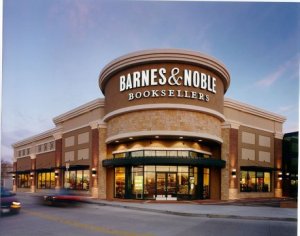
In the last 24 hours or so, several of my writer friends have shared an article via Facebook regarding the slow death of Barnes and Noble. The article was penned by Dennis Johnson, founder of MobyLives and co-founder and co-publisher of Melville House. To put it simply, Johnson predicts that the chain bookstore is not long for this world and could be out of business within the next 2-3 years. When I first saw the link to the article and read the first paragraph, I thought it was an alarmist piece of journalism, but by the end of the article, it’s clear that Johnson has sound reason and evidence to believe that the demise of Barnes and Noble is likely, and that would have an astounding impact on the literary landscape and readership.
barnesnoble_featured

Johnson opens the article by mentioning the wave of Barnes and Noble stores that have closed since the holiday season, and they’re not only in small communities, but in Philadelphia, Los Angeles, Washington, D.C., Chicago, Seattle, San Francicso, and other metropolitan eras. Publishers Weekly is cited to highlight that the bookstore had lackluster holiday sales; store sales declined nearly 11 percent, while NOOK sales tumbled 12.6 percent.

A blurb from the Wall Street Journal is cited to illustrate that Barnes and Noble has failed at marketing, especially in regards to its e-reader, the NOOK.

“What concerns us is that as the overall market gravitates toward color tablets, you’d have expected that Barnes & Noble would have been able to maintain its share because it introduced two new color tablets during the quarter,” said Morningstar analyst Peter Wahlstrom. “They aren’t behind on the tablet front in the sense that their devices compare well with others, but they are behind in terms of marketing, awareness and adoption. And that’s critical.”

What’s shocking about Johnson’s article is the point raised that if the 2,000 plus Barnes and Nobles stores close in a few years, that would lead to the demise of roughly half the nation’s bookstores. In blunt words, the writer predicts that will leave the literary landscape and publishing industry totally screwed, and it can even harm small indie bookstores and the sale of e-books because it will make books overall less visible, thus making consumers care about them even less.

Like Johnson stated, the publishing industry better adapt to this quickly, or books as we know them will be all but extinct.  Barnes and Noble should take a cue from indie bookstores and try to engage customers by hosting more readings, book signings, and other events, whatever it takes to get customers into the store. Just imagine a country losing nearly half its bookstores. Talk about killing the publishing industry and  decreasing even more this country’s intelligence level, education, and curiosity.

Upcoming Readings/Events

It’s the beginning of a new year, so I’ve started to schedule some readings.

On Thursday, Jan. 10, I’m reading at Wilkes University’s M.F.A. Alumni Night. The reading will begin at 7 p.m. and take place at the  Dorothy Dickson Darte Center, 84 W. South Street, Wilkes-Barre, PA. I’ll be joined by fellow poets Laura Moran, Jason Carney, Phil Brady, and Thom Ward. The reading is free and open to the public. Books will be for sale.

On Saturday, Jan. 19, I’m reading at the Osterhauht Library, 71 S. Franklin St., Wilkes-Barre, PA. The reading begins at 2 p.m. and  a is celebration of the new issue of  the literary magazine Word Fountain.  Other contributors will also read. Copies of the journal will be for sale, and all money made will be given to flood victims of Luzerne County.

In February, I’m taking part in the local author night at the Valley Community Library in Peckville. More details on that to come soon.

Later in the year, my first full-length book of poems will be out through Unbound Content. Once I schedule more readings for the book, I’ll post them here and on my website.


End of the Year Movies

Happy New Year! I hope everyone has a safe, healthy, and successful 2013. Since it’s the end of 2012, a lot of the big movies up for various awards flooded the theaters over the last few weeks, and I’ve found myself going to the theater a lot  lately. Most recently, I saw Les Miserables, which I enjoyed and recomend, and Django Unchained, which I also recomend. I’ll admit that I don’t like a lot of Quentin Tarantino’s films, except for Pulp Fiction. I find a lot of his work outlandish, flat on character development/growth, and overly violent and profane. However, I liked Django Unchained quite a lot, especially Tarantino’s decision as the film’s director/writer to make a nearly 3-hour long picture that addresses America’s ugly past of slavery, and in doing so, Tarantino juxtaposes scenes that are at times humorous and cartoonish with scenes that are utterly brutal and violent to show the violence white slaveowners unleashed on black slaves. One scene in particular shows Mississippi plantation owner Calvin Candie, played by Leonardo DiCaprio, release a set of hungry dogs on a slave who tried to run away. As you can imagine ,the dogs literally tear him to pieces, and the audience witnesses this with long slow motion shots.

Another reason I enjoy the film is for its character development, especially Django, played by Jamie Foxx. The filmmaker incoporates several flashbacks  to illustrated how Django was treated on the plantation, how he ran away, and how he lost his wife, as well as what happened to her during their separation. The audience ends up rooting for the protagonist throughout the film, as he mauls down one white slaver after another, and Jamie Foxx is stellar in the role as a gunslinging, freed slave out to save his wife.

The film has also opened up a dialogue about race between Spike Lee and Tarantino, after Lee said he refuses to see the movie because it turns the history of slavery into a spaghetti western. Furthermore, Salon.com recently ran an article stating that only Tarantino, a rich white filmmaker, could have made such a movie. The article can be read here, and it’s worth a read for anyone interested in the movie or film criticism in general. The article is not critical of Tarantino, and in fact, it praises him for choosing such a project when he can make any type of film with any type of story that he wants, but it does raise questions about how far we have or have not progressed as a country and who can make what type of art.


Final Print Issue of Newsweek

The end of this month not only marks the conclusion of 2012, but also the grand finale of Newsweek’s run as a print magazine. The current issue, out now, features a vintage photo of the old New York Newsweek offices with a hashtag title “Last Print Issue.” It’s a great cover and title, one that marks the end of the era and marks the age of social media and e-readers. The  issue was first made available through e-reader tablets, and starting in 2013, the magazine will only be available online through a fee. The editor, Tina Brown, believes this is the only way to sustain the magazine.  The final print issue is worth reading, if you have any interest in journalism and media. It features an oral history of the publication and some lengthy essays by current and past editors and writers about covering some of the biggest stories of the last 80 years since the magazine started, including the Civil Rights Movement, the Women’s Rights Movement, AIDs, and 9/11.

When I was an undergraduate student and had a minor in journalism, I had a particular reading habit and routine. Every weekend, I would stop at a local Barnes ‘n Noble in the Philly area where I was living at the time and read copies of The New Yorker, Time, The Nation, and Newsweek, since I didn’t have money to subscribe to them. For a few years, I really enjoyed Newsweek, especially for its political reporting and photojournalism. Newsweek is certainly one of the reasons I became so interested in politics, but over the years, especially since Brown took over, I enjoyed it less and less. The covers became too sensational, especially in the last two years or so, with titles such as “Is Heaven Real?” and “Hit the Road, Barack.” The number of words per article shrank and shrank, replaced by a lot of ads, and so did a lot of the a colorful photos. Now, the magazine is a shell of what it used to be.  I’m skeptical that Brown will be able to save it from extinction by making it web only and charging a fee for its content. I doubt people will pay for the online version, especially since a lot of other publications can be read online for free, including The New York Times and Washington Post.  However, I’ll miss sitting down at a local cafe with a cup of tea and reading the magazine, or at least what the magazine used to be. I hope Time, The New Yorker, and other print magazines I read ever week stay in business a while. When publications go online, I tend to forget about them and no longer read them. I assume that will be the case for a lot of Newsweek readers.

o-NEWSWEEK-570

What Does It Mean to Grow Up With a Band?

The AV Club, a music/culture publication owned by The Onion, has a wonderful new segment called “What’s Does It Mean to Grow Up With a Band?” and the first entry, written by Jason Heller, focuses on the 1990s  indie/punk trio Jawbreaker. The article is worth a read for any music lovers, not just fans of that band or scene. Heller captures the experience of discovering a band for the first time and being so young that you’re sure you’ll be into one type of music forever. His article made me feel 18 again, when I first discovered Jawbreaker’s albums Bivouac and 24-Hour Revenge Therapy, which I still consider one of the best pop-punk albums ever recorded. Like Heller, I was astounded by the band because prior to hearing them, I mostly listened to punk standards The Clash, The Ramones, Black Flag, The Dead Kennedys. But Jawbreaker did something a lot different with that style of music, creating a sound that was even more grizzled and gruff, complimented by the layered lyrics of Blake Schwarzenbach, who later quit music  to obtain a Ph.D. in English literature. When I was in college, Jawbreaker and Blake’s following band, the more tempered Jets to Brazil, were staples for me, constantly booming in my headphones as I walked around campus.  As a literature major, I was in awe of Blake’s ability to spin a metaphor and write about meaning found in daily conversations and occurrences. Heller compares some of the band’s lyrics to Raymond Carver’s stories, in the sense that they often end with an epiphany, sparked by an ordinary occurrence. I was also fascinated by Jawbreaker’s story, how soon they imploded after releasing a major label album, how close the band got to stardom, including opening for Nirvana in 1993.

Like Heller, I eventually left the punk/indie scene behind, exploring other genres of music. Still, I never skip over a Jawbreaker tune when it comes up on my I-Pod, and the music still sounds as fresh, exciting, and interesting to me as it did when I was 18. Like a lot of other fans, I have my fingers crossed that the band will play a reunion show one day, especially since a lot of the albums have just been re-released on CD and vinyl. In the meantime, there’s Blake’s new band to enjoy, The Forgetters.