Strange Darling( Run to a theater and see this movie)!

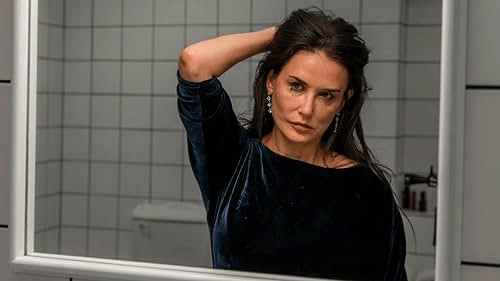
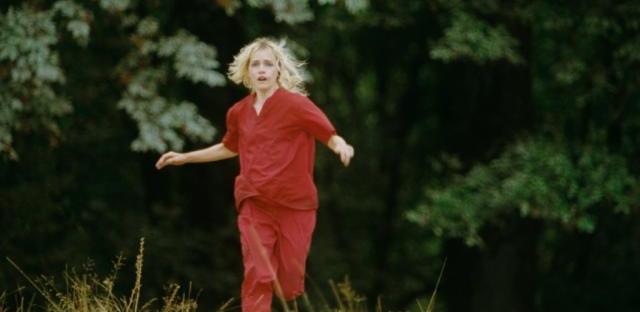
Last year, there was one film at Fantastic Fest that I couldn’t stop talking about and telling people about, and that’s writer/director’s JT Mollner’s Strange Darling, which, after playing at Fantastic Fest nearly a year ago, now has a wide theatrical release in the U.S. Everything about the film, from the fact it was shot in 35 mm, to its stunning colors, to its soundtrack, to Willa Fitzgerald and Kyle Gallner’s performances, really captivated me.

Over the last five or so years, I’ve been really, really grateful and fortunate to cover a lot of film fests, and every now and then, there’s a true gem like Strange Darling, one you really hope gets picked up for distribution so it can have a theatrical release and a bigger audience. However, the less I say about Strange Darling the better. In my review for Horror Buzz, I tried to spoil as little as possible.

However, I will make a few points. Strange Darling is a serial killer film unlike any other media we’ve had about serial killers. It also, at least somewhat, explores our fascination with serial killers. This feature is so effective because of its twist and turns. It’s told in seven chapters and begins at chapter 3. It takes a while until the whole story/puzzle completes itself. It’s really clever storytelling, not wholly new, but done so well. I already mentioned Gallner and Fitzgerald’s great performances (maybe my two favorites of the year so far), but the film looks really gorgeous, from the production design to Giovanni Ribisi’s cinematography.

I hear so many people say that they’re tired of sequel, requels, reboots, and the like. Well, Strange Darling is a wholly original indie film that’s been lucky enough to get a wide theatrical release. Go see it. Support it. Go in as blind as you can.

A wide-ranging interview with Full Moon Features Founder Charles Band

I got into horror by visiting video stores with my dad. On Friday nights, we’d browse the aisles, and he’d let me rent a horror movie or two. I was always fascinated by the colorful sleeves of Full Moon Features movies like Puppet Master, Demonic Toys, and Castle Freak.

When presented with the opportunity to interview Full Mean Features founder and legendary B-movie director Charles Band for 1428 Elm, I jumped on the chance. During the wide-ranging chat, we talked about his new movie, Quadrant, Full Moon’s new production label Pulp Noir, indie filmmaking, and AI.

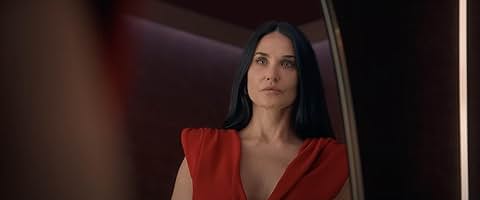
Especially of interest to me was Band’s comments on AI in terms of its use in filmmaking and how it can be a tool used sparingly. He also talked quite a bit about Full Moon’s new label, Pulp Noir, which will release “darker” and “edgier” films with more mature subject matter. The first to release on the label, Quadrant, follows a Jack the Ripper-obsessed serial killer who uses the quadrant technology, basically a VR headset, to transport herself to 19th Century London. The film is a stylish sci-fi flasher with some cool black and white sequences.

Band also promised a few exciting Full Moon films on the horizon that should excite fans of oh, say, the Puppet Master series. To read the full interview, check it out over at 1428 Elm.

Alien: Romulus Returns to Basics

It’s been a while since we’ve had an Alien movie worth seeing on the big screen. Ridley Scott’s return to the franchise more than a decade ago gave us Prometheus (2012) and Alien: Covenant (2017). Prometheus has a lot of interesting things to say, but fans complained because it wasn’t a movie featuring Xenomorphs stalking and killing. Because of that, Covenant paid too much attention to fan gripes and in turn, gave us one of the worst films in the franchise.

Alien: Romulus, for better or worse, is a return to bloody basics. It’s even set between the first two films, widely considered the best in the series. Directed by Fede Alvarez (Don’t Breathe, Evil Dead 2013), the film follows a group of young miners desperate to get the hell off of their deary planet, which sees zero days of sunlight. The Company won’t allow them to transfer and keeps upping the number of years they have to work. Yes, The Company is still just as evil and horrible.

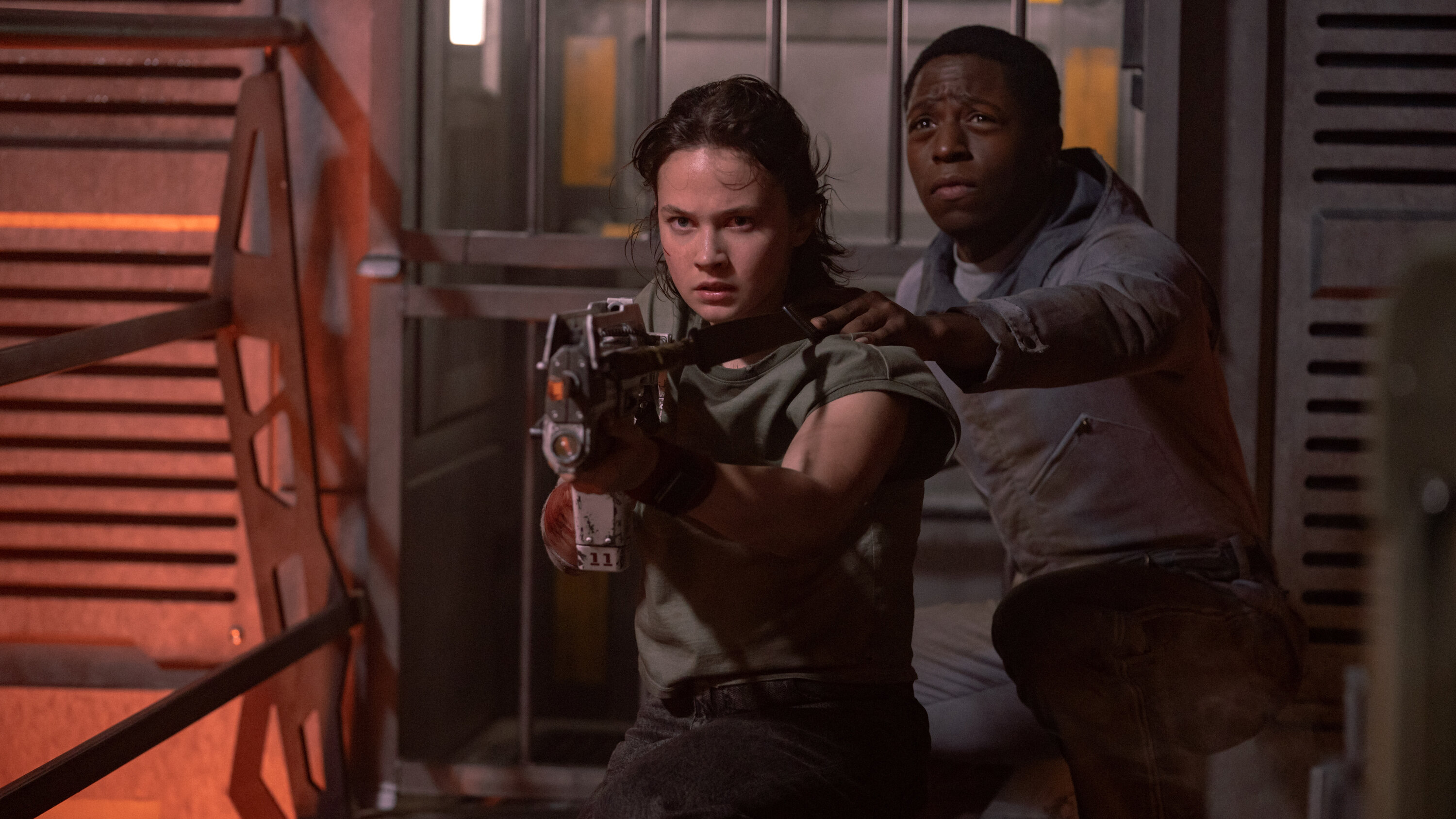
Cailee Spaeny stars as Rain, an orphan who’s only real sense of family is an android/syntenic named Andy (David Jonsson). He’s essentially a product that The Company disposed of, before Rain’s father rescued him and reprogrammed him to look after Rain. It’s a really interesting twist on the android aspect that’s always been a part of this franchise.

Rain’s friends, also miners, hatch a plan to board a derelict space station that’s drifted into their orbit and steal the hibernation pods so they can reach a much sunnier planet and create their own lives. They refuse to labor until they die on a bleak planet, all on behalf of The Company. Yes, some of the class politics from the first two Alien movies are certainly at play here and generally handled well.

Unfortunately, however, most of the other characters are mere cannon fodder for the Xenomorphs and face huggers, which are quickly unleashed once the group’s plan goes terribly, terribly awry. There’s the ship’s pilot, Navarro (Aileen Wu), the pregnant Kay (Isabela Merced), Rain’s hunky boyfriend Tyler (Archie Renaux), and the real jerk of the lot, Bjorn (Spike Fearn). None of these actors are bad per say, but too many of them are given little to do. It’s really Spaeny and Jonsson’s performances that are the most memorable. They’re the only fully realized characters who also have quite a complex relationship. Can a machine be family? Can it even be trusted? Rain wrestles with this very question throughout the two-hour runtime.

Because of various narrative turns his character takes, Jonsson goes through quite a range of emotions that straddle hero and villain, another common trait of the franchise regarding the synthetic characters. Spaeny, meanwhile, makes a kickass final girl. No, her performance isn’t as iconic as Sigourney Weaver’s various iterations of Ripley, but that’s an unfair comparison. Spaeny handles her own well enough, and we come to care about Rain’s fate.

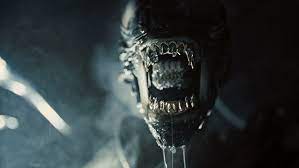
This is certainly the scariest Alien movie that we’ve had in some years. The Xenomorphs and face huggers, which were largely created through practical effects, are downright menacing. The ship feels confining, perilous, and suffocating, much like the first film. The sound design, especially the moments of space’s eerie silence, really enhance the suspense and that fear of the unknown.

The film’s main problem, at least throughout the first half, is that it has way, way too many nods to what Ridley Scott created in Alien and what James Cameron did with Aliens. It’s too much of a homage. The film really becomes interesting in the last act, when Alvarez manages to expand the lore and mythology in quite a creative way, while keeping on point with some of the franchise’s main themes, that being the dangers of technology, fear of the unknown, and The Company’s disregard for human life. There’s a lot going on with AI that speaks to our times, and I’ll leave it at that to avoid spoilers.

Alvarez is known for really gory scenes and sexual violence. There’s a lot of that in this film, especially in that harrowing and surprising final act. It’s at that point this truly feels like a Fede Alvraez movie and less like a tribute to the strongest two films in the franchise. He very much makes that final act his own and takes the franchise in some exciting new directions.

Alien: Romulus has plenty to enjoy, especially for long-term fans of the franchise. It operates best when it’s less a tribute to what came before and instead carves out its own path within the broader Alien universe. Alvarez crafted a horror movie through and through that’s actually scary at points. Though flawed, this is the best Alien movie we’ve had in some years.

Alien Romulus opens nationwide on Friday.

Gen X Pittsburgh: The Beehive and the ’90s Scene

Growing up in northeastern, Pennsylvania, in the industrial husk of Scranton, I found refuge in an artsy cafe on Mulberry Street, just blocks from the University of Scranton, called Cafe Del Sol. Just about every weekend, I attended $5 punk shows there, featuring local bands with names like Dead Radical and The Riverdale Zombies. I also ventured to Wilkes-Barre to attend slightly larger shows at Cafe Metropolis and Homebase. It’s there where I saw larger acts such as Strike Anywhere, Catch 22, Bigwig, and so many more. By larger, I mean bands that at least frequently toured the tri-state area and sometimes, the entire East Coast.

Cafe Del Sol was really special to me because it’s the place where I found community, and all these years later, I’m certain it shaped a lot of my worldview. I attended poetry open mic nights. I heard punk rock activists namedrop Emma Goldman as they handed out zines. This was at least a decade or so before everyone in a cafe stared at their cell phones or laptop screens. People a few tables over interacted.

When I moved to the Philadelphia area, I found solace in places like the First Unitarian Church, which held punk shows every weekend, and still does sometimes. In fact, I’ll never forget when I was 20 and saw Against Me! play before a packed crowd in that church’s basement. For some context, this was only about a year or so after their debut, Reinventing Axl Rose, came out. I recall when the band invited everyone on stage for the encore of “We Laugh at Danger and Break All the Rules.” It was a moment in time. The fists in the air, the sweaty bodies, the gang vocals- it was a spirit and ethos.

I bring all of this up in the context of Pittsburgh journalist David Rullo’s stellar book Gen X Pittsburgh: The Beehive and the ’90s Scene. Though I live on the opposite side of the state and rarely visit Pittsburgh, I can relate to the scene that Rullo describes. I’m an older millennial, turning 40 in just two weeks. Though the Beehive opened in the early 90s, the artistic community Rullo recounts, once Scott Kramer and Steve Zumoff opened the coffeeshop, reminds me of the venues I attended in high school and then in college, pre-smart phone days.

Rullo uses his talents as a journalist to detail the Beehive’s opening, successes, and its closure pre-COVID. He interviews Kramer, Zumoff, as well as several of the coffee slingers, artists, and musicians who were regulars. The book also includes old photos and really cool flyers. He depicts a time and a place that’s really, really hard to replicate now. By the mid-90s, the Beehive was the place to be, long before Pittsburgh became such a trendy city, known for hip shops and microbreweries, topping several “Best Cities to Live” lists. Rullo notes how everyone from John Cusack to the Red Hot Chili Peppers visited the Beehive at one point.

While the book may be about a specific coffeeshop, it’s also about the rise and fall of an artistic scene and a moment in time that can’t be replicated, even if dozens upon dozens of other coffeeshops and artist studios opened since the Beehive’s heyday. Part of this just has to do with the alternative culture of the early and mid 90s, but it also has to do with the fact that we’re all wired now, constantly looking at our phones. Meanwhile, Pittsburgh, like Philly, has been incredibly gentrified. In the case of Pittsburgh, neighborhoods that once belonged to generations of steel mill workers are now occupied by high-end renters. In the case of Philly, working-class neighborhoods like Fishtown have been occupied by luxury condos and young professionals.

Even if Rullo’s book concludes with the Beehive’s closure and a reflection on its legacy, the fact Kramer and Zumoff were able to run two locations for so long is a testament to the importance of places like the Beehive and how certain places can foster community and artistic spaces. For me, growing up, Cafe Del Sol, Cafe Metropolis, the First Unitarian Church, and a few other venues, were really, really important. It’s where I connected with other artistic souls. It’s where I learned about activism and punk’s DIY ethos. Though I may have attended my own versions of the Beehive in the early 2000s, I can still relate to Rullo’s book, even if it’s Gen X.

For anyone who ever had their own Beehive, I highly recommend Rullo’s book. It’s a thorough account of the rise and fall of a scene, as well as a broader exploration of Pittsburgh’s growth and gentrification.

Fantasia Film Fest Favorites

I’m very grateful that I had the chance to cover the Fantasia Film Festival again for Horror Buzz. Instead of sharing every single review, I just wanted to post some of my favorites/highlights from the fest.

Witchboard

It’s been decades since Chuck Russell directed a horror movie. He made a name for himself with Nightmare on Elm Street 3: Dream Warriors (probably the fan favorite NOES sequel) and The Blob remake, before going onto direct major, major Hollywood productions, including The Mask and The Scorpion King.

His return to the horror genre is a reimagining of the 80s cult classic Witchboard. This film feels very cinematic in scope and would do well with a wider theatrical release. Like Russell’s other work, it has some impressive practical effects and a solid performance by Madison Iseman, who plays Emily. She comes across the board, which has powerful, supernatural effects on her. Also of note is James Campbell Bower’s performance as Alexander Baptiste, a nefarious villain. Bower is best known as Vecna in Stranger Things, and he certainly plays a villain well.

You can read my interview with Russell and the cast, as well as my review of the film.

Cuckoo

By far, Cuckoo was my most anticipated film at Fantasia this year. Simply put, NEON, its distributor, has been putting out some of the most interesting films as of late. Longlegs is a prime example. Cuckoo is freakin’ BONKERS. Not everything in the plot makes sense, but boy, is it atmospheric as hell.

Hunter Schafer turns in one heck of a performance as the grief-stricken Gretchen. Her character evolves from a wounded and moody teen to a switchblade-wielding, kickass final girl. This is contrasted with Dan Stevens’ absolutely bloodcurdling, flute-playing antagonist, Herr Konig.

Cuckoo will have a wider theatrical release on Aug. 9. Until then, read my review.

Chainsaws Were Singing

This may be my favorite film from the fest. Chainsaws Were Singing is an Estonian horror musical that’s nearly two hours long. It shouldn’t work, but it does. Oh, and it’s a love story. I don’t want to say much more than that, but whenever this gets a wider release, whatever that may look like, give it a chance! It’ll worm its way into your heart. If you want to learn more, check out my review.

The Soul Eater

French directors Alexandre Bustillo and Julien Maury made names for themselves with 2007’s Inside, an unrelenting and punishing gem from the New French Extremity movement. Since then, everything they’ve made since has been so different. They never recreate the same film. Their last movie, for instance, The Deep House, was an underwater haunted house flick.

Their latest, The Soul Eater, is a bleak police procedural movie. It’s a slow burn with a few harrowing crime scenes sprinkled throughout, all leading to an absolutely bleak ending. Because Amazon Studios is listed in the opening credits, I assume the film will wind up on Prime Video. Give it a watch if that’s the case. Check out my review in the meantime.

Darkest Miram

Even though Charlie Kaufman is listed as an executive producer, this is really nothing like any of his films, or a Spike Jonze movie, for that matter. Darkest Miriam follows a quirky librarian, Miriam (Britt Lower), who falls in love with an artist/cab driver, Janko (Tom Mercier). Oh, and she has nicknames for all of the library patrons and eventually feels like she’s being stalked.

I can’t understate how creative the storytelling is in this film, from the “incident reports” Miriam files that give insight into her world, to the threatening letters she finds in library books. This is such an odd, endearing, slice-of-life movie with a great performance by Lower who says so much through body language and facial expressions. Check out my review.

Currents in the Electric City in Beacon, NY/Stanza Books

On Saturday, we had a wonderful and inspiring launch for Currents in the Electric City. About a dozen contributors read their work from the anthology at the Albright Memorial Library before a packed house. The momentum will continue into the late summer and fall months. Next up, some of us will be reading at Stanza Books in Beacon, NY on Saturday, August 17.

Stanza Books is co-owned by one of the anthology’s contributors, Andrea Talarico. She’ll be reading, along with Mandy Pennington, Daryl Fanelli, Joe Kraus, Dawn Leas, and I. It should be a lot of fun, and we’ll have copies of the book for sale.

For more info about the reading, click here. We’re in the process of planning some events for the fall months, too, so stay tuned!

Happy Publication Day to Currents in the Electric City: A Scranton Anthology

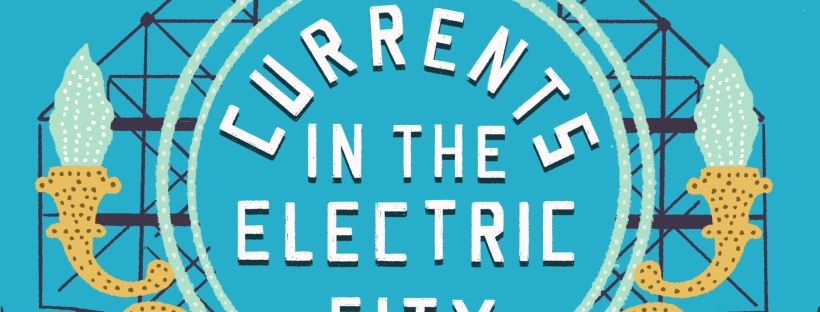
Yes, I know, I know that this is self-promotional, but I want to say Happy Publication Day to Currents in the Electric City: A Scranton Anthology (Belt Publishing)! I was fortunate enough to edit this book with Joe Kraus, and working with over two dozen contributes was a real pleasure.

Yes, yes, there’s “The Office” and the city’s political history, including President Biden’s endless references to it, but I think this anthology showcases Scranton’s layered history, struggles, and revitalization. This anthology houses a unique chorus of voices writing about their relationship to the hardscrabble city. I’m really proud of the work in this book.

Currents in the Electric City: A Scranton Anthology officially came out today and we’ll be having a launch/reading on Saturday, July 27 at the Albright Memorial Library in downtown Scranton! If you’re in the area, come hear some of the contributors share their work.

Then, on Saturday, Aug. 17 at Stanza Books in Beacon, NY, there will be another reading celebrating the anthology. The event starts at 6:30 pm and you can find more info on the bookstore’s website.

Yes, Longlegs is the creepiest movie of the year

I’m not one to say such and such is the scariest movie of all time, or such and such rivals The Exorcist. I avoid those broad statements. That said, I will definitively declare that Longlegs is the creepiest movie I’ve seen all year, one that will stick with me for a long while, from its cold, immersive world, to Maika Monroe and Nic Cage’s performances, to the unsettling imagery that haunts nearly every frame. Writer/director Oz Perkins’ Longlegs is pure nightmare fuel.

Set in the 1990s, the film stars Monroe (It Follows) as FBI agent Lee Harker, who’s placed on a case to locate a serial killer and also solve why the patriarch within various families murders his loved ones. She works alongside Agent Carter (Blair Underwood), who has been on the case for years but has been running cold until Lee shows up. For whatever reason, Lee seems to possess some sort of psychic abilities and connection to Longlegs (Cage). The reasons why exactly become much clearer in the film’s final act, but the less audience members know going into the film, the better. Carter comes across as a hard-nosed skeptic, while Lee believes there’s something otherworldly possibly at play. It’s a solid dynamic at the center of the film.

Longlegs has earned some comparisons to Silence of Lambs, and they’re somewhat warranted. Monroe’s character, like Jodie Foster’s Clarice Starling, largely operates in an all-male world. This is the 90s, after all. More than one agent doubts Lee’s ability to handle such a grisly case. She has to prove herself, and prove herself she eventually does, to the point she becomes absolutely obsessed with the case. She stays up all night, trying to decipher Longlegs’ bizarre letters, which seem like they’re written in code. At one point, she tells her mom over the phone that the work she’s doing is important. She understands if she solves the case, she’ll save other families. There’s also the fact that Lee hails from a tiny unnamed town and grew up sheltered, living only with her religious mom, played by Alicia Witt. The scenes between those two are oddly unnerving as well. Something simply seems strange and uncanny about their relationship.

If I had one critique of Perkins’ other films, it’s that they too often elevated style over story and narrative. Longlegs finally feels like he got both just right- style and substance. This film is incredibly bleak aesthetically, from the snowy settings of small-town America to the dim libraries where Lee often works late into the night. Yet, Perkins creates quite a world here, with a dense narrative and several layers that eventually peel away the longer the runtime progresses. By the last act, it all gels. I also can’t understate just how hellish the imagery is, from nuns with shotguns, to maggot-covered corpses, to snakes that hiss and fill the frame. There are moments that feel like they’re statured in pure evil, meant to torment the viewer’s mind well after the credits roll.

For as stylish the film looks and for as detailed the narrative is, this film works so well because of Monroe and Cage’s performances. In short, this is the most disturbing role I’ve ever seen Cage in. He’s barely recognizable when you do see him. Every moment he’s on screen is hair-raising. Monroe, meanwhile, plays a pensive, yet determined FBI agent, and one specific scene in which she confronts Longlegs drips with edge-of-your-seat suspense. It’s no wonder that the distributor, Neon, made a whole promo about Monroe’s heartbeat the first time she saw Cage in the Longlegs makeup. You feel it in that particular scene they have together.

Longlegs is a film that warrants rewatches, if audience members can handle the devilish imagery. It’s one of those films where you’ll want to reexamine nearly every frame to see what you might have missed during the first or second viewing. This is, by far, Perkins’ strongest film to date, and it’s Cage’s most unnerving performance. Meanwhile, Monroe has starred in two of the best horror films of the last decade- It Follows and Longlegs.

The film opens nationwide on Friday.

Interview: Tiger Stripes Director Amanda Nell Eu on Body Horror, Censorship, and Influences

Now that the year is at its halfway point, I’m already pondering what some of my favorite films of 2024 are, and yes, I know there’s still plenty of films yet to be released. Still, there are a few movies that I’m sure will top my year-end list. One of those films is Tiger Stripes, by Amanda Nell Eu. The Malaysian feature debut combines several genres, including body horror, coming-of-age drama, and even possession, with a dash of Mean Girls influence on the side.

I first screened and reviewed the film at the Jim Thorpe Independent Film Festival back in April. While I probably screened 50 films at the JTIFF this year, Tiger Stripes is one that stood out for the way it used body horror to address marginalization, puberty, and especially gender. It also has one heck of a performance by Zafreen Zairizal, who stars as Zaffan. She’s shunned by society, including her home and school and finds refuge in the jungle.

I had the pleasure of recently interviewing director Amanda Nell Eu for 1428 Elm. We discussed the movie’s influences, censorship it faced in her home country of Malaysia, and some of those very tough bullying scenes. It was a delight chatting with her and getting more insight into this unique film. You can read the interview by clicking here.

Tiger Stripes is now available globally on VOD, and I highly recommend it.

In Honor of John Carpenter’s Hollywood Star

Recently, for 1428 Elm, I made a list of my favorite John Carpenter films in honor of his star on the Hollywood Walk of Fame, coming next year. This got me thinking a lot about Carpenter, who has pretty much stopped directing (I don’t really count that Suburban Screams episode last fall as a proper return) to record music and still score some films. He also plays a lot of video games now, apparently. Still, I’d be hard-pressed to think of a director who has had more impact on the horror genre than Carpenter, other than maybe James Whale, Wes Craven, and Hitchcock.

If you asked me, I couldn’t tell you which Carpenter film I saw first. Was it Halloween? Was it The Thing? Was it The Fog? Most likely, I first viewed his work with my dad, who made a habit of renting horror movies with me when I was a kid, and I’m fairly certain that’s when I first encountered the maestro’s work, likely when I was 10, 11, or 12. Years later, in college, my friends and I had horror movie marathons at least once a month. Carpenter’s work factored heavily into our screenings, and it’s then I encountered some of his lesser-known work, like Princess of Darkness and Assault on Precinct 13.

The older I get, the more I’m drawn to some of these less-revered films, especially the later parts of what Carpenter described as his “apocalypse” trilogy. This trilogy began with The Thing in 1982, but I find myself rewatching Prince of Darkness (1987) and In the Mouth of Madness (1994) more. Because I’ve taught Halloween so many times in my horror film/literature class and because The Thing is so revered, and rightfully so, I’ve taken a pause from those classics in part because they feel so inescapable.

Prince of Darkness caught my attention in the last year or two because that film, while incredibly eerie, also has such a profound sense of dread to it. In short, there’s nothing optimistic about Prince of Darkness. It’s incredibly freakin’ bleak. Even though Childs or MacReady may be infected at the end of The Thing, the last shot shows them sitting around a fire, trading a bottle of whiskey back and forth. You hold out hope one of them will survive the night. There’s no chance for that at the conclusion of Prince of Darkness and you start to think that yes, the world may end, after graduate students and scientist unleash a strange goop from an ancient canister that ushers in Satan. Hey, I didn’t say the plot was perfect. Oh, and did I mention that Donald Pleasance plays a priest, and there’s a cameo by Alice Cooper?!

In the Mouth of Madness is Carpenter’s last truly big film, and he really went crazy with it. The film stars Sam Neill, who plays an insurance investigator sent to solve the mystery of Sutter Cane’s disappearance. Cane is a horror novelist whose work is similar to Lovecraft and whose pages start to become real. This film is all out bonkers, and it’s so much fun to see Neill return to the horror genre after the massive success of Jurassic Park. For me, this one has plenty of rewatch value because of Neill’s performance and for what it has to say about mass marketing, consumption, and even the publishing industry itself. It’s also a fitting conclusion to the apocalypse trilogy. It’s also a thrill ride to see a Lovecraftian Carpenter film.

It’s unclear if Carpenter will ever direct a full-length feature again. He’s stated in the past he wants to, but regardless, his legacy is secured. Halloween and The Thing especially are essentially inescapable classics at this point, referenced in countless other films. Yet, for as much as I love those two works, I find myself returning to Carpenter’s mid-career films much more, appreciating them years later.