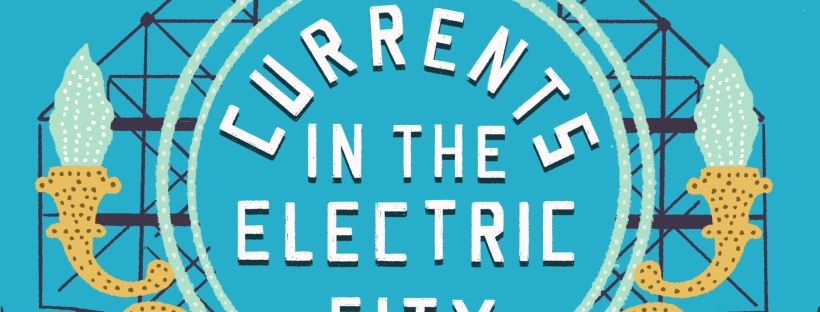
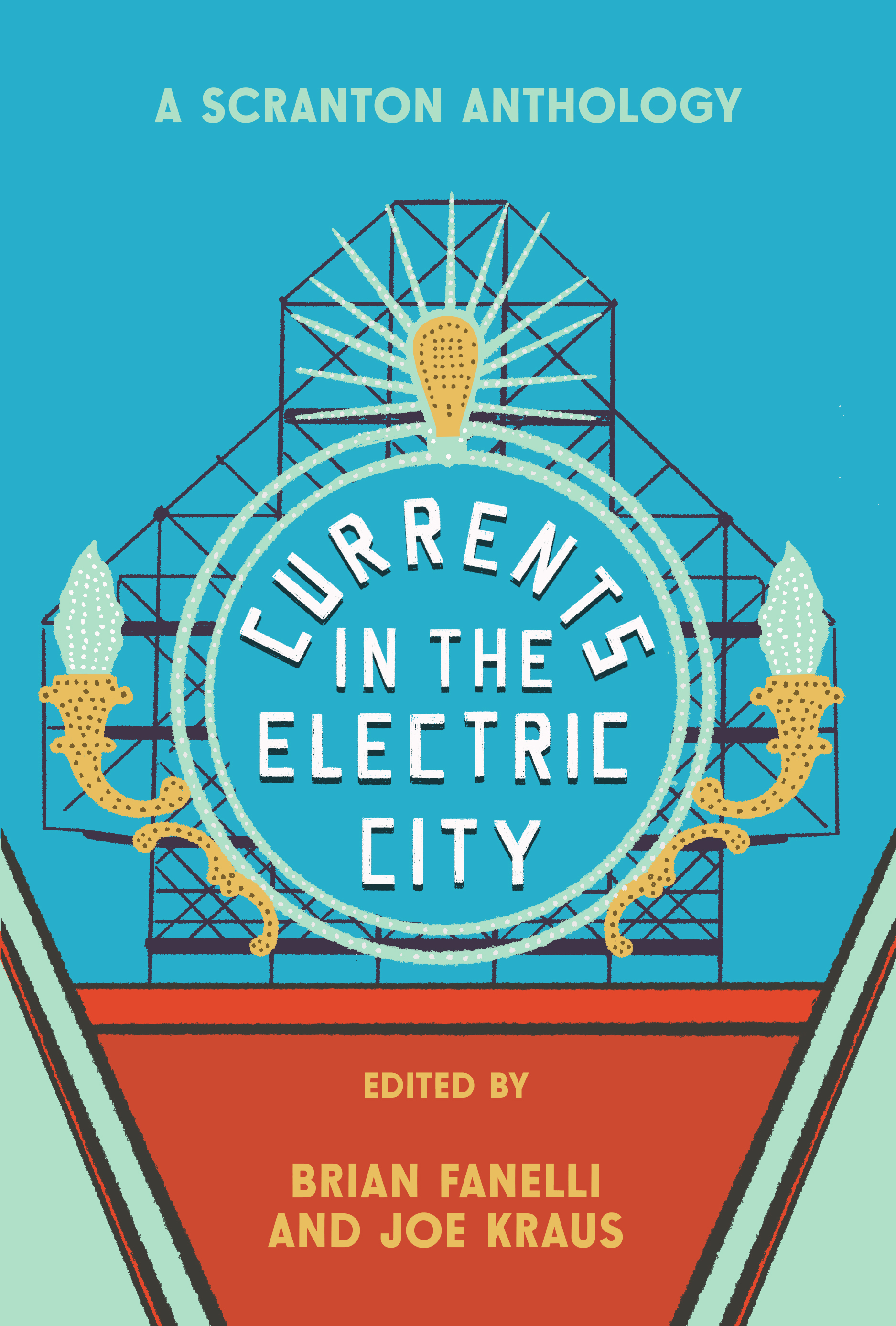
Yes, I know, I know that this is self-promotional, but I want to say Happy Publication Day to Currents in the Electric City: A Scranton Anthology (Belt Publishing)! I was fortunate enough to edit this book with Joe Kraus, and working with over two dozen contributes was a real pleasure.
Yes, yes, there’s “The Office” and the city’s political history, including President Biden’s endless references to it, but I think this anthology showcases Scranton’s layered history, struggles, and revitalization. This anthology houses a unique chorus of voices writing about their relationship to the hardscrabble city. I’m really proud of the work in this book.
Currents in the Electric City: A Scranton Anthology officially came out today and we’ll be having a launch/reading on Saturday, July 27 at the Albright Memorial Library in downtown Scranton! If you’re in the area, come hear some of the contributors share their work.
Then, on Saturday, Aug. 17 at Stanza Books in Beacon, NY, there will be another reading celebrating the anthology. The event starts at 6:30 pm and you can find more info on the bookstore’s website.
I’m not one to say such and such is the scariest movie of all time, or such and such rivals The Exorcist. I avoid those broad statements. That said, I will definitively declare that Longlegs is the creepiest movie I’ve seen all year, one that will stick with me for a long while, from its cold, immersive world, to Maika Monroe and Nic Cage’s performances, to the unsettling imagery that haunts nearly every frame. Writer/director Oz Perkins’ Longlegs is pure nightmare fuel.
Set in the 1990s, the film stars Monroe (It Follows) as FBI agent Lee Harker, who’s placed on a case to locate a serial killer and also solve why the patriarch within various families murders his loved ones. She works alongside Agent Carter (Blair Underwood), who has been on the case for years but has been running cold until Lee shows up. For whatever reason, Lee seems to possess some sort of psychic abilities and connection to Longlegs (Cage). The reasons why exactly become much clearer in the film’s final act, but the less audience members know going into the film, the better. Carter comes across as a hard-nosed skeptic, while Lee believes there’s something otherworldly possibly at play. It’s a solid dynamic at the center of the film.
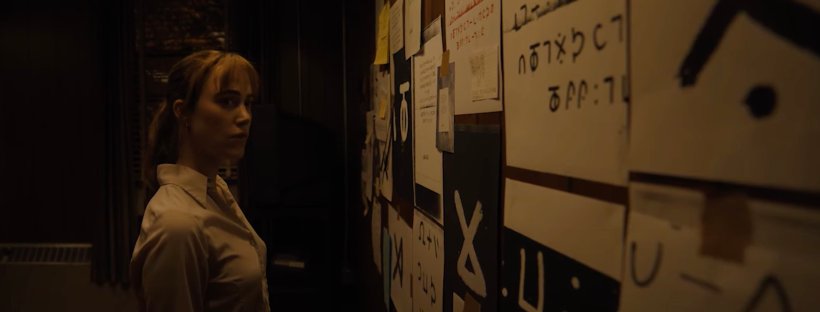
Longlegs has earned some comparisons to Silence of Lambs, and they’re somewhat warranted. Monroe’s character, like Jodie Foster’s Clarice Starling, largely operates in an all-male world. This is the 90s, after all. More than one agent doubts Lee’s ability to handle such a grisly case. She has to prove herself, and prove herself she eventually does, to the point she becomes absolutely obsessed with the case. She stays up all night, trying to decipher Longlegs’ bizarre letters, which seem like they’re written in code. At one point, she tells her mom over the phone that the work she’s doing is important. She understands if she solves the case, she’ll save other families. There’s also the fact that Lee hails from a tiny unnamed town and grew up sheltered, living only with her religious mom, played by Alicia Witt. The scenes between those two are oddly unnerving as well. Something simply seems strange and uncanny about their relationship.
If I had one critique of Perkins’ other films, it’s that they too often elevated style over story and narrative. Longlegs finally feels like he got both just right- style and substance. This film is incredibly bleak aesthetically, from the snowy settings of small-town America to the dim libraries where Lee often works late into the night. Yet, Perkins creates quite a world here, with a dense narrative and several layers that eventually peel away the longer the runtime progresses. By the last act, it all gels. I also can’t understate just how hellish the imagery is, from nuns with shotguns, to maggot-covered corpses, to snakes that hiss and fill the frame. There are moments that feel like they’re statured in pure evil, meant to torment the viewer’s mind well after the credits roll.
For as stylish the film looks and for as detailed the narrative is, this film works so well because of Monroe and Cage’s performances. In short, this is the most disturbing role I’ve ever seen Cage in. He’s barely recognizable when you do see him. Every moment he’s on screen is hair-raising. Monroe, meanwhile, plays a pensive, yet determined FBI agent, and one specific scene in which she confronts Longlegs drips with edge-of-your-seat suspense. It’s no wonder that the distributor, Neon, made a whole promo about Monroe’s heartbeat the first time she saw Cage in the Longlegs makeup. You feel it in that particular scene they have together.
Longlegs is a film that warrants rewatches, if audience members can handle the devilish imagery. It’s one of those films where you’ll want to reexamine nearly every frame to see what you might have missed during the first or second viewing. This is, by far, Perkins’ strongest film to date, and it’s Cage’s most unnerving performance. Meanwhile, Monroe has starred in two of the best horror films of the last decade- It Follows and Longlegs.
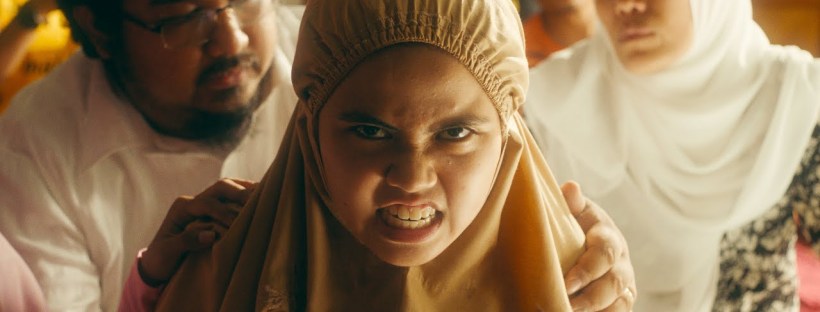
Now that the year is at its halfway point, I’m already pondering what some of my favorite films of 2024 are, and yes, I know there’s still plenty of films yet to be released. Still, there are a few movies that I’m sure will top my year-end list. One of those films is Tiger Stripes, by Amanda Nell Eu. The Malaysian feature debut combines several genres, including body horror, coming-of-age drama, and even possession, with a dash of Mean Girls influence on the side.
I first screened and reviewed the film at the Jim Thorpe Independent Film Festival back in April. While I probably screened 50 films at the JTIFF this year, Tiger Stripes is one that stood out for the way it used body horror to address marginalization, puberty, and especially gender. It also has one heck of a performance by Zafreen Zairizal, who stars as Zaffan. She’s shunned by society, including her home and school and finds refuge in the jungle.
I had the pleasure of recently interviewing director Amanda Nell Eu for 1428 Elm. We discussed the movie’s influences, censorship it faced in her home country of Malaysia, and some of those very tough bullying scenes. It was a delight chatting with her and getting more insight into this unique film. You can read the interview by clicking here.
Tiger Stripes is now available globally on VOD, and I highly recommend it.
Recently, for 1428 Elm, I made a list of my favorite John Carpenter films in honor of his star on the Hollywood Walk of Fame, coming next year. This got me thinking a lot about Carpenter, who has pretty much stopped directing (I don’t really count that Suburban Screams episode last fall as a proper return) to record music and still score some films. He also plays a lot of video games now, apparently. Still, I’d be hard-pressed to think of a director who has had more impact on the horror genre than Carpenter, other than maybe James Whale, Wes Craven, and Hitchcock.
If you asked me, I couldn’t tell you which Carpenter film I saw first. Was it Halloween? Was it The Thing? Was it The Fog? Most likely, I first viewed his work with my dad, who made a habit of renting horror movies with me when I was a kid, and I’m fairly certain that’s when I first encountered the maestro’s work, likely when I was 10, 11, or 12. Years later, in college, my friends and I had horror movie marathons at least once a month. Carpenter’s work factored heavily into our screenings, and it’s then I encountered some of his lesser-known work, like Princess of Darkness and Assault on Precinct 13.
The older I get, the more I’m drawn to some of these less-revered films, especially the later parts of what Carpenter described as his “apocalypse” trilogy. This trilogy began with The Thing in 1982, but I find myself rewatching Prince of Darkness (1987) and In the Mouth of Madness (1994) more. Because I’ve taught Halloween so many times in my horror film/literature class and because The Thing is so revered, and rightfully so, I’ve taken a pause from those classics in part because they feel so inescapable.
Prince of Darkness caught my attention in the last year or two because that film, while incredibly eerie, also has such a profound sense of dread to it. In short, there’s nothing optimistic about Prince of Darkness. It’s incredibly freakin’ bleak. Even though Childs or MacReady may be infected at the end of The Thing, the last shot shows them sitting around a fire, trading a bottle of whiskey back and forth. You hold out hope one of them will survive the night. There’s no chance for that at the conclusion of Prince of Darkness and you start to think that yes, the world may end, after graduate students and scientist unleash a strange goop from an ancient canister that ushers in Satan. Hey, I didn’t say the plot was perfect. Oh, and did I mention that Donald Pleasance plays a priest, and there’s a cameo by Alice Cooper?!
In the Mouth of Madness is Carpenter’s last truly big film, and he really went crazy with it. The film stars Sam Neill, who plays an insurance investigator sent to solve the mystery of Sutter Cane’s disappearance. Cane is a horror novelist whose work is similar to Lovecraft and whose pages start to become real. This film is all out bonkers, and it’s so much fun to see Neill return to the horror genre after the massive success of Jurassic Park. For me, this one has plenty of rewatch value because of Neill’s performance and for what it has to say about mass marketing, consumption, and even the publishing industry itself. It’s also a fitting conclusion to the apocalypse trilogy. It’s also a thrill ride to see a Lovecraftian Carpenter film.
It’s unclear if Carpenter will ever direct a full-length feature again. He’s stated in the past he wants to, but regardless, his legacy is secured. Halloween and The Thing especially are essentially inescapable classics at this point, referenced in countless other films. Yet, for as much as I love those two works, I find myself returning to Carpenter’s mid-career films much more, appreciating them years later.
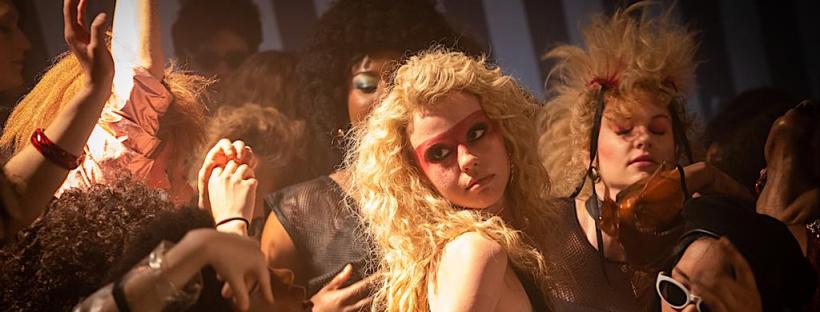
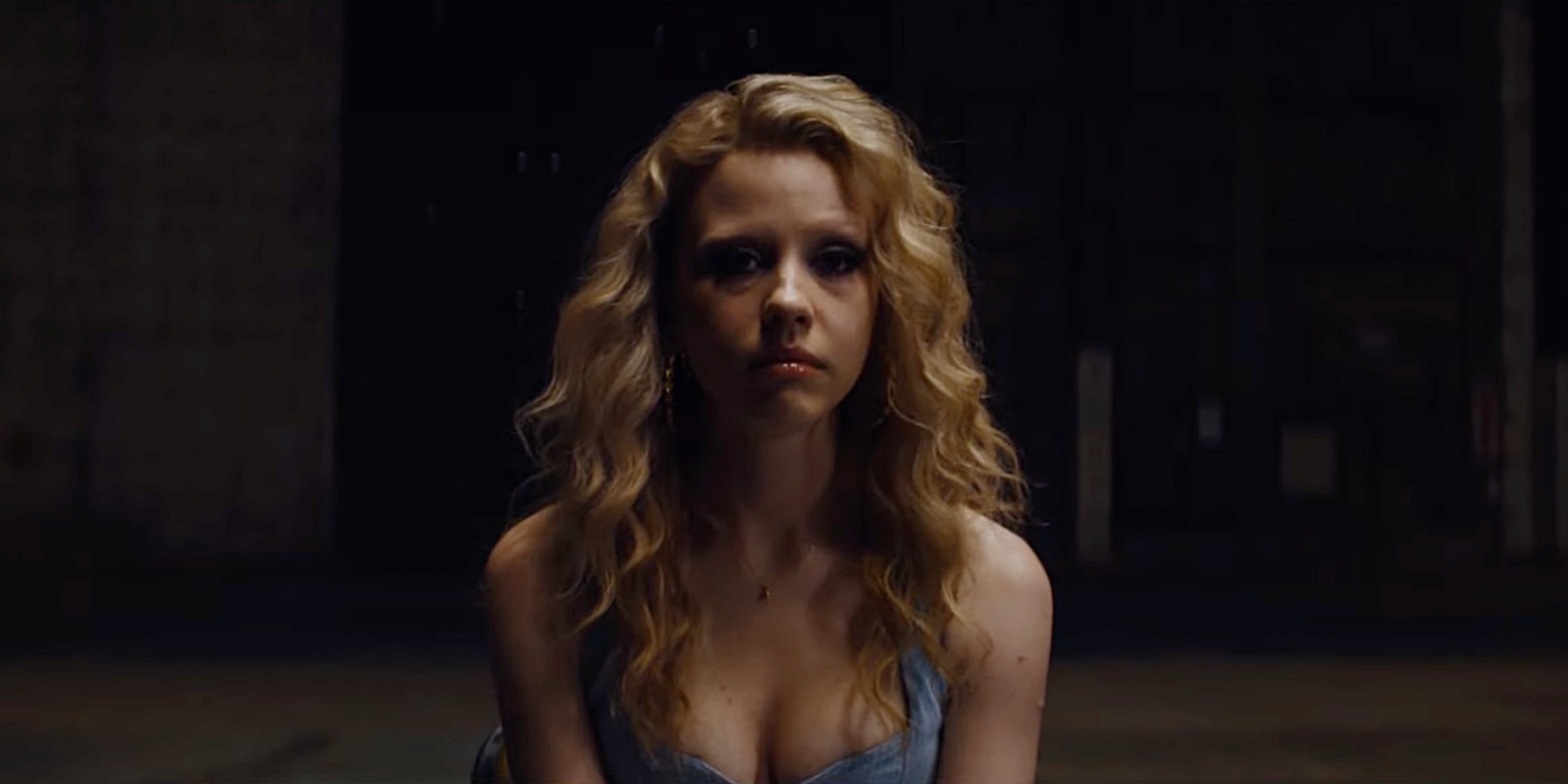
If anyone says that mainstream horror movies are all remakes, requels, prequels, and reboots, then please point them in the direction of Ti West’s X trilogy, which began with 2022’s X, followed by the prequel Pearl, and now the finale, Maxxxine, all starring Mia Goth in one banger of a performance after another. West manages to stick the landing and conclude the trilogy well, all while steeping the final entry in 1980s Hollywood, complete with cocaine and neon colors.
Comparing the trilogy’s entries really isn’t fair because each and every one stands on its own, and each is stylistically different. X is a bloody romp and tribute to 1970s grindhouse, while also serving as a commentary on voyeurism and audience. Pearl is a tragic character study and technicolor nightmare that has plenty of nods to the Wizard of Oz. Maxxxine, meanwhile, is a nod to the 1980s, video rental stores, and slashers, specifically Giallos.
Maxxxine opens years after the conclusion of X, and though you really don’t need to see the other films to make sense of the final entry, it’s beneficial to give X another watch because so much of the film calls back to that first entry. Set in 1985, the third entry finds Maxine Minx (Goth) in Hollywood. After carving out a very successful career for herself as a porn star, she wants to make the shift to more mainstream movies. It turns out that she lands a starring role in a horror movie that’s a sequel to a B movie called The Puritan, helmed by the very serious and demanding director Elizabeth Bender (Elizabeth Debicki). The filmmaker demands that Maxine get her head in the game and be willing to give her all for the film. Alongside the bloodshed, Bender wants to send a powerful message into the world, using the horror genre to do so. Some of the interactions between Maxine and the director are some of my favorite moments in the film, commentaries about art and the horror genre generally, as well as the difficulty of working with the mainstream studios, which too often stifle truly creative voices that go against the status quo.
The film set is besieged by Satanic Panic protestors who believe that everything from heavy metal to genre movies are the work of the devil. Meanwhile, there’s a killer on the loose called the Night Stalker who torments Maxine for what transpired in X, and he continually picks off young women who worked with the wannabe starlet in the porn industry. In fact, the black-gloved killer hires a private investigator, played by Kevin Bacon, to track Maxine down. Much of the film plays out like a murder mystery, though there are some gnarly and bloody kills that should satisfy horror hounds, though this film doesn’t have the grindhouse elements of X. It’s much tamer by comparison and more of a drama, too.
Yes, this film deals with Hollywood and Maxine’s aspirations as an actress, and like the other entries, it’s very much a love letter to filmmaking in general. It’s also about the weight of a character’s actions. As Bacon’s character warns Maxine, the past is about to catch up with her. She’s haunted by it, and she can’t outrun it. She has to learn to confront it. If she doesn’t do that, then her career and friends will suffer. This is a much more vulnerable Maxine compared to the first entry, again showing Goth’s versality as an actress. She’s rattled by the murders and notes and video tapes the killer leaves for her.
All of Ti West’s films are stylish, and Maxxxine is no different. This film is drenched in pastel and neon colors. The characters, including Maxine, have big hair and 80s outfits. This is a film, like the others, that really should be seen on a big screen, especially for some of the set designs, costumes, and Hollywood studio lots. There’s even a nod to the Bates Motel, again another reference to the fact the past always catches up with the present. It’s inescabale.
While I’m hesitant to say that Maxxxine is as good as Pearl or X, it’s a fitting conclusion to West’s trilogy. Goth’s character comes full circle and I can’t see any other way that this could have ended. Overall, West has made an outstanding horror trilogy that’s also very much his love letter to the process of filmmaking itself and different eras of Holllywood.
Let me preface this post by stating if you want a more detailed analysis of the Nosferatu trailer from me, then read the piece I wrote a few days ago over at 1428 Elm. I did a pretty comprehensive breakdown of the trailer, including the characters, the comparisons to Bram Stoker’s text, and comparisons to the original film. I’m using this post to talk about why I have a lot of faith in Robert Eggers’ take on Nosferatu and why he may be the only contemporary genre director who can handle the monumental task of remaking this film, like Werner Herzog did in 1979.
I’ll also state that I have a deep love of F.W. Murnau’s original 1922 film, and I’ve written about it and presented on it more than a few times. In fact, every fall, when I teach my Horror Literature and Film class, the very first film we watch is Nosferatu, as an introduction to German Expressionism and the foundations of the genre. It’s a heck of a lot of fun discussing that movie with the class. Many students, even the horror hounds, haven’t seen it before, at least not in full.
I’m hard-pressed to think of a director better suited to remake this classic than Eggers. His entire body of work has been period pieces, starting with The Witch, then The Lighthouse, and lastly, The Northman. He likes period pieces, and it’s clear from the trailer he’s sticking with the Victorian era for this remake. Not only that, but he’s clearly influenced by German Expressionism. This is most evident in The Lighthouse, a film set in 1905 and shot in black and white, very much reliant on light and shadow and strange camera angles, like Murnau’s work. Nosferatu has been Eggers’ dream project for years, and if you watch The Lighthouse specifically and even The Witch, to a lesser extent, it’s clear why.
The trailer, even if it’s about 90 seconds long, makes clear that Eggers is sticking to the general story of Stoker’s text and Murnau’s very loose adaptation of it. As I wrote in my piece for 1428 Elm, the trailer does a good job establishing the main characters, including Count Orlok’s prey. This includes Nicholas Hoult as Thomas Hutter, Lily-Rose Deep as Ellen Hutter, Thomas’ wife who comes under Orlok’s attacks, and Emma Corrin as Anna Harding, likely Ellen’s best friend who stands in for the Lucy character in Stoker’s book. Willem Dafoe stars as the Van Helsing-type character.
There also a refrain that’s repeated, and it’s simple, but effective. “He is coming.” The trailer barely shows Bill Skarsgård in the make-up, but it does present Orlok as an apocalyptic threat to the New World, who will not only attack Thomas, Ellen, and Emma, but also unleash plague, famine, and death. We see the rats. We see the coffins carried through the streets of (London maybe? It’s hard to tell). He is coming indeed, and I have faith Eggers is going to make this Gothic film frightening, especially when you consider he told Empire magazine, “It’s a horror movie. It’s a Gothic horror movie. And I do think that there hasn’t been an old-school Gothic movie that’s actually scary in a while. And I think that the majority of audiences will find this one to be the case.”
Eggers’ movie, like the other Nosferatu films, appears to make the vampire predatory and scary again. It also aligns Orlok with predatory animals again, including the wolf. I’m all for it! There’s no director I can think of who better understands the source material or who’s been influenced by German Expressionism more than Eggers. The trailer is extremely promising, and I can’t wait for the film’s release on Christmas day. Until then, check out the original if you haven’t watched it yet. It’s public domain and free to stream online.
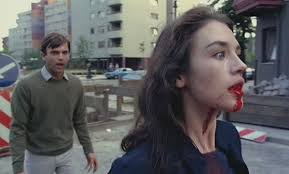
In my latest article for 1428 Elm, I explore why Possession is such a film born of its time, a response to Cold War geopolitics and Polish director Andrzej Żuławski‘s divorce from actress Malgorzata Braunek. As bonkers as the film is, and it truly, truly is, it’s a perfect marriage of the personal and political. Needless to say, when the Hollywood Reporter broke the news that Robert Pattinson plans to produce a remake of the cult film, with Smile director Parker Finn on board, I, along with others in the film community, were shocked.
How exactly do you remake Possession? How do you capture the personal anguish and emotional turmoil that Zulawski captured on screen, inspiring once-in-a-lifetime performances from a rather young Sam Neill as Mark and Isabelle Adjani as Anna? Zulawski has stated over the years that the dialogue in the film mirrored arguments he had with his ex-wife. This is why the film works so well as a metaphor for divorce. For Zulawski, this film was utterly personal, a way to process his own emotional pain. That’s a sort of muse that a remake would prove difficult to conjure.
Not only that, but Possession is a film that’s also a response to the Cold War. Mark works as a spy behind the Berlin Wall, which factors heavily into the film, increasing his paranoia and the division between he and Anna. It’s a perfect visual metaphor for the times, literally a country split in two, and Anna and Mark’s fractured relationship. There is no contemporary visual metaphor that would work as well. The wall factors heavily into the film, with spies constantly watching Mark’s every move.
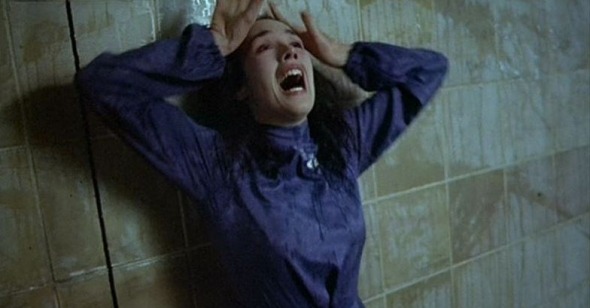
Further, how do you top Adjani’s bewitching performance? It’s truly one for the ages, and I don’t just mean the wild subway scene, which has been referenced in several contemporary horror films, including The First Omen and Climax. Her performance earned her an award for Best Female Performance at the 1981 Cannes Film Festival. That sequence alone is one of the best body horror sequences in all of cinema, a potent metaphor for her character’s distress. These points don’t even address the film’s other wild elements, such as the doppelgangers and tentacle monster.
Parker Finn and Robert Pattinson are immensely talented. They have the funds and connections to make whatever films they want, including a remake. The original will still exist. Still, I’d rather see them channel their talents into a different project. Possession is a perfect marriage of the personal and political that seems impossible to replicate.
A little less than two years ago, Joe Kraus, an English Professor at the University of Scranton, asked me to co-edit an anthology with him for Belt Publishing’s City Anthology Series on Scranton, my hometown. Yes, I was born and raised in North Scranton, and though I left it for college and stuck around in the Philly area for a while after, it’s my home turf. I’m really thrilled with this anthology, which officially releases on July 16! You can preorder a copy through the publisher’s website by clicking here.
The anthology, which features nearly 30 contributors, contains an honest and multi-faceted look at the city of Scranton, from its place in pop culture on shows like “The Office,” to its labor/coal mining history, to poems and essays about very specific neighborhoods. More than anything, this anthology documents Scranton’s place and history as a hardscrabble, blue-collar city to a place that’s clawed its way out of its coal mining past and continues to undergo major revitalization.
To celebrate the anthology, we’re having a kickoff event on Saturday, July 27 at 3 pm at the Albright Memorial Library in downtown Scranton. Contributors will read their pieces, and we’ll have copies of the book for sale. More events will be coming, but the launch on the July 27 is the first.
Speaking of literary events, on Saturday, June 22 at 7 pm at The Gathering Place in Clarks Summit, PA, I’m giving a poetry reading. I’ll be joined by novelist Barb Taylor, and following our featured readings, there will be an open mic. I’ll have copies of some of my books for sale, and Barb will have copies of her new novel, Rain Breaks No Bones. If you’re in the area, come on out, and bring a piece to read for the open mic!
It’s certainly shaping up to be a literary summer!
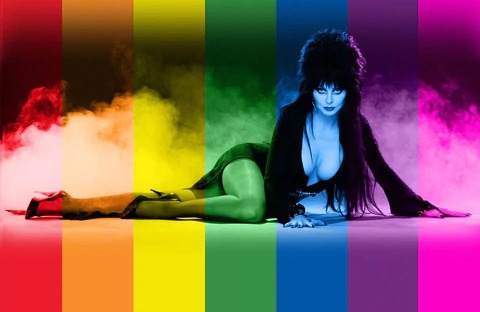
Horror has a long, rich history of celebrating queerness. This dates back to its 19th Century foundation in Gothic literature, specifically the famous story of the friendship among Mary Shelley, Percy Shelley, and Lord Byron, all sexually fluid writers whose work, especially Mary Shelley’s, explores themes of Otherness. Meanwhile, her hubs, Percy, was an anarchist who advocated for the rights of the marginalized. Queerness extends to other Gothic writers, including Oscar Wilde, author of the Portrait of Dorian Gray. Wilde is an important figure because he was put on trial in the late 19th Century for “gross indecency,” after the details of his homosexual affair with a British aristocrat became public. Needless to say, this profoundly negatively impacted the writer’s career, but he was unashamed of who he was and his sexuality.
Queerness extends to horror’s earliest film adaptations, too, including Nosferatu by gay director F.W. Murnau, and some of the most famed early Universal movies, specifically those by openly gay director James Whale, including Frankenstein, The Invisible Man, The Old Dark House, and most notably, Bride of Frankenstein, a campy feature that includes many theater actors who worked with Whale.
While horror does have some problematic depictions of the LGBTQ community, such as Buffalo Bill in Silence of the Lambs, and the “bury your gays” trope that became all too prevalent in slashers of the 1980s, the genre has become more and more inclusive, with recent examples being Freaky, Attachment, Let the Right One In, Spiral, Bodies, Bodies, Bodies, and the haunting and mesmerizing I Saw the TV Glow, by non-binary director Jane Schoenbrun. These are just a few examples in an ever-growing canon.
It pains me to say this, but we’re not getting a new Friday the 13th film anytime soon, even if there are plans to launch a “Jason universe,” which basically just means more merch and video games. Recently, series creator Sean S. Cunninham, who also directed the first film, went on record and said a new film isn’t happening in the near future. Most likely, it’s because the rights are so screwed up between different film companies. There was also a lengthy lawsuit between Cunningham and the OG screenwriter Victor Miller over franchise rights. In short, it’s all still a mess. Meanwhile, after Bryan Fuller pulled out of the “Crystal Lake” project, the TV series on Peacock now seems iffy at best. It’s been a frustrating ride for Jason fans, for sure.
Still, even if we won’t see Jason slice and dice Camp Crystal teens anytime soon, gore hounds have a reason to be excited. In a Violent Nature, written/directed by Chris Nash, slashes into theaters this Friday. I implore horror fans: GO see this movie. If you want to read a spoiler-free review of the film, check out my piece at Signal Horizon. I promise that I really didn’t spoil much of anything.
In a Violent Nature upends the slasher formula by showing everything from the POV of Johnny the killer. During the second half of this film, which features two of the gnarliest kills I’ve seen in a long time, this technique really, really works. I will admit that the pacing in the first half is a bit of a slog, with lots and lots of walking around in the woods. Still, In a Violent Nature does something remarkably different and it’s likely that future creatives will perfect what Nash attempts.
In a Violent Nature is probably the closest thing we’ll get to a new F13 film without it being a F13 film. It’s largely set in the woods and features a mad man picking off naive 20-somethings who step into his territory. Again, two of the kills especially are brutal and relentless. Those two sequences alone are worth the price of admission for horror fans. Though I had a screener for this, I plan to buy a ticket just to see how the audience reacts to a few of the grisly scenes.
It’s refreshing to see a slasher that’s not part of a long-running franchise. Do we really need another Scream entry, for instance? While In a Violent Nature didn’t work for me on all levels, I still very much enjoyed it and what the filmmaker tried to do. It’s important to support original horror instead of waiting around for familiar 80s slasher icons to return to the big screen. This film feels like a creative burst of energy that a well-worn subgenre desperately needs.
In a Violent Nature bleeds into theaters this Friday. It’ll hit Shudder at a later date. If you want more recommendations for summer slashers, check out my list of favorite summer slashers I wrote for 1428 Elm.






 Brian Fanelli