Black Christmas at 50 and Why the Film Remains So Relevant

For 1428 Elm, I penned an article sharing my love of Black Christmas, how it pioneered many of the slasher tropes, and why, in a post-Dobbs world, the film feels so relevant on its 50-year anniversary. I linked the article and pasted it below.

No matter how many times I’ve watched Black Christmas, the film remains chilling. Yes, it contains some dark humor that foreshadows the comedic films director Bob Clark would helm later, especially Porky’s and A Christmas Story, but the film remains a resonant and powerful slasher, and its influence stretched into the late 1970s and the 1980s slasher craze. Fifty years on, Black Christmas’ themes of female autonomy and agency, especially Jess’ (Olivia Hussey) pregnancy and her decision to abort the child, and the masculine attacks on a female sorority, feel all too relevant at the conclusion of 2024.

From the get-go, the sorority house, which should serve as a safe space for the women, comes under attack through a series of phone calls by killer Billy. Some of his calls sound like garbled, incoherent jibberish. At their core, however, the calls assault the women’s sense of safety. In some of the first calls we hear, he threatens to sexually assault the women. His words are too explicit to reprint here, but the violence stands out more than his other ramblings.

To be clear, the women don’t act defenseless against Billy. In one of the most notable early scenes, Barb, played by the wonderful Margot Kidder, responds to Billy’s threats with the famous line, “Oh, why don’t you go find a wall socket and stick your tongue in it? That’ll give you a charge.” Yes, the line draws laughs, but it also underscores these women aren’t pushovers. They’re also much stronger together, providing greater resolve and defense when united.

However, Billy picks several of them off one by one, including the alcoholic house mother Mrs. Mac (Marian Waldman). The killings start with Clare (Lynne Griffin), who Billy strangles and suffocates with a plastic bag and leaves in the attic, specifically in a rocking chair for the duration of the film. Clare’s murder triggers much of the plot and rattles the sorority sisters, who assume she’s gone missing. Suddenly, their sense of safety shatters.

Of all the deaths, though, Barb’s feels most tragic. Other than Jess, she’s the strongest of the bunch. Yes, her sisters roll their eyes at her, and yes, she boozes as much as Mrs. Mac, but she has the best, most forceful responses to Billy. She successfully rattles him over the phone to the point he threatens to kill her.

Unfortunately, this foreshadows her death a bit past the film’s halfway point. The scene guts me each time, especially since Barb feels like the black sheep of the bunch, as well as the most outspoken. There’s the feeling she’s unwanted, not only by her sisters, but by her family. Who’s coming to pick her up for the Christmas holiday? The fact she dies alone in her bedroom reinforces her isolation.

Black Christmas’ major influence on the slasher genre

Black Christmas isn’t the first slasher. That credit really goes to Psycho and Peeping Tom, both from 1960, but the killer’s POV shots certainly influenced John Carpenter’s Halloween, which released four years after Clark’s film. Just watch the first ten minutes of Black Christmas and then the first ten minutes of Halloween. In both cases, you’re placed in the killer’s POV, as he enters the house. The influence is undeniable. Like Billy, Michael Myers is rarely shown fully in frame. He lurks in the shadows. We catch glimpses and images of him. He’s there, and then he’s not, but he’s an ever-present threat.

Further, the conclusions of Halloween and Black Christmas aren’t too dissimilar. Both boogeymen survive. After Dr. Loomis (Donald Pleasence) shoots Michael several times and he falls from the second floor into the yard, he soon vanishes. Cue the famous Halloween theme, as well as several shots of everywhere Michael’s been in the film, coupled with the sound of his breathing.

At the conclusion of Black Christmas, the police leave Jess alone in the house to sleep and recover. As the credits roll, the phone rings again. It’s clear Billy’s not dead, leaving Jess’ fate uncertain. Clark refused to direct a sequel to Black Christmas, but the film still established the trope that the bad guy isn’t killed off.

Additionally, in both Halloween and Black Christmas, authority figures are pretty inept. This is true of Mrs. Mac, but also the police in both films. In fact, they dismiss the obscene phone calls initially in Black Christmas and then leave Jess alone. In Halloween, they do little to stop Michael and initially ignore Dr. Loomis’ warnings. This is even true of Haddonfield’s sherif, Leigh Brackett (Charles Cyphers). His denial of what Loomis tells him leads to the death of his daughter, Annie (Nancy Kyes). He could have stopped Michael but didn’t. Likewise, in Black Christmas, the police should have listened to the women much sooner about the calls, which could have stopped Billy.

Black Christmas and female autonomy and agency
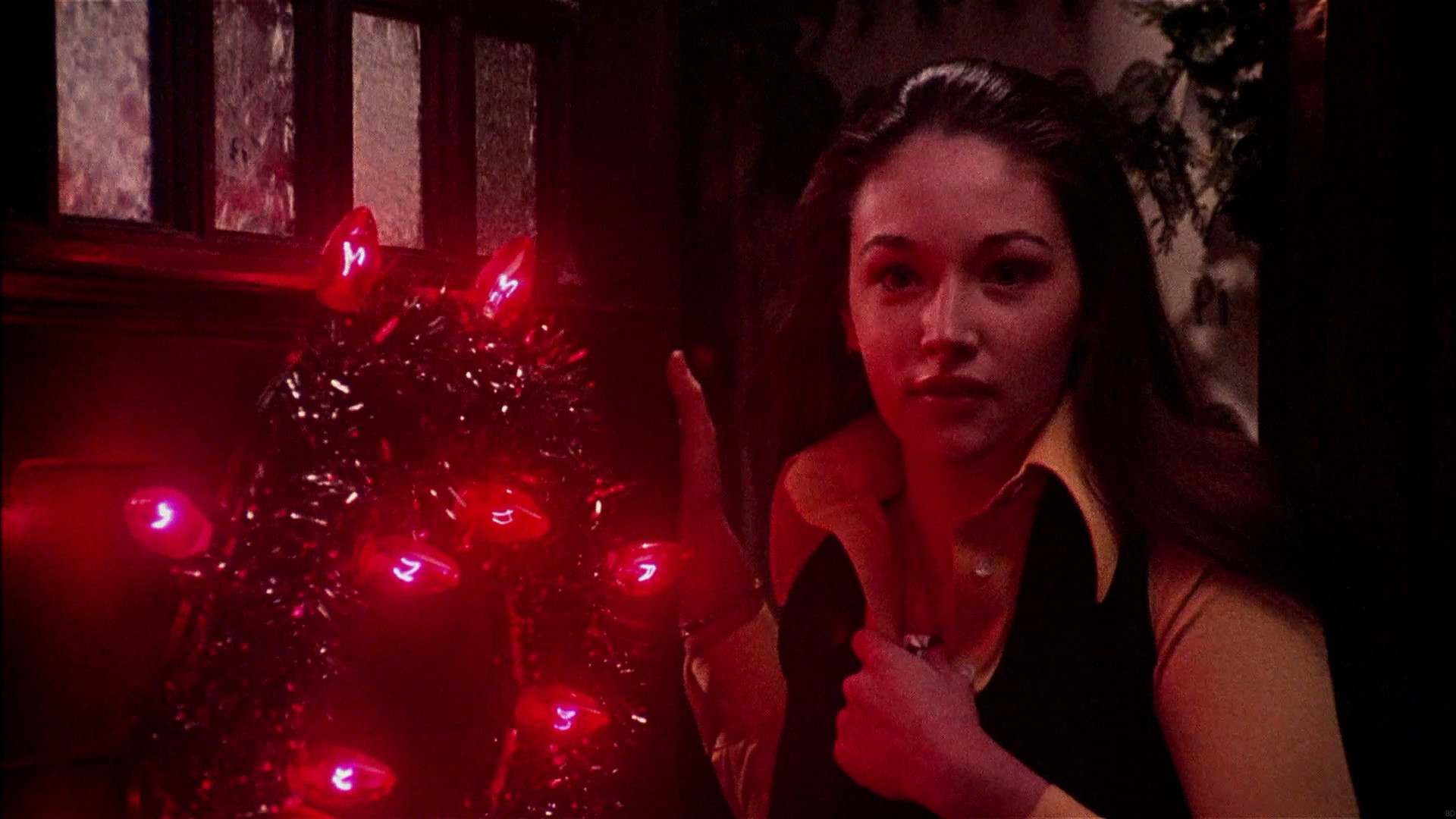
Besides its influence on slashers, Clark’s feature was way ahead of its time because of Jess’ storyline. Like Barb, she maintains and defends her sense of agency. This is most apparent regarding her abortion storyline. She informs her boyfriend Peter (Keir Dullea) that she’s pregnant but plans to seek an abortion. Peter, who studies to become a concert pianist, freaks out and demands she keep the kid. At one point, he tells her he’s going to quit school and marry her. Of course, he thinks she should drop all her plans, too. In response, Jess maintains her resolve that she’s not getting married, she plans to finish school, and she’s moving forward with the abortion.

Though Peter doesn’t kill anyone, he’s the film’s other antagonist, a threat against Jess’ agency and dreams. His response to her decision is both childish and downright unnerving. He accuses her of being selfish and complains he hasn’t been consulted regarding the abortion. It’s no surprise that Clark uses Peter as a red herring for the killer. At one point, he smashes his piano and lurks around the sorority house. He’s a menace.

Fifty years later, Black Christmas remains as effective and timely as ever. Clark and writer Roy Moore crafted fully realized female characters, especially Jess and Barb, that do their best to defend against attacks on what should be a safe female space. It goes without saying that in a post-Dobbs era, the film feels all too relevant.

Black Christmas is currently streaming for free on Tubi and Crackle. It’s also available on Peacock, Shudder, and Prime Video.

7 Favorite Christmas Horror Movies

Now that Thanksgiving has come and gone, the holiday songs have started playing in every store. While some folks enjoy traditional Christmas movies, such as Home Alone or It’s a Wonderful Life, the horror community has a slew of films to pick from to watch this holiday season. In fact, holiday horror has really become its own subgenre. If you’re looking for something spooky to watch this season, here are my personal favorites.

Gremlins

Director Joe Dante’s 1984 monster movie Gremlins is a classic. Yes, the mogwai known as Gizmo is hella cute, especially in one scene where he sports a Santa hat and plays the keyboard in Billy’s (Zach Galligan) bedroom. Gizmo even purrs, sings, and makes all sorts of cuddly noises. However, if the rules are broken (don’t feed him after midnight, don’t get him wet, avoid bright lights) then the little adorable fuzzball spawns the vicious Gremlins.

Gremlins is really the perfect gateway horror movie for kids. It’s not too scary, but it’s still a top-notch creature feature from one of America’s best contemporary horror directors. Oh, and who can forget that scene where Phoebe Cates’ Kate tells Billy all about the worst thing that ever happened to her at Christmas. In case there’s actually someone out there who hasn’t seen Gremlins, I don’t want to spoil Cates’ monologue, but it’s a doozie.

Silent Night, Deadly Night

While Gremlins was a box office hit in 1984, Silent Night, Deadly Night was not. Released by Tri-Star Pictures, it was yanked from theaters about a week after its release because of controversy. In particular, the religious right threw a hissy fit about the promotional material, in particular the poster of a killer Santa in the chimney, holding an axe. And well, generally, they simply didn’t like Chris Kringle depicted as a murderer

Controversy aside, Silent Night, Deadly Night is a fun slasher that follows Billy Chapman (Robert Brian Wilson). Traumatized by his parents’ murder on Christmas Eve, and then tormented by sadistic nuns in an orphanage, little Billy grows up to embark on a yuletide rampage as a deadly Santa.

Terrifier 3

Writer/director Damien Leone’s Terrifier 3 just may be the most popular horror movie of 2024. Art the Clown is everywhere. He’s even a Spirit Halloween animatronic. In the third installment, Art returns to once again terrorize his arch nemesis, the stellar Final Girl Sienna, played by modern day scream queen Lauren LaVera. Some time has passed since the horrific events of the second movie, and Sienna isn’t doing too well, suffering from PTSD. Yet, she finds the strength to go toe to toe with the maniacal demon clown yet again.

This film has so many gruesome scenes, from the opening to a sequence involving a chainsaw, to an encounter Art has with a Santa in a bar. Meanwhile, Sienna has one hell of a Final Girl sequence in the last act. Art gives Billy from Silent Night, Deadly Night a real run for his money in terms of killer Santas.

Rare Exports

The Finnish movie Rare Exports is all sorts of wonderfully strange. A young boy named Pietari (Onni Tommila) and his friend Juuso (Ilmari Järvenpää) believe that a secret mountain drilling project near their home uncovered the tomb of Santa. However, this isn’t a Jolly ‘Ol St. Nick they encounter. Instead, it’s an evil, monstrous Santa.

Meanwhile, when Pietari’s father (Jorma Tommila) captures a feral old man (Peeter Jakobi) in his wolf trap, the man may hold the key to why reindeer are being slaughtered and children are disappearing. If you’re looking for something a little different this holiday season, give Rare Exports a chance.

Anna and the Apocalypse

Every Thanksgiving night, after we’re done visiting family, and loaded up on way too many carbs, my wife and I watch Anna and the Apocalypse as a way to start the holiday season. Imagine if the cast of
“Glee” starred in a zombie movie at Christmas time. Well, that’s Anna and the Apocalypse.

No, this movie isn’t for everyone. That said, the Scottish film has a lot of heart, great storytelling, and one kickass final girl in Ella Hunt’s Anna. The songs serve to push the narrative forward and also underscore some of the movie’s themes. Trust me, you haven’t seen a zombie movie like this. If you do give this a chance, be warned that songs like “Turning My Life Around” and “Hollywood Ending” will likely get stuck in your head.

Christmas Evil

Yes, here’s another killer Santa Clause movie. Christmas Evil, set in suburban NJ, is wonderfully weird. Directed by Lewis Jackson, it stars Brandon Maggart as Harry. Tired of everyone’s cynicism and berated and belittled at his toy factory job, Harry turns into a vengeful Santa. Over the years, the film gained a cult following, much like Silent Night, Deadly Night. It also faced controversy and was seized as part of the Video Nasty period in the UK in the 1980s.

Oh, and did I mention that Harry spies on children to see if they’re being naughty and nice? He also watched his mom get sexually groped by his father, dressed up as Santa, when he was a kid. Yet, this is also the story about a fed-up worker more than anything else.

Black Christmas

Not only is Bob Clark’s Canadian film Black Christmas an iconic holiday movie, but it’s an incredibly important slasher film, specifically one of the biggest influences on John Carpenter’s Halloween because of the killer’s first person POV shots. A group of sorority women are terrorized by a killer named Billy. He continually calls them and makes obscene phone calls. Then, the murders start.

This film has a heck of a cast too, especially Margot Kidder as the foul-mouthed Barb and Olivia Hussey as Final Girl Jess. Horror fans will also recognize John Saxon as Lt. Fuller. Saxon would later play Nancy’s dad in Nightmare on Elm Street and Nightmare on Elm Street 3: Dream Warriors. Nearly a decade after Black Christmas, Clark would go on to direct another seasonal staple, A Christmas Story. Both films certainly have doses of dark humor.

Black Christmas was also quite progressive for its time because of the abortion storyline that impacts Jess. She’s determined to make her own decisions about her body, despite the crazed reactions from her overbearing boyfriend, Peter (Keir Dullea). In terms of subject matter, slasher tropes, and tone, Black Christmas was way ahead of its time and one of the major influences on the genre. Skip the two remakes. Watch the OG. It’s a must-see.

Cue the Remakes

I desperately wanted Mike Flanagan’s adaptation of Doctor Sleep to do well, not only because it’s a good movie, it is (read my review of it over at Signal Horizon), but because its box office success could have meant that big studios like Warner Brothers would take a chance on fresh, character-driven horror films. Its opening weekend earlier this month grossed about $14 million dollars, which is not terrible, but certainly below expectations when you consider all of the marketing that was pumped into the film. On the other hand, when you compare Doctor Sleep’s opening to that of Halloween 2018, which grossed about $78 billion during its opening weekend, it’s likely that big studios are going to support more remakes and reboots of well-known franchises. Recent news stories over the last few weeks confirm this.

I can only speculate why Doctor Sleep is not drawing more people to the theater. It has a stellar performance by Ewan McGregor as a grown-up Danny Torrance, battling demons and struggling to not repeat the sins of his alcoholic, abusive father. Rebecca Ferguson commands every scene she’s in as the terrifying vampire Rose the Hat. Still, even though it’s a sequel to The Shining, and even though Stephen King is undergoing yet another renaissance right now, Doctor Sleep doesn’t have a franchise icon associated with it as recognizable as Michael Myers. The Overlook Hotel is in the film but only in the final act. Maybe Warner Brothers should have released the film during October or even late September, instead of waiting until Nov. 8.

One thing is certain, though, we vote with our dollars, and as Halloween 2018 has proved, if a studio realizes a reboot or sequel makes money, they will continue making more of them. Halloween 2018 is getting two more sequels, Halloween Kills and Halloween Ends, to be released in October 2020 and October 2021.

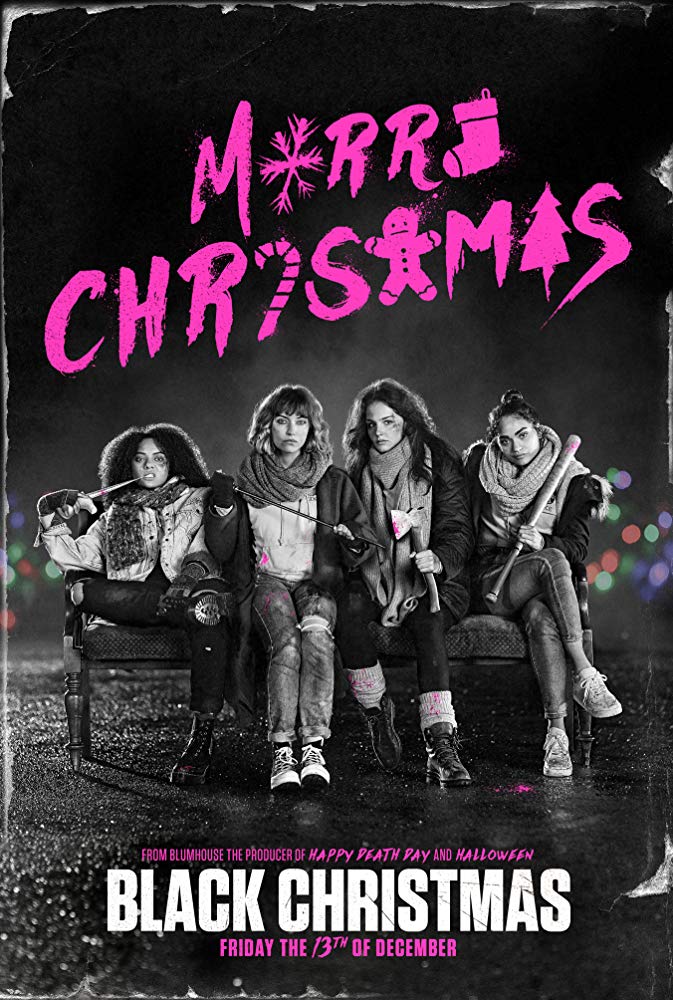
Meanwhile, a slasher film that heavily influenced John Carpenter’s Halloween, 1974’s Black Christmas, is getting a reboot set to open on Friday, Dec. 13. I assume that its studio, Blumhouse, which helped produce Halloween 2018 in partnership with Universal, suspects there are dollars to be made rehashing some of these well-known slasher films. Judging from a recent TV spot (see below), this very much looks like a film for the “woke” era.

In the TV spot, you see a group of sorority women fending off a black-robed, masked killer, and in one scene, a character who appears to be the head of a fraternity questions one of the women about power. My real question about this film is why now? The film was already remade in 2006 and was panned, especially by the horror community. There are several more interesting films that have come out in the last few years that deal with female power, be it The Witch, The Nightingale, or Revenge. Why doesn’t Blumhouse and Universal invest their dollars into an original script? Furthermore, for its time, Black Christmas was innovative. It featured a killer inside of the house, which was one of the most terrifying twists in horror history. It established the killer’s POV shot, which was used by Carpenter and others, and it generally had strong, forceful women who drank, smoke, cursed, and generally held their own. What new is a remake going to add?

Shortly after the release of Black Christmas, Universal/Blumhouse is set to relaunch the classic Universal Monsters in hopes of establishing a Dark Universe (yet again). The remake of The Invisible Man is set to drop in February. See below.

Now, I will admit this remake looks much more interesting than Black Christmas, especially because of Elisabeth Moss’performance and the theme of abuse that is so evident in the trailer,especially when Moss’ character says, “He said that wherever I went, he would find me.”  That said, this film looks like it has little in common with H.G. Wells’ novel and James Whale’s classic 1934 adaptation. The Invisible Man looks like a totally different character in this, not a mad scientist. The name was kept, most likely, in hopes that it will attract viewers and make money, thus creating a Dark Universe that Universal has wanted and has so far failed to launch after the remake of The Mummy totally bombed.

These remakes/reboots by Universal/Blumhouse aren’t the only ones on the horizon. It was reported recently that there is going to be another Scream movie that operates within the universe Wes Craven established. Speaking of Wes Craven, his estate is apparently listening to pitches for a new Nightmare on Elm Street. You can’t blame these studios for moving forward with these projects after they saw the immense amount of money that Halloween 2018 grossed. With all of that said, there are plenty of young, innovative directors out there doing great things, like Robert Eggers, Jordan Peele, Jennifer Kent, and Coralie Fargeat, and thanks to streaming services like Shudder, horror is now an international market.

Still, though, I’m upset that Doctor Sleep isn’t making more money at the box office. It’s poor showing is going to encourage studios to keep making remake after remake. Meanwhile, unique stories won’t be seen by as wide of an audience and a good script may get passed over. We vote with our dollars, and when an interesting horror movie comes along, we need to support it, see it, and talk about it.


For your holiday viewing pleasure


If you’re looking for a horror movie to watch during this holiday season, then let me recommend Black Christmas (1974), one of the most overlooked slasher movies that preceded Halloween but established a lot of the techniques that John Carpenter used in his much-acclaimed film.

The premise of Black Christmas is quite simple. Directed by Bob Clark, the Canadian horror flick focuses on a group of sorority sisters who are a tormented by anonymous phone calls that put them on edge when all they want to do is make plans for their holiday break. The film is loosely based on the urban legend of a killer who torments a babysitter and tells her to “check on the children,” and it is based on murders that occurred in Montreal.

So what makes Black Christmas different than other slasher films? For one, it predates the slasher wave that started in the late 1970s and peaked in the 1980s. It is generally a more innovative and unsettling film compared to all of the Friday the 13th, Nightmare on Elm Street, and Halloween sequels, too. Black Christmas is a film heavy on atmosphere, from the location of the house to the squeal of violins in the soundtrack. The sorority sisters are picked off one by one, but the gore is never gratuitous. More unsettling than the deaths are the unnerving phone calls that follow.

The film also established the technique of creating a point of view from the killer’s perspective, which has been used countless times since, most notably in John Carpenter’s Halloween, which opens with a shot from a young Michael Myers’ POV, as he is about to murder his older sister, Judith. Carpenter uses this technique several times throughout the film, as Michael stalks Laurie Strode (Jaimee Lee Curtis) and her friends.

If you’re looking for a horror movie this holiday season, then check out Black Christmas. The film still holds up well and is generally creepy, especially its conclusion. It plays on the worst fears of every babysitter, and it is a lot more original than the nauseating slasher wave that followed.

If you have any Christmas horror movie recommendations, feel free to share!