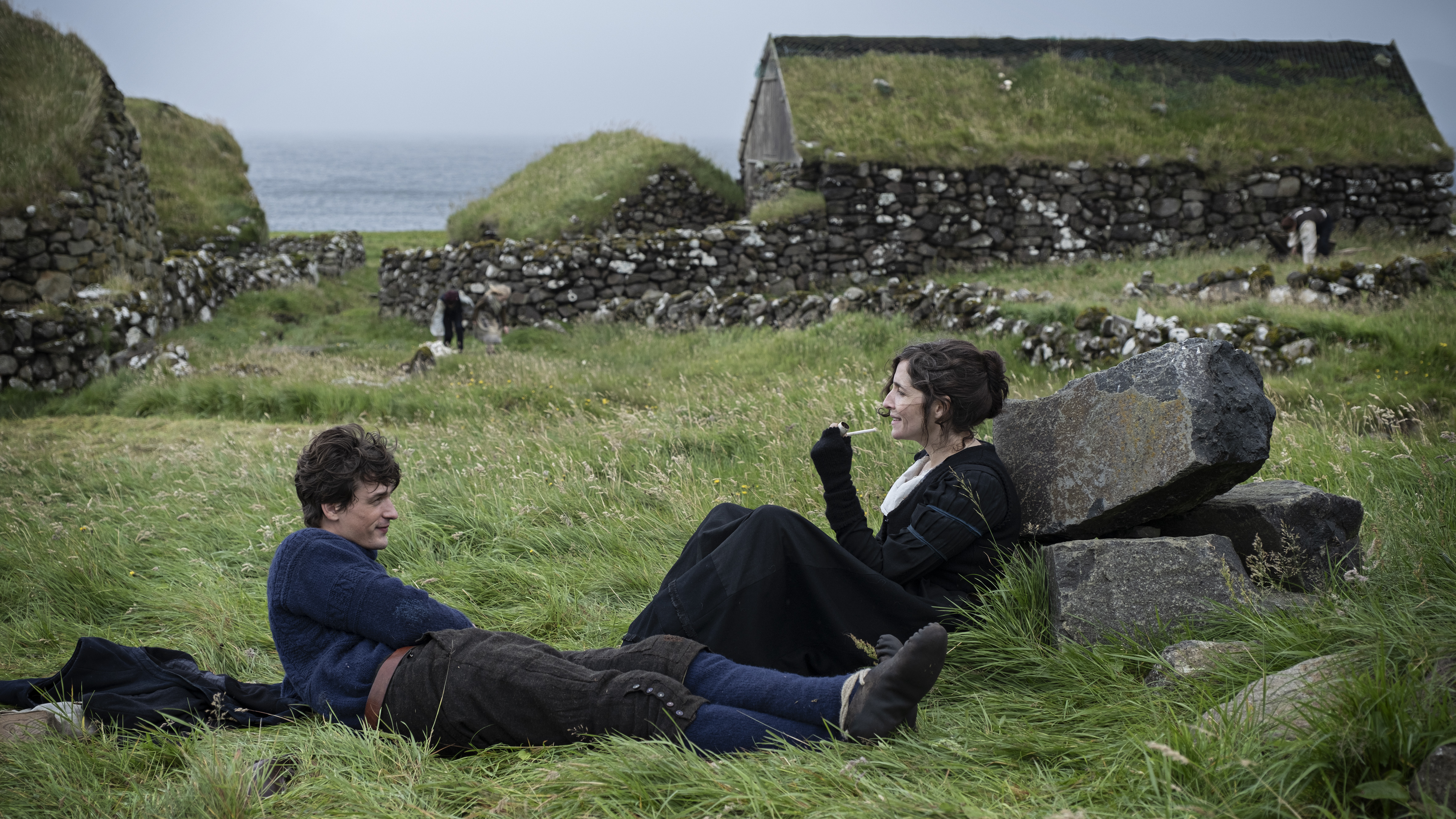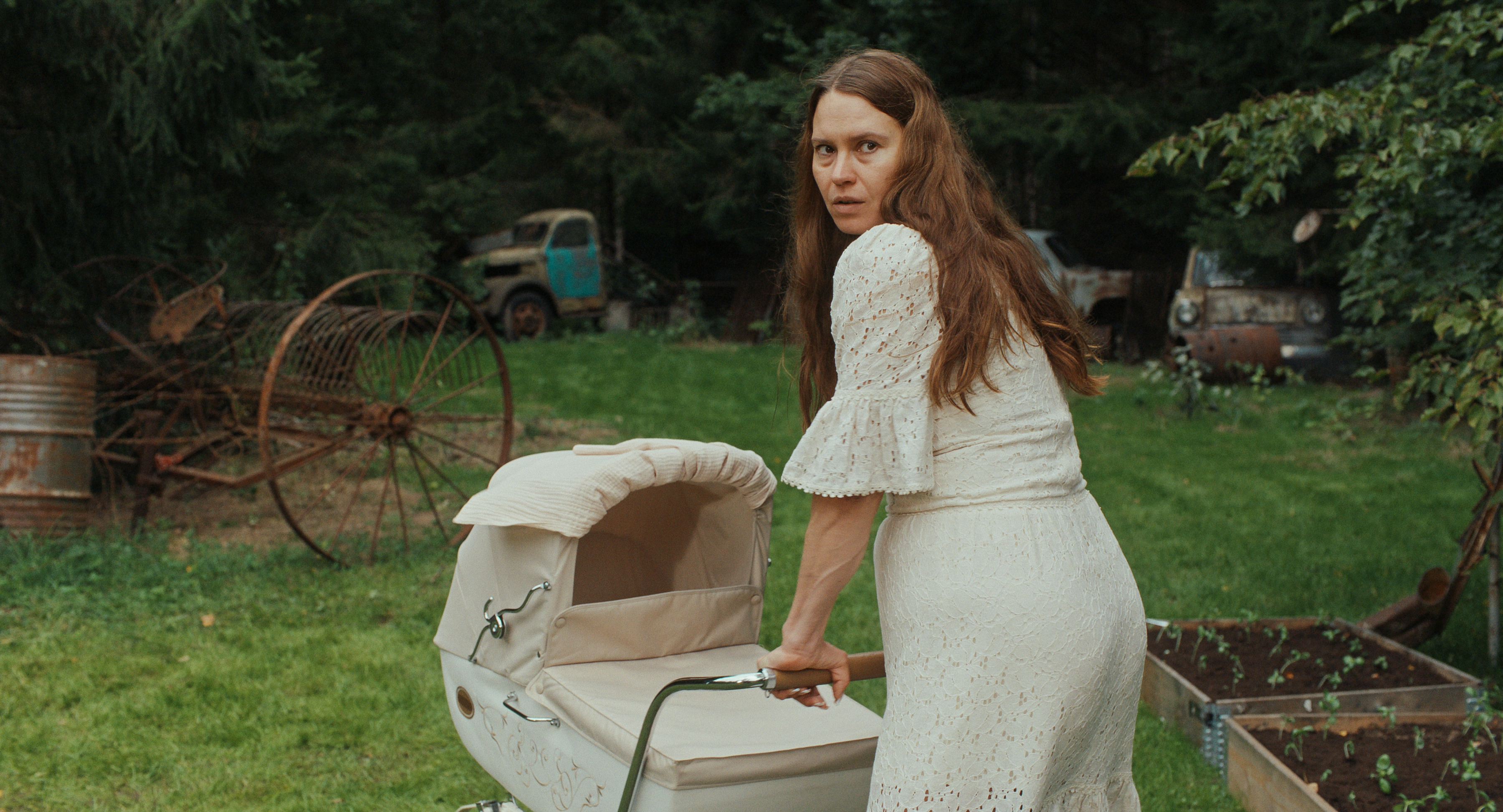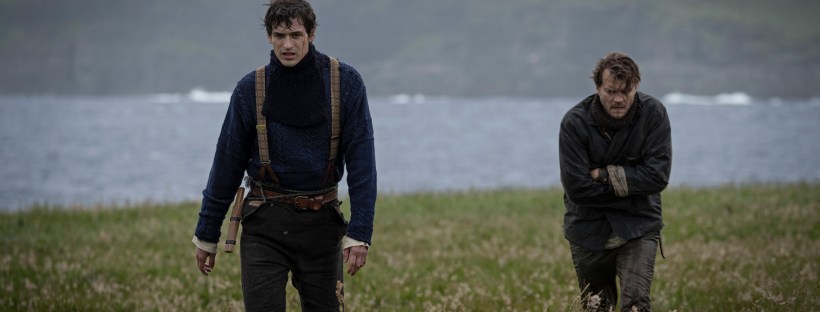
An image of Rubert Grint as Jon and Seidi Haarla as Saga in the horror movie Nightborn.

Interview: Writer/director Hanna Bergholm on her new film Nightborn and the horrors of parenthood

Recently, I just wrapped up another year covering the Fantasia Film Festival, and I’m grateful for such an opportunity. One of my favorite films out of this year’s fest was Nightborn, starring Seidi Haarla and Rupert Grint, who play Saga and Jon, a married couple whose baby isn’t quite…right. It’s born with excessive hair, constantly growls, and devours raw meat.

This is writer/director Hanna Bergholm’s second film, and like her first feature, Hatching, Nightborn tackles the horrors and anxieties pertaining to parenthood, only this time, it focuses on the mother’s point-of-view. I had the chance to interview Bergholm for The Horror Lounge, and I included some of that interview here.

The Horror Lounge: In both Hatching and Nightborn, motherhood is such a central theme. Can you talk about how that concept has influenced your work so far?

Hanna Bergholm: I think this kind of mother and child relationship is very interesting. You can take several stories from it because it’s the first relationship we have and a profound relationship. Hatching was told from the child’s point of view, and you can say the mother is kind of a villain in that film. With Nightborn, I wanted to tell the mother’s point of view, so that’s where it started from.

The Horror Lounge: Seidi Haarla, as Saga, undergoes quite an arc in Nightborn. Can you talk about her arc and also comment on your experience working with her?

Hanna Bergholm: I was so happy to have her in this film. She’s so good at portraying sensitivity and strength at the same time. I felt like she understood the role so well. When she first read the script, she told me thank you for being seen and heard. She also felt like these emotions are relatable, not that the character is her, but that she could relate to Saga’s emotions.

When Rupert Grint came on board, we had about ten days of rehearsals in Finland. We had a wonderful dance choreographer who choregraphed a dance for the film. Both of the actors had to get physical in the roles and get close to each other. I wanted to have this kind of physicality.

The Horror Lounge: Rupert Grint’s Jon also undergoes quite a character arc. What was it like working with him?

Hanna Bergholm: First of all, working with him was really a joy. He’s so professional and so nice and polite. It was fun to work with him. His character, Jon, is a person, from his point of view, who feels like his wife is having a very hard time and maybe losing her mind. He’s just trying to keep up the normality of the family while trying to help her. I don’t think he does anything wrong but tries his best to support his wife.

From Saga’s point of view, whatever nice and supportive things that her husband is going to do always comes out somehow in the wrong way. You might say that all of the characters mean well. Every time someone is speaking, they are kind of right in what they’re saying, but they misunderstand each other and insult each other, which sometimes happens in life.

The Horror Lounge: To that point, Saga’s mother tells her to focus on her own well-being and don’t just focus on the child and motherhood. Can you address that relationship, too?

Hanna Bergholm: Saga’s mother is the grandmother for the child, and you might think that everything she says sounds rude. I think she’s right in what she’s saying, but maybe Saga, her daughter, wants her to be softer and more maternal in a traditional sense. I also wanted to portray the taboos of being a grandmother. As a grandmother, you’re supposed to be soft and loving towards your grandchild, but what if you’re not? This film is very much about how to accept other people when they’re not what you hoped they’d be.

The Horror Lounge: Can you address some of the film’s folk horror elements and the role of nature?

Hanna Bergholm: I wanted to use some of the old Finnish folklore about creatures waiting in the forest, which were kind of old wisdom about us being part of the forest but a warning about not getting lost in the forest because there could be something scary in there.

Because this story is about a couple facing something unknown, I wanted to use this old mythology about scary creatures living in a forest.

There’s a house in the middle of the forest. The actual house is a façade that we built for the film. I wanted this film to have a style of its own, so it’s not a particular architectural era. That’s why we built the house. You might think the house resembles Saga and Jon’s relationship, how they try to fix it, but it just keeps on rotting. Saga really decorated the nursery as the ideal time she’d have with her child, complete with a beautiful looking rocking horse and porcelain dolls. I don’t even know how a baby can play with porcelain dolls. [Laughs]. It was so perfect and so beautiful that it wouldn’t even be possible to play there.

Nightborn is now streaming on Shudder.

Nina Kiri as Evy in the new horror film The Undertone

Interview: The Undertone Director Ian Tuason & Star Nina Kiri (Fantasia 2025)

I’ve probably watched at least 15 movies from this year’s Fantasia’s Film Festival, and The Undertone just may be my favorite. Nina Kiri plays podcaster Evy, who self-medicates to deal with daily stresses, including caring for her ailing mother. Evy and her podcast partner listen to 10 audio files that follow the haunting/possession of Mike and Jessa. The film is a true auditory nightmare with a heck of a performance by Kiri. This feature has the creepiest sound design that I’ve heard in a long time, and the film draws inspiration from the likes of Paranormal Activity and The Exorcist.

As part of my festival coverage for HorrorBuzz, I interviewed the writer/director, Ian Tuason, and Kiri. You can read the full interview here. I also included some of it below. I also reviewed the film, which you can read here.

Can you talk a bit about the experience of shooting this film, since so much of it relies on the audio and sound design and Evy’s reactions to those factors? 

Nina Kiri: During the first week, we did most of the podcast stuff and the entire length that’s part of the podcast. We did it in chronological order, which was really helpful. She [Evy] slowly starts to descend and unravel, and it was helpful to do that in chronological order, to be honest. Once that was over and a lot of the dialogue was over, I felt more relaxed. I could live in the scenes more.

Michele came the second week. I think that was really nice for everyone. It brought a new energy that was so much more than what we expected. It didn’t really feel like acting on my own because the person playing Justin [Evy’s podcast co-host] wasn’t yet cast, but someone was on location, in a different room, speaking to me live for every take. It really didn’t feel like I shot the movie on my own and didn’t have any scene partners.

Regarding the audio recordings, I didn’t hear them until the day we shot the scenes. That created an organic response. I never felt alone in the parts where it’s just me, which is a lot of the movie.

Ian Tuason: I didn’t really direct Nina specifically about what to do when she’s listening or even speaking to Justin. She could be looking at anything.

Nina Kiri: It starts nonchalant, with the first audio file, but then it gets creepier and creepier. There’s a weight to it that felt more specific. Instead of just looking around, there’s a lot more concentration. She has to hear things correctly because she’s not sure what’s going on. I think keeping things small until it merits being bigger was a really good choice. I remember thinking that so much of this movie is listening. I don’t want to act while listening. I don’t want to try to make it interesting at all. I want to do what feels right. Then there are moments I realized, while watching it, where it becomes a bigger performance and it really pays off. There’s a lot of stillness, and I think there’s a lot of fear around stillness. But with everything else going on in the movie, it’s enough to be authentically listening.

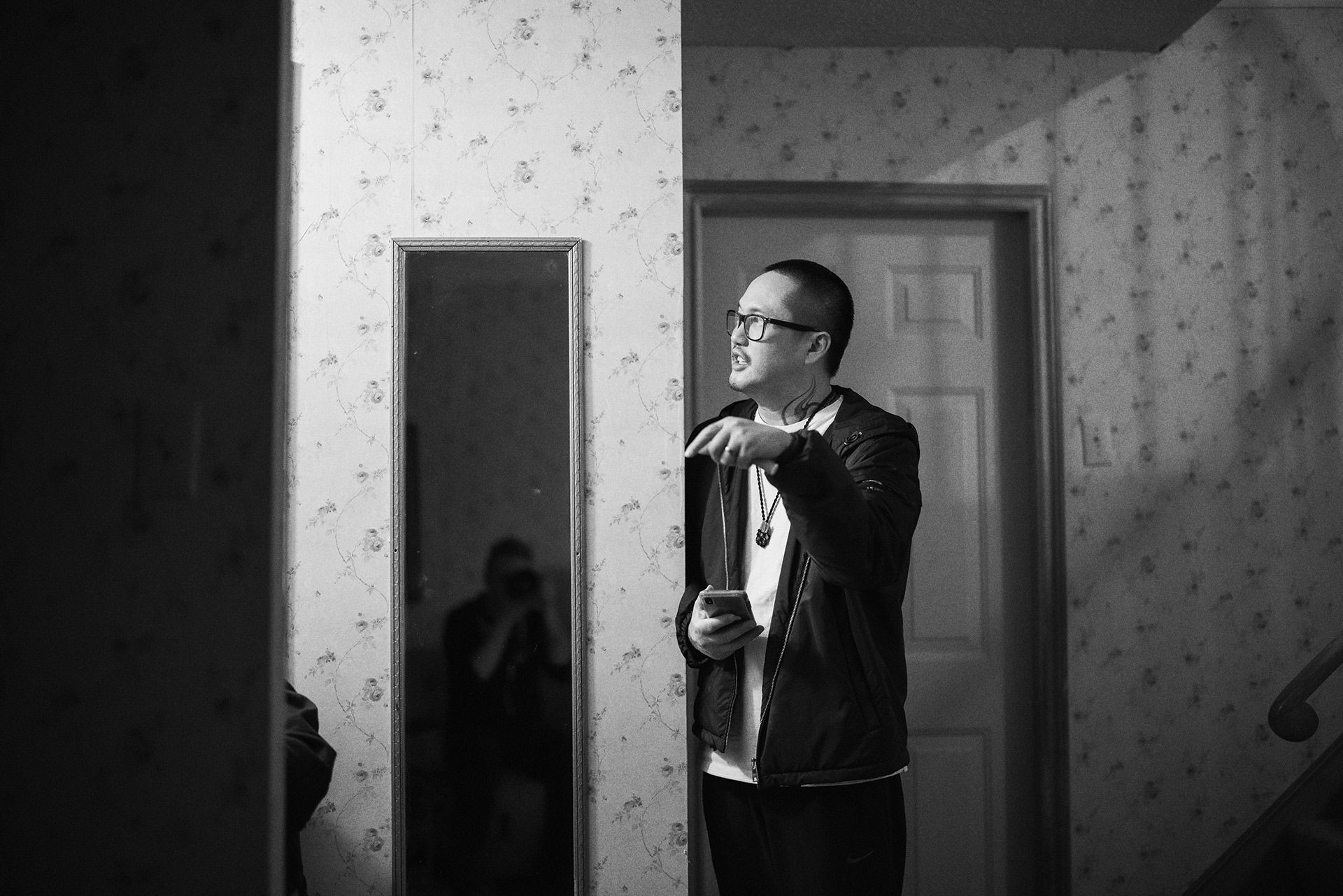
A picture of director Ian Tuason on the set of his new film, The Undertone

Talk about the eerie narrative regarding the audio files and the characters of Jessa and Mike. Where did that idea come from, and Nina, what was your experience like hearing those audio files for the first time?

Ian Tuason: Three films creep me out. The Exorcist is number one. Number two is The Blair Witch Project, and number three is Paranormal ActivityParanormal Activity is what the audio files are. It’s the couple in bed. They’re recording themselves asleep, and that scared me.

Undertone started off as a radio play, something that I was going to publish as a narrative podcast. Then, all of a sudden, life events happened, and I became the caregiver to my parents. I had this script written already for the podcast, and I thought it would be perfect to make into a film. Then, I added my first favorite film, The Exorcist, in between recordings of the podcast. I feel like I combined my two favorite horror genres, which are possession and found footage, except, in this case, it’s found audio, not found footage. That’s why I think people are going to get creeped out. I think everyone will be scared when they watch this movie.

Nina Kiri: It was basically kind of what I said before. It allowed me to have the experience. Because so much of it is me listening and because listening doesn’t have to involve movement or performance, hearing them for the first time felt like a genuine reaction and not put on in any way. It kind of took my brain away from having to think about being compelling or interesting. I was really listening, and they’re so good. Those recordings are incredible. I don’t think there’s much acting involved when you hear something that good. It always makes me feel better as an actor knowing that the director is trying to help me and support me by helping my performance be genuine.

Ian, can you address the film’s incorporation of folklore and the female demon Abyzou?

Ian Tuason: It’s based on an actual demon from the Book of Solomon. I did some research because I wanted to do the same thing that The Exorcist did regarding an ancient entity. When I was writing the story and needed to find a female demon, and one that threatens pregnant women, I found that one. I used it, and then weird stuff started happening in my house. But I saged my house, and it’s fine now.