Horror Movie Recommendations (Netflix Streaming)

Since October is already halfway over, I wanted to share my recommendations for horror movies streaming on Netflix. It took me a while to put this list together, but I feel confident that these are my favorites.

It Follows (2015) This is one of my favorite horror films of the last few years. One the one hand, this movie is a major tribute to 1970s horror flicks like David Cronenberg’s Shivers, especially visually, but the story rewrites the classic trope of teenage sexuality/fear of teenage sexuality and creates a truly terrifying monster that passes on from person to person through sex. It also employs the most haunting use of T.S. Eliot’s “The Love Song of J. Alfred Prufrock” that I’ve ever seen on screen. It must be said that A24 Studios is currently producing some of the most arresting American horror films. Pay attention to what they do.

Hush (2016) Directed by Mike Flannigan, this film does something unique with the home invasion and slasher tropes. The film centers around Maddie (Kate Siegel), a deaf mute who has to protect herself against a masked home invader. The use of sound in this film is especially nail-biting.

Raw (2016). This French film, directed by Julia Ducournau, is my favorite horror film of last year. It has a lot working for it: well-developed characters, strong visuals, unnerving scenes, and oh, cannibalism.

Creep (2014) This low-budget horror flick, directed by Patrick Brice, only features two characters: Josef (Mark Duplass) and Aaron (Patrick Brice). The film is haunting for the ways that it explores loneliness, social interaction, and what can happen when we respond to a Craigs List posting.

The Babadook (2014) What can I say that hasn’t already been said about this film? Memorable horror literature and films stand as allegories for our deepest anxieties, and I can think of few films in recent memory that explore the anxieties of child-rearing and motherhood as well as The Babadook.

Honeymoon (2014). I LOVE this film! The first time I watched this, it left me unsettled for days, and because I consume so many horror films, it is VERY rare that a film does that to me. This is another low-budget indie film, one that centers around a newly married couple who slowly learn that there is a lot they don’t know about each other. This film has prefect pacing, chilling scenes, well-written dialogue, and engaging characters. Check it out.

Hellraiser (1987) I had to include one classic on the list, and unfortunately, Netflix doesn’t have a lot of classic horror stock. This is the best Hellraiser film. Based on Clive Barker’s novella, The Hellbound Heart, this is the only Hellraiser film that he wrote and directed, and it maintains his exploration of sex, violence, pain, and pleasure that can be found in the novella. Pinhead and his merry crew of Cenobites are only in this for about the last 20 minutes, but the payoff is worth it. The humans are far more monstrous in this film, anyways.
It Follows and Suburban Fears of the Other

I’m straying a little bit from the usual poet-oriented posts to offer some criticism on the horror film It Follows, one of the best horror films I’ve seen in a few years. If you’ve seen the film, I hope that you enjoy this read.

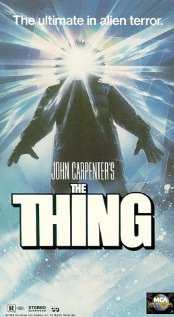
John Carpenter, director of the original Halloween, The Thing, and other iconic horror movies, states in the documentary American Nightmares in Red, White, and Blue that American horror movies are very much about our fear of “the other,” something or someone different that will threaten our tribe. His own movies very much deal with this theme. In his remake of the The Thing, the monster is a shape shifter/parasite/alien that infects a group of scientists working in Alaska. In Halloween, Michael Myers terrorizes a quiet, sleepy suburban Illinois town and picks off teenagers one by one.

It Follows is very much a movie that plays with the trope that Carpenter mentioned, fears of “the other,” and like Halloween, it raises questions about where the other comes from. The opening shot establishes the setting and resembles some of the early shots in Halloween in that we see big houses and tree-lined streets, thus establishing the setting of what should be a safe suburban town. However, in both films that sense of security that suburbia should provide, specifically keeping bad things out, is shattered. In the opening scene of Halloween, the initial camera sequence is from Michael Myers’s point of view, as he roams through the rooms of his house, picks up a butcher knife and kills his sister as she’s having sex. In those first few moments of the film, however, the viewer has no idea that the killer is a child, a young Michael Myers, until a few shots later, when the camera angle shifts to third person, and we see him standing on the lawn, dressed in a clown costume, holding a bloody knife. Terror doesn’t come from the outside, but rather, it comes from the inside. About 20-30 minutes into the film, once Michael Myers is grown up and escapes from a mental hospital, he returns to his hometown to kill off teenagers.

After the opening shot of tree-lined streets and nice houses in It Follows, the viewer then sees a teenager, Annie, run out of her house, screaming, before she drives to a beach,where she leaves a panicked message for her father.  As the film progresses and moves towards the opening shot, we learn the source of her terror.

Early in the film, the protagonist, Jay, has sex in  a car with a boy older than her. He goes by the name of Hugh, but viewers later learn that his real name is Jeff. At first, little is known about him, but it can be assumes that he’s from the rougher side of the tracks, since he tells Jay that he doesn’t want to go back to his place because he doesn’t want to show her where he lives. After they have sex, he tells her that he passed on something to her, which he inherited from his last sexual partner. He then tells her that this thing can come in any form and can be someone she knows or someone she doesn’t know, but if it touches her, she’ll die.

During the rest of the film, Jay spends her time fleeing this creature in various forms, a creature that only she can see. She and her friends also visit Detroit, and in one scene, the friends chat about how their parents always told them to stay away from the city and stay in the suburbs. During their attempts to locate Jeff in the city, the viewer sees shots of bombed out buildings, which reinforces the idea of “the other,” that everything bad came from the city, including the man that Jay encountered and the sexual partner who passed down the evil to him.

However, the friends eventually learn that Jeff was not from the city, but rather, he attended high school in the suburbs, and they find him hiding out at his parents’s safe suburban home. He faked his name, though, and rented a house in the city to lure in a young woman and pass down the evil. His true identity is important, however, because it shows that the real terror lurks in the suburbs, not in the inner-city. It didn’t come from outside, but rather from within.

In this regard, the nameless, shape-shifting villain in It Follows is similar to other iconic horror movie villains, including Michael Myers, a boy from the suburbs, who, for seemingly no reason, kills his sister as a boy and returns to his hometown to commit additional murders. The evil is similar to Freddy Kreuger, a child molester who was burned to death by the townspeople and then returns as a supernatural entity to kill, in dreams, the children of the suburban parents who burned him alive. Even in Poltergeist, the evil does not come from outside, but from within. A family moves into a home in a development, and are terrorized by poltergeists. About mid-way through the film, the father learns that the development was built on an Indian burial ground, thus the cause of the haunting.

It Follows also gives a nod to another horror trope: sex and consequence. In the Friday the 13th movies, any teenagers who have sex are murdered by Jason. In American Dreams in Red, White, and Blue, Jason is even compared to a vicious, Old Testament kind of figure, eager to butcher anyone who strays from the straight and moral path. It is indeed significant that the creature in It Follows is passed down through sex. However, It Follows is a little more liberal in its treatment of teenage sex, or perhaps it lies somewhere in the middle of Friday the 13th and David Cronenberg’s 1970s film Shivers, which is about blood parasites that make their hosts hyper-sexual. There are some scenes of It Follows that resemble Shivers. In one of the final scenes, Jay and her friends hide out at a public, indoor pool. They hope to trap the creature in water and electrocute it, using lamps, TVs, and other appliances they lugged from their suburban homes. The pool itself and the colors in the shot, especially all of the yellow, resemble the closing scene in Shivers, when the creature/parasite infects the last person who doesn’t have it, and essentially, the film ends in an orgy, thus making a statement that sexual desires are impossible to avoid.

That scene in It Follows is different, however. Jay doesn’t succumb to the shape-shifting creature. Instead, she resists it, fights it, and flees from it yet again. Furthermore, throughout the film, Jay’s childhood friend, Paul, pleads with her to have sex with him to pass it on. She refuses, however, especially after she has sex with another character and the creature kills him. Ultimately, though, Jay does have sex with Paul, and the closing shot shows them walking down their suburban street, holding hands, while someone walks feet behind them. It’s not clear, however, if the person following them is the creature in yet another form, or someone normal. The viewer is left to guess.

It Follows makes a middle-ground statement regarding sex. Jay and Paul have sex and aren’t killed off Jason-style. Even Jeff doesn’t die, despite his confession that he contracted the evil after a one-night stand with a woman he met in the bar. However, it can be interpreted that only once Jay has sex that is meaningful, with someone who cares about her, is she safe. She survives and is no longer running by the closing shot.

In many ways, It Follows is about the old classic horror trope of the other. In the film, the other takes the shape of the inner-city creeping into the suburbs, an American fear that stems back to the great white flight of the 1950s and 1960s and has returned in the age of Occupy, a bankrupt Detroit, and class inequality/racial tensions. But the other also takes the shape of teenage sex. The creature literally stalks characters because it is passed down through sex. Yet, in the end, Jay has sex, and survives. So sex becomes less threatening.

There are other aspects of the film to note. Its music and even some of its set design/displays, such as the lamps, station wagons, and even a typewriter, resemble 1960s/1970s America, a time period that was iconic for American horror film. Yet, the film is supposed to be set in present day Detroit ‘burbs. There is a wonderful scene too, when Jay is sitting in a college classroom, listening to a professor read Eliot’s “The Love Song of J. Alfred Prufrock,” a poem all about “the cry of the occasion,” sex, the consequences of sex, and death. Prufrock ponders sex, women, and fears that he is getting old. Like “The Love Song of J. Alfred Prufrock,” It Follows is a film that analyzes the consequences of sex and how our past partners shape us and carry us to the present. We can’t run from it or avoid it. It follows.

Celebrating Halloween

Every October, I try to make the most of Halloween because it’s my favorite holiday. This weekend, I plan to purchase pumpkin ale and watch some horror movies on NetFlix that I have yet to see, including Lovely Molly and Insidious, both of which are contemporary films that have gotten positive reviews. If you are looking for horror movies to watch on Netflix, there are several to choose from. If you want something classic, Netflix offers a slew of Vincent Price films, including The Masque of Red Death, House on Haunted Hill, and others. They also have some of the universal monster horror movies, including The Creature from the Black Lagoon.

Out of all the horror options on Netflix, I recommend Masters of Horror, a series that features 45-minute films by several well-known horror directors, including John Carpenter, Joe Dante, Dario Argento, Tobe Hopper, and others. Both seasons are available for streaming. Check out “Cigarette Burns,” “Jennifer,” and “Imprint.” Those  were my favorite in the series.

If you want to watch something from the 1970s/1980s (the best era in American horror cinema, in my opinion), check out AMC’s 24-hour horror movie marathon that runs from now until Halloween. They’ll be playing The Exorcist, Friday the 13th, and a lot of the Halloween movies, as well as reruns of The Walking Dead, with a new episode to debut Sunday night.

If you want something spooky to read, check out this column in  Electric City. I mentioned in the column “cemetary Nights V” by Stephen Dobyns as a good read for this time of year, but I also recommend Charles Simic and Mark Strand as some other poets to check out. They have plenty of work with unsettling, eerie, deep images.

As we await for the Frankstorm to hit the East Coast, there’s plenty of movies to watch and books to read to celebrate Halloween.

They’re Coming to Get You, Barbara

When I was young, I used to watch horror movies with my father. I have memories of seeing Night of the Living Dead, Friday the 13th, Fire in the Sky, and other movies with him. Since then, I’ve always loved horror movies, specifically ones from the 1960s-1980s that offer at least some character development, interesting plot, and at times social/political commentary. As a writer, I also know how difficult it is to suspend reality and make the setting and situation work, no matter how outlandish the story may seem on paper.

Here’s an overview/commentary on some of my favorite horror movies.

George A. Romero’s Night of the Living Dead, Dawn of the Dead,  Day of the Dead, Land of the Dead

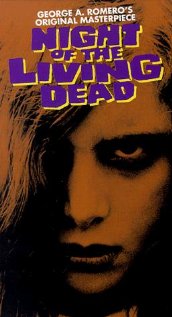
Zombies have been popular over the last few years. The high ratings of AMC’s show “The Walking Dead” prove that. But Romero’s brilliant zombie films started the trend and how we think of zombies on the big screen or TV. What separates Romero’s films from the rest, though, is his social commentary. You can view Dawn of the Dead as a statement against consumerism. The zombies do flock to the mall, after all, and wander around aimlessly. Day of the Dead warns against militarization, and one of his more recent films, Land of the Dead, highlights the growing gap between the wealthy and the poor in the U.S. My favorite, though, is still Night of the Living Dead. I love the 1968 black and white version, especially the beginning of the film where the young woman and her friend are in the graveyard and encounter a stumbling, groaning zombie. I still love the line, “They’re coming to get you, Barbara!”

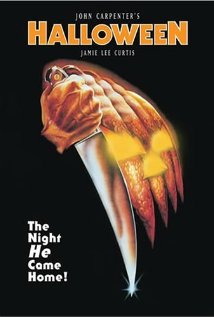
John Carpenter’s Halloween

This is the film I re-watch every October, and it still holds up. I love the scenes shot from Michael Myer’s point of view, as he stalks Laurie Strode (Jamie Lee Curtis) and her friends. I love the fact there is no rational  for why Michael does what he does, other than pure evil.  None of the sequels or remakes hold up to the original.

John Carpenter’s The Thing

I just re-watched this the other day for the first time in a few years. The setting and effects are still spectacular and eerie, especially as the paranoia overtakes each of the characters in the film as they question who or who isn’t the shape-shifting alien.

Poltergeist

I also re-watched this recently. The scene where Carol Anne speaks through the TV and the white noise gives me chills. What’s especially effective about this movie is the character development. We want the family to survive, and we grow fond of them as the movie progresses.

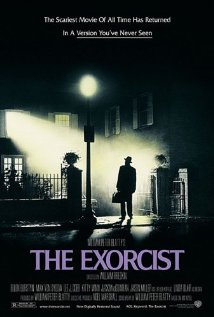
The Exorcist

This is the only horror movie that generally scared me. A lot of the scenes stick with you after you watch it,  even the notion that a 12-year-old girl can suddenly become possessed by a demon. There’s also a lot of good points about faith and doubt raised in this film. In the extended version, the scene where a possessed Linda Blair walks up and down the stairs like a spider makes my skin crawl.

These are just some of my favorite horror films. There aren’t too many recent ones I’ve enjoyed, as it seems many of them rely on high body counts and flat characters, as opposed to rich character development, an intriguing plot, and effects that aren’t overdone.

My girlfriend and I plan to watch a few of these and some other favorites during these days leading up to Halloween.