Interview: Fear Street: Prom Queen Writer/Director Matt Palmer

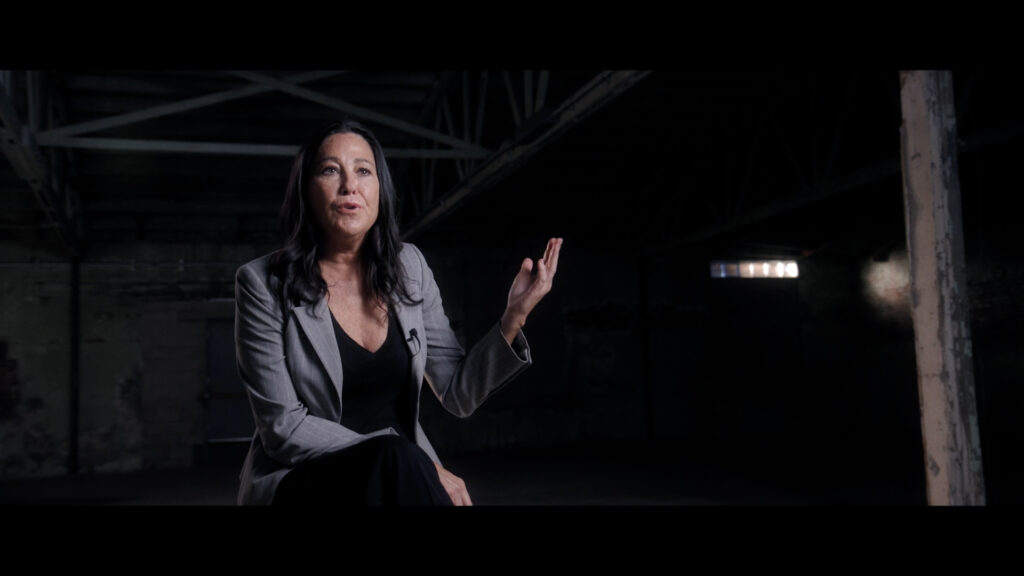
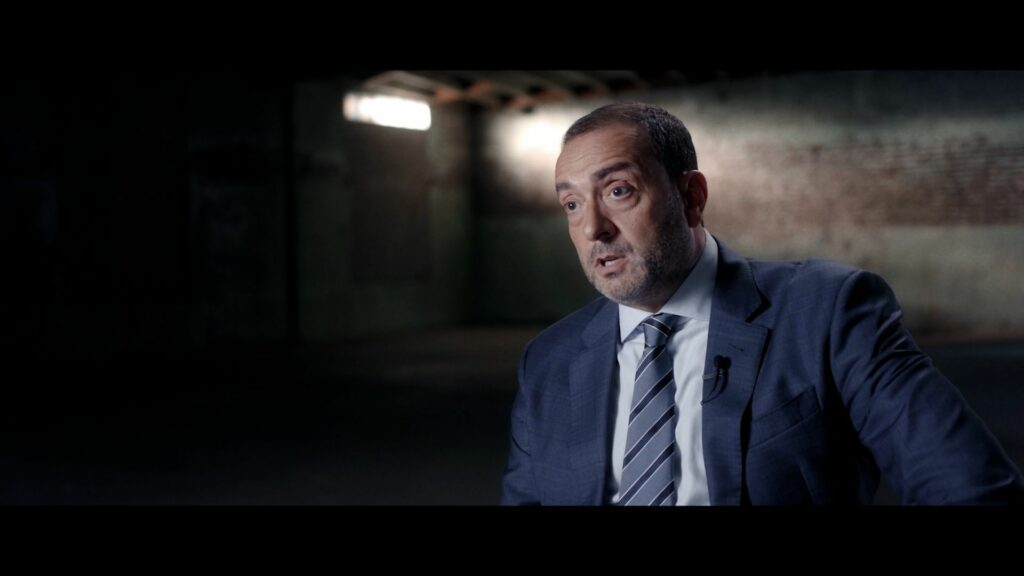
Recently, I chatted with Fear Street: Prom Queen writer/director Matt Palmer for 1428 Elm about inhabiting the world of R.L. Stine’s books and ’80s slashers. You can read the interview in full here, but I posted some of it below. Fear Street: Prom Queen just dropped on Netflix. Slasher fans should enjoy it.

What was it like to step into the world of R.L. Stine and the Fear Street series?

Matt Palmer: It was exciting. Full disclosure: I think Fear Street was bigger in America than in the U.K. I’ve heard of R.L. Stine and Goosebumps, but this was my introduction to Fear Street. It was jumping into the world of R.L. Stine, but also jumping back into the world of ’80s slashers. It was a combo of those things, which was an incredibly exciting prospect.

This film has some pretty grisly kills and a lot of gore. Did you face any pushback about the level of bloodshed, or did Netflix pretty much allow you to do what you wanted in terms of the gore and the kills?

Matt Palmer: I was waiting for pushback, and then I was very surprised. As much as possible, we did practical effects. There were a few things we couldn’t do only practically. I’m a big fan of the way that Gaspar Noé does practical effects but incorporates digital effects quite seamlessly. Actually, Netflix upped our VFX budget in post-production to enhance the gore and make it more extreme. It was a fantastic moment. Not only did they allow us to do this and not ask us to cut it, but they also asked us for more.

I think there’s been a bit of a sea change in horror over the last 12 months. I think people are pushing back against the PG-13 element of it. They’re ready to go the other way. I think the horror community might be in for quite exciting times. I think things are about to get bloody. [Laughs].

Which slashers served as inspiration for the film?

Matt Palmer: I like slashers generally. My favorites are the slightly more mental ones. I’m a big fan of PiecesHappy Birthday to Me and Sleepaway Camp. I’m also a big fan of Giallo movies and Argento in particular. I feel like the shadow of Tenebrae hangs quite long over this movie. I love how in an Argento movie, there’s a ritualistic quality when a kill is coming. I thought that when we had a kill coming, we had to bring it home as far as possible and really go to town on those scenes.

I’m also really proud that all of our kill scenes are quite distinct and have quite different tones, pacing, and rhythms. Hopefully, that keeps the audience on its toes.

In terms of the soundtrack, there are some familiar ’80s bangers in the film, including Billy Idol, The Eurythmics, Tiffany, and others. How much say did you have over the soundtrack?

Matt Palmer: Some of the tracks, like Eighth Wonder’s “I’m Not Scared,” were a key track for me. The pulsating quality of that really suggested to me that it had promise visually. The prom scenes should be seen through the young people at prom, but it’s also like an idealized image of that. I felt like “I’m Not Scared” has that throbbing, pulsing quality.

The one thing that did happen is that I picked a few tracks that were very personal to me. I was happy when they came on and were in the edit for a long time. But one of the producers is younger. She’d tell me that a track sounded kind of boring. That’s when the voices were helpful. It was exciting for me because I listened to those tracks when I was 13, but we switched some of those tracks up. A lot of it was to keep the energy up. I picked some slightly down-tempo tunes. Eventually, we found that keeping the pace was the best thing for the movie.

FEAR STREET: PROM QUEEN
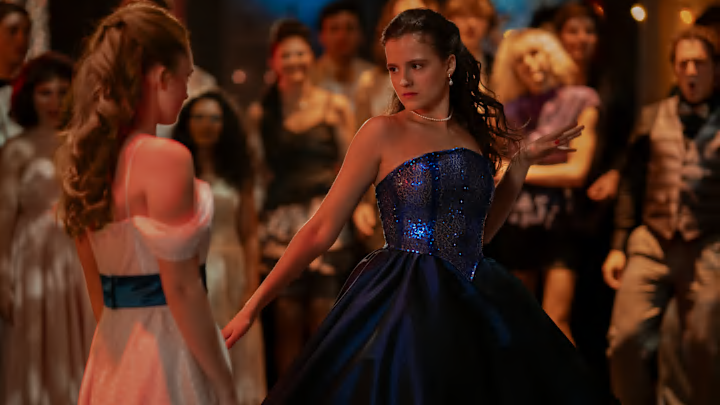
(L-R) India Fowler as Lori Granger and Fina Strazza as Tiffany Falconer in Fear Street: Prom Queen | Netflix

There’s a really great sequence where the two competing prom queens, outcast Lori (India Fowler) and popular girl Tiffany (Fina Strazza), have a dance off. That scene looked like it was a heck of a lot of fun to shoot. Can you talk about directing it?

Matt Palmer: I think it was a lot of fun for everyone, apart from the actresses [Laughs]. That was a really tough scene for India and Fina. Not only are they essentially dancing for a camera, but there were about 150 extras around them. I don’t care who you are. That’s intimidating.

Neither of them are trained dancers. We had a fantastic choreographer who worked with them. It was a tough day and more challenging than some of the elaborate kill scenes actually, but I was really, really happy with what we came out with. Fina, as she dances, her performance falls apart. It’s laugh-out-loud funny, the moves that she’s pulling. They’re all classic ’80s moves gone wrong.

Can you also talk about the dynamic between Tiffany and Lori? They make for good opposing characters and come from such different worlds in terms of their popularity, class, and even family.

Matt Palmer: The producer said it was a story about Lori and Megan (Suzanna Son), but now that I’m looking at the edit, it’s a story about Lori and Tiffany. It’s kind of both. There’s a little bit of an element of Showgirls, just in terms of the catty and camp and snarky and snide stuff.

The Tiffany character was a total joy to write. She’s just a meanie. The interesting thing about Tiffany that I’m pleased with is the moments in the film that you see underneath that front. There’s a vulnerable teenage girl who tries to find herself under that mean girl exterior.

Lori is essentially the opposite. She has that strength, but she needs to go through the grind of the narrative to come out on the other side and really exhibit that strength. There’s a real crossing over. One becomes weaker and the other becomes stronger as the movie goes on.

Day of the Dead Production Still

Day of the Dead, a Woman’s Nightmare, and Post-Capitalist Possibilities

A few years ago, at the NeMLA Conference, I presented a paper on representations of capitalism in The Amityville Horror, The Stuff, and Day of the Dead. Since then, I’ve revised the essay and focused more on the singular movies, including George A. Romero’s Day of the Dead, the last film in his initial zombie trilogy, which began with Night of the Living Dead in 1968. While that initial trilogy still feels biting and important as whole, right now, Day of the Dead feels most relevant for its critique of capitalism and hypermasculinity. It’s also the only film from that trilogy to feature a female protagonist.

Day of the Dead is a cynical conclusion to the initial trilogy, a film where fascistic military men rule. Yet, unlike Night and Dawn, Day proposes some potential alternatives to capitalism. That makes it radical, and, coupled with its critique of toxic masculinity through the might makes right military characters, Day resonates right now, especially for its female perspective.

After a lot of revision, my essay on Day of the Dead finally found a home at Bright Lights Film Journal. You can read it here.

Alec Gillis for Shout! TV's Double Take Series Honor Roger Corman

FX Guru Alec Gillis (Starship Troopers, Alien Franchise, Death Becomes Her) on Celebrating Roger Corman

Recently, for HorrorBuzz, I had the honor of interviewing FX wiz Alec Gillis (Starship Toopers, Alien 3, Death Becomes Her), on celebrating Roger Corman for his birthday this Saturday. Gillis, who started his career at Corman’s New World Cinema, working alongside the likes of James Cameron, will host a double feature in honor of Corman for Shout! TV’s double take series.

You can read the interview in full here. I posted some of it below.

Talk about your relationship to Roger Corman and working for New World Cinema.

Alec Gillis: I was very fortunate, at 19 years old, to get an interview to work on a movie called Battle Beyond the Stars. I interviewed with the visual effects department. I brought along a friend that I met a year earlier by the name of James Cameron. This was when he delivered books for the school district. It was that era. Roger was not at that initial meeting, but when we did finally get brought on and hired, we got to meet Roger. He sat behind a giant glass desk. He was a very imperious and intimidating character. He was very tall. He had a booming voice. He was warm enough but there was a wall there. I thought he was really impressive.

I’d then see him around the studio, which was in Venice, California. He bought an old lumber company that went out of business. You’d never know it was a special effects studio. He had prime real estate in Venice Beach. We were all talented up-and-comers that couldn’t believe our luck to be working on a movie, even if it was a knock-off of Star Wars.

Corman is one of the true godfathers of American independent films. He was also known for doing whatever he could to save a buck. Did that prove challenging in terms of the special effects department?

Alec Gillis: I didn’t know any better because I came from my own Super 8 movies in my mother’s garage. This was totally extravagant to me. It was the case for a lot of us. When you’re not in it for the money and you’re excited about any opportunity, it feels like an absolute playground.

Speaking of Roger’s creativity, he was an opportunist. I say that in a positive way. He had a gift for maximizing the assets. I remember once when we were shooting Battle Beyond the Stars we came in and stuff was rearranged on the set. Someone said to us that Roger was here this weekend. He was shooting another movie on the weekend for the Spanish market. He had a whole other movie on the weekends. [Laughs]. I always respected that. I can’t say that every Roger Corman movie was a great, or even a good movie, but there’s something about them. They were fun to work on, and they gave a lot of talented people a foot in the door. That’s part of why he’s so beloved.

What can we expect from your involvement with Shout! TV’s Double Take Series?

Alec Gillis: I chose Battle Beyond the Stars and Galaxy of Terror because those are the two biggest Corman films I worked on. Galaxy of Terror was great. I’d take a quarter off from going to UCLA Film School and then go back to work. That was a great steppingstone for James Cameron as well. I’m going to talk about what it was like back then, what the circumstances were, and specifics about the movies.

What did you apply to later films that you learned on those Corman productions?

Alec Gillis: Battle Beyond the Stars was a great team. Bill Paxton was a carpenter on that film. Gale Anne Hurd was around, though not on that film. James Cameron was there. These are lifelong relationships, and I’m very grateful for that. Galaxy of Terror was my first experience on an exclusively monster-making crew. It taught me that you could literally pull things out of your ear, if you have enough talent, and roll with a lack of time and a lack of resources and not to fear that. That’s a big lesson from Roger. Sometimes, the lack of resources and the parameters are your friend. It can be better than having unlimited time.

What else can we look forward to from you?

Alec Gillis: We have our own Corman-like, indie film called Wellwood. It’s full of practical effects. We shot it on a budget and it’s out in the world now. You can stream it. On Instagram, we’re posting a bunch of behind-the-scenes stuff now.

825 Forest Road Production Still

Hell House Creator Stephen Cognetti Dishes on His New FIlm 825 Forest Road

For HorrorBuz.com, I recently interviewed Hell House LLC series creator Stephen Cognetti about his latest film, 825 Forest Road, debuting on Shudder this Friday. We chatted about the film’s more traditional narrative storytelling, haunted histories, small town America, and the fact he filmed in the Victorian-looking town of Jim Thorpe, PA, localish to me.

You can read the full interview here. I also included some of it below.

825 Forest Road stars Joe Falcone as Chuck Wilson, who, after a family tragedy, moves to the sleepy town of Ashland Falls with his little sister, Isabelle (Kathryn Miller), and his wife, Maria (Elizabeth Vermilyea). Yet, as the family soon finds out, the town harbors a dark secret.

What was your experience like transitioning from the found footage genre to more traditional narrative storytelling?

Stephen Cognetti: It was a great transition for me to leave found footage behind. I shot this right after Hell House 3. It was in between Hell House 3 and Hell House: Origins, so this happened between two found footage films. It was great to step away from found footage and do a traditional narrative. That’s the style of filmmaking I like doing in production, but I also love found footage horror, as a consumer of it and making it as well. I had fun making the Hell House movies, and I have fun watching found footage movies myself. But I had already done three found footage movies and I wanted to do something else. It’s a specific kind of filmmaking. It’s fun to do, but it’s not a kind of filmmaking to always live in. It’s good to try other styles of filmmaking.

How did you come up with the mythos surrounding Helen Foster and her ghost? Is she based on any specific local folklore?

 Stephen Cognetti: She, specifically, is not based on any folklore. The whole story is based on any small town America folklore. I left New York City and moved to a small town in the Scranton [Pennsylvania] area. This town has its history. Everyone I met always had a story to tell about the town’s history. I imagined, what if one of these stories is about a ghost? I wanted to create my own fictional small town folklore and small town legend. What if it wasn’t a legend but something still affecting the town to this day? If you talked about it, you’d talk about it while looking over your shoulder because you don’t want to bring too much attention to yourself by talking too much about it. If you talk about it to a newbie, it’s a secret warning.

The truth of it came from my own move from New York City to small town Pennsylvania and learning about the history. It didn’t have any ghosts in it, so I created my own.

The idea of locations with haunted histories factors heavily in this film and even the Hell House series. Can you comment on that aspect of your work?

Stephen Cognetti: I can’t actually answer that because I think it’s organic and comes with each story. I’m a history guy. I love history. I was a film major and history minor in college. I took every history class that I could. I love history as a story. There might be, in the back of my head, a story that derives from some place. I think that goes to Hell House and 825 as well, along with films coming up in the pipeline that haven’t been announced yet. It’s always been of interest to me. I don’t know why that is, other than I have a love of history itself.

Speaking of small towns, you filmed this in Jim Thorpe, PA. For anyone who’s never been there, it looks like a Victorian town. What factored into your decision to film there?

Stephen Cognetti: I started exploring towns all around Northeastern Pennsylvania, Southeastern Pennsylvania, Central Pennsylvania, and everywhere. I drove into New York, too. I spent a lot of time driving. Jim Thorpe had a bit of everything. It already had that whole look, that look like it has history. Every building looks like that. The town is cool. The people are great, and it’s a good town to shoot in. It was accessible for me and everyone working on the film coming in from New York. It fit the accessibility, and it had the look.

825 Forest Road is also about loss and family dynamics. Can you touch upon the relationships in this film, especially between Chuck and his sister Isabelle?

Stephen Cognetti: I think Chuck starts out as a sympathetic character and a central character in the film. That’s how the first act is presented to us. As the film goes on, especially as we see Isabelle and Maria’s stories, Chuck can be considered an antagonist in this. He’s not actually any hero at all. I love that development of him and when you see him from a different perspective than his own. When you see him from a different perspective, he’s aloof and has a poor way of dealing with people going through something. I think everyone knows a person like that. Chuck is the kind of person that’s only there to lend very broad support but doesn’t understand it. He thinks he does, but he doesn’t really understand it. Therefore, he can’t really offer any help. He thinks he knows everything. When you see Chuck in other perspectives, you see he’s not the guy presented in the first act. His personality has a lot of flaws

825 Forest Road haunts Shudder beginning Friday, April 4 as part of their Halfway to Halloween celebration.

Good Boy Production Still

Good Boy and a New Type of Haunted House Film

There’s been a trend this year within the horror genre: haunted house films told from unique perspectives. At the start of the year, we had Presence, directed by Steven Soderbergh. In this particular slow-burn feature, the film is largely shot from the POV of poltergeist(s). The spook(s) torment a grief-stricken family, especially the daughter. Though the film is pretty light on scares, it’s an interesting take on a familiar subgenre. Instead of following a family moving into a home that’s haunted, we largely see the world through the eyes of the supernatural presence.

Now along comes Good Boy, which just debuted at the South by Southwest Film Festival. In this film, we see everything through the perspective of Indy, an adorable dog who’ll do whatever it takes to protect his owner from a frightening entity. Unlike Presence, Good Boy has some really solid scares. So far, it’s my favorite horror film of the year. Here’s my review of the film, which was initially published at HorrorBuzz.

********

It’s been quite the year for animals in film. Flow, a wordless film from a cat’s perspective, won Best Animated Feature at the Oscars. Flow has plenty of endearing moments, but it’s also a nerve-rattling viewing experience because the cat must survive mass flooding and life-ending climate disasters. Now along comes Good Boy. Here, we have a haunted house movie, and really a meditation on death, told totally from a dog named Indy’s perspective. Like Flow, it’s one harrowing watch.

Directed by Ben Leonberg, the film stars Shane Jensen alongside Indy. Jensen plays Todd. In the opening minutes, we see Indy at his owner’s feet. Suddenly, Todd coughs blood, just as his sister enters the apartment in time. This opening gives away quite a bit, and Todd’s condition and what’s really going on with this film become much clearer as early as the halfway point. After the foreboding start, the film cuts to various home videos of Todd and Indy, and yes, the two are adorable together, especially the grainy footage of Indy as a puppy in Todd’s arms.

Before the film meets its conclusion, there’s a creeping sense of dread and some solidly scary scenes. Indy fears the rural house that Todd lives in. It’s a long-standing family home, but hardly anyone lasted more than a few weeks in it, including Todd’s grandfather. This is where the film flirts a lot with experimentation. Instead of the typical family haunting, here we have a haunted house movie from the dog’s point of view. We see shadows in the corner through Indy’s perspective. We hear loud thumps at night and then watch Indy’s ears perk up as he whimpers and knows that whatever’s haunting the house is inching closer and closer to his owner, no matter how badly Indy wants to keep the presence at bay.

Some of the camera shots, which sometimes focus on a snowy TV or the staircase, resemble Skinamarink. This is also why I know this film won’t be for everyone. That other film has its lovers and haters. This feature risks the same thing with some of its focused shots and emphasis on the mundane within a house. Yet, like SkinamarinkGood Boy, at some of its most frightening moments, makes familiar objects really, really creepy, creating a sense of the uncanny. Suddenly, the static noise from the TV, and other familiar sounds and images, provoke a sense of dread. There are unsettling moments in this film, especially when the scares are juxtaposed with the prolonged sound of Todd wheezing and coughing. The sicker he becomes, the more his relationship with Indy changes. The word “stay” takes on new meaning here.

This has been an interesting year for both animals in film and the haunted house movie. At the beginning of the year, Steven Soderberg’s Presence showed us the point of view of a poltergeist tormenting a family, especially the grief-stricken daughter. Now, we see everything creepy in a rural spook house from a dog’s point of view. Yet, no matter how much Indy wants to protect his owner, he can’t prevent the inevitable. Though Good Boy’s experimentation may turn off some viewers, this lean feature gets right to it and has some genuine frights. Two paws up for this chilling tale.

****

I can’t say what’s causing this new wave of haunted house films, told from creative and clever POVs, but I’m all for it. The horror genre continually finds a way to reinvent itself, while tapping into our collective anxieties and fears. Presence and Good Boy make a familiar subgenre feel new again, and Indy gives one of this year’s best performances so far!

Portal to Hell Production Still, featuring Trey Holland and Romnia Dugo.

Slamdance Film Fest Interview: Portal to Hell Writer/Director Woody Bess & Actor Trey Holland

I’m grateful to be covering the Slamdance Film Festival again this year for HorrorBuzz. One of the highlights for me so far was an interview I did with Portal to Hell’s writer/director Woody Bess and its star Trey Holland. The horror comedy is a clever spin on the old Faustian bargain. It also stars genre icon Keith David, of They Live and The Thing fame. The interview ran in full a few days ago, and you can read it over at HorrorBuzz. I included some of it in this post, too.

Just prior to the fest, Raven Banner picked up the film for worldwide distribution and sales, so keep an eye out for it.

First, talk about how this story came together and the Faustian bargain at the center of it.

Woody Bess: I’m a huge fan of horror films and movies like Little Shop of Horrors that have a devil’s bargain. There’s Constantine from 2005, which I think is criminally underrated. I’ve always been interested in anything that deals with heaven and hell.

What was it like working with horror icon Keith David? 

Woody Bess: I’m the biggest Keith David fan. The Thing is a film I watch multiple times a year and even his work as the Arbiter in Halo. Getting him to be in our small film is really a dream come true for us. He’s such an incredible actor and actor’s actor. He was also a teacher. He had so many lessons of what to do as an actor for Trey and as a director for me. We learned so much from working with him. We’re so grateful he decided to be in our film.

Trey Holland: It was such a blessing. He elevated the tone to the point that we were able to go back and reshoot some of the teaser stuff because he grounded it in such a different place. For me, as an actor, it was so fun to know, as we were doing the scenes with Keith, that we’d have to reshoot some of the Dunn stuff because it was such a different thing. We asked him to help us, and we’re forever grateful. He influenced the tone so much. He was such a kind and generous actor. Like Woody said, he was fantastic to work with.

Dunn works as a medical debt collector, and some of the scenes when he’s on the phone are some of the funniest in the film. Where did the idea originate to make him a debt collector? Did either of you ever work a job like that?

Trey Holland: I’ve had experience on the other side of the phone call. I had to flip it around. I think we’ve all spent time on a customer service line. I tried to imagine myself in that job and then imagine Dunn in that job and how he’d do it. I never had experience doing it, but unfortunately, we can all relate to the state of the medical industry in the first place.

Woody Bess: Thematically, it fit with the notion of debt that we have in the film. Dunn collects on financial debts, but the demon is a mirror collecting on our ethical or moral debts. We all kind of have a debt to pay and our mistakes to own.

Talk about the role that LA plays in this film. 

Woody Bess: LA is such a beautiful, messy place. There’s so many colored lights and neon signs. It’s overwhelming but can be really beautiful if you kind of embrace it. It’s also a place where people go to pursue their dreams and other people take advantage of that. It really has the best and worst of us in Los Angeles. I’ve been here for ten years. Sometimes, I don’t know why I still live here. Then, I can’t live anywhere else. That’s LA in a nutshell. We tried to capture that visually and what a gorgeous mash of light LA is.

Trey Holland: It’s another character in the story. Like Woody said, the good and bad are here. That’s what this whole film is about, that fine line of morality. That can easily be found in a big city. LA is so pretty. At the same time, it can be very dark. We wanted to highlight those type of elements and then show the beautiful side as well. It’s a perfect backdrop for our film.

This film successfully combines comedy with horror. What were some of the challenges of blending those genres? Not every horror comedy works.

Woody Bess: A lot of my favorite films, including Shaun of the Dead and Get Out, fall in that line. It’s hard to hit both of those notes, of having a joke or scare land. It’s a fine line to walk. In theory, though, a joke structure and scare structure are the same. Get Out is a great example. A scene ends with a joke or something terrifying. We kind of tried to emulate that as best as we could. Jordan Peele is obviously incredible. I’m just a big horror comedy fan.

What was the inspiration for the demon Chip? Trey what was it like working with the demon?

Trey Holland: It was cool. Ideally, it’s the best thing to work with a practical effect as an actor. Everything becomes more real when your creature is right there in front of you and it’s not a tennis ball or a guy in a green suit. Trevor [Newlin] is over seven feet tall already. We put him in some backward hooves, so he was even taller. It was terrifying. It was so helpful, to me, as an actor, to have that right in front of me. I’ll never forget seeing him walk around that corner for the first time. It was great. Trevor did a fantastic job.

Here’s another fun thing, on that same thread. The way Trevor moved, we took that scene to New York. We watched [demon voice actor/human form] Richard [Kind] get into Trevor’s movement in the booth. They [Kind and Newlin] weren’t there together on that day. To watch Rich use Trevor’s acting and marry the two into one was really fun to watch. I think it turned out fantastic.

Woody Bess: Trevor Newlin also played the Xenomorph in Alien: Romulus. He’s just an incredible actor. He was a joy to work with, and he’s very tall. [Laughs].

Anything else you’d like to add?

Woody Bess: It was a joy to make the film. We hope it’s at least a fun time at the movies.

Revisiting Horror Noire: A History of Black Horror

In honor of Black History Month, I thought I’d repost this interview that my wife and I did a few years ago with Xavier Burgin, director of the documentary Horror Noire: A History of Black Horror. If you’re a film fan of any kind, I highly recommend this documentary.

If you want to read the interview in full, initially published by HorrOrigins, click here. This is a shortened version.

Xavier Burgin’s documentary Horror Noire is a must-see not only for horror fans but film fans in general. The Shudder exclusive is based on Robin R. Means Coleman’s book of the same name. It covers over 100 years of film history, starting with Birth of a Nation and the negative stereotypes it perpetuated about black Americans. From there, it analyzes the tropes that exist within horror, while also highlighting innovative black filmmakers like Blacula director William Crain and Ganja & Hess director Bill Gunn. All of this leads to the massive success of Jordan Peele’s Get Out. Featuring interviews with Tony Todd (Candyman), Ken Foree (Dawn of the Dead), and Rachel True (The Craft), among many others, Horror Noire truly is a comprehensive doc about black horror cinema. Burgin talked to us about the success of his film and how it’s changed the conversation about black cinema, while acknowledging that the negative tropes the doc highlights still persist in Hollywood. He also chatted about some of his favorite horror flicks and his plans post-Horror Noire.


What has the past year been like for you after the success of Horror Noire?

Essentially, since finishing Horror Noire, there’s been an intersection between black horror fans and general horror fans who really love the movie. It’s opened up a lot of discussion about what it means to be black and a POC in the horror genre and how we’ve always been a part of it from the beginning. I’m really happy we put a spotlight on it and that folks are paying attention. They want more, so I’m hoping to see more. There will be another documentary on Shudder about LGBT people in horror. I think that’s awesome. I hope we see more of that regarding minority representation in genre film, especially the horror genre.

It’s still been a push to get my work off the ground. It’s absolutely amazing to have such an extremely successful documentary under my belt, but I’m also looking to do work in the narrative space. Horror Noire has gotten me into rooms, but I’m still fighting to get my first narrative project off the ground. It’s a marathon, not a race.

How do you think Horror Noire has changed the conversation about Black cinema since its release?

Horror Noire has put a spotlight on black horror. To the black people and horror fans who appreciate black cinema, they’ve already known about these amazing films we talk about. To a larger audience, this was a deep dive into a part of horror many don’t see or learn. Horror Noire has helped a large swath of horror fans (and film fans in general) understand black people have always been a part of your favorite genre. It’s just that our contributions are not always recognized. 

I think our documentary is important in terms of teaching and reaching people, but I’m not sure if the people who have the infrastructural power and money were very much swayed by it. Unfortunately, Hollywood is very stubborn when it comes to giving black and brown creators chances within any genre. Horror is no different in that way. We’re still fighting to get our work out there. On an educational level, it’s made a huge difference for folks that care, but I’m not sure if the gatekeepers have paid attention in the way that’s necessary to make change.

What do you think needs to happen to change the minds of film industry gatekeepers?

The gatekeepers of Hollywood still tend to be primarily old, rich, and white. This means they usually do not have black and brown people around them. They tend not to know these individuals or understand where we’re coming from and the necessity of our stories. I want to see more black and brown folks in positions to get things off the ground, but at the same time, these individuals have to get a yes from a higher-up who tends to be white, older, and richer. The type of risk they can take, unfortunately, isn’t as big as what they would like. When I say risk, I mean taking a risk on underrepresented filmmakers who are not seen as lucrative. In my opinion, the only way we’ll see a change is if more of the direct funding comes from producers and executives who don’t have the specter of getting fired or losing their livelihood over their head. 

Out of all the films covered in Horror Noire, which is your favorite?

Blacula. For me, it’s less about the movie and more about the director, William Crain. He was a black man in his twenties, in the 70s, helming one of the biggest projects of that era. Everyone (even his own financiers and crew) were against him, so it’s a miracle he pulled this off. William didn’t get the career he deserved due to exclusion and racism, but I’m always reminded without him, the black directors of today wouldn’t have the chances they receive now. I wouldn’t be making this documentary if not for him, so that’s why Blacula is the most important topic in the documentary for me. 

Given how times have changed even since Get Out, what do you think the future of Black cinema is? What story would you like to see that hasn’t been told yet?

Every story about the black experience (both within and outside of horror) still needs to be told. When you look at the overall history of film, it’s still relatively young, and black people are still struggling to make films about us without interference. I do believe black cinema has gone through a mini renaissance recently, but there are still too many creatives fighting to make their projects to say there’s been real, significant improvement in the industry after Horror Noire

I hope that post-Get Out, we’re going to see more horror films that deal with our lived experience from black and brown directors. I also hope we get to see more films that are helmed by black and brown directors that aren’t primarily about race. We can direct anything. We just need the opportunities. 

Why do you think Get Out was able to break through in the way it did to such a large audience?

Jordan Peele is a phenomenal writer and director. That script should be taught in every single screenwriting classroom. I also think that Blumhouse and Monkeypaw made sure that Jordan had the creative control that he needed to make this in the way he felt was right to him. 

For a very long time, a running joke in the black film community is that we’re only allowed to make hood or slave movies. There’s a looming truth to this assessment. The people who hold infrastructural power in Hollywood are majority white, older people. Their idea of black people works in a binary. They love hood movies because it’s their current view of the black populace. They love slave movies because they can pat themselves on the back for not being the horrible racists their ancestors were. 

Get Out did something different. It didn’t perpetuate the idea racism was an exclusively Southern, conservative problem. It told us the white liberal who puts on a nice face, votes for Obama twice, but is still willing to exploit black people for profit is just as (if not more) dangerous. This type of message should have gotten shot down in Hollywood, but Jordan was able to make it. It felt like his full vision. We need to see more of this. 

DANIEL KALUUYA as Chris Washington in “Get Out,” a speculative thriller from Blumhouse (producers of “The Visit,” “Insidious” series and “The Gift”) and the mind of Jordan Peele, when a young African-American man visits his white girlfriend’s family estate, he becomes ensnared in a more sinister real reason for the invitation.

Which Black directors and/or writers should we be paying attention to?

Nia DaCosta, who is directing the new Candyman movie. You should keep up with Gerard McMurrary, who directed the latest Purge movie. Of course, we all know to keep up with Jordan Peele’s work within the genre. Outside and inside horror, I’m keeping up with the work of Terence Nance, Nijla Mu’min, Tananarive Due, Tina Mabry, and an assortment of talented creators who I believe will be in the industry for a long time. 

In the Horror Noire syllabus, put together by Dr. Robin R. Means Coleman, [author/educator] Tananarive Due, and Graveyard Shift Sisters’ Ashlee Blackwell, all producers for Horror Noire, there are black filmmakers listed who are doing not only short horror films but also feature-length horror. They’re also doing stuff within the written world. 

Which film covered in the documentary do you think people should immediately stream after reading this interview?

You should watch all of them, but if I had to narrow it down, I’d recommend watching BlaculaGanja & HessTales from The Hood, and Get Out.  I definitely recommend that you watch everything we cover, but not everyone has that amount of time. I won’t recommend that anyone watch Birth of a Nation. I think it’s a racist and horrible film, but I will say if you want to understand where so much of the racism and white supremacist antics we see in America comes from, that’s a film to watch. I’ll go further and say that one of the biggest problems we have in film education is that we’re so willing to talk about the technical direction of this film, but not give the context. It infuriates me whenever I hear about a class somewhere watching Birth of a Nation and the professor says how revolutionary it was as a filmmaking device. You can’t put the politics and racism aside. You need to talk about everything. That’s how you educate the next generation of filmmakers to understand what they’re making, but on a bigger level, there is no such thing as a film that isn’t political. All films are inherently political. It’s up to you as a filmmaker whether or not you acknowledge it and use it to your advantage.

Steven Soderbergh Attempts to Upend the Haunted House Genre

Steven Soderbergh has dozens of film credits to his name. Yet, he’s never tackled a proper horror film, that is, until his latest feature, Presence. However, for those seeking a good old-fashioned ghost story or haunted house tale, this isn’t quite it. In true Soderbergh fashion, Presence does something slightly different with the genre, while offering a meditation on grief.

The film follows a family who moves into a new suburban home. Lucy Liu plays the mom Rebekah. Chris Sullivan stars as dad Chris, while Eddy Maday plays their son Tyler, and Callina Liang plays their troubled daughter Chloe, who lost two of her best friends, Nadia and Simone. The parents hope that the move will spark a fresh start and help their troubled daughter’s mental health.

The haunted house film has long served as a vehicle to address deeper issues. The Amityville Horror, for instance, deals with the Lutz family’s financial woes at the end of the 1970s. They purchase a house that needs major renovations they can’t quite afford. The Haunting of Hill House is a story about its protagonist Eleanor’s grief and loneliness. She wants so badly to fit in, to have a family that accepts her.

In that regard, Presence works well when it focuses on the family’s tension, be it Chloe’s justified pain, or Chris’ stress and feeling that his family is coming undone. In fact, I wish that the film focused more on this and fleshed out its central cast more.

Presence veers from the genre’s typical formula by often showing the POV of the ghost(s). Convinced the spirits of her friends followed her, Chloe never feels right in the house. Objects suddenly move in her bedroom. The dresser shakes, and the ghosts bang on the walls. Yet, none of this is all that frightening. However, that’s not really the point of this movie. It’s more about the family’s struggles and Chloe’s grief especially.

The film takes another turn when Ryan (West Muholland) is introduced and acts like he has a general interest in Chloe. This leads to a major twist in the last act, but like the rest of the film, this plot point feels a bit too rushed and never fully realized.

I have to give credit to Soderbergh for upending the haunted house genre and showing us the POV of ghost(s). Though the film never reaches its full potential, and the last act especially feels too abrupt, at least Presence offers a different kind of ghost story.

Presence releases in theaters today.

Leigh Whannell’s Wolf Man Doesn’t Respond to Much of Anything (And That’s Its Central Flaw)

Let me preface this by stating that I’m never a fan of tearing down movies. A lot of time, work, and money goes into filmmaking. The intention of this post isn’t to shred the latest reimagining of a classic Universal Monster, that being The Wolf Man, directed by Leigh Whannell. Rather, I’m more interested in exploring why Whannell’s film just didn’t work for me, especially when compared to his 2020 remake of The Invisible Man. While The Wolf Man certainly maintained the tragic aspect of the character, especially through the earnest performance of Christopher Abbott, who plays Blake, the film falls flat because, well, it doesn’t respond to anything. It’s a major missed opportunity to tap into at least some deeper cultural and social anxieties.

Whannell’s film is set in Oregon, and Abbott stars alongside Julia Garner, who plays his wife Charlotte, and Matilda Firth, who plays their daughter Ginger. Oregon, with its deep forests and lush greenery, is the perfect setting for this film. The state, especially its natural landscapes, just has a strangeness to it. Heck, think of the opening credits of “Twin Peaks.” It’s a great setting for a werewolf movie.

Initially, the film sets up a promising concept, that of generational trauma. The opening introduces us to a very young Blake and his domineering father, Grady (Sam Jaeger). Grady frequently snaps at his son, all in the name of protecting him from what’s essentially a werewolf lurking in the woods, which, for whatever reason, can also attack and lurk during the day, without a full moon. Yes, Whannell changes up some of the werewolf lure, but that’s fine. Let him do his own thing.

This interesting opening, however, never fully blooms into a more interesting storyline. In the present day, 30 years after the opening scene, Blake and his family leave NYC and trek to his father’s farm, after Blake receives notice that his father is likely dead. Blake does exhibit flashes of his dad’s anger and temper, lashing out at Ginger and Charlotte a few times, but again, this is an underutilized character point. There are hints that Blake’s dad was at least verbally and mentally abusive, and we do see some of that in the opening, but again, it’s never fleshed out.

What I had really hoped for, and what the trailer sort of hinted at, was a deeper exploration of masculinity. There are shades of it with the poor relationship between father and son, but it’s terribly underwritten. We’re currently living in a time where everyone is asking what’s wrong with young men, why they’re socially isolated, why they’ve drifted hard right, why they helped propel Trump back to the White House, etc., etc. The werewolf is a great metaphor and vehicle to explore this very issue, but Whannell doesn’t do much of anything with it.

This marks quite a contrast from his take on The Invisible Man, a film that fully tapped into the anxieties of the #MeToo/Women’s March era, a film that also addresses rapid advances in technology, much like James Whale’s 1933 film. In contrast, The Wolf Man just feels so culturally and socially impotent.

Even the toxic father/son dynamic is weak. The father/son werewolves even come to blows at one point, but that’s another part of the script that feels way too undercooked. I don’t blame any of the actors in this film. As already stated, Abbott does a fine job in the lead role, giving his character the sort of pathos and tragedy that Lon Chaney J. had in the 1941 film. There’s a sense that Garner wanted to give more to her character, but there’s just not much in the script.

The initial Wolf Man holds up for so many reasons, including Chaney Jr.’s performance, the awesome Gothic set designs, and most importantly, because it’s a response to the anxieties of WW II. I just wrote about this for 1428 Elm, but the film’s writer, Curt Siodmak, was a Jewish man, forced to flee Germany in the 1930s to escape the Nazis. The parallels between his story and Larry Talbot’s (Chaney Jr.) are obvious. Even the werewolf mark that afflicts Talbot resembles the Star of David.

While Whannell’s Wolf Man is a decent monster movie, it’s just not much more than that. It falls flat because it doesn’t respond to anything, be it otherness, masculinity, or any other issue, really. It feels like a rushed script with too many underbaked elements.

Why the Wolf Man (1941) remains a sympathetic symbol of otherness

***This essay was first published at 1428 Elm. You can read it in full here.***

While other Universal Monsters have sympathetic stories, especially Frankenstein’s Monster, few convey otherness as much as Larry Talbot, also known as The Wolf Man (Lon Chaney Jr.). With Leigh Whannell’s Wolf Man set to howl in theaters this weekend, now’s a great time to revisit the 1941 film and explore its themes of otherness, including the impact of WWII on its writer, Curt Siodmak, a Jewish man who fled to the U.S. to escape persecution.

From the outset, the parallels between what Jewish people faced in Nazi Germany and Larry’s plight are evident. The film opens with a close-up of an ancient text detailing the mark of the werewolf. It includes a five-pointed star, similar to the Star of David. When Larry is bitten early in the film, he eventually bears the mark on his chest, making him an outcast and drawing the townspeople’s suspicion.

Even prior to the bite, Larry is associated with the symbol. While flirting with his love interest, Gwen (Evelyn Ankers), at an antique shop, he purchases a cane with the wolf symbol. Gwen warns him that the image is associated with the werewolf, but he doesn’t care and dismisses it.

The Wolf Man‘saddress of otherness is no coincidence. Siodmak’s New York Times obituary includes a quote from him that states, “I am the Wolf Man,” before adding, “I was forced into a fate I didn’t want: to be a Jew in Germany. I would not have chosen that as my fate. The swastika represents the moon. When the moon comes up, the man doesn’t want to murder, but he knows he cannot escape it, the Wolf Man destiny.”

Siodmak’s quote is interesting because it depicts the Wolf Man as both victim and murderer. Larry Talbot can’t escape his fate, nor can he quell his murderous impulses. Even before he transforms into a wolf, he kills a Romani fortune teller named Bela (Bela Lugosi) by brutally bludgeoning him with the cane, which causes the bite. To be fair, Bela was in wolf form, but the scene is prolonged and quite shocking.

Unfortunately, there is no escape for Larry Talbot. His story begins and ends in sorrow. He only returns to his family’s estate because his older brother died in a hunting accident, so the care of the estate falls upon him. At one point, Gwen’s actual fiancé, Frank Andrews (Patric Knowles), notes that there’s something very tragic about Talbot. He also refuses to shake his hand, again othering Larry, before he tells Gwen that he couldn’t help but notice the wolf handle and star on Larry’s cane.

Larry’s fate only worsens when the townspeople hunt him down in the woods, in true Universal Monsters fashion. He dies at the hands of his very own father (Claude Rains), who doesn’t know that the Wolf Man is his son. Larry’s struck down by the same cane that he used to kill Bela. It’s a haunting, poetic, and sad ending for one of Universal’s most well-known monsters.

Besides Larry’s association with otherness, there’s also the depiction of the Romani people. As soon as they’re introduced, they’re linked to the Old World and superstitions. In fact, the set design changes from city streets to a foggy landscape with gnarled trees and stunning gothic backdrops. Larry then meets Bela and his mother, Maleva (Maria Ouspenskaya), who eventually explains the werewolf curse.

Like Larry, the Romani people are scorned by some townspeople, who decry their traditions. Similar to the Jewish people, Nazis targeted the Romani people for extermination. According to the Holocaust Encyclopedia, a resource of the United States Holocaust Memorial Museum, beginning in 1933, the Nazis started persecuting the Romani people in Germany, forcing them into internment camps. It’s estimated that the Nazis murdered at least 250,000 European Roma, but the number could be as high as 500,000.

Considering these facts, it’s no surprise that Siodmak created Romani characters and used them as an integral part of the story. Larry Talbot eventually has more in common with them than his flesh-and-blood family. He learns the full extent of the curse and his otherness through them. Meanwhile, Maleva, more than any other character, tries to protect and save Larry, giving him a pendant at first to break the curse before encouraging him to run. She understands the danger Larry poses but also how their society shuns anyone deemed different.

Lon Chaney Jr.’s performance as the Wolf Man remains a horror staple because he’s a tragic figure who embodies otherness. The film works well because it draws upon Siodmak’s lived experience as a Jewish man living during World War II. Larry Talbot’s story and curse is heartbreaking, and Chaney Jr. plays it perfectly with great pathos.