Let me preface this by stating that I’m never a fan of tearing down movies. A lot of time, work, and money goes into filmmaking. The intention of this post isn’t to shred the latest reimagining of a classic Universal Monster, that being The Wolf Man, directed by Leigh Whannell. Rather, I’m more interested in exploring why Whannell’s film just didn’t work for me, especially when compared to his 2020 remake of The Invisible Man. While The Wolf Man certainly maintained the tragic aspect of the character, especially through the earnest performance of Christopher Abbott, who plays Blake, the film falls flat because, well, it doesn’t respond to anything. It’s a major missed opportunity to tap into at least some deeper cultural and social anxieties.
Whannell’s film is set in Oregon, and Abbott stars alongside Julia Garner, who plays his wife Charlotte, and Matilda Firth, who plays their daughter Ginger. Oregon, with its deep forests and lush greenery, is the perfect setting for this film. The state, especially its natural landscapes, just has a strangeness to it. Heck, think of the opening credits of “Twin Peaks.” It’s a great setting for a werewolf movie.
Initially, the film sets up a promising concept, that of generational trauma. The opening introduces us to a very young Blake and his domineering father, Grady (Sam Jaeger). Grady frequently snaps at his son, all in the name of protecting him from what’s essentially a werewolf lurking in the woods, which, for whatever reason, can also attack and lurk during the day, without a full moon. Yes, Whannell changes up some of the werewolf lure, but that’s fine. Let him do his own thing.
This interesting opening, however, never fully blooms into a more interesting storyline. In the present day, 30 years after the opening scene, Blake and his family leave NYC and trek to his father’s farm, after Blake receives notice that his father is likely dead. Blake does exhibit flashes of his dad’s anger and temper, lashing out at Ginger and Charlotte a few times, but again, this is an underutilized character point. There are hints that Blake’s dad was at least verbally and mentally abusive, and we do see some of that in the opening, but again, it’s never fleshed out.
What I had really hoped for, and what the trailer sort of hinted at, was a deeper exploration of masculinity. There are shades of it with the poor relationship between father and son, but it’s terribly underwritten. We’re currently living in a time where everyone is asking what’s wrong with young men, why they’re socially isolated, why they’ve drifted hard right, why they helped propel Trump back to the White House, etc., etc. The werewolf is a great metaphor and vehicle to explore this very issue, but Whannell doesn’t do much of anything with it.
This marks quite a contrast from his take on The Invisible Man, a film that fully tapped into the anxieties of the #MeToo/Women’s March era, a film that also addresses rapid advances in technology, much like James Whale’s 1933 film. In contrast, The Wolf Man just feels so culturally and socially impotent.
Even the toxic father/son dynamic is weak. The father/son werewolves even come to blows at one point, but that’s another part of the script that feels way too undercooked. I don’t blame any of the actors in this film. As already stated, Abbott does a fine job in the lead role, giving his character the sort of pathos and tragedy that Lon Chaney J. had in the 1941 film. There’s a sense that Garner wanted to give more to her character, but there’s just not much in the script.
The initial Wolf Man holds up for so many reasons, including Chaney Jr.’s performance, the awesome Gothic set designs, and most importantly, because it’s a response to the anxieties of WW II. I just wrote about this for 1428 Elm, but the film’s writer, Curt Siodmak, was a Jewish man, forced to flee Germany in the 1930s to escape the Nazis. The parallels between his story and Larry Talbot’s (Chaney Jr.) are obvious. Even the werewolf mark that afflicts Talbot resembles the Star of David.
While Whannell’s Wolf Man is a decent monster movie, it’s just not much more than that. It falls flat because it doesn’t respond to anything, be it otherness, masculinity, or any other issue, really. It feels like a rushed script with too many underbaked elements.
While other Universal Monsters have sympathetic stories, especially Frankenstein’s Monster, few convey otherness as much as Larry Talbot, also known as The Wolf Man (Lon Chaney Jr.). With Leigh Whannell’s Wolf Man set to howl in theaters this weekend, now’s a great time to revisit the 1941 film and explore its themes of otherness, including the impact of WWII on its writer, Curt Siodmak, a Jewish man who fled to the U.S. to escape persecution.
From the outset, the parallels between what Jewish people faced in Nazi Germany and Larry’s plight are evident. The film opens with a close-up of an ancient text detailing the mark of the werewolf. It includes a five-pointed star, similar to the Star of David. When Larry is bitten early in the film, he eventually bears the mark on his chest, making him an outcast and drawing the townspeople’s suspicion.
Even prior to the bite, Larry is associated with the symbol. While flirting with his love interest, Gwen (Evelyn Ankers), at an antique shop, he purchases a cane with the wolf symbol. Gwen warns him that the image is associated with the werewolf, but he doesn’t care and dismisses it.
The Wolf Man‘saddress of otherness is no coincidence. Siodmak’s New York Times obituary includes a quote from him that states, “I am the Wolf Man,” before adding, “I was forced into a fate I didn’t want: to be a Jew in Germany. I would not have chosen that as my fate. The swastika represents the moon. When the moon comes up, the man doesn’t want to murder, but he knows he cannot escape it, the Wolf Man destiny.”
Siodmak’s quote is interesting because it depicts the Wolf Man as both victim and murderer. Larry Talbot can’t escape his fate, nor can he quell his murderous impulses. Even before he transforms into a wolf, he kills a Romani fortune teller named Bela (Bela Lugosi) by brutally bludgeoning him with the cane, which causes the bite. To be fair, Bela was in wolf form, but the scene is prolonged and quite shocking.
Unfortunately, there is no escape for Larry Talbot. His story begins and ends in sorrow. He only returns to his family’s estate because his older brother died in a hunting accident, so the care of the estate falls upon him. At one point, Gwen’s actual fiancé, Frank Andrews (Patric Knowles), notes that there’s something very tragic about Talbot. He also refuses to shake his hand, again othering Larry, before he tells Gwen that he couldn’t help but notice the wolf handle and star on Larry’s cane.
Larry’s fate only worsens when the townspeople hunt him down in the woods, in true Universal Monsters fashion. He dies at the hands of his very own father (Claude Rains), who doesn’t know that the Wolf Man is his son. Larry’s struck down by the same cane that he used to kill Bela. It’s a haunting, poetic, and sad ending for one of Universal’s most well-known monsters.
Besides Larry’s association with otherness, there’s also the depiction of the Romani people. As soon as they’re introduced, they’re linked to the Old World and superstitions. In fact, the set design changes from city streets to a foggy landscape with gnarled trees and stunning gothic backdrops. Larry then meets Bela and his mother, Maleva (Maria Ouspenskaya), who eventually explains the werewolf curse.
Like Larry, the Romani people are scorned by some townspeople, who decry their traditions. Similar to the Jewish people, Nazis targeted the Romani people for extermination. According to the Holocaust Encyclopedia, a resource of the United States Holocaust Memorial Museum, beginning in 1933, the Nazis started persecuting the Romani people in Germany, forcing them into internment camps. It’s estimated that the Nazis murdered at least 250,000 European Roma, but the number could be as high as 500,000.
Considering these facts, it’s no surprise that Siodmak created Romani characters and used them as an integral part of the story. Larry Talbot eventually has more in common with them than his flesh-and-blood family. He learns the full extent of the curse and his otherness through them. Meanwhile, Maleva, more than any other character, tries to protect and save Larry, giving him a pendant at first to break the curse before encouraging him to run. She understands the danger Larry poses but also how their society shuns anyone deemed different.
Lon Chaney Jr.’s performance as the Wolf Man remains a horror staple because he’s a tragic figure who embodies otherness. The film works well because it draws upon Siodmak’s lived experience as a Jewish man living during World War II. Larry Talbot’s story and curse is heartbreaking, and Chaney Jr. plays it perfectly with great pathos.
The Damned is such a fitting movie for the beginning of January. Inspired by Icelandic folklore and featuring countless snowy backdrops, the film is a frigid slow burn that truly creates a sense of dread. It also addresses the consequences of decisions rendered.
Set in a remote fishing outpost during the 19th Century, the film stars Odessa Young as a widow named Eva. In charge of the outpost, she has to make a decision after a shipwreck close to the crew’s shoreline. She can either allow her fishermen to risk venturing out into the choppy waters to try to save some of the ship’s men, or she can opt to do nothing and preserve what limited supplies the group has during an especially harsh winter. She decides to do nothing.
Eva’s decision haunts the crew for the rest of the runtime. More specifically, director Thordur Palsson’s debut draws on the Norse myth of the Draugur, a creature that’s like a part-ghost, part-zombie. As one character describes it, the Draugur is like a returned person with flesh and blood. It torments every character in the film, causing them to hear voices, turn on each other, and commit horrid acts of violence. The creature is shown a few times and feels omnipresent. I actually think the film would have worked slightly better if the monster was shown a bit less, creating greater ambiguity and mystery.
The Draugur functions as an unshakeable curse that befalls the characters due to their decision not to save the men, lost to the frigid ocean’s depths. Meanwhile, Young gives a memorable performance, especially through the expressive look of her eyes and the way she conveys her character’s breaking point, caused by the curse and the weight of her decision. She’s really at the front and center of this movie and outshines just about all of the men. In fact, too many of the fisherman feel like background characters, without their own storylines.
While this film certainly works as an eerie morality tale, the visuals really make The Damned stand out. Thordur grew up in the Icelandic landscapes, and it really shows. Everything about this movie feels cold. The wind howls. Eva constantly treks through snow. The sea looks inky and menacing. Yet, the visuals stun at times, thanks, in part, to the film’s director of photography, Eli Arenson, who previously worked on Lamb, another visually rich film. The Damned lends itself well to the big screen, and the striking natural landscape becomes a character.
There does come a point where questions about the plot and direction arise. For instance, if the group has such limited supplies, why do they bother building coffins for the drowned? Where are they getting the wood and nails? However, a startling moment in the last act saves the narrative. It makes the rest of the pieces fit, and it’s one heck of a pay-off.
The Damned is an unsettling period piece with awe-striking landscapes and a performance by Young that shines against the bleak and isolated setting. This is a perfect film to watch in winter because it evokes such an icy sense of dread.
Now that Thanksgiving has come and gone, the holiday songs have started playing in every store. While some folks enjoy traditional Christmas movies, such as Home Alone or It’s a Wonderful Life, the horror community has a slew of films to pick from to watch this holiday season. In fact, holiday horror has really become its own subgenre. If you’re looking for something spooky to watch this season, here are my personal favorites.
Gremlins
Director Joe Dante’s 1984 monster movie Gremlins is a classic. Yes, the mogwai known as Gizmo is hella cute, especially in one scene where he sports a Santa hat and plays the keyboard in Billy’s (Zach Galligan) bedroom. Gizmo even purrs, sings, and makes all sorts of cuddly noises. However, if the rules are broken (don’t feed him after midnight, don’t get him wet, avoid bright lights) then the little adorable fuzzball spawns the vicious Gremlins.
Gremlins is really the perfect gateway horror movie for kids. It’s not too scary, but it’s still a top-notch creature feature from one of America’s best contemporary horror directors. Oh, and who can forget that scene where Phoebe Cates’ Kate tells Billy all about the worst thing that ever happened to her at Christmas. In case there’s actually someone out there who hasn’t seen Gremlins, I don’t want to spoil Cates’ monologue, but it’s a doozie.
Silent Night, Deadly Night
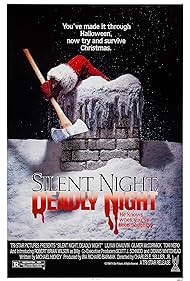
While Gremlins was a box office hit in 1984, Silent Night, Deadly Night was not. Released by Tri-Star Pictures, it was yanked from theaters about a week after its release because of controversy. In particular, the religious right threw a hissy fit about the promotional material, in particular the poster of a killer Santa in the chimney, holding an axe. And well, generally, they simply didn’t like Chris Kringle depicted as a murderer
Controversy aside, Silent Night, Deadly Night is a fun slasher that follows Billy Chapman (Robert Brian Wilson). Traumatized by his parents’ murder on Christmas Eve, and then tormented by sadistic nuns in an orphanage, little Billy grows up to embark on a yuletide rampage as a deadly Santa.
Terrifier 3
Writer/director Damien Leone’s Terrifier 3 just may be the most popular horror movie of 2024. Art the Clown is everywhere. He’s even a Spirit Halloween animatronic. In the third installment, Art returns to once again terrorize his arch nemesis, the stellar Final Girl Sienna, played by modern day scream queen Lauren LaVera. Some time has passed since the horrific events of the second movie, and Sienna isn’t doing too well, suffering from PTSD. Yet, she finds the strength to go toe to toe with the maniacal demon clown yet again.
This film has so many gruesome scenes, from the opening to a sequence involving a chainsaw, to an encounter Art has with a Santa in a bar. Meanwhile, Sienna has one hell of a Final Girl sequence in the last act. Art gives Billy from Silent Night, Deadly Night a real run for his money in terms of killer Santas.
Rare Exports
The Finnish movie Rare Exports is all sorts of wonderfully strange. A young boy named Pietari (Onni Tommila) and his friend Juuso (Ilmari Järvenpää) believe that a secret mountain drilling project near their home uncovered the tomb of Santa. However, this isn’t a Jolly ‘Ol St. Nick they encounter. Instead, it’s an evil, monstrous Santa.
Meanwhile, when Pietari’s father (Jorma Tommila) captures a feral old man (Peeter Jakobi) in his wolf trap, the man may hold the key to why reindeer are being slaughtered and children are disappearing. If you’re looking for something a little different this holiday season, give Rare Exports a chance.
Anna and the Apocalypse
Every Thanksgiving night, after we’re done visiting family, and loaded up on way too many carbs, my wife and I watch Anna and the Apocalypse as a way to start the holiday season. Imagine if the cast of “Glee” starred in a zombie movie at Christmas time. Well, that’s Anna and the Apocalypse.
No, this movie isn’t for everyone. That said, the Scottish film has a lot of heart, great storytelling, and one kickass final girl in Ella Hunt’s Anna. The songs serve to push the narrative forward and also underscore some of the movie’s themes. Trust me, you haven’t seen a zombie movie like this. If you do give this a chance, be warned that songs like “Turning My Life Around” and “Hollywood Ending” will likely get stuck in your head.
Christmas Evil
Yes, here’s another killer Santa Clause movie. Christmas Evil, set in suburban NJ, is wonderfully weird. Directed by Lewis Jackson, it stars Brandon Maggart as Harry. Tired of everyone’s cynicism and berated and belittled at his toy factory job, Harry turns into a vengeful Santa. Over the years, the film gained a cult following, much like Silent Night, Deadly Night. It also faced controversy and was seized as part of the Video Nasty period in the UK in the 1980s.
Oh, and did I mention that Harry spies on children to see if they’re being naughty and nice? He also watched his mom get sexually groped by his father, dressed up as Santa, when he was a kid. Yet, this is also the story about a fed-up worker more than anything else.
Black Christmas
Not only is Bob Clark’s Canadian film Black Christmas an iconic holiday movie, but it’s an incredibly important slasher film, specifically one of the biggest influences on John Carpenter’s Halloween because of the killer’s first person POV shots. A group of sorority women are terrorized by a killer named Billy. He continually calls them and makes obscene phone calls. Then, the murders start.
This film has a heck of a cast too, especially Margot Kidder as the foul-mouthed Barb and Olivia Hussey as Final Girl Jess. Horror fans will also recognize John Saxon as Lt. Fuller. Saxon would later play Nancy’s dad in Nightmare on Elm Street and Nightmare on Elm Street 3: Dream Warriors. Nearly a decade after Black Christmas, Clark would go on to direct another seasonal staple, A Christmas Story. Both films certainly have doses of dark humor.
Black Christmas was also quite progressive for its time because of the abortion storyline that impacts Jess. She’s determined to make her own decisions about her body, despite the crazed reactions from her overbearing boyfriend, Peter (Keir Dullea). In terms of subject matter, slasher tropes, and tone, Black Christmas was way ahead of its time and one of the major influences on the genre. Skip the two remakes. Watch the OG. It’s a must-see.
Since the recent U.S. election, I’ve been struggling how to process the result. I don’t know what shape a “resistance” will take this time. I was at the Women’s March in 2017 and organized near- weekly visits to the local offices of our two PA senators to oppose the worst of the initial Trump cabinet picks and policies. As a whole, the groundswell of activism that occurred in 2017 likely stopped the worst of it, but this feels different. The cabinet picks are most definitely worse, and the incoming far-right government trifecta seems more intent on passing sweeping legislation, at least within the first year, before they campaign for the 2026 midterms.
We also have the issue of billionaires like Elon Musk spending unlimited funds to influence an outcome. I don’t know how we deal with that, but I’m turning to writing both as a solace and maybe as a means to offer some paths forward.
In that regard, my first post-election piece is on John Carpenter’s 1988 political satire They Live. There’s a lot of lessons to learn from it, including the power of worker organization. This article was initially published at 1428 Elm this week, and I am reposting it here.
While John Carpenter’s 1988 political satire They Live may have been a response to Ronald Reagan’s America, with direct references to his campaign slogan “morning in America,” the film feels increasingly timely now. Considering the involvement of billionaires in the recent presidential election, with Elon Musk playing an outsized role, Carpenter’s critique of capitalism makes They Live the most relevant of his films for this precarious moment.
Set in LA in the late 1980s, They Live follows a drifter named Nada (Roddy Piper). Within the first 15 minutes, he ends up in a shantytown. Skyscrapers loom in the distance, drawing his gaze and underscoring a setting that shows the divide between the haves and the haves-nots. Initially, Nada isn’t bothered by this. He’s simply looking for work and believes in the promise of America.
At the shantytown, Nada encounters Frank (Keith David). During their first conversation, their differing views on class become apparent. Frank, like the countless working-class voters from PA, MI, and WI interviewed in 2016 and then again in 2024, laments the loss of well-paying factory jobs. He’s hardened and ready for action, but even more importantly, desperate for a job. He’s ready to tear down the system if he doesn’t find one.
During this first exchange between the men, we learn a lot about Frank and his challenging plight. He tells Nada, “We gave the steel companies a break when they needed it. Know what they gave themselves? Raises,” before reciting one of the film’s most famous lines about the golden rule, “He who has the gold, makes the rules.”
Frank’s justified anger is the most relevant of the two characters. It’s palpable. He, like too many other workers, has been stiffed. Following an election that hinged, at least in part, on economic issues, such as the cost of housing and the skyrocketing cost of everyday goods post-COVID, Frank’s rage feels righteous and warranted. He’s prepared to take a sledgehammer to the whole system.
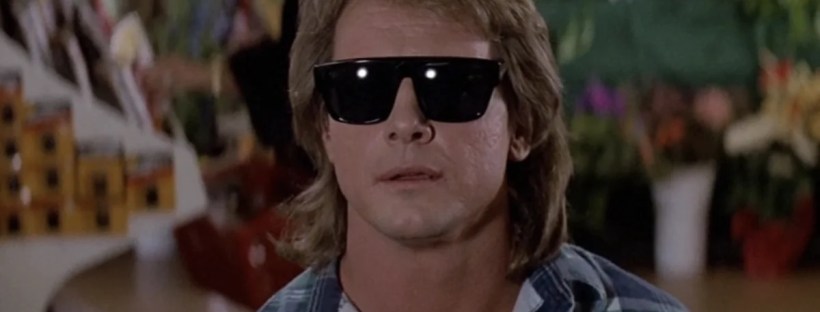
Nada’s response to Frank’s simmering anger feels naïve at best. He says, “You know, you ought to have a little more patience with life.” With his blue jeans, flannel shirt, and mullet, Nada looks ready to recite a Bruce Springsteen or John Mellencamp song without really listening to the lyrics.
It would likely have been easier for Nada to brush off Frank’s gripes and maintain his simplistic worldview. However, his character evolves the moment riot police and bulldozers utterly obliterate the shantytown. The scene is one of the film’s most harrowing. Nada looks on in shock and horror as this occurs seemingly for no good reason. He evades the police, only to find a pair of sunglasses that allow him to see the world as it truly is. Thus begins Nada’s political and social awakening.
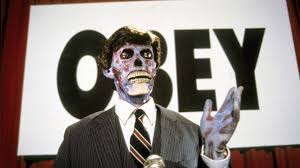
The glasses empower Nada, making him less susceptible to hyper-consumerism and control. When he puts them on, he sees aliens determined to keep people asleep in a fog of consumerism as they overtake Earth. With the glasses on, Nada sees billboards that say Obey, Consume, and other slogans. When he fixes his gaze on money, he encounters the phrase, “This is your god.”
Carpenter’s political critique isn’t exactly subtle, but it’s incredibly effective. When you have Musk paling around with the new president-elect or the barrage of celebrity endorsements secured by VP Kamala Harris, They Live’s over-the-top political satire speaks to the moment. In 2017, speaking out against a bizarre Neo-Nazi claim that the film traffics in stereotypes, Carpenter made clear that’s not the point of the film, tweeting that it is about “yuppies and unrestrained capitalism.”
Besides the blatant critique of consumerism and capitalism, They Live offers a more subtle message, that of worker power and organizing. For at least half the film, Frank and Nada, two men with working-class backgrounds, stand at a divide. Nada initially dismisses Frank’s anger with a dose of foolish optimism. Later in the film, Frank does the same to Nada, though for different reasons.
When Nada encounters Frank much later in the film, he implores him to try on the glasses and see the world as it truly is. However, Frank landed a job in construction. With Nada’s face plastered all over the news, after killing a few of the aliens, he wants nothing to do with him. Frank wants to protect his job. He has no choice.
The men brawl with each other in an alley. The scene is absurd and also plays up Piper’s wrestling background. However, the sequence, silly as it is, highlights the divide between the men, specifically between different members of the working class. As long as they remain divided, those in power maintain and accumulate wealth. This class division is also maintained because the aliens continually promise workers that they can advance up the social and economic ladder if they submit and assist with the takeover.
Eventually, Frank and Nada, along with other members of a pocket resistance, come together to fight the aliens. This underscores the power of organizing, perhaps as the only means to create a more equitable society.
I was 14 when I saw The Blair Witch Project in theaters, and boy, did it creep me out. Released in 1999, the film utilized the early days of the internet. It ignited a marketing campaign that included a website with journal entries, fake missing persons flyers, and other tidbits about the Maryland witch and the three leads who went missing in those deep and dark woods. That final shot of Mike (Michael C. Williams) standing in the corner, where Heather (Heather Donahue) finds him, before the witch, or some other entity knocks attacks her, remains just as chilling today as it did 25 years ago. It’s one of the most iconic final shots in contemporary horror.
Since Blair Witch, Williams has starred or made cameos in several other movies, including The Objective and the anthology movie Satanic Hispanics. His role in Satanic Hispanics, and his connection to Eduardo Sanchez, who co-directed Blair Witch, led him to his latest film, Ghost Game, a movie that toys with home invasion tropes and the traditional ghost story, as well as a prank knowing as phrogging. Here’s part of the interview I conducted with Williams for 1428 Elm, and again, you can read the full interview on the site.
Eduardo Sanchez is one of the producers of Ghost Game, and he also co-directed The Blair Witch Project. Did he lead you to Ghost Game? How did you get involved?
Michael C. Williams: I did a cameo in Satanic Hispanics with Eduardo a couple of Junes ago. I met one of the producers on that, Carlo Glorioso, who later contacted me, and Sam Lukowski, who I’ve known for years, but never worked with. They both contacted me about the script and really wanted me to read it. They thought it could be a lot of fun.
They were making some films out of Maryland that were smaller, independent horror films. The culture on Santastic Hispanics was that smaller film community in Maryland making part of the film, which was an anthology. It was the connection through Ed, but then I met people who had me read the script. I loved it. I hadn’t even heard of what they call phrogging. I soon came to find out that it is a thing that exists.
I had an initial conversation withJill Gevargizian, who directed. Then, I watched The Stylist and really loved her work. I always root for young people in film, especially young people in horror, for probably obvious reasons. It seemed like a no brainer to me. The script was strong. The role for me was exciting because there are definitely turns and twists in the role. It was an awesome experience.
What was it like playing Pete, an alcoholic writer and conspiracy theorist? We’re not used to seeing you play a character like this.
Michael C. Williams: For me, that was somewhat of what was exciting about it. I do play a lot of Nice Guy Mike [roles]. We all have shades of other things in us. Pete gets dark, although as a human being, he doesn’t walk around saying he’s going to be dark today. This guy tries to do the best he possibly can do for his family. It falls apart. He tries to hold it together, but it’s just not working out.
It has to feel authentic. You can’t go into it saying you’re going to play mean or dark. It wouldn’t work as well compared to it naturally evolving. That’s what attracted me to that role, certainly shades of that anger and what happens around him.
It’s been 25 years since The Blair Witch Project and you’ve done other horror and sci-fi projects since then, including Altered, The Objective, and now Ghost Game. What keeps you interested in genre filmmaking and genre movies?
Michael C. Williams: Well, likely the filmmakers and the connection I have to the horror world. I went to do a cameo in Satanic Hispanics, and that was through Ed Sanchez. Through him, I met Carlo Glorioso, and he turned me towards Jill Gevargizian’s script. I ended up talking to her. You work with these pockets of folks who are kind, cool, and creative. That’s where it’s landed me over the years, and I’m grateful for it.
Ghost Game will have a limited theatrical run on Oct. 18, before it hits digital on Oct. 18.
Once again, I had the honor of covering Fantastic Fest for Horror Buzz. I watched and reviewed ten or so films. Here are some of my favorites.
The Remarkable Life of Ibelin
This is such a beautiful and heartbreaking documentary about a Norwegian gamer named Mats Steen. His degenerative muscular disease caused him to seek refuge in the World of Warcraft, where he played the avatar/character Ibelin. Much of this documentary is narrated through the avatars and creatures that populate WOW. During the runtime, we come to know how much Mats meant to so many of his fellow gamers and how, in turn, they provided him friendship and community. This film will stream on Netflix beginning October 25. I can’t recommend it enough. You can check out my full review over at Horror Buzz.
Touched by Eternity
At this point, there’s not much left to do that’s new with the well-worn vampire genre. Writer/director Marcis Lacis likely knows this. Hence why his film, Touched by Eternity, is a sharp horror satire more than anything else. The Latavian film stars Andriss Keiss as the unmotivated Fatso. Though he’s obsessed with podcasts and conspiracy theories about eternal life, when two vampires show up at his trailer, offering him such, he flees them. This movie is a hoot through and through, but it’s also a smart meditation on being human and mortality. Oh, and there’s a knee-slapping scene in which a vampire academic reads her paper about the fanged undead, even citing Marx! Here’s my full review.
What Happened to Dorothy Bell?
If there’s one film I can’t stop thinking about after Fantastic Fest, it’s What Happened to Dorothy Bell?, an unnerving found footage movie from writer/director Danny Villanueva Jr. His feature stars Asya Meadows as Ozzie, a deeply troubled young 20-something who makes a documentary for a school project to unpack what happened to her grandmother, Dorothy, a librarian who eventually lost her mind and attacked Ozzie. There’s a lot of creepy stuff in this one. Oh, and Nightmare on Elm Street 4 and 5’s final girl, Lisa Wilcox, also stars in this as Ozzie’s therapist. I wouldn’t be surprised if a distributor picks this one up soon. Here’s my full review.
Apartment 7A
When I first heard news that Rosemary’s Baby was getting a prequel, I was skeptical. Who would want to touch Ira Levin’s novel and Roman Polanski’s adaptation? Well, when I saw Natalie Erika James’ name attached to it, I had greater confidence in the project. I really liked her 2020 film Relic. Set in 1965 NYC, this prequel tells Terry’s story, and Julia Garner does an impressive job in the lead role. Apartment 7A is now streaming on Paramount Plus. It’s also available to purchase on other streaming outlets. Here’s my full review.
Strange Harvest: Occult Murder in the Inland Empire
Writer/director Stuart Ortiz’s (Grave Encounters 1 and 2) Strange Harvest: Occult Murder in the Inland Empire is a harrowing commentary on our culture’s obsession with true crime and serial killers. This film makes viewers question why we love serial killers and often forget about their victims. In a mock documentary style, this film contains interviews with two detectives, haunted by the murders at the hands of Mr. Shiny. The less I say about this one, the better. Likely, this film will get swooped up by a distributor. Read my full review here. You can also check out my interview with Ortiz and the cast.
Natalie Erika James made a name for herself with the stellar, slow-burn horror movie Relic from 2020. Her latest feature, Apartment 7A, is a prequel to Rosemary’s Baby. While crafting a prequel to Ira Levin’s novel and Roman Polanski’s influential adaptation would seem like an insurmountable task, James, and her co-writers, Christian White and Skylar James, do quite a good job.
While Apartment 7A has some familiar characters and callbacks to Rosemary’s Baby, it’s very much its own film, starring Julia Garner as Terry Gionoffrio, a Nebraska farm girl who moves to NYC, hoping to catch her big break. She’s lured by occult forces, and well, you can guess what happens next.
During Fantastic Fest, I chatted with the director and her co-writers about Apartment 7A and the importance of telling Terry’s story.
This interview was edited slightly for clarity.
Creating a prequel to a movie as influential as Rosemary’s Baby couldn’t have been easy. What made you want to create a prequel all these years later and tell Terry’s story?
Natalie Erika James: I was approached with a script, which set Terry’s story in 1960s Broadway. I was excited about not just the notion of playing in the world of the original mythology, but just to play with Terry’s journey and how much agency she had over her ambition. I was really interested in this focus on a really horrific event, an assault that she has to deal with, and the idea of a fractured self and coming back to herself in the context of trying to pursue a certain career. It felt like there were scenes that were relevant to women today.
Skylar James: We’re having the same conversations about a lot of issues that we’ve had for 50 years. Taking on something like Rosemary’s Baby is taking on sacred ground. You are filling some very, very big shoes. For me, there’s conversations to be had about foundational trauma, grooming, cults, and victimization. These are very real and prevalent issues.
Just in terms of continuing the conversation from Rosemary’s Baby in a grander sense, there’s something to be said about seeing the story through a different lens. For me that’s Terry Gionoffrio, this woman who has these ambitions and big dreams. She’s someone who’s not easily told no, sent home, or deterred. She’s a fighter from the first frame to the last frame of the movie. This continues on the conversation about women’s rights, body horror, political and social issues, but seeing them through this lens of this fierce woman who really does have something of her own to say.
Christian White: In the original, Rosemary is a victim. It’s a wonderful and beautiful film, but Rosemary is a victim. I never think of Terry as a victim. Bad things happen, but she’s also driving her own story. As she gets closer to her goal, she’s continually forced to shed more of herself and sacrifice more. There’s something about that agency and exploring a woman’s agency that was a reason to make this now.
Skylar James: Imagine the dumb luck of choosing a vessel for the devil’s seed who doesn’t even want a baby. [Laughs].
I was really surprised by the performances in this, not only Julia Garner’s as the protagonist, but also Jim Sturgess, who plays Alan Marchand and Dianne Wiest, who plays Minnie Castevet. They’re both so evil in different ways. We’re not used to seeing them take on roles like this. Natalie, can you talk about working with these two actors?
Natalie Erika James: Dianne has an incredible track record of playing larger-than-life characters but in a completely grounded way. I was immediately excited by the prospect of crafting Minnie with her. With Jim, you’re 100 percent right. You don’t seem him cast in a dark role. I think with both of them there was a real sense that you had to come at it from the character’s perspective. You have to buy into the characters. We spoke a lot about how it’s not necessarily religious, but it’s rooted in a belief in themselves. There’s a real sense of purpose. It’s not just evil for the sake of evil. I think it contextualized it for the characters in a way that’s believable. Building from there was the approach.
Dianne Wiest as Minnie Castavet in Apartment 7A, streaming on Paramount+ 2024. Photo Credit: Gareth Gatrell/Paramount+.
How much, if at all, did the Dobbs decision and the overturning of Roe v. Wade influence this film and its narrative? So much of the film is about a woman’s bodily autonomy.
Skylar James: A lot. It’s a conversation that’s front and center in American politics right now. I think by showing a depiction of a woman in the 60s, who had no choice and the danger that put her in, I think that’s really important to talk about. No matter where you stand on the issue, it’s a conversation that’s important to have. We talk about it in the context of the devil’s spawn. [Laughs]. That element about women’s rights and a woman’s right to choose, that’s a universal and a timely conversation. It’s an important one to have. For me, it was at the forefront of the writing.
Christian White: It was something that was necessary to the story anyways. We had to go there. In a lot of the sensitive areas, we went through it and never skirted around it. The abortion issue was interesting. In Australia, it’s a sensitive topic as well, but nothing like it is in the United States. Culturally, it’s quite different.
I remember Nat and I doing a version of the story and having to remind ourselves that this is an American film. We had to think about all that baggage. We have a little bit of that baggage in Australia, but it’s more sensitive in the U.S. It’s so important to talk about it. As long as we’re talking about it, that’s good.
Natalie Erika James: Rosemary’s Baby is about bodily autonomy, and the fight for that and a real aggressive taking away of bodily autonomy for Rosemary, similar to Terry. It’s disturbing that it’s just as relevant today. I was moved by the research that I undertook to craft that [back alley] abortion scene and how so many women were at unnecessary risk. Clearly, women had to resort to really extreme, dangerous means to have that control and bodily autonomy back in the 60s. To think we’re going back to that is harrowing.
After I watched this, I kept thinking about the relationship among the women in this film. Minnie essentially undercuts Terry and lures her to do the occult’s bidding, while Annie (Marli Siu) is much more of an ally to Terry. Can you comment on the relationships among these women?
Skylar James: There was a real desire to show and depict strong women. That’s in the choice of having a female villain and a female hero. There’s that relationship with Annie and that close bond, as Terry decides what to do. She’s working through the trauma of a rape. She confides in her best friend. Then, you see tension in the dance company. Vera (Rosy McEwen) weaponizes these traumas against Terry. Showing the community of female relationships and how Terry navigates those, for me, was an empowering experience, specifically getting to show all these different types of female roles.
Christian White: There’s this cliché that you can’t choose your family. We all have those important relationships where we’re not related by blood. I think that’s what that central friendship was about. They’re sisters, bonded, because they live in the same world and have the same experiences. I was also surprised how strong the chemistry was between those two actresses. You felt that love. I really like their relationship.
Skylar James: Terry at the end says this is something that she has to face on her own. Giving her that strength and getting to see all sides of it was so important.
Julia Garner as Terry Gionoffrio in Apartment 7A, streaming on Paramount+ 2024. Photo Credit: Gareth Gatrell/Paramount+.
Natalie, what was it like to shoot some of the exterior shots at the Dakota in New York City, which was the location of the Bramford in Rosemary’s Baby, and can you comment generally on the production design?
Natalie Erika James: It was a really conscious choice to keep that continuity going into the film. We shot the film in London. It was just a skeleton crew that we sent to New York to actually shoot shots of the Dakota. It was definitely production design in collaboration with visual effects to achieve that. A lot of planning went into it. Simon Bowles, our production designer, did such an incredible job finding structures and streets that could match New York. Even with the interiors and finding furniture to match the original film was impressive.
Apartment 7A will stream exclusively on Paramount Plus beginning this Friday, Sept. 27.
A few years ago, for Horror Homeroom, I wrote about how writer/director Coralie Fargeat reverses the male gaze in her rape/revenge debut Revenge. In the beginning of that film, Fargeat focuses the camera’s gaze on Jen (Matilida Anna Ingrid Lutz), the mistress of the uber wealthy Richard (Kevin Janssens), who rapes Jen not long into the runtime. Initially, the camera focuses on Jen’s legs, buttocks, and breasts, as she sucks a lollipop. This switches about halfway through the film, and not only does the gaze switch, but Jen becomes the hunter, ultimately unleashing hell upon Kevin for the brutality he inflicted upon her.
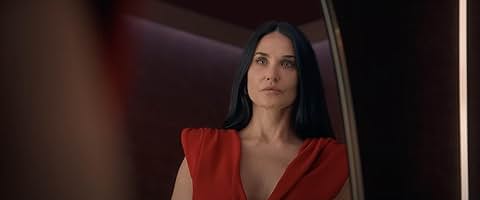
Fargeat’s latest feature, the excellent The Substance, again deals with issues of gender and the male gaze but expands that to include the beauty industry and how culture generally treats aging women, specifically celebrities. To stress that point from the outset, the movie opens with a Hollywood star just constructed on Hollywood Boulevard. It belongs to Elisabeth Sparkle, played by Demi Moore. During the first few years of the star’s existence, people pose for pictures with it. Judging by their clothes, you can tell this it’s the 1980s, which was the start of Moore’s career as a Brat Pack member. As years go by, the star cracks. People walk by it. They spill stuff on it. They don’t recall who Sparkle is. Her celebrity has been reduced to a workout series, and she’s on the cusp of aging out of that, on her 50th bday.
As soon as the film’s first act, Elisabeth gets notification from a strange, anonymous company that she can take a product called “the substance” to essentially look younger again. She really, really wants this, since the powers that be booted her from her workout show, in order to find a younger, more attractive model/actress.
Unlike Revenge, The Substance is very much a body horror movie, and its practical effects are on par with the likes of The Fly, Basket Case, and other great body horror movies of the 1980s. When Elisabeth injects herself with the substance, she passes out on her bathroom floor. Her back splits open, and a younger version of herself appears named Sue (Margaret Qualley). Sue easily lands Elisabeth’s former job. Her face and body are plastered on billboards. She appears frequently in commercials and chats up late-night talk show hosts. She obtains everything Elisabeth once had.
The problem is that the more famous Sue becomes, the more Elisabeth ages. The two entities technically need each other to exist, but Sue takes and sucks more and more from Elisabeth, until she starts to look like a crone. Even prior to that, Fargeat uses lightening and make-up to make Moore look older, to make her skin look as cracked as Elisabeth’s Hollywood star.
The messages in Fargeat’s film are by no means subtle. The film serves up an all-out assault and critique on the beauty industry, the media, celebrity, and how older women are mistreated and even worse, forgotten by the culture that once loved them. Men in suits/bigwig TV execs always tell Sue and Elisabeth to smile more. The film has so many discomforting moments, reinforced by the frequent close-ups that Fargeat uses. The sound design is sometimes amped up too, especially to reinforce how loud and overbearing men in power can be.
Like Revenge, The Substance makes the male gaze obvious with frequent close-ups of Sue working out in front of the cameras, zooming in on her most intimate body parts, objectifying and sexualizing her. Yet, she also knows the power of her own body. She also craves the fame and sues her looks to obtain it.
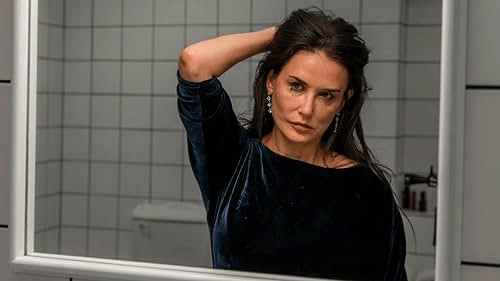
Yet, what I found to be the most powerful moment isn’t one of the gross-out body horror sequences. Near the midway point, Elisabeth nearly goes on a date with an old classmate who still has a major crush on her and generally likes her. For nearly an hour, she stands in front of the mirror, messing with her make-up. She’s haunted by a massive billboard of Sue just outside of her swanky apartment’s window. Because she no longer feels attractive, Elisabeth never attends the date. It’s heartbreaking, and Moore is great throughout the film, but she’s especially brilliant in that particular scene.
While I don’t think The Substance will resonate with everyone, especially some of the body horror bits, Fargeat isn’t afraid to take some wild wings with her filmmaking. Moore is perfectly cast in this film about an aging celebrity deemed disposable by a celebrity culture that created her. Once again, Fargeat does a lot of interesting things with the camera and the gaze to reinforce points she wants to make about gender.
The Substance is currently in theaters. If you want to learn more about Fargeat’s work, check out this interview I conducted with her for Signal Horizon a few years ago.
Last year, I wrote about a short horror film called The Chair that became a viral sensation. The short, which you can watch for free on YouTube, is all kinds of creepy, blending possession with what may be a metaphor for old age/Alzheimer’s. The short was created by the folks in That’s a Bad Idea, which initially started as a sketch comedy group but now keeps making more and more horror films.
Their latest film, Milk & Serial, also directed by Curry Barker, who stars as lead character Milk, is an inventive, non-linear found footage film that was created for $800. In less than a month, it already has over half a million views on YouTube. Cooper Tomlinson stars alongside Barker as Seven, who plans a bday party for Milk. The two are pranksters, constantly filming new content to upload their channel. Except, in this case, the pranks lead to one escalating crisis after another.
If you want to read more of my thoughts, check out this piece I wrote for 1428 Elm. In it, I explain that what’s so effective about the 62-minute film is the DIY, punk rock energy it has. You can tell Tomlinson, Barker, and the rest of the small crew had a hell of a good time making this.
Yet, the film also works because of what it has to say about voyeurism and livestreaming. The non-linear narrative works at keeping viewers engaged, as one event after another is teased, often out of order, at a break-neck pace. Yet, when one prank early on causes Seven and Milk to cover up a crime, you feel like you’re a witness to it, rubbernecking, unable to look away or unsubscribe from their channel.
After a few viral hits now, shot on a shoestring budget, it wouldn’t surprise me if Barker and crew are tapped for bigger projects. Still, I hope that they continue to make films on their own terms with the sort of DIY, indie filmmaking, punk rock spirit that Milk & Serial has.






 Brian Fanelli