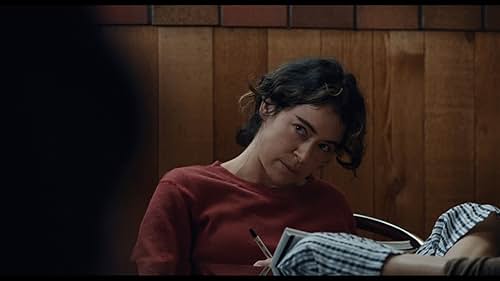
A production still from the movie Keeper

Keeper Plays Out as a Creepy, but Flawed Dark Fairytale (Review)

Osgood Perkins has been on a real winning streak lately, with the massive success of Longlegs and The Monkey. His multi-picture deal with NEON has paid off so far. The director’s latest, Keeper, contains some of the most chilling imagery out of any horror film this year. Perkins spins a dark fairytale and a warning about toxic relationships. Yet, for all of the frightening imagery, the movie feels a bit too paper-thin, especially in its second half.

Keeper stars Tatiana Maslany as big city girl Liz and Rossif Sutherland as her boyfriend Malcolm. Hoping for a romantic weekend, Malcolm takes Liz to his remote cabin in the woods, and well, because this is a horror movie, things go horribly, horribly wrong. Before the horror kicks into overdrive, Perkins spends some time with Liz and Malcolm, and I’d argue the film’s first act may be its strongest. There’s unspoken tension between the two, though the source of it isn’t quite clear. Maybe it’s simply the different lifestyles and Liz’s love of big cities. Maybe she simply distrusts men. Regardless, she doesn’t fully embrace Malcolm, and this is most evident when they’re alone together, be it sipping wine over dinner or driving to the cabin. Something about the relationship feels off, though the source of Liz’s suspicion isn’t quite clear. Malcolm seems like a sweet enough guy.

The film enters typical Perkins territory once Malcolm’s reclusive cousin Darren (Birkett Turton) shows up, with an Eastern European girlfriend who Darren claims doesn’t speak English. This deepens Liz’s discomfort and rightfully so, especially when she warns Liz that the chocolate cake Malcolm purchased for her “tastes like shit.” Yet, once Darren and his latest arm candy leave, Liz devours the cake, even though she tells Malcolm that she hates chocolate.

At that point, the film gets really weird, even by Perkins’ standards. It feels like a fever dream into hell, as Liz grows increasingly paranoid and continually sees strange women in the background or out of the corner of her eye. Even worse, Malcolm, a doctor, claims he has to return to the city to suddenly see a patient, leaving Liz alone with her hallucinations and creepy cousin Darren next door.
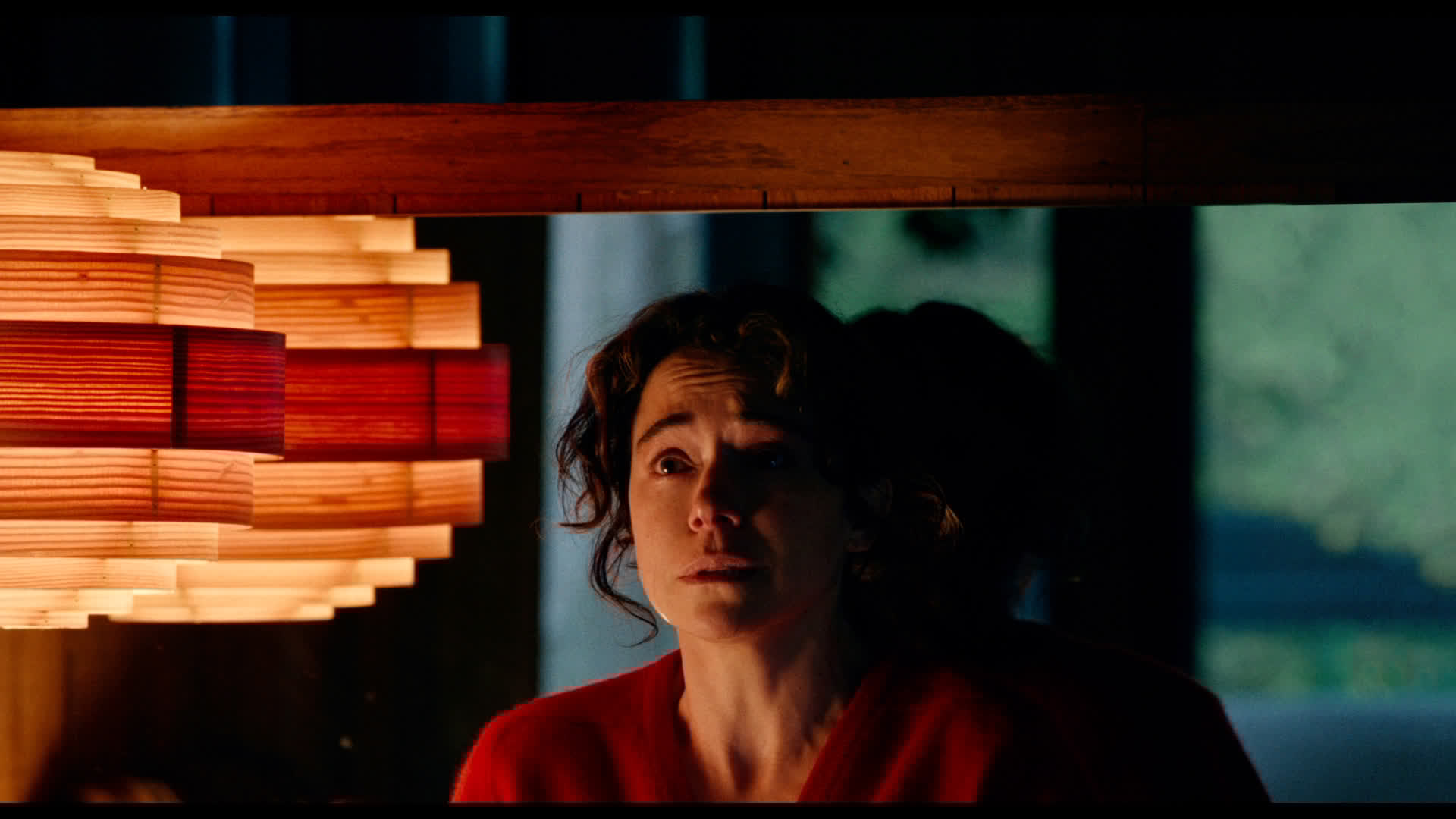
A production still from the movie Keeper

By the film’s second half, Perkins barrages viewers with a series of unsettling imagery and a brooding atmosphere. There’s even a woman with multiple faces crawling around in the basement. Trust me, you don’t want her to remove that bag from her head. The film also edges dark fairytale territory once the source of the scares is explained, all involving Malcolm. This is where the film falters. The lore isn’t built up enough and some of it comes across as too absurd, even for a horror movie. The film works better when it’s more grounded in reality and when Perkins explores the growing tension between Liz and Malcolm. The film’s main weak point is the script, penned by Nick Lepard. There’s too much explanation suddenly crammed into the film’s second half, and a lot of it is given by one of Malcolm’s monologues.

All of that aside, the film does ramp up to quite a great ending. I’ll never be able to look at honey the same way again. Overall, Keeper isn’t quite as strong as Perkins’ last few films, or even his earlier work, like The Blackcoat’s Daughter, but it continues to prove he’s one of the most effective directors at creating nightmarish sequences and atmospheres that invoke dread. Keeper succeeds when it’s more based in reality and explores a strained relationship. Its second half is hampered by poor explanation and weaker writing.

Keeper is currently playing in theaters.
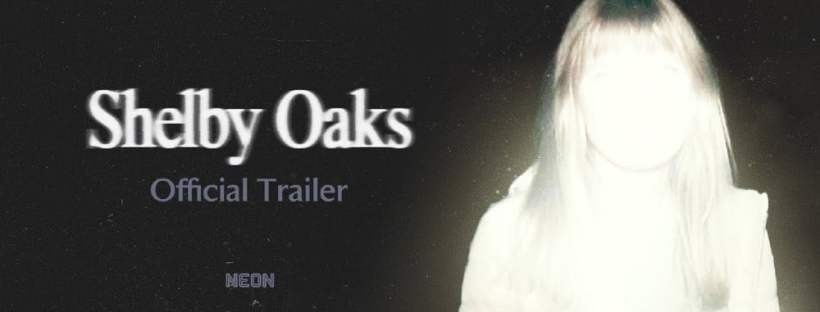
A poster from the NEON film Shelby Oaks

Camille Sullivan Dishes on Playing Mia in the Buzzy Horror Film Shelby Oaks

Chris Stuckmann built a fan base over the years as a YouTube horror critic. He also used a Kickstarter campaign to raise money for his debut horror feature, Shelby Oaks. Because of the impressive fundraising campaign and Stuckmann’s built-in fan base, Shelby Oaks earned buzz almost from the get-go, to the point NEON scooped it up for distribution.

Prior to the film’s October 24 release in theaters, I had the chance to chat with one of its lead actresses, Camille Sullivan, who plays Mia, a character reeling from the eerie disappearance of her sister, Riley (Sarah Durn). Shelby Oaks combines found footage, mockumentary-style filmmaking, and juxtaposes old YouTube videos, online discussion posts, and grainy footage to tell a missing person story. The film also has a LOT of narrative twists and will likely generate discussion once it’s out. This is the type of movie to see in a packed theater during opening weekend.

You can read my full interview with Sullivan over at 1428 Elm, but I included some of it here.

Camille, what, in particular, drew you to the role of Mia?

Camille Sullivan: When I first read the script, I was really drawn to the relationship between the two sisters and the way that Riley’s disappearance has affected Mia and the weight she carries with her through her whole life and how that’s affected her relationship to her husband and how that’s affected all of her choices. She can’t move on from it. I thought that was an interesting place to start a character.

Can you comment more on Mia’s relationship with her missing sister, Riley, and how that drives the film’s initial narrative?

Camille Sullivan: The bond between the two sisters is so strong. The movie is set up so they lost their mother and there is no father in the picture. They were each other’s family. I have two sisters, and I’m very close to them. The love was easy.

There’s a really chilling scene where Mia comes across a tape showing the minute Riley disappears and the man responsible. As viewers, we see the tape and Mia’s reaction to it. How did you prepare for that sequence and did you also watch the tape in real time?

Camille Sullivan: From an actor’s perspective, the way we filmed it was perfect. Chris set it up so that I had the real tape from start to finish. It was a 15-minute take, and I could just watch it. I had not seen it before. I think we only did one take, and we switched angles so I could do a couple of pick-ups. I was able to just really take it in in real time, and then they were able to pull out the moments. This was really a dream.

Can you comment on the film’s narrative structure? The film is told through old tapes and YouTube videos featuring Riley, online discussion posts, and Mia’s commentary in front of the camera, almost like a mockumentary at times.

Camille Sullivan: It was really fun, actually. The way I look at Mia is that she starts us in this one place, and then her life cracks open. Something changes for her. Then, she gets to take off in an entirely new direction. It’s almost a renewal of hope. For me, as an actor, that helped me with the changes in different styles. For me, the changes in style seemed natural because I could follow the flow of story.

Shelby Oaks Camille
Shelby Oaks – Courtesy NEON

The film takes another turn in the last act where it veers into a totally different direction. Without spoiling anything, what was your reaction to those additional narrative turns and some of those creepy set designs?

Camille Sullivan: The set designs were amazing. We shot, during that last section, in a warehouse at night. It was completely dark in there. I was feeling pretty beaten down at that point in time. [Laughs]. It was sort of perfect for the script. It just takes off again in a whole new direction, something unexpected. The secret that Mia uncovers is something that the audience uncovers at the same time. It’s not at all what you expect.

What was it like working with Chris Stuckmann, and did you give him any tips or advice, since it’s his first film?

Camille Sullivan: I really like working with first-time directors. It’s their baby, so all of their heart is in it. I love it, and that’s how I like to approach a film, too. We were able to collaborate. He knew exactly what he wanted, and he was super prepared. However, on the day, if I had ideas, he was really open to them. We had good conversations. Sometimes, things would change a little, or maybe they wouldn’t. The dialogue was there back and forth. He’s a really generous director.

How did you prepare for the role of Mia?

Camille Sullivan: I did a little research on people who had loved ones go missing. There’s quite a bit out there, and it’s heartbreaking when you really delve into it. There’s a very good documentary called Who Took Johnny about this child who goes missing. I started with that place of realism because I figured, if you’re on the path to find your loved ones, anything that comes at you, you keep moving forward. Nothing can stop you, no matter how crazy or dangerous. I knew that if Mia had that focus the whole time, it would be believable.

Is there anything else you’d like to add?

Camille Sullivan: I just want to give a shoutout to the locations. We shot at some really cool places in Ohio, including the Shawshank Redemption prison. It was fun. We were in there at night. I was wandering around, looking for ghosts. I thought I found one.

Can you talk about that more, specifically your search for ghosts?

Camille Sullivan. I did a scene where I was running into the darkness. I heard a little voice go, “No, no, no.” I asked if someone was there. I heard someone say, “It’s just me.” That wasn’t reassuring. It was terrifying. It turns out, it was one of the PAs. For like 30 minutes, I told people I saw a ghost. [Laughs].