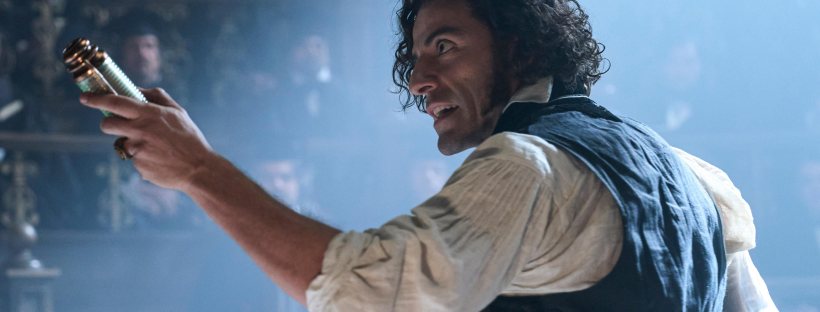
Frankenstein production skill of Oscar Isaac as Victor Frankenstein

Review: Guillermo del Toro’s Frankenstein (2025)

Writer/director Guillermo del Toro has declared himself a proud monster kid over the years in a number of interviews. His obsession with classic monsters and their representation of the “other” is well-known. He even has a massive collection of props from the films that influenced his career, including James Whale’s iconic 1931 take on Mary Shelley’s Frankenstein for Universal.

With this in mind, it’s no surprise that he’s finally adapted Shelley’s novel. This is the movie he always wanted to make. For the most part, and for better or worse, del Toro remains incredibly faithful to Shelley’s text, including the shifting narrations between Victor Frankenstein (Oscar Isaac) and the Monster (Jacob Elordi). Yet, he does make some radical changes to the book, especially regarding Elizabeth (Mia Goth) and the final face-off between creator and creation. Such changes, though, enhance and serve this particular adaptation.

This latest rendition of Shelley’s tale begins in the Arctic, just like the novel. Here, we find the Monster, who rages and hunts down his maker. Victor is on the cusp of death and saved by a group of explorers, led by a sympathetic Captain Anderson (Lars Mikkelsen), a stand-in for Captain Walton from the novel, who, like Victor, pushes the limits of knowledge and exploration until it nearly causes his own undoing and that of his crew.

del Toro kicks off his lengthy film with high-octane action. The Monster Hulks out, downing one man after the other, throwing them against the ship or into the ice. It looks a bit silly, but it does underscore the Monster’s rage. After that action-heavy opening, we’re introduced to Victor’s tale, which lasts for about half of the runtime.

There are some high notes in the film’s first half and also some bloat. Isaac relishes playing the cocksure scientist, refusing to listen to his colleagues about the dangers of his experiments. This is most apparent during a trial among his peers when he expresses his desire to conquer death itself and unveils a half-animated corpse, a preview of his larger experiment to come. Of course, this draws disdain from his peers and his expulsion from his teaching gig. Isaac really shines in this sequence, and his eyes contain a fervency that matches Victor’s mighty ambitions. At his best moments, the actor exudes Victor’s all-consuming passion to defeat death. It wouldn’t surprise me if he earns an Oscar nomination for this performance.

Additionally, del Toro handled well the father/son thread that’s apparent in Shelley’s novel, the constant conflict between maker and son. Even at a young age, Victor wants to escape his father’s shadow and push the Frankenstein name to new heights. Later on, he separates himself from his younger and more morally-sound brother, William (Felix Kammerer), who is much older than the child William that’s strangled to death by the Monster in Shelley’s text. I do think William’s death in the novel has far more weight because by murdering a child, it shows how far the Monster will go to unleash misery upon Victor. Even today, that death remains quite shocking.

The creation scene comes a bit too late in the runtime, and the first half tends to drag, but the set designs of Victor’s laboratory are quite breathtaking and give a nice nod to some of Whale’s most iconic moments in his 1931 rendition. I have no doubt the set and costume designs will earn Oscar nominations. del Toro’s always great at making his visions come to life for the screen. The film’s first half also centers around the relationship between Victor and Elizabeth, who, in this take, is slated to marry William, not Victor.

Adorned in flowing 19th Century Gothic dresses, Goth gives Elizabeth a confidence and willingness to challenge Victor that’s not evident in the novel or earlier adaptations. Here, Elizabeth plays a much more active role. It both frustrates Victor and causes him to fall in love with her. She tries to pull him back from the brink, but we all know how the tale ends.
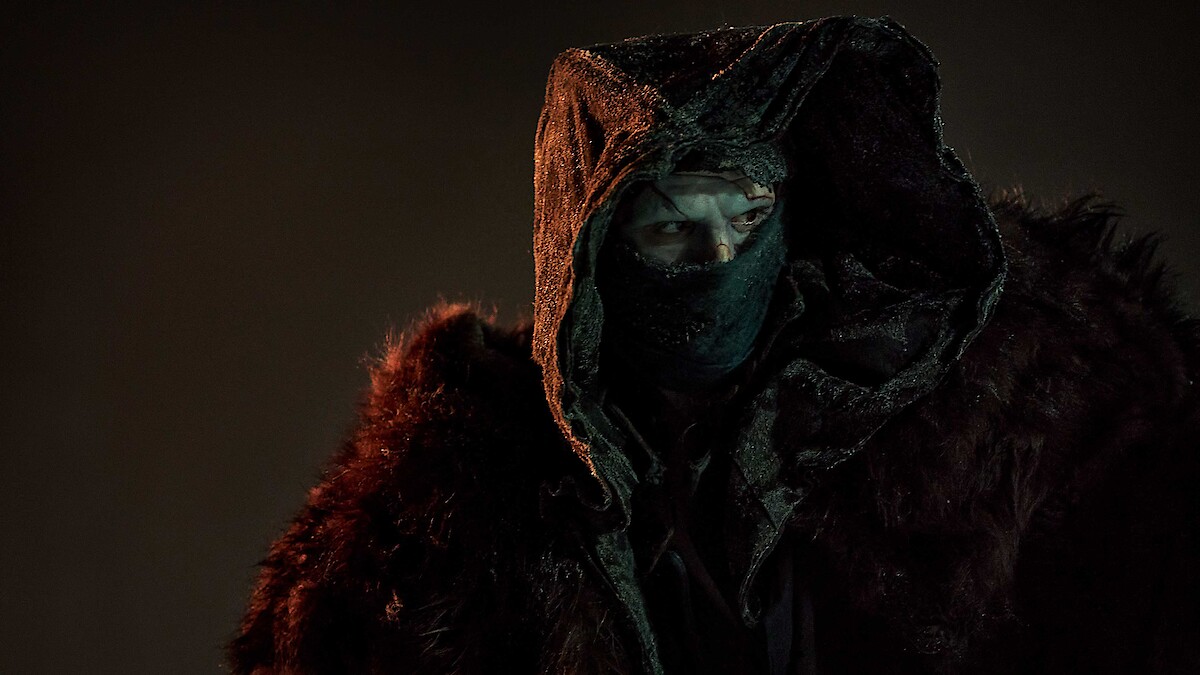
Jacob Elordi as the Monster in Frankenstein

Eventually, the Captain invites the Creature to share his tale, once he boards the ship, eager to snuff out his maker’s waning breaths. The film’s second half is much more powerful and richer in terms of its storytelling. We learn why and how the Monster transformed into the raging brute seen in the first few moments of the film.

Elordi gives the Monster the complexity and knowledge that exists within Shelley’s novel. He learns language. He reads classic literature with a blind man, his only friend, but he also learns about violence and humankind’s capacity to destroy each other. Elordi really carries much of this film, and though his performance isn’t as iconic as Boris Karloff’s, it’s still quite noteworthy. He conveys the Monster’s softer side and also his rage. He also develops a touching friendship with Elizabeth, a major shift form Shelley’s novel, but one that adds more weight and stakes to del Toro’s film. Once Victor denies the Creature a mate, the Monster fully transforms into a character driven by vengeance.

All of this circles back to the Arctic, to the final confrontation between the maker and the creation. The last ten minutes mark the most radical shift from Shelley’s novel and a far more optimistic conclusion. Without spoiling anything, I will say that del Toro reminds us to lean into sunlight, appreciate natural beauty, and feel grateful for each day we’re given. This is a far softer ending than we’re given in the text, but at this moment, with the world on fire, maybe this is the ending we need. It’s a celebration of life itself, punctuated with a gorgeous and poetic final shot of the Monster.

It feels like del Toro’s entire career has led to this film. All around, Frankenstein contains strong and compelling performances. Isaac, Goth, and Elordi clearly understood the assignment of inhabiting such iconic characters and bringing the director’s passion project to life. Like all of del Toro’s work, the feature contains stunning visuals that animate the Victorian setting. The first half of the film does feel a bit too long, but it’s worth the wait for the Monster to finally tell his tale.

Frankenstein is currently playing in limited theaters and will stream on Netflix starting November 7.

Interview: Fear Street: Prom Queen Writer/Director Matt Palmer

Recently, I chatted with Fear Street: Prom Queen writer/director Matt Palmer for 1428 Elm about inhabiting the world of R.L. Stine’s books and ’80s slashers. You can read the interview in full here, but I posted some of it below. Fear Street: Prom Queen just dropped on Netflix. Slasher fans should enjoy it.

What was it like to step into the world of R.L. Stine and the Fear Street series?

Matt Palmer: It was exciting. Full disclosure: I think Fear Street was bigger in America than in the U.K. I’ve heard of R.L. Stine and Goosebumps, but this was my introduction to Fear Street. It was jumping into the world of R.L. Stine, but also jumping back into the world of ’80s slashers. It was a combo of those things, which was an incredibly exciting prospect.

This film has some pretty grisly kills and a lot of gore. Did you face any pushback about the level of bloodshed, or did Netflix pretty much allow you to do what you wanted in terms of the gore and the kills?

Matt Palmer: I was waiting for pushback, and then I was very surprised. As much as possible, we did practical effects. There were a few things we couldn’t do only practically. I’m a big fan of the way that Gaspar Noé does practical effects but incorporates digital effects quite seamlessly. Actually, Netflix upped our VFX budget in post-production to enhance the gore and make it more extreme. It was a fantastic moment. Not only did they allow us to do this and not ask us to cut it, but they also asked us for more.

I think there’s been a bit of a sea change in horror over the last 12 months. I think people are pushing back against the PG-13 element of it. They’re ready to go the other way. I think the horror community might be in for quite exciting times. I think things are about to get bloody. [Laughs].

Which slashers served as inspiration for the film?

Matt Palmer: I like slashers generally. My favorites are the slightly more mental ones. I’m a big fan of PiecesHappy Birthday to Me and Sleepaway Camp. I’m also a big fan of Giallo movies and Argento in particular. I feel like the shadow of Tenebrae hangs quite long over this movie. I love how in an Argento movie, there’s a ritualistic quality when a kill is coming. I thought that when we had a kill coming, we had to bring it home as far as possible and really go to town on those scenes.

I’m also really proud that all of our kill scenes are quite distinct and have quite different tones, pacing, and rhythms. Hopefully, that keeps the audience on its toes.

In terms of the soundtrack, there are some familiar ’80s bangers in the film, including Billy Idol, The Eurythmics, Tiffany, and others. How much say did you have over the soundtrack?

Matt Palmer: Some of the tracks, like Eighth Wonder’s “I’m Not Scared,” were a key track for me. The pulsating quality of that really suggested to me that it had promise visually. The prom scenes should be seen through the young people at prom, but it’s also like an idealized image of that. I felt like “I’m Not Scared” has that throbbing, pulsing quality.

The one thing that did happen is that I picked a few tracks that were very personal to me. I was happy when they came on and were in the edit for a long time. But one of the producers is younger. She’d tell me that a track sounded kind of boring. That’s when the voices were helpful. It was exciting for me because I listened to those tracks when I was 13, but we switched some of those tracks up. A lot of it was to keep the energy up. I picked some slightly down-tempo tunes. Eventually, we found that keeping the pace was the best thing for the movie.

FEAR STREET: PROM QUEEN
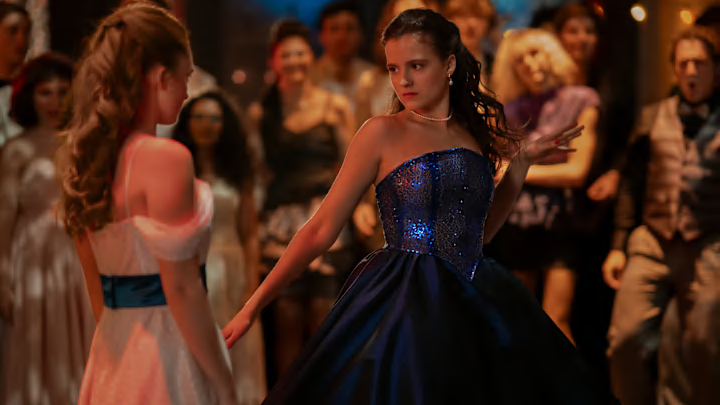
(L-R) India Fowler as Lori Granger and Fina Strazza as Tiffany Falconer in Fear Street: Prom Queen | Netflix

There’s a really great sequence where the two competing prom queens, outcast Lori (India Fowler) and popular girl Tiffany (Fina Strazza), have a dance off. That scene looked like it was a heck of a lot of fun to shoot. Can you talk about directing it?

Matt Palmer: I think it was a lot of fun for everyone, apart from the actresses [Laughs]. That was a really tough scene for India and Fina. Not only are they essentially dancing for a camera, but there were about 150 extras around them. I don’t care who you are. That’s intimidating.

Neither of them are trained dancers. We had a fantastic choreographer who worked with them. It was a tough day and more challenging than some of the elaborate kill scenes actually, but I was really, really happy with what we came out with. Fina, as she dances, her performance falls apart. It’s laugh-out-loud funny, the moves that she’s pulling. They’re all classic ’80s moves gone wrong.

Can you also talk about the dynamic between Tiffany and Lori? They make for good opposing characters and come from such different worlds in terms of their popularity, class, and even family.

Matt Palmer: The producer said it was a story about Lori and Megan (Suzanna Son), but now that I’m looking at the edit, it’s a story about Lori and Tiffany. It’s kind of both. There’s a little bit of an element of Showgirls, just in terms of the catty and camp and snarky and snide stuff.

The Tiffany character was a total joy to write. She’s just a meanie. The interesting thing about Tiffany that I’m pleased with is the moments in the film that you see underneath that front. There’s a vulnerable teenage girl who tries to find herself under that mean girl exterior.

Lori is essentially the opposite. She has that strength, but she needs to go through the grind of the narrative to come out on the other side and really exhibit that strength. There’s a real crossing over. One becomes weaker and the other becomes stronger as the movie goes on.

Top Horror Films of 2020

Blood Quantum' Review - Variety

What a year it’s been. From the pandemic, to the U.S. election that felt like it was 10 years long, this was a hard year. The horror genre, meanwhile, continued to have resounding success and always does best during periods of anxiety. The Invisible Man posted major box office numbers. “Lovecraft County” and “The Haunting of Bly Manor” were huge hits on their respective streaming services, and the little indie film Host reinvented the found footage genre for the Zoom/pandemic age, much in the way that The Blair Witch Project rewrote the rules of the genre in 1999.

Before I offer my list, let me note one trendline that I noticed this year. OLD IS BACK. What do I mean by this? Well, H.P. Lovecraft is huge again. “Lovecraft Country,” based on Matt Ruff’s novel, is one example. Even in my creative writing classes, I have more and more students writing Lovecraft-like stories with otherwordly monsters and an indifferent universe. This year’s first big horror flick was Underwater, an aquatic film that rips off both Alien and the big guy himself, Cthulhu. The underwater scenes are as bleak and hopeless as the worlds in Lovecraft’s stories.

Further, there’s been a return to classic Gothic films/books. “The Haunting of Bly Manor” is a contemporary take on Henry James’ stories, mostly The Turn of the Screw. The Invisible Man reinvented the H.G. Wells’ monster and had so much success that Universal now plans to reboot other classic monsters. Instead of a dark universe, they’re planning individual films, hoping to replicate the success The Invisible Man. We’ll probably be seeing the Gil-man, Wolfman, Frankenstein, and the Bride back on the big screen at some point.

Now, on to the list! Unlike past years, these are not numbered. I can’t pick a specific favorite film.

The Lodge (Directed by Veronika Franz and Severin Fiala)

If you thought Franz and Fiala’s Goodnight, Mommy (2014) was brutal, especially its ending, then The Lodge may be too much. There’s nothing pleasant in the film. Nothing. No humor. No quips. This entire movie feels claustrophobic and frigid. After a father abruptly departs for work, his girlfriend, Grace (Riley Keough), is left alone with his two children. A blizzard traps her in the remote cabin with the kids, where she’s haunted by the past and religious fanaticism. I saw this film in February when it was released in theaters, and boy, did that mid-winter night feel so much colder after viewing this.

Swallow (Directed by Carlo Mirabella-Davis)

This is a quiet little indie flick and one of a few films released by IFC that made my list. They had a very good year from a horror perspective. This film reminds me a lot of Rosemary’s Baby. Everyone thinks that they know what’s best for Hunter (Haley Bennett). The men want to control her, especially her hubby, Richie (Austin Stowell). So, she takes to swallowing objects, everything from a thumbtack to a marble, and in an odd way, it gives her some agency. (Read my review of Swallow for HorrOrigins). The conversations and break down of communication between Hunter and Richie are some of the most memorable scenes I’ve watched all year.

The Vast of Night (Directed by Andrew Patterson)

I can’t say enough about this film and how inventive it is. It’s a story about UFOs that’s all about the storytelling, using the technology from the 1950s, especially radio broadcasts, to spin its spooky narrative. You don’t even really see the bright lights or little green men. You don’t need to. Everything is relayed through the hair-raising dialogue and storytelling. But more so, the film is about two people, Fay (Sierra McCormick) and Everett (Jake Horowitz), who want to escape their small town. They dream of something bigger, and they get swept up in something much larger than themselves. (Read my review of The Vast of Night for Signal Horizon Magazine).

The Invisible Man (Directed by Leigh Whannel)

Director Leigh Whannel’s stock has really been rising within the horror community. After creating Saw with James Wan, Whannel’s career didn’t take off the way that Wan’s did, but then The Invisible Man happened this year, a major box office hit and collaboration between Blumhouse and Universal Studios. The film rewrote Wells’ monster and made him a metaphor for domestic abuse. The film is terrifying, bolstered by Elisabeth Moss’ harrowing performance. After the film’s massive success, Universal green-lit a slew of Universal Monsters reboots. COVID has delayed filming schedules, but there will be plenty more classic monsters in the coming years. Whannell, meanwhile, signed a two-picture, first-look deal with Blumhouse directly after the film’s release. (Read my review of The Invisible Man for Signal Horizon Magazine).

The Wretched (Directed by Drew and Brett Pierce)

I’m as intrigued by the story of The Wretched as I am by the film itself. This movie was #1 at the box office a few weeks in a row, thanks to IFC’s wise decision to screen it a drive-ins. This indie film became a major hit! It’s a positive story from the pandemic year. Also, this movie is just a lot of fun. It’s a throw-back to 80s films and practical effects with a few Hitchcock references thrown in. The witch also looks really, really damn cool. (Read my review of The Wretched for Signal Horizon Magazine. Read my interview with the directors for HorrOrigins).

The Wolf of Snow Hollow (Directed by/Written by/Starring Jim Cummings)

When was the last time we had a really good werewolf movie? Ginger Snaps (2000) is the last one that comes to mind for me. The Wolf of Snow Hollow is a thoroughly enjoyable werewolf flick, but at the center of it is a family drama. The lead, John Marshell (Cummings), is an officer in a small Utah town. Oh, and he’s an alcoholic. His life is frayed. His wife divorced him, and the stress of trying to solve the town’s murders may push him over the edge at any moment. The film has SO much heart, humor, and stellar cinematography. It also makes for a good holiday film with its snowy setting and Christmas music playing in the background. (Read my review for HorrOrigins).

La Llorona (Directed by Jayro Bustamante)

If you are a horror fan, then you need to subscribe to the streaming service Shudder. Period. Year after year, they put out some of the best international and domestic films in the genre. La Llorona is one of the films they released this year, and it feels SO important, especially in the context of right-wing populism’s rise internationally over the last few years. In Guatemala, Alma is murdered with her children during a military attack. Thirty years later, the general who ordered the genocide is found not guilty, and Alma comes back to the world of the living to torment Gen. Enrique. This film is so haunting, especially in its portrayal of genocide and how those ghosts impact the present. This film is also a warning about strong men and how a country can collapse under authoritarian rule.

Relic (Directed by Natalie Erika James)

This is the final IFC film on my list. Few films recently have moved me as much as Relic, a story about dementia and a family’s struggles in dealing with the matriarch’s decline. Yes, there are scary scenes in this, but the film is more about witnessing a family member’s ailing mental health and being helpless to stop it. The house becomes a metaphor for a ravaged mind. The ending is one of the most poetic that I’ve seen in a while. I can’t wait to see what James does next. (Read my review of Relic for HorrOrigins).

His House (Directed by Remi Weekes)

Netflix’s horror selection is REALLY hit or miss, but then along comes a film like His House that totally reinvents the haunted house genre to tell the story of a refugee couple who flees war-torn Sudan. This film is creepy and atmospheric, but its real importance lies in the story that it has to tell.

Blood Quantum (Directed by Jeff Barnaby)

Once again, Shudder has more than one entry on my best-of, year-end list. Blood Quantum is important for SO many reasons. It’s directed by a Native filmmaker and features an all-Native cast. It totally rewrites the zombie genre to tell a story about erasure, survival, and reclaiming history. Like George A. Romero before him, Barnaby understands why zombies work so well as social metaphors. Oh, and it’s a thoroughly enjoyable film with lots of gore, too. Before I say anymore about this one, just go watch it, please.

Runner-ups and Honorable Mentions: Host, Shirley, Becky, The Devil to Pay, The Beach House, Color Out of Space

Let’s hope that next year is an easier year for all of us. Maybe we’ll finally get Nia DaCosta’s Candyman reboot in theaters and Halloween Kills by next October. Be safe everyone!

Who’s Sleeping Next to Us?

(Photo from IFC Midnight)

Recently, I wrote a feature story on the films What Keeps You Alive (2018), currently streaming on Netflix, and Honeymoon (2014), one of my favorite horror films of the last decade. The article looks at how both films have a monster who is a significant other and use a rural setting to invoke the Otherness/monster. It’s a terrifying premise, that the one we love isn’t who we think they are. The article appears over at Signal Horizon. Check it out if you’re so inclined!

BBC/Netlix’s Dracula: A Mixed Adaptation of Stoker’s Classic Novel

drac1.jpg

Photo Courtesy of the BBC

How do you make Bram Stoker’s 19th Century Dracula relevant for the 21st Century? How do you tell a vampire story post-Twilight and make the classic monster threatening? The three-part BBC/Netflix adaptation tries to do both with mixed results. Its first episode is reminiscent of early Dracula Hammer films, while drawing fairly heavily from the source material. The second two episodes take bold risks with Stoker’s novel, while trying to maintain the general story-line and characterization. At certain points, the series succeeds in making the vampire relevant in 2020, while at other times, namely in the third episode, there are too many poorly executed leaps.

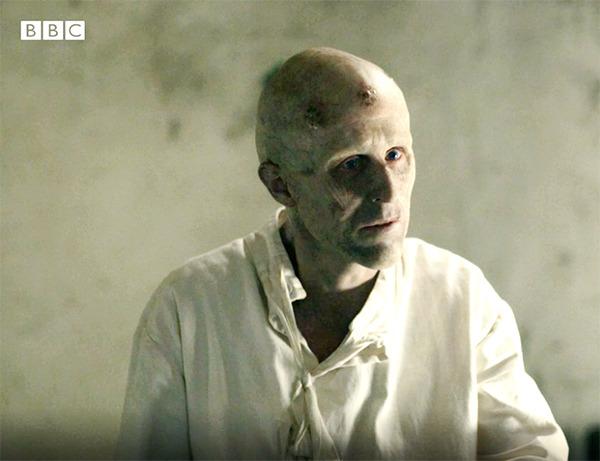
In terms of the building slow dread and genuine scares, the first episode is the most effective, and it generally follows the beginning of the novel when lawyer Jonathan Harker (John Heffernan) treks to the Count’s Gothic estate to complete a real estate transaction, only to fall prey to the monster, while  his fiance Mina (Morfydd Clark)  frets over his whereabouts. The challenge of adapting Stoker’s novel is the epistolary form. To handle this, show creators Mark Gatiss and Steven Mofatt still give Harker’s account of his time under the Count’s spell, but they do so by having nuns/vampire hunters (yes, you read that correctly) interview him. Oddly enough, it works. We’re introduced to a pale, badly scarred Harker, and in one of the most effective scares, a fly crawls along and under his eyeball. The presence and stench of death is a reoccurring motif in the novel, and the first episode uses the constant image of flies to reinforce this. It is unnerving and haunting, underscoring the power that the monster still has over Harker. His wounds are both physical and mental.

drac2.jpg

(Photo Courtesy of the BBC)

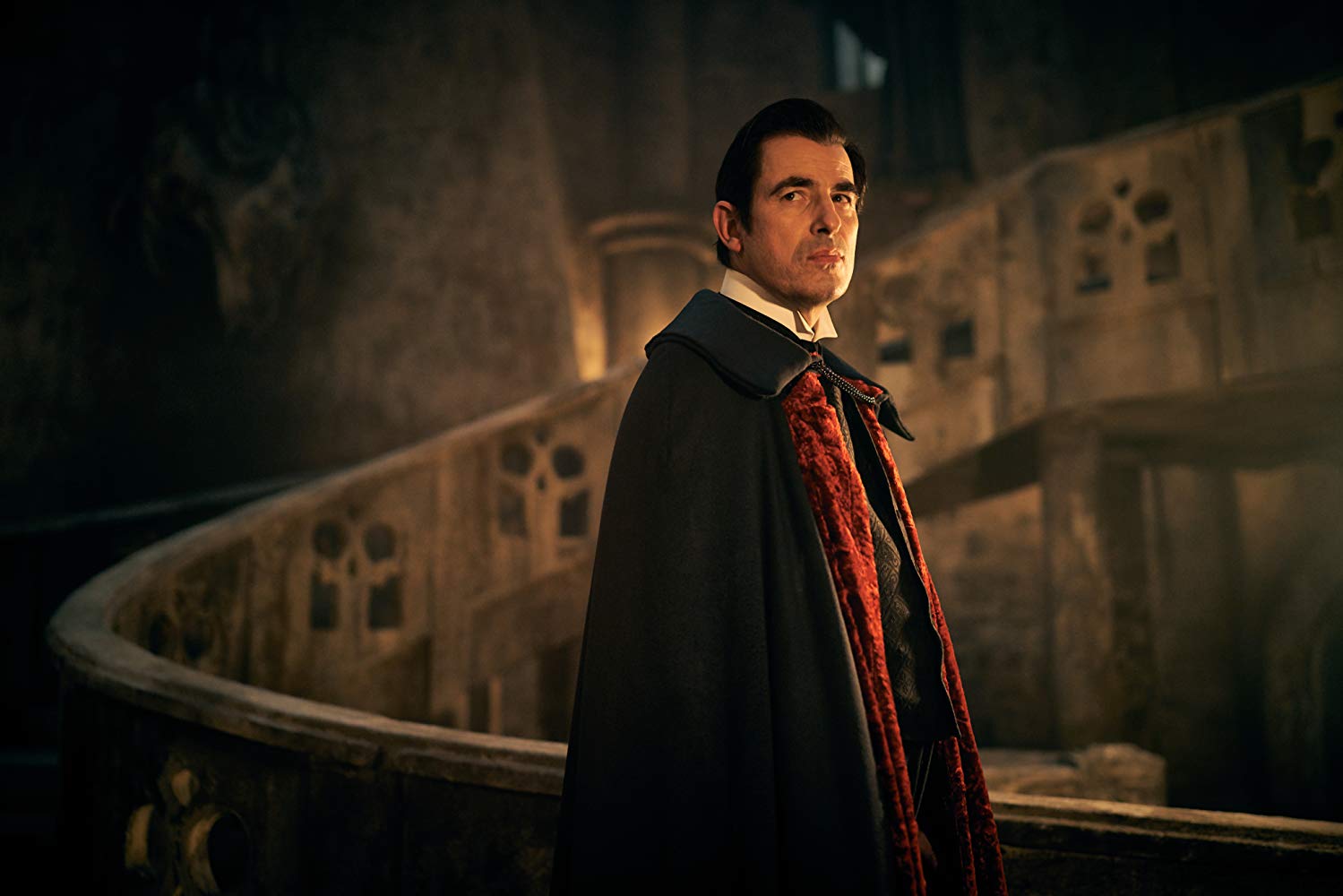
Claes Bang is generally a captivating Dracula as his power grows over the young Harker. He is suave and handsome once he feeds. His hair darkens. His wrinkles disappear, but the fact his first appearance depicts him as a scraggly-haired, sharp-toothed fiend compounds the point Stoker emphasizes in the novel that no matter how alluring, Count Dracula is a monster who only unleashes death. Throughout the rest of the series, however, Dracula resembles a caped Christopher Lee and Bela Lugosi more than he does Max Schreck/Noseratu. Additionally, the influence of the Lee-era Hammer Films  is apparent in the first episode, with several close-up shots of the castle and fog rolling beneath looming spires. The episode leans heavily into the Gothic elements and creates a mesmerizing atmosphere.

Sister Agatha Van Helsing (Dolly Wells) also elevates the first episode, specifically when she encounters the Count for the first time and taunts him, calling him nothing but a beast who driven by sheer hunger at the sight of blood. Some  may gripe that Van Helsing was changed to a woman for this series, but in the first episode, she gives one of the strongest performances. Her intellect and confidence match Dracula’s.

The second episode takes place on the Demeter, a ship set for the New World/England,  as the Count stalks victim after victim and hides the bodies. The gore here is as effective as the use of flies in episode one, but after spending an hour and a half on a ship, you just want the Count to reach London already. Additionally, too many of the characters in the second chapter are too hollow and serve as little more than vampire bait. The third episode is the shakiest in the series and has drawn the most complaints from viewers. There are great leaps in the narrative and major characters from the novel, namely Lucy (Lydia West) and Renfield (Gattis), who feel shoehorned into the final chapter. The most brazen move entails setting Dracula in the present day. How he ended up in the present is absurd and laughable from a narrative standpoint and comes across as lazy writing. There are plot points regarding the Van Helsing family that also don’t quite stick. Yet, I couldn’t stop laughing (in a good way) each time Dracula checked email and Skyped.

Overall, the series is uneven. Its first episode is the strongest. Its visuals, story line, and acting all cohere to create an engaging first chapter that stays true to the source material while making changes that make sense for the TV format. The third episode is by far the riskiest and has drawn the most ire from fans. Too many major characters from the novel are stuffed into the conclusion and not given enough time to breathe. All of that said, at least  the vampire doesn’t sparkle. On the one hand, he’s attractive and intellectual, and on the other hand, when his mouth is covered with blood, or when he visits Jonathan’s dreams as an aged demonic figure, he’s quite terrifying. Final verdict: watch the series with an open mind and enjoy it for what it is.


Review: Hold the Dark (2018)

In Green Room, director Jeremy Saulnier uses the tight confines of a dingy punk rock club in rural America to create isolation and tension as a band is besieged by neo-Nazis. At one point, the group is hauled up in the confines of a sound check room with no access to the outside world. Sauldnier’s latest film, Netflix’s Hold the Dark, contains sprawling Alaskan landscapes and stunning cinematography that creates bleakness and despair. The violence is as brutal and sudden as some of the scenes in Green Room. However, the film strays into too much ambiguity near the halfway point and sinks beneath its own weight.

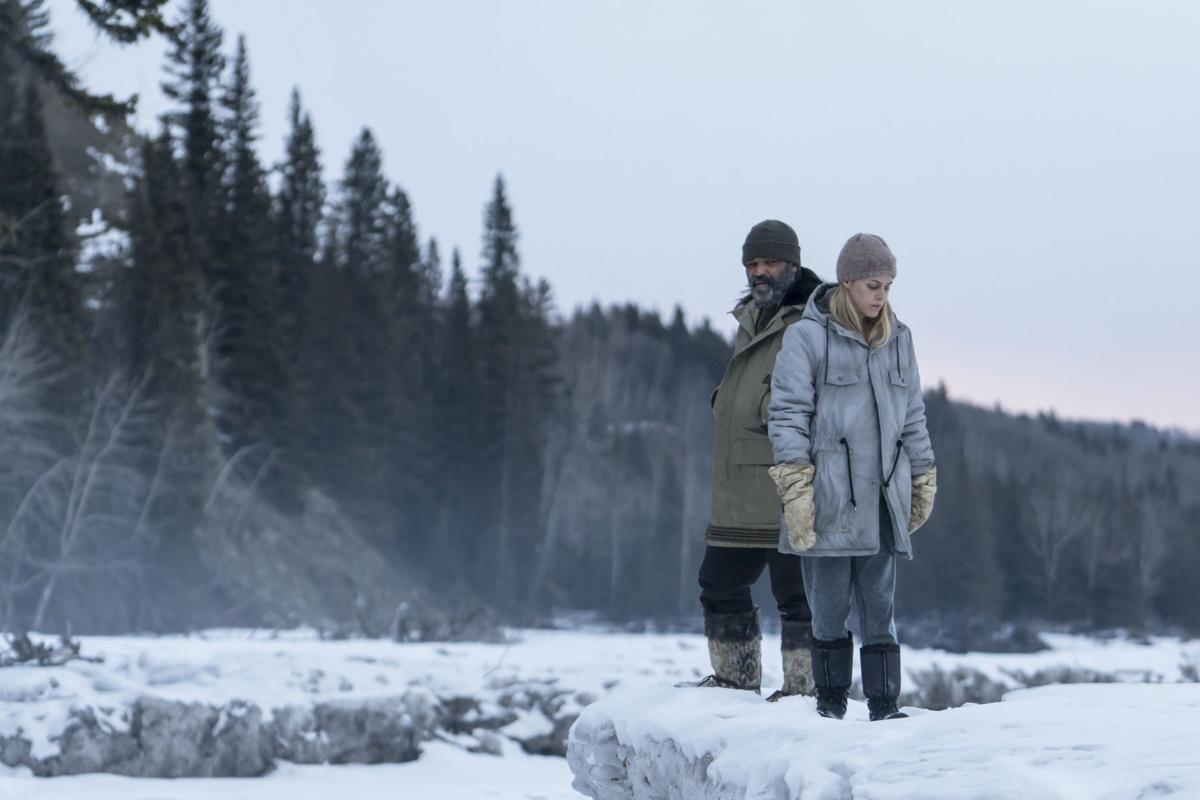
Hold the Dark is based on the 2014 novel by William Giraldi, and it traces the journey/mission of writer Russell Core (Jeffrey Wright), who is summoned by Medora Slone (Riley Keough) to investigate the loss of her son, who was allegedly killed by a pack of wolves. The animals are also blamed for the death of other children in the village. The opening act  is the strongest, especially the scenes between Wright and Keough, whose acting is top notch. The dialogue is well-crafted and builds a foreboding sense of darkness that can’t be kept at bay, especially when Medora says, “The wilderness here is inside us…Inside everything.” The early scenes are isolating and often feature long shots of the all-consuming Alaskan wilderness, sometimes with the characters set small against the backdrop. One of the most tense scenes occurs when Core stumbles down a snowy hill and encounters the pack of wolves, their snouts bloodied after devouring one of their own, a cub. It’s a survival of the fittest/kill or be killed type of world.

Holdthedark

Russell Core (Jeremy Wright) and Medora Slone (Riley Keough)

Following the opening act, once Medora flees the scene and after it’s discovered that she may have been the one who killed her son, the rest of the film loses its momentum and veers off track, especially once her husband, Vernon Slone (Alexander Skarsgård), returns home from Iraq after getting shot in the neck. He kills and kills some more, as he searches for his wife. There were several missed opportunities and potential story lines left uncharted. The idea of isolation and loneliness caused by Vernon Slone’s Iraq tour is generally unexplored. Imagine being a military spouse, left to raise your child alone in Alaska. The tension between what the Native people believe about nature and the wolves and what police believe, mainly that there is no greater, metaphysical force at work, is interesting and deserved far more attention. Early on, the idea that there is some connection between Medora Slone and the wolves is lightly introduced but also underdeveloped. I had hoped the film would have explored some connection between the feminine and nature and how Medora is viewed by the villagers and the police.

Watch the trailer for Hold the Dark:


The film’s final act, when Core eventually confronts Vernon Slone, is the most frustrating. Yes, they come face to face and one walks away, so to speak, but the film’s conclusion is utterly ambiguous. Nothing is really resolved. It takes over two hours to build to such a climax, only to veer off into a strange direction with no finality.

The acting and cinematography are the highlights of Hold the Dark, and fans who liked the level of gore and violence in Green Room won’t be disappointed with some of the brutal scenes in Saulnier’s latest effort. However, the film’s plot comes unglued around the halfway point, and anyone who sticks around for the ending will probably find it underwhelming.