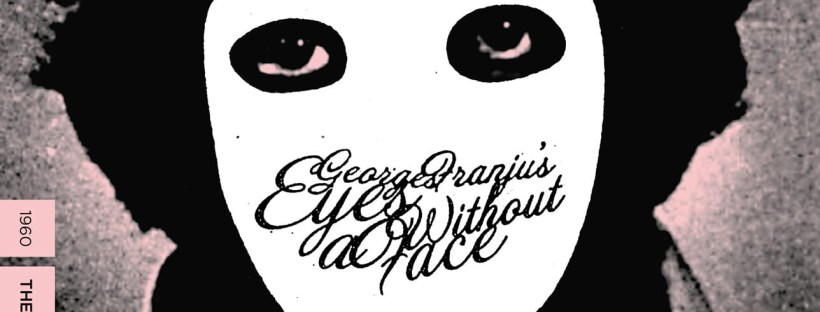
The Criterion Collection's cover art for Eyes Without a Face

Five Criterion Horror Recommendations (For the Barnes & Noble Sale)

For physical media collectors, July and November mark the Barnes & Noble Criterion Collection 50 percent off sale, the only time of the year, other than the one-day Criterion flash sales, when Criterion movies are actually affordable. The current sale lasts until December 7. In honor of the sale, I wanted to share five of my favorite horror movies within the collection.

Eyes Without a Face

This 1960 French film, directed by Georges Franju, is a masterclass in Gothic aesthetic and tone. A surgeon, played by Pierre Brasseur, kidnaps women to graft their faces onto his disfigured daughter, Christine, played by Edith Scob. This movie works so well in part because of Scob’s performance. She’s strangely mesmerizing and arresting on screen. She has some of the most expressive and haunting eyes that you’ll ever see in a film, and the thing is, she wears a blank mask through much of the film, but you’ll never forget her performance.

Additional Criterion suggestion: if you like Eyes Without a Face, also check out the black and white 1955 French mystery/horror movie Diabolique.

Night of the Living Dead

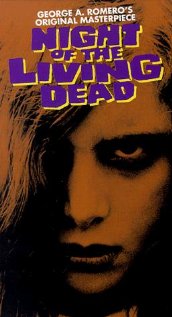
George A. Romero’s Night of the Living Dead was released on physical media a lot over the years, and it’s available to stream virtually everywhere. That said, Criterion’s recent 4K restoration looks damn good. There’s also a LOT of special features, including a radio interview with Duane Jones, who played the lead Ben. There aren’t many interviews of Jones talking about the film, so that alone makes this a must-have pick-up.

Additional Criterion suggestion: if you like Night of the Living Dead, check out 1962’s Carnival of Souls, one of the biggest influences on Romero’s film.

The Uninvited

Other than Robert Wise’s stellar The Haunting, The Uninvited is one of my favorite haunted house movies. The 1944 film follows a pair of siblings from London (Ray Milland and Ruth Hussey). They purchase an affordable cliff-top house in Cornwall, and well, soon discover the house was so affordable because it’s haunted. This film is incredibly atmospheric, eerie, and features an unforgettable score by Victor Young.

Additional Criterion suggestion: if you like The Uninvited, then check out The Innocents, which is an adaptation of Henry James’ famous ghost story “The Turn of the Screw.” Robert Eggers has frequently cited The Innocents as one of his biggest visual influences.

Cure

Few movies have crawled under my skin as much as the Japanese film Cure. Directed by Kiyoshi Kurosawa, who would direct the equally eerie Pulse just a few years later, the movie follows detective Takabe (Koji Yakusho) as he tracks a series of identical murders, committed under similar uncanny circumstances. However, nothing seems to connect the murders, despite their commonality. This is a deeply unsettling and philosophical movie about the nature of evil itself. This, along with some of Kurosawa’s other movies, are absolute must-sees.

Additional Criterion suggestion: It was just announced that Kurosawa’s latest movie, Cloud, will be released to the Criterion Collection in February. You can read my review of the film from this year’s Overlook Film Festival here.

Haxan

This silent film is important to the history of horror generally. It’s essentially a history of witchcraft and has some utterly striking visuals, including witches lining up to kiss Satan’s booty. The Criterion edition is loaded with special features, including a reedited 1968 version narrated by Beat author William S. Burroughs. Put this one on and get lost in the hypnotic visuals.

Additional Criterion suggestions: if you dig early horror, then make sure to also check out Cat People, Freaks, Vampyr, and I Walked with a Zombie, all released within the last few years. Like Haxan, these are all must-watches.

And yes, I know, I know that I didn’t include any of David Lynch’s films on this list. Almost his entire catalogue is now in the Criterion Collection, but here’s the thing, how do you pick just ONE Lynch movie to include on such a list? His movies also combine a lot of genres, including neo-film noir, drama, dark comedy, and yes, horror. So that’s why I didn’t include his work on the list, but Eraserhead, Lost Highway, Twin Peaks: Fire Walk with Me, Blue Velvet, Mulholland Drive, and Inland Empire are now all Criterion releases, many recently remastered in 4K, and they’re all horror adjacent. If you’re looking for a good place to start with Lynch, I recommend Mulholland Drive or Blue Velvet.

I also didn’t include anything from David Cronenberg because most of his films are in the collection, and I can’t pick just one. I recommend Videodrome and Scanners as starting points. Unfortunately, The Fly is not in the collection.

The Barnes & Noble Criterion sale runs until December 7.

Favorite black and white horror movies

For 1428 Elm, I shared a list of my favorite black and white horror movies, a mix of new and old. It got me thinking about why I enjoy such movies so much, especially at the start of September, as we get closer and closer to Halloween. Upon reflection, I realize that it traces back to my bad, as does my general love for horror.

I’ve said this before, but growing up, my dad took me to the local video store. He was a genre fan, but in particular, he dug the movies that he grew up with, such as Psycho, The Birds, and Night of the Living Dead. Yep, my dad came of age during horror’s second gold age in the 60s and into the early 70s. Though my dad also rented the latest Friday the 13th with me, these classics are some of the first movies I recall seeing with him. They held a strange sort of power that still resonates with me today, especially watching them with the lights out.

Besides those iconic 60s film, we also watched the Univeral Monsters. Though my memory may be a little faulty at this point,, I do recall watching some of the Frankenstein movies with him, Creature from the Black Lagoon, and The Wolfman. Something about those Gothic settings simply fascinated me, and I still hold dear those great Universal films. I remember watching the Gil-man swim just beneath Kay (Julia Adams), or feeling empathy with the Wolfman and Frankenstein’s Monster, both tragic characters in their own right.

A few of these films I share with my students, and though we’re living with 21st Century standards now, there’s still an alure, a strange sort of power that these films have. I have my dad to thank for my love of them and those gateway horror rentals.

RIP, Romero

images


As a kid, I used to watch horror movies with my dad, typically on Friday evenings, rented from Blockbuster. One of his favorites was Night of the Living Dead, and I credit that initial viewing experience for getting me into horror. There was so much about the movie that I loved and still love, especially the opening, when Barbara (Judith O’Dea) stumbles around the graveyard and encounters the film’s first zombie. Of course, there is also that famous “They’re coming to get you, Barbara” line, one of the most classic quotes in any horror movie. After seeing that movie as a boy, I was hooked.

Romero’s work resonated with me a lot more when I grew older. Upon first viewing, I didn’t realize the significance of Romero choosing a black male lead, Duane Jones, for Night of the Living Dead in the late 1960s, or the significance of that final shot, when Ben is shot in the head by redneck vigilantes and then his body is burned. In college, I hung a poster on my dorm room wall of the young zombie girl who killed her parents in the film. Imagine a movie with that type of scene hitting in the 1960s!

I didn’t see Dawn of the Dead until college, but I was struck by its campiness and cartoonishness (the blue zombie make-up and bright red blood) coupled with the not-so-subtle commentary on consumerism. However, my favorite installments in Romero’s zombie legacy may be Day of the Dead and Land of the Dead. The zombies are a lot scarier, smarter, and angrier, for one, but the social commentary pushes deeper and really makes us think about ways in which human beings are worse than the monster/other. Day of the Dead raises the question  whether or not human beings would be able to survive an apocalypse-like scenario without killing each other or resorting to militarism or fascism, and Land of the Dead railed against the 1 percenters before Occupy Wall Streeters ever pitched tens in Zuccotti Park. It was one of the perfect films for the Bush age, shortly before the economic crash and bailout. Diary of the Dead is worth watching, too, and I only wish that we could witness a final installment in Romero’s zombie canon, especially in the Trump-age.

Romero is part of an important wave of American horror movie filmmakers from the 1960s and 1970s, the likes of which also included Wes Craven, Tobe Hopper, John Carpenter, among others, who realized, as Mary Shelley did while penning Frankenstein, that horror is a wonderful vehicle for exploring social commentary. As I noted in another blog post, horror is undergoing a wonderful revival now, and it is mostly thanks to independent filmmakers and indie studios like A24. However, if it wasn’t for films like Night of the Living Dead, shot in Western, PA. on a shoestring budget, with no household names, the horror films generating buzz today probably wouldn’t have been possible. Night of the Living Dead, Halloween, Texas Chainsaw Massacre, and other small-budget films from that time caused studios to take risks and made them realize there is an audience out there for smart, boundary-pushing horror movies.

I’ll forever be grateful to my dad for getting me into horror, specifically through Romero’s work. A few months ago, Gravel published a poem I wrote about Night of the Living Dead. In honor of the filmmaker, I’ll share it again. Check it out here.


They’re Coming to Get You, Barbara

When I was young, I used to watch horror movies with my father. I have memories of seeing Night of the Living Dead, Friday the 13th, Fire in the Sky, and other movies with him. Since then, I’ve always loved horror movies, specifically ones from the 1960s-1980s that offer at least some character development, interesting plot, and at times social/political commentary. As a writer, I also know how difficult it is to suspend reality and make the setting and situation work, no matter how outlandish the story may seem on paper.

Here’s an overview/commentary on some of my favorite horror movies.

George A. Romero’s Night of the Living Dead, Dawn of the Dead,  Day of the Dead, Land of the Dead

Zombies have been popular over the last few years. The high ratings of AMC’s show “The Walking Dead” prove that. But Romero’s brilliant zombie films started the trend and how we think of zombies on the big screen or TV. What separates Romero’s films from the rest, though, is his social commentary. You can view Dawn of the Dead as a statement against consumerism. The zombies do flock to the mall, after all, and wander around aimlessly. Day of the Dead warns against militarization, and one of his more recent films, Land of the Dead, highlights the growing gap between the wealthy and the poor in the U.S. My favorite, though, is still Night of the Living Dead. I love the 1968 black and white version, especially the beginning of the film where the young woman and her friend are in the graveyard and encounter a stumbling, groaning zombie. I still love the line, “They’re coming to get you, Barbara!”

John Carpenter’s Halloween

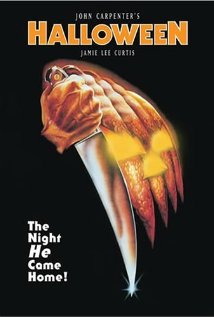
This is the film I re-watch every October, and it still holds up. I love the scenes shot from Michael Myer’s point of view, as he stalks Laurie Strode (Jamie Lee Curtis) and her friends. I love the fact there is no rational  for why Michael does what he does, other than pure evil.  None of the sequels or remakes hold up to the original.

John Carpenter’s The Thing

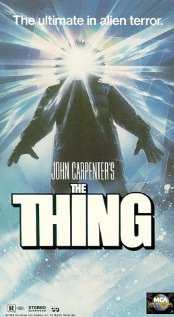
I just re-watched this the other day for the first time in a few years. The setting and effects are still spectacular and eerie, especially as the paranoia overtakes each of the characters in the film as they question who or who isn’t the shape-shifting alien.

Poltergeist

I also re-watched this recently. The scene where Carol Anne speaks through the TV and the white noise gives me chills. What’s especially effective about this movie is the character development. We want the family to survive, and we grow fond of them as the movie progresses.

The Exorcist

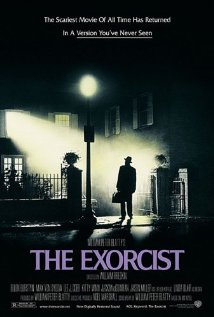
This is the only horror movie that generally scared me. A lot of the scenes stick with you after you watch it,  even the notion that a 12-year-old girl can suddenly become possessed by a demon. There’s also a lot of good points about faith and doubt raised in this film. In the extended version, the scene where a possessed Linda Blair walks up and down the stairs like a spider makes my skin crawl.

These are just some of my favorite horror films. There aren’t too many recent ones I’ve enjoyed, as it seems many of them rely on high body counts and flat characters, as opposed to rich character development, an intriguing plot, and effects that aren’t overdone.

My girlfriend and I plan to watch a few of these and some other favorites during these days leading up to Halloween.