Influencers: A Bigger and Bolder Sequel (Review)

Writer/director Kurtis David Harder’s 2023 film Influencer is a tight thriller with a dose of social commentary. His sequel, Influencers, is much broader in scope, especially regarding its characterization, commentary, and the overall stakes. It’s rare for a sequel to match the original, but Influencers breaks the mold in that regard. Though the film has some flaws, it’s an entertaining romp that leads to a knock-down, drag-out finale.

At the end of Influencer, the villain, CW (Cassandra Naud), was left for dead on an island, while Madison (Emily Tennant) barely escaped. The sequel picks up a few years later. CW somehow survived and moved to southern France. She masks her past, tries to bury her homicidal tendencies, and falls in love with Diane (Lisa Delamar). Initially, CW succeeds in starting over. That all changes, however, when Diane and CW meet a British influencer named Charlotte, played by Georgina Campbell, at a posh resort. CW doesn’t like the attention Charlotte bestows upon Diane, and well, anyone who has seen the first film likely knows that CW can’t subdue her murderous impulses for too long.

Madison, meanwhile, was arrested by police in Thailand and blamed for the murders that CW committed. Eventually, she, too, tries to start over and buries her online persona. However, that doesn’t stop the harassment or stalking. She’s even questioned about the murders on a true crime podcast. Madison just can’t quite clear her name or escape her past. Eventually, she realizes that CW survived and tracks her to France to finish things off once and for all.

In the meantime, there’s another subplot regarding a right-wing bro influencer, Jacob (Jonathan Whitesell), and his girlfriend, Ariana (Veronica Long). It’s she who tells Jacob that he has to be more radical online to drive likes and subscribers. It’s a bit of a half-baked commentary on the rise of the Joe Rogan-type podcasters and the white male insecurity and radicalization crisis. Eventually, Jacob and Ariana get swept up in Madison and CW’s crossfire.

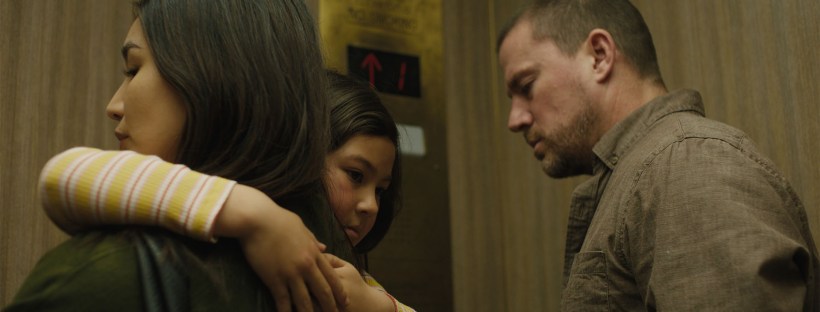
A still from the film Influences

It can’t be understated just how damn good Naud is once again as CW. She’s makes for a sly and cunning villain. But in the sequel, she’s given far more backstory, and for the most part, the film is shown from her perspective. In this film, CW has grown far more savvy, utilizing all sorts of technology and tracking to avoid culpability for her previous actions and to keep tabs on Madison. Tennant’s Maidson, on the other hand, is far more vulnerable this time around, facing increased online backlash, before developing a steely determination to stop CW.

One of the film’s major flaws is the suspension of disbelief it requires. For instance, it’s never stated how exactly CW escaped the island in the first place. There’s no plausible explanation for it, and it’s a gaping hole that the script never fills. At one point, Diane asks CW about it, but CW skirts around the answer. It’s simply a little too unbelievable. Additionally, though the film touches upon the explosive rise of far-right bro influencers, not enough is done with this, despite Jacob and Ariana’s storyline.

That said, the film reaches an explosive conclusion and a bloody showdown between CW and Madison. It’s one hell of a payoff, too. There’s also potential here for yet another sequel. Maybe a trilogy? I wouldn’t mind seeing that. Overall, Influencers maintains the tension of the first film, while pushing the characterization deeper. There are some major plot holes, but still, this is a worthy follow-up that addresses the pressure of influencer culture, before arriving at a fisticuffs finale.

Influencers will stream on Shudder beginning December 12.

A production still from the found footage film Man Finds Tape.

Man Finds Tape: An Intriguing Found Footage Nightmare (Review)

Something sinister is afoot in the small town of Larkin, Texas, and popular YouTuber Lucas Page (William Magnunson) is determined to unravel the eerie mystery. That’s the general premise of co-directors/writers Paul Gandersman and Peter S. Hall’s feature debut Man Finds Tape, a film that combines found footage, mockumentary, and even cosmic horror. For a first film, the directors crafted an unsettling narrative, and though the movie is a bit uneven overall, it’s worth the ride.

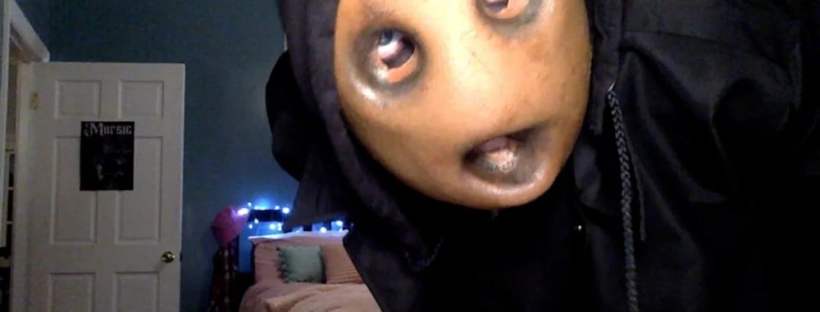
Early in the film, we learn that Lucas found a tape with his name on it after cleaning out his parents’ home and old barn. It should be noted that his parents died of a mysterious illness, but prior to that, they passed on their love of filmmaking to Lucas and his sister, Lynn (Kelsey Pribilski). The tape shows a stranger entering Lucas’ childhood bedroom. It’s a hair-raising sequence that drives the rest of the film and leads to a much larger plot. Lucas wants to discover who the heck the stranger is, and he consistently enlists the help of Lynn to unravel the mystery, though she’s reluctant at first. The popularity of Lucas’ YouTube channel, Man Finds Tape, earned Lynn unwanted attention. Lucas made a name for himself by showing graphic videos.

For the most part, the film is shot in a mockumentary style, with Lynn handling most of the voiceovers and narration. The feature shifts to found footage and analog when Lucas or Lynn show off what they’ve filmed or what they’ve discovered on older tapes, like the recording of the stranger entering Lucas’ bedroom when he was a kid. These grainy videos avoid the shaky, handheld effects of other found footage movies, most notably The Blair Witch Project. The old tapes also show everything, and I mean everything. They don’t cut away. There’s one video Lucas constantly shows on his channel of a van running over and killing a person

A Production still from Man Finds Tape.

By the halfway point, Lucas and Lynn draw a connection between the stranger, played by
Brian Villalobos, and Reverand Endicott Carr (John Gholson). For years, the reverend hosted a public access, faith-based TV show. Lucas and Lynn’s parents filmed the show for a while. During parts of his taped sermons, viewers, including Lucas, nod off. The feature does a stellar job keeping the viewer in the dark until the last act about who’s responsible for what’s going on in the town. It’s not clear if the stranger or the reverend is part of some larger diabolical plan to control the town and infect its residents.

The constant shifts between mockumentary-style filmmaking and found footage can be a little bit jarring, and the film’s ultimate explanation doesn’t quite land, including a convoluted plot regarding Lucas’ ex-girlfriend, Wendy (Nell Kessler). That said, the final 30 minutes feature some impressive special effects and veer into cosmic horror territory. Meanwhile, Pribilski and Magnunson’s performances really sell the film, especially when the premise grows more and more bonkers. Pribilski’s character is not quite the believer that Magnunson’s Lucas is, and the dynamic between the two characters strikes some conflict early on.

The film also touches briefly on internet fame and YouTube influencers, especially within the first 20 minutes. The more Lucas’ channel grows in likes and subscribers, the harder it is on his mental health. It even has ramifications that affect Lynn, since it brings her unwanted notoriety, including people filming her on the street. That said, a lot more could have been done with this premise.

Man Finds Tape, though uneven at times, is still an impressive feature debut from Gandersman and Hall. If you like found footage or cosmic horror, this is definitely worth a watch. It’s a slow-burn mystery that eventually evolves into an otherworldly nightmare.

Man Finds Tape is now playing in limited theaters and available on VOD.

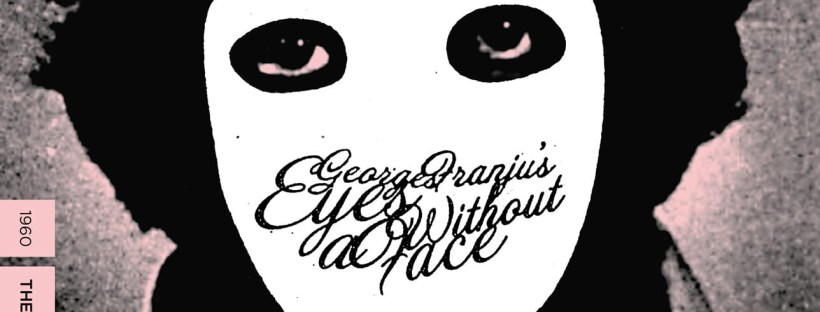
The Criterion Collection's cover art for Eyes Without a Face

Five Criterion Horror Recommendations (For the Barnes & Noble Sale)

For physical media collectors, July and November mark the Barnes & Noble Criterion Collection 50 percent off sale, the only time of the year, other than the one-day Criterion flash sales, when Criterion movies are actually affordable. The current sale lasts until December 7. In honor of the sale, I wanted to share five of my favorite horror movies within the collection.

Eyes Without a Face

This 1960 French film, directed by Georges Franju, is a masterclass in Gothic aesthetic and tone. A surgeon, played by Pierre Brasseur, kidnaps women to graft their faces onto his disfigured daughter, Christine, played by Edith Scob. This movie works so well in part because of Scob’s performance. She’s strangely mesmerizing and arresting on screen. She has some of the most expressive and haunting eyes that you’ll ever see in a film, and the thing is, she wears a blank mask through much of the film, but you’ll never forget her performance.

Additional Criterion suggestion: if you like Eyes Without a Face, also check out the black and white 1955 French mystery/horror movie Diabolique.

Night of the Living Dead

George A. Romero’s Night of the Living Dead was released on physical media a lot over the years, and it’s available to stream virtually everywhere. That said, Criterion’s recent 4K restoration looks damn good. There’s also a LOT of special features, including a radio interview with Duane Jones, who played the lead Ben. There aren’t many interviews of Jones talking about the film, so that alone makes this a must-have pick-up.

Additional Criterion suggestion: if you like Night of the Living Dead, check out 1962’s Carnival of Souls, one of the biggest influences on Romero’s film.

The Uninvited

Other than Robert Wise’s stellar The Haunting, The Uninvited is one of my favorite haunted house movies. The 1944 film follows a pair of siblings from London (Ray Milland and Ruth Hussey). They purchase an affordable cliff-top house in Cornwall, and well, soon discover the house was so affordable because it’s haunted. This film is incredibly atmospheric, eerie, and features an unforgettable score by Victor Young.

Additional Criterion suggestion: if you like The Uninvited, then check out The Innocents, which is an adaptation of Henry James’ famous ghost story “The Turn of the Screw.” Robert Eggers has frequently cited The Innocents as one of his biggest visual influences.

Cure

Few movies have crawled under my skin as much as the Japanese film Cure. Directed by Kiyoshi Kurosawa, who would direct the equally eerie Pulse just a few years later, the movie follows detective Takabe (Koji Yakusho) as he tracks a series of identical murders, committed under similar uncanny circumstances. However, nothing seems to connect the murders, despite their commonality. This is a deeply unsettling and philosophical movie about the nature of evil itself. This, along with some of Kurosawa’s other movies, are absolute must-sees.

Additional Criterion suggestion: It was just announced that Kurosawa’s latest movie, Cloud, will be released to the Criterion Collection in February. You can read my review of the film from this year’s Overlook Film Festival here.

Haxan

This silent film is important to the history of horror generally. It’s essentially a history of witchcraft and has some utterly striking visuals, including witches lining up to kiss Satan’s booty. The Criterion edition is loaded with special features, including a reedited 1968 version narrated by Beat author William S. Burroughs. Put this one on and get lost in the hypnotic visuals.

Additional Criterion suggestions: if you dig early horror, then make sure to also check out Cat People, Freaks, Vampyr, and I Walked with a Zombie, all released within the last few years. Like Haxan, these are all must-watches.

And yes, I know, I know that I didn’t include any of David Lynch’s films on this list. Almost his entire catalogue is now in the Criterion Collection, but here’s the thing, how do you pick just ONE Lynch movie to include on such a list? His movies also combine a lot of genres, including neo-film noir, drama, dark comedy, and yes, horror. So that’s why I didn’t include his work on the list, but Eraserhead, Lost Highway, Twin Peaks: Fire Walk with Me, Blue Velvet, Mulholland Drive, and Inland Empire are now all Criterion releases, many recently remastered in 4K, and they’re all horror adjacent. If you’re looking for a good place to start with Lynch, I recommend Mulholland Drive or Blue Velvet.

I also didn’t include anything from David Cronenberg because most of his films are in the collection, and I can’t pick just one. I recommend Videodrome and Scanners as starting points. Unfortunately, The Fly is not in the collection.

The Barnes & Noble Criterion sale runs until December 7.

A production still from the movie Keeper

Keeper Plays Out as a Creepy, but Flawed Dark Fairytale (Review)

Osgood Perkins has been on a real winning streak lately, with the massive success of Longlegs and The Monkey. His multi-picture deal with NEON has paid off so far. The director’s latest, Keeper, contains some of the most chilling imagery out of any horror film this year. Perkins spins a dark fairytale and a warning about toxic relationships. Yet, for all of the frightening imagery, the movie feels a bit too paper-thin, especially in its second half.

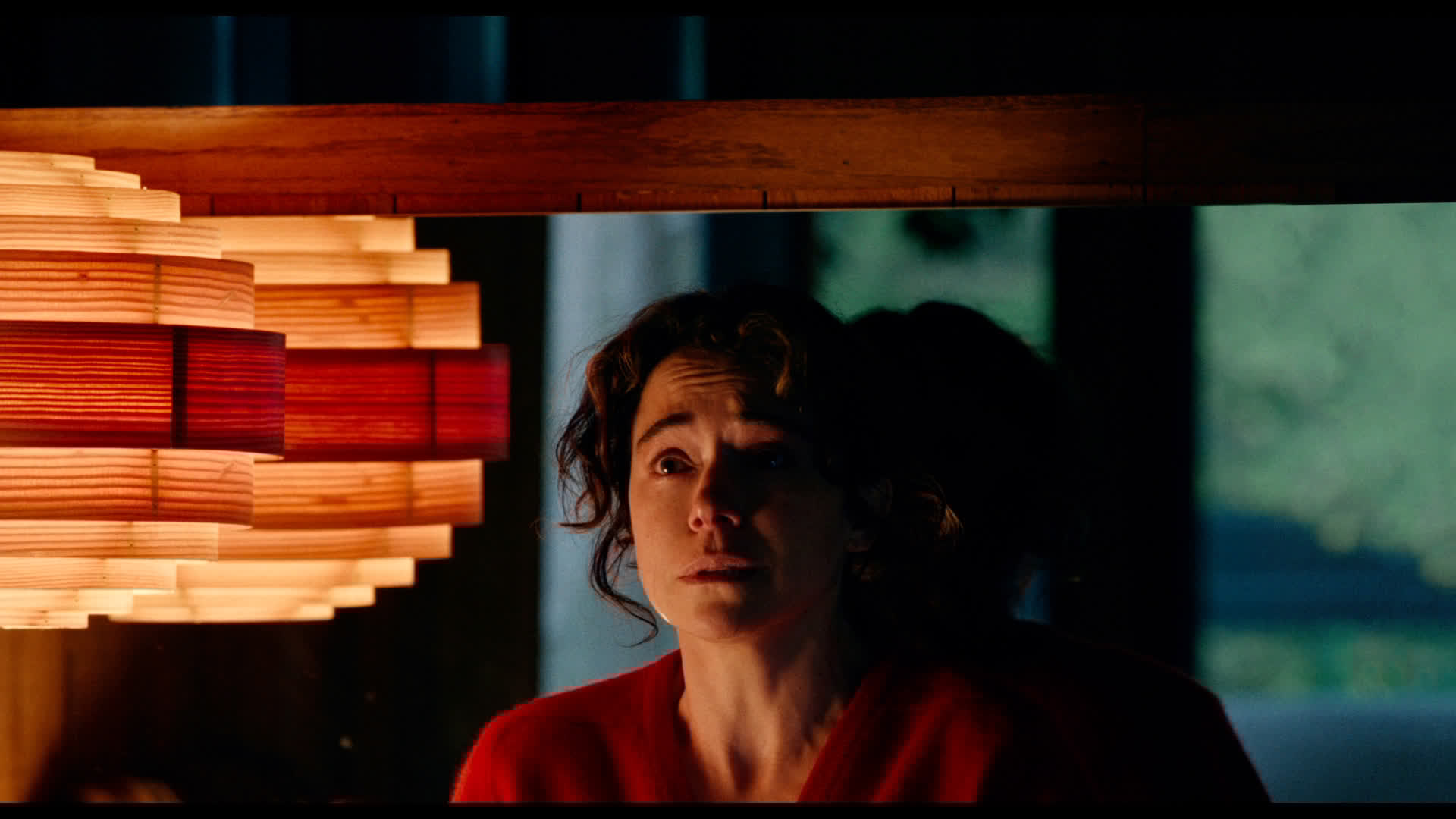
Keeper stars Tatiana Maslany as big city girl Liz and Rossif Sutherland as her boyfriend Malcolm. Hoping for a romantic weekend, Malcolm takes Liz to his remote cabin in the woods, and well, because this is a horror movie, things go horribly, horribly wrong. Before the horror kicks into overdrive, Perkins spends some time with Liz and Malcolm, and I’d argue the film’s first act may be its strongest. There’s unspoken tension between the two, though the source of it isn’t quite clear. Maybe it’s simply the different lifestyles and Liz’s love of big cities. Maybe she simply distrusts men. Regardless, she doesn’t fully embrace Malcolm, and this is most evident when they’re alone together, be it sipping wine over dinner or driving to the cabin. Something about the relationship feels off, though the source of Liz’s suspicion isn’t quite clear. Malcolm seems like a sweet enough guy.

The film enters typical Perkins territory once Malcolm’s reclusive cousin Darren (Birkett Turton) shows up, with an Eastern European girlfriend who Darren claims doesn’t speak English. This deepens Liz’s discomfort and rightfully so, especially when she warns Liz that the chocolate cake Malcolm purchased for her “tastes like shit.” Yet, once Darren and his latest arm candy leave, Liz devours the cake, even though she tells Malcolm that she hates chocolate.

At that point, the film gets really weird, even by Perkins’ standards. It feels like a fever dream into hell, as Liz grows increasingly paranoid and continually sees strange women in the background or out of the corner of her eye. Even worse, Malcolm, a doctor, claims he has to return to the city to suddenly see a patient, leaving Liz alone with her hallucinations and creepy cousin Darren next door.

A production still from the movie Keeper

By the film’s second half, Perkins barrages viewers with a series of unsettling imagery and a brooding atmosphere. There’s even a woman with multiple faces crawling around in the basement. Trust me, you don’t want her to remove that bag from her head. The film also edges dark fairytale territory once the source of the scares is explained, all involving Malcolm. This is where the film falters. The lore isn’t built up enough and some of it comes across as too absurd, even for a horror movie. The film works better when it’s more grounded in reality and when Perkins explores the growing tension between Liz and Malcolm. The film’s main weak point is the script, penned by Nick Lepard. There’s too much explanation suddenly crammed into the film’s second half, and a lot of it is given by one of Malcolm’s monologues.

All of that aside, the film does ramp up to quite a great ending. I’ll never be able to look at honey the same way again. Overall, Keeper isn’t quite as strong as Perkins’ last few films, or even his earlier work, like The Blackcoat’s Daughter, but it continues to prove he’s one of the most effective directors at creating nightmarish sequences and atmospheres that invoke dread. Keeper succeeds when it’s more based in reality and explores a strained relationship. Its second half is hampered by poor explanation and weaker writing.

Keeper is currently playing in theaters.

Interview: Strange Harvest Director Stuart Ortiz & Stars Peter Zizzo and Terri Apple

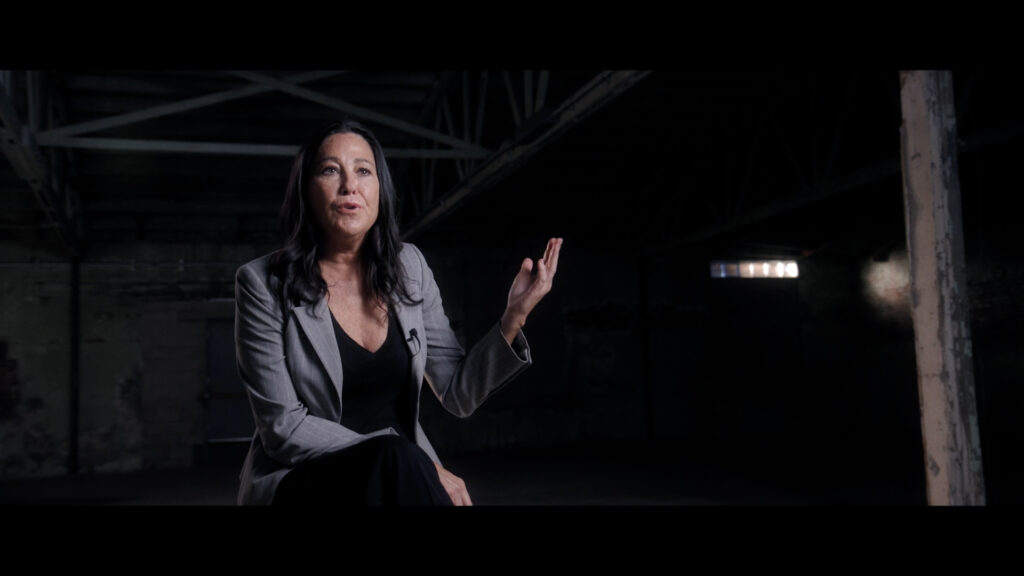
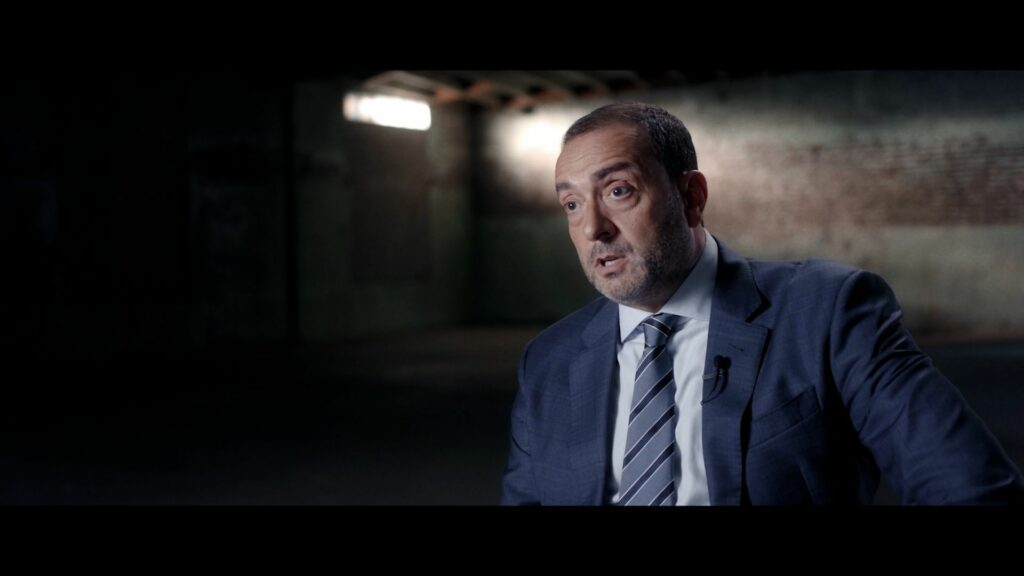
Last fall, during Fantastic Fest, I had the chance to interview director Stuart Ortiz about his film Strange Harvest: Occult Murders in the Inland Empire, and stars Peter Zizzo and Terri Apple, who play detectives Joe Kirby and Alexis Taylor. The film is currently in theaters, and while Weapons has dominated the genre conversation lately, I highly recommend Ortiz’s film. It’s a deeply unsettling and grisly take on true crime. Since the movie just had its theatrical release, I thought it would be a good time to share the interview, which was initially published over at HorrorBuzz.

Stuart, what made you want to film a faux true crime documentary? Is it simply because of the culture’s obsession with serial killers?

Stuart Ortiz: In my first film, Grave Encounters, which is a found footage film, we had a little bit of documentary elements in that. I always thought it was a cool approach to a horror movie and a horror story that I haven’t seen utilized that much. It was always on my mind, trying to return to that and do something that was a documentary horror movie.

During COVID, Tiger King came out. It was a phenomenon. Tiger King, at its core, is basically a true crime story. Even though it has all this other silly stuff, it’s basically a true crime story. It occurred to me that true crime was huge and everywhere. It wasn’t just a small thing. It really had legs.

I was also very influenced by True Detective. I’ve always been a fan of police procedurals. When you inject a bit of weird, uncanny, otherworldly stuff, it’s perfect for me. It’s up my alley creatively.

The Mr. Shiny character was kind of a conglomeration. Some of the Zodiac Killer is in there. His motivations are not the more conventional. Our killer in the film has his own motivations that are otherworldly. He’s obsessed with this mythology and a cult element. If I had to say there were any serial killers [that influenced the film], probably David Berkowitz, the Son of Sam killer. He thought he was talking to some entity. There was this guy, Herbert Mullin, who killed because he thought an earthquake would destroy the world if he didn’t. These were guys who were driven by a higher purpose in their minds. I kind of used them as examples.

Peter and Terri, can you talk about playing these two detectives and also how you dealt with subject matter that’s so heavy, and at times, shocking?

Terri Apple: It was very interesting because I get freaked out by this kind of thing, even though I watch a lot of it. When I was a kid, my father owned a building, and they had Halloween there. I never went through the haunted house. It freaked me out. My dad took me to meet all the actors in character. Then, he finally convinced me to go through the house, which was a four-story building. It was such a funny thing. I thought I could do this character. That’s what got me onto set.

I realized it looked really realistic, but I have a big empathy for this. I’m also fascinated by serial murders and the genre in general. From that perspective, I always thought if I wasn’t an actor, I would have loved to have been someone who helped solve serial murders in real life.

In general, I liked playing her [Det. Alexis Taylor] as real as possible. That was her passion, to get to the bottom and solve this because of her childhood and her background.

Terri Apple as Det. Alexis Taylor

Peter Zizzo: Like Stuart and Terri, I’m already a big fan of the genres, both horror and true crime. I immediately was drawn to the approach to this film and wanted to bring as much realism to a character that requires the buying in of the viewer.

My therapist knows a retired New York City homicide detective. I got on the phone with him a couple of times and had him tell me stories. I really paid attention when he described some horrific things. There was a certain grace about the guy and a certain empathy that somehow came through this matter-of-fact way he’d describe really horrible things. I thought it was a great lens to view my character through. You can see behind his eyes that there’s a lot of sorrow.

Stuart really specified that he wanted micro expressions. I thought it was a cool thing for me to bring to this character. It wasn’t just me sitting there, running lines in a suit. It also led me to work on my voice a little bit.

There’s a moment in the film when a victim’s mother says that the names of serial killers become infamous, but too often, we forget the victims. Does anyone want to comment on that powerful concept?

Stuart Ortiz: I think that is completely true. That’s just the reality of the times we live in. There’s been a fascination with these killers. It’s a sad truth that their victims are lost in the shuffle. They become numbers and faceless names. It’s a tragedy. It was important in this to highlight the victims. They couldn’t be left out or on the sidelines.

Terri Apple: I worked with Find the Children about 20 years ago. I went into schools to talk about missing kids. It really always has been a personal passion. I do think the police need a stronger thorough thread to connect these victims and to give these victims a platform.  It is true that serial killers get a bigger name. We’re desensitized now. I think it’s important to emotionally connect with the families.

When I walk in on that family, in the beginning of the movie, it’s real. It does happen. It’s a real family. It’s a true component.

Peter Zizzo: Typically, in life, when you hear about something horribly tragic, one of the things you’ll say is, God, I can’t imagine what that must be like. With most horror films, you don’t have to imagine. They show you the kills and the horror all the time. With this film, you have two level-headed narrators that walk you through these unbelievable, horrific things. I think it involves more empathy and more shock when you imagine what it must have been like. You just see the end result.

Terri and I, our characters, talk to you calmly about how their blood was drained. You can see it really bothers us, but you don’t see it happen. You hear about it, and in a way, that’s almost doubly effective. It’s a great approach to a horror film.

Peter Zizzo as Det. Joe Kirby

It feels like each murder case we learn about is more brutal than the last. Can you talk about filming some of those gruesome scenes?

Terri Apple:  I want to jump in from a woman’s perspective and from the character’s perspective. I thought I wasn’t going to be able to handle it. Stuart and I had a conversation about it. I told him I couldn’t do it. The character could do it, but I can’t do it. Peter had no problem with it. [Laughs]. I was freaked out for a very long time. I kept saying that I can’t. I realized I’d have to be on set with this in actuality. It’s not play acting. You’re recreating. It was so life-like on the set.

I have to tell you I was extremely surprised by the brilliance of the way Stuart set it up. Yes, it’s brutal, but guess what? These murders are freakin’ brutal. It was really weird, but this is the reality of what goes on. I played a character who has a real problem with it, but her passion of solving it was greater. That’s my own perspective, as someone who was so nervous about doing it.

Stuart Ortiz: It was a pivotal thing to try to get the realism right. Tom Savini, a famous make-up artist who did Friday the 13th, Dawn of the Dead, and all of these amazing movies, would talk about how you just know when it’s right and when it looks right. I can’t exactly say what that barometer is for me, but when we set up the bodies and crime scenes, I tried to go for the realism and not have it be more of a Hollywood thing, where it’s cleaner and more presentational with a dead body. It was about the awkwardness and trying to capture the reality of death as closely as we could.

Peter Zizzo: We did a screening in Beverly Hills. Some of the people who came out to support me are my friends, but they don’t necessarily want to see gore and violence. It’s a real testament to the way the film handles it. For them, it was a lot, but they still loved the movie. You have these shots, snippets, and flashes of something. It doesn’t linger enough where you get up and walk out. The film handles it deftly. For those repulsed by violence and gore, I think they can handle this. What I come away with is the story. I think that’s why people that doesn’t necessarily gravitate towards the kill count will also be good with this. It’s just the right amount to freak you out, but it doesn’t feel exploitative.

Terri Apple: With all these really gory movies that we do watch, like Friday the 13th, you’re actually watching people be murdered. Here, we walk into scenes post. This is a different perspective.

Stuart Ortiz: Mostly what you see are things in the aftermath and examine crime scenes after things have happened. I think that’s why true crime is so popular. It gives people who listen to it or watch it a context and safe space to experience these horrible things. It’s always with commentary. Your hand is held through the whole thing. Usually, it’s something that happened in the past. It’s not a direct threat now.

I think that helped us with our film. Even though we do have horrific crime scenes and violence, it’s always with the examination and lens of a true crime documentary. Like Terri is saying, it helps people and lessens the blow. It’s a sugar with medicine kind of thing.

Good Boy Production Still

Good Boy and a New Type of Haunted House Film

There’s been a trend this year within the horror genre: haunted house films told from unique perspectives. At the start of the year, we had Presence, directed by Steven Soderbergh. In this particular slow-burn feature, the film is largely shot from the POV of poltergeist(s). The spook(s) torment a grief-stricken family, especially the daughter. Though the film is pretty light on scares, it’s an interesting take on a familiar subgenre. Instead of following a family moving into a home that’s haunted, we largely see the world through the eyes of the supernatural presence.

Now along comes Good Boy, which just debuted at the South by Southwest Film Festival. In this film, we see everything through the perspective of Indy, an adorable dog who’ll do whatever it takes to protect his owner from a frightening entity. Unlike Presence, Good Boy has some really solid scares. So far, it’s my favorite horror film of the year. Here’s my review of the film, which was initially published at HorrorBuzz.

********

It’s been quite the year for animals in film. Flow, a wordless film from a cat’s perspective, won Best Animated Feature at the Oscars. Flow has plenty of endearing moments, but it’s also a nerve-rattling viewing experience because the cat must survive mass flooding and life-ending climate disasters. Now along comes Good Boy. Here, we have a haunted house movie, and really a meditation on death, told totally from a dog named Indy’s perspective. Like Flow, it’s one harrowing watch.

Directed by Ben Leonberg, the film stars Shane Jensen alongside Indy. Jensen plays Todd. In the opening minutes, we see Indy at his owner’s feet. Suddenly, Todd coughs blood, just as his sister enters the apartment in time. This opening gives away quite a bit, and Todd’s condition and what’s really going on with this film become much clearer as early as the halfway point. After the foreboding start, the film cuts to various home videos of Todd and Indy, and yes, the two are adorable together, especially the grainy footage of Indy as a puppy in Todd’s arms.

Before the film meets its conclusion, there’s a creeping sense of dread and some solidly scary scenes. Indy fears the rural house that Todd lives in. It’s a long-standing family home, but hardly anyone lasted more than a few weeks in it, including Todd’s grandfather. This is where the film flirts a lot with experimentation. Instead of the typical family haunting, here we have a haunted house movie from the dog’s point of view. We see shadows in the corner through Indy’s perspective. We hear loud thumps at night and then watch Indy’s ears perk up as he whimpers and knows that whatever’s haunting the house is inching closer and closer to his owner, no matter how badly Indy wants to keep the presence at bay.

Some of the camera shots, which sometimes focus on a snowy TV or the staircase, resemble Skinamarink. This is also why I know this film won’t be for everyone. That other film has its lovers and haters. This feature risks the same thing with some of its focused shots and emphasis on the mundane within a house. Yet, like SkinamarinkGood Boy, at some of its most frightening moments, makes familiar objects really, really creepy, creating a sense of the uncanny. Suddenly, the static noise from the TV, and other familiar sounds and images, provoke a sense of dread. There are unsettling moments in this film, especially when the scares are juxtaposed with the prolonged sound of Todd wheezing and coughing. The sicker he becomes, the more his relationship with Indy changes. The word “stay” takes on new meaning here.

This has been an interesting year for both animals in film and the haunted house movie. At the beginning of the year, Steven Soderberg’s Presence showed us the point of view of a poltergeist tormenting a family, especially the grief-stricken daughter. Now, we see everything creepy in a rural spook house from a dog’s point of view. Yet, no matter how much Indy wants to protect his owner, he can’t prevent the inevitable. Though Good Boy’s experimentation may turn off some viewers, this lean feature gets right to it and has some genuine frights. Two paws up for this chilling tale.

****

I can’t say what’s causing this new wave of haunted house films, told from creative and clever POVs, but I’m all for it. The horror genre continually finds a way to reinvent itself, while tapping into our collective anxieties and fears. Presence and Good Boy make a familiar subgenre feel new again, and Indy gives one of this year’s best performances so far!

Wildcat: Finally, a fitting tribute to Flannery O’Connor

I’ve always been perplexed that Flannery O’Connor, or her haunting novels and short stories for that matter, were never really given proper cinematic treatment. I understand why there’s so much focus on the Lost Generation or even the Beat generation, but O’Connor sort of exists between those two literary movements. writing a flurry of work in the 1950s and very early 60s. Still, there’s a lot to mine in terms of her life story, including her close friendship with Pulitzer Prize-winning poet Robert “Cal” Lowell, who was her teacher at the Iowa Writers’ Workshop, or her battle with Lupus, which took her life in 1964, or even her devout Catholicism. For the most part, other than a PBS documentary from a few years ago, O’Connor’s life and work have largely been ignored by filmmakers.

Again, I find this baffling. I’ve taught O’Connor’s work nearly every semester, though not always the same short stories. I teach her in American literature and often, Intro to Creative Writing. Students tend to really dig her, be it the Southern Gothic undertones, or even the sardonic statements in some of her lectures and essays. They like her, and her themes are incredibly resonant today, especially her address of the shifting views in the South and tension brought by the Civil Rights Movement. We’re rehashing those very debates today.

Finally, O’Connor gets the proper treatment in film at the hands of Ethan and Maya Hawke. He directs and she stars both as O’Connor and various characters from her story in the film Wildcat, which is one part biopic and one part literary adaptation of about half a dozen of her stories, including “Parker’s Back,” “The Life You Save May Be Your Own,” “Good Country People,” among a few others. The film also tackles O’Connor’s time at the Iowa Writers’ Workshop, her personal faith, and her illness. It’s a beautiful testament to her art and life. I suspect fans of her work will enjoy it. Maya Hawke especially gives a heck of a performance, showing what she’s capable of post-Stranger Things. I’m confident she’ll have a long career.

If you want to read my full thoughts on the film, you can check out my review for 1428 Elm. Wildcat is getting a very limited theatrical release on May 3, before expanding to more theaters.