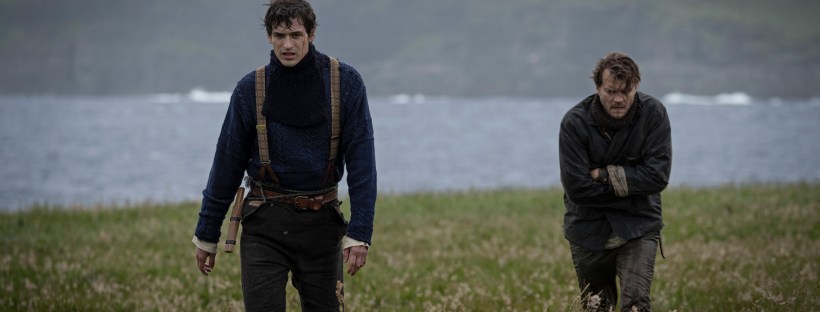
Another one of my favorite movies out of this year’s Fantasia Film Festival was No Rest of the Wicked, a queer vampire movie based on a 19th Century German story. The movie stars Egor Venned as Baldur, a young fisherman who meets a whaler named Helge (Pilou Asbaek). Initially, Baldur denies his feelings for Helge, considering the time period and Baldur’s small, conversative town on the Faroe Islands. Yet, eventually, he can’t deny what he feels, and of course, the movie has vampirism in it, too! The feature won two juried awards at Fantasia, including Best Director and Outstanding Performance (Asbeak).
I talked to Venned and Kalle for The Horror Lounge, and you can read some of the interview below.
The Horror Lounge: What was it like shooting at the Faroe Islands? The film does a great job depicting the natural beauty, yet danger of them.
Kasper Kalle: I’m not from the Faroe Islands. I’m from Denmark. For me, it was a big experience to come to the Faroe Islands and see it for the first time. I went there for the summer, and it was amazing. There was sun all week when I was there, which is rare for the Faroe Islands.
I also love using nature in my films. The landscape and nature of the Faroe Islands fit so well with the themes of the film. It’s so isolated, and the fog and mountains fit well for the mysteriousness of the film and the horror. But it was also really, really tough. The weather on the Faroe Islands can change in an instant. It was really tough, but I loved it.
Egor Venned: For me, I went back home to where I’m from. I was there three months in total, two months shooting, but I went there a month before to reconnect with my home. I was also ready for what we were going to get into with the weather. I don’t think the Danish crew were ready for all of that. [Laughs].
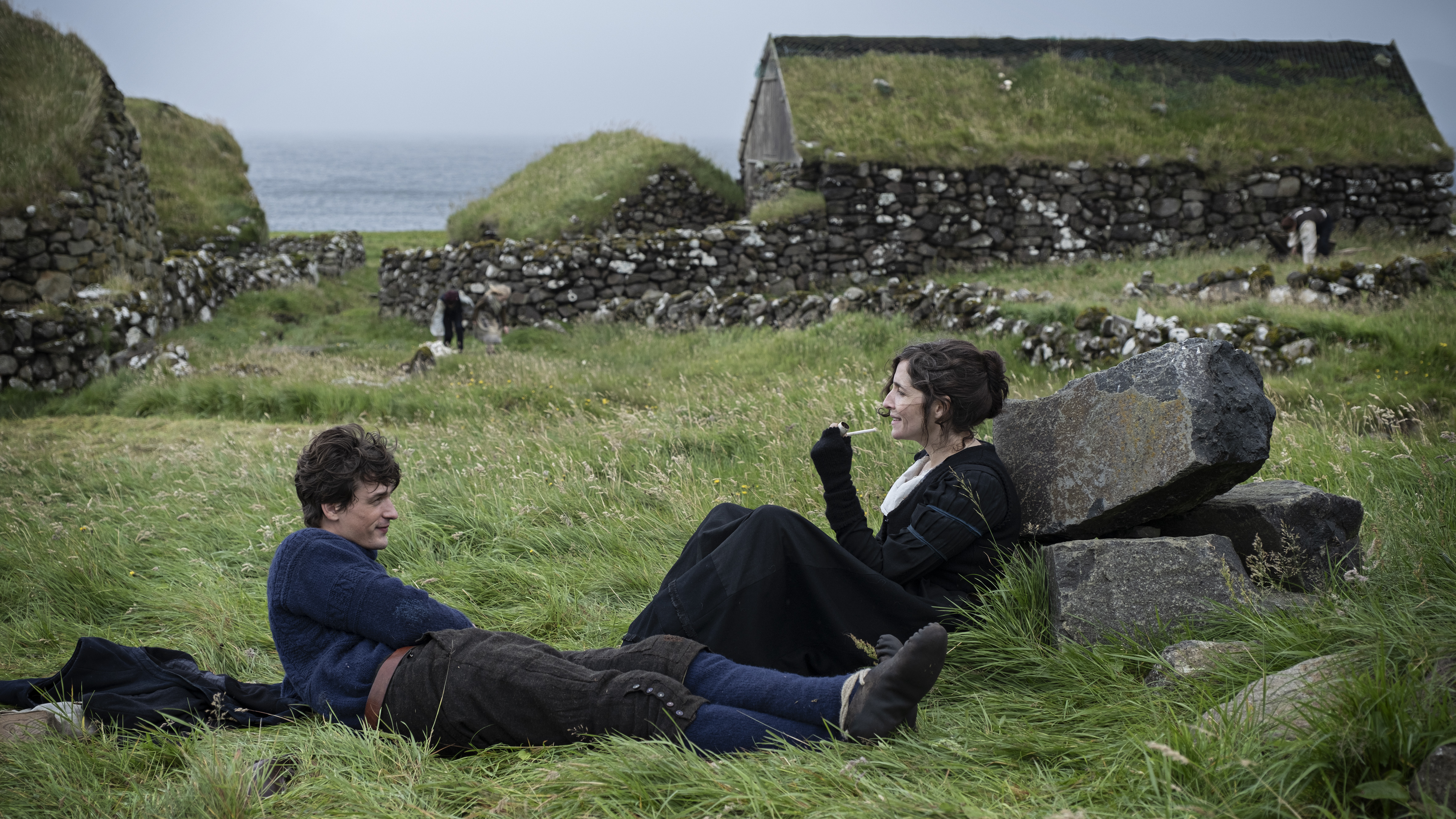
It’s rare for it to be sunny all the time. During some summers, you may never see the sun. That was a fun experience, those weather challenges, but we also got to shoot at all of these locations, including an old house from the 1600s that’s a museum now. We had learned about the history in school, so being able to incorporate so much of Faroese history and culture was just such a cool experience.
The Horror Lounge: Vampires have a long history of sexuality and even queerness. Can you address that aspect of the film?
Kasper Kalle: It’s based on a short story from 1884, written by the German author Karl Heinrich Ulrichs. It was written ten years before Dracula. When I read the short story, I could see the vampire theme, but it was so different. It was a vampire story but told in a different way, and I really liked that. We didn’t want it to be like all other vampire stories we’ve seen, but of course, it’s still about sexuality and love and the force within us that we can’t control. I think that’s typical for a vampire story.
The Horror Lounge: Egor, can you talk about working with Pilou and the relationship that your characters have in this film?
Egor Venned: Pilou is really loveable as a human being. He’s also just a very good actor, so acting with him is just really easy. It was my first experience acting. We had some conversations before starting and got to know each other. He took me under his wing and made everything less scary and less nerve-wracking. He said we’re here to play and we could make mistakes. Because of his easygoingness, it was a nice start. Once we got going, it didn’t feel nerve-wracking, and I got comfortable really quick.
Also, the whole team made me feel so comfortable and allowed me to just explore and give my take on it from the beginning. It all ended up working organically, especially with Pilou. Because of our chemistry in real life, we became friends really quickly. I had the best experience acting.
The Horror Lounge: Can you speak about the role of the town and the role that religion plays in the film?
Kasper Kalle: For me, it’s difficult to talk about the role of religion. When you’re from a Christian country, it’s just so deep in everything, in culture and your way of thinking. It’s so rooted in everybody. Even if you’re not actually religious, you still grew up in a religious country, and everything is based on that. For me, it’s not a critical comment on religion, but more about who we are and where we’re from. Religion is the culture.
The Horror Lounge: Baldur has quite a character arc in which he eventually accepts his feelings and who he is. Can you comment upon his character?
Egor Venned: In the beginning, speaking of religion and the conservatism of where he was from, they look at it as a dark force. Gay love is dark and scary. It’s demonic. He’s scared of it in the beginning. He has a lot of respect and love for his mom. He loves where he’s from, but at the same time, love is powerful. There’s nothing that can stop it. In the end, he needs it so bad. He’s willing to go to the length that he goes to. It’s just a story that love always wins.
Kasper Kalle: You start to think that Baldur has to go through this big development, but it comes natural to him when he falls in love. It’s actually the mother who goes through a bigger development. It’s more difficult for her to accept.