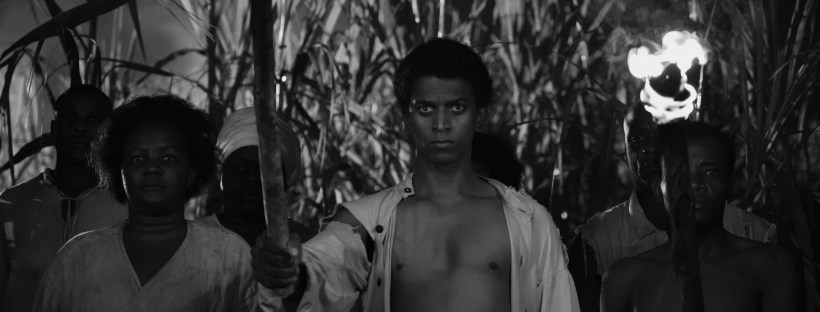
A production still from the documentary Black Zombie

From Haiti to Hollywood, Black Zombie Explores the Zombie’s evolution

Zombies remain a persistent and popular monster within the broader horror genre. Director Maya Anna Bedward’s new documentary, Black Zombie, explores the zombie’s Haitian roots and its early depictions in Hollywood. In 90 minutes, Bedward explores the anti-colonial history of voodoo and various representations of the creature in Hollywood. Her doc includes interviews with film scholars, voodoo practitioners, and well-known figures such as Slash, who co-produced the doc, and special effects legend Tom Savini.

The documentary just premiered at South by Southwest Film Festival, and I had a chance to interview Bedward for The Horror Lounge. The interview can be read in full here, but I included some of it below.

Maya Annik Bedward: My background is that I’m Afro-Caribbean. My father was born in Jamaica. I’ve always been interested in stories that look at our history, traditions, and cultures not through a Western lens. I’m very interested in the connections to West Africa and the traditions that were taken from West Africa through the transatlantic slave trade. Often, we’re told that a lot of that history isn’t captured and has been lost. That’s just not true. You can find traces of it in our music, food, and most powerfully, in our spiritual traditions.

When I found out the zombie was a Haitian voodoo metaphor for slavery, that just blew my mind. I was shocked I didn’t know that. I had to learn more. The more I researched, the more I knew I had to tell the story. That’s the way I came at the story.

I actually wasn’t into horror at all. I’m a filmmaker and love film, but that was the genre that never really appealed to me. As I started doing research for the film, I actually fell in love with horror. I’ve been working on this film for about ten years. Through that journey, I became really interested in horror as a tool to tell really meaningful stories.

The Horror Lounge: Your film contains interviews with directors, horror scholars, and also actual voodoo practitioners. Can you talk about the importance of having that diverse array of voices in your documentary?

Maya Annik Bedward: I think that’s what makes this story so interesting is that it touches so many parts of the world. We’re in Hollywood. We’re in France. We’re in Haiti. The zombie is a global phenomenon. I think it was the nature of the story, but for me, it was important to center Haitian voices and the voices of Haitian voodoo practitioners. I wanted to start from that place.

Although a lot of people don’t know the origin story of the zombie, what has remained is the total denigration of Haitian voodoo. It’s synonymous with black magic and sorcery. That all comes from these early zombie films. I always wanted to center those voices and show voodoo in its true nature and how beautiful and healing it is.

It was a big story, so I had to go into these key places and get the right people to talk about those different points in the history of the zombie.
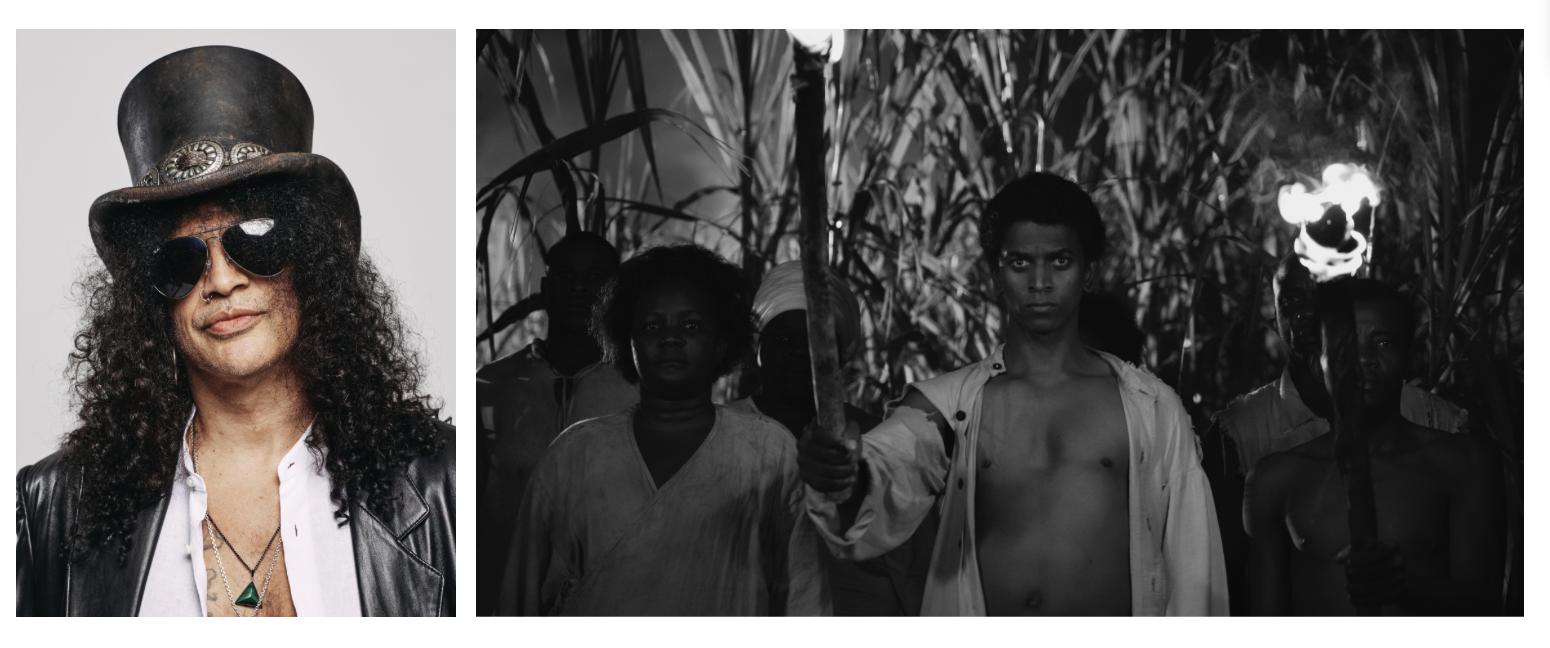
The Horror Lounge: Slash signed on as a producer. Talk about that relationship and what it was like working with him.

Maya Annik Bedward: I had shot quite a bit of the film before I met with Slash. I was connected to him through some other executive producers. Slash loves horror, but he’s such an iconic figure. A lot of that is his look. He’s an amazing guitar player, one of the best in the world, but he has this iconic look. It’s very much connected to the guardians of the crossroads, a huge figure in voodoo and a lot of the African spiritual traditions.

I thought he was such a great example of how we kind of know but don’t really know what voodoo is. We have these things in pop culture and nods to it. His mother is African American, and she has connection to the faith and these traditions. It was a full circle in which he had a real respect for the faith. When we approached him, he was totally game. He loved the idea and was so sweet to interview.

The Horror Lounge: Near the end of the film, a Haitian voodoo practitioner expresses reservations about the documentary because he says in the past, interviews have been used to again foster negative stereotypes about the Haitian people and voodoo more generally. Can you talk about that interaction with him?

Maya Annik Bedward: I was very concerned whether I was representing voodoo properly. I’ve been very interested in African-derived religions. I spent a lot of time in Brazil learning, but I’m not a voodoo practitioner at all. There’s been so much harm done by people coming in, taking these stories, and telling them. I wanted to be really sure I wasn’t re-perpetuating that.

When I asked him a question, I wanted a really honest answer. He had his reservations, and I thought that was important. I am a creator behind the scenes, making decisions. There’s never going to be anything that’s fully objective. It’s about your intention and what you’re trying to do. I wondered if I was making the right decision. I thought it was important to pull back the curtain and show that it’s a film, process, and story inspired by some of the stories I read about the Haitian voodoo zombie.

The Horror Lounge: Why do you think the zombie remains so persistent in popular culture?

Maya Annik Bedward:  I think people like zombies because in the more modern zombie film, it creates this post-apocalyptic world. It’s often a contagion. It’s reminiscent of what we went through with the pandemic. It addresses a lot of parallels and fears in our modern life.

A lot of people say they’re nothing like the Haitian zombie, but if you think about the transatlantic slave trade and people who were brutalized and forced to work in the fields, for them, that was an apocalypse. I think that’s why that story is still connected to the zombie today. People just don’t look at it through that lens of the diaspora and what happened to our ancestors.

That’s my guess, and it’s only a theory. [Laughs].
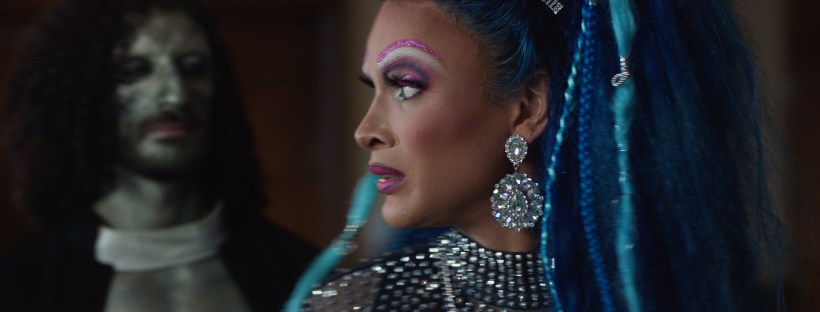
Day of the Dead Production Still

Day of the Dead, a Woman’s Nightmare, and Post-Capitalist Possibilities

A few years ago, at the NeMLA Conference, I presented a paper on representations of capitalism in The Amityville Horror, The Stuff, and Day of the Dead. Since then, I’ve revised the essay and focused more on the singular movies, including George A. Romero’s Day of the Dead, the last film in his initial zombie trilogy, which began with Night of the Living Dead in 1968. While that initial trilogy still feels biting and important as whole, right now, Day of the Dead feels most relevant for its critique of capitalism and hypermasculinity. It’s also the only film from that trilogy to feature a female protagonist.

Day of the Dead is a cynical conclusion to the initial trilogy, a film where fascistic military men rule. Yet, unlike Night and Dawn, Day proposes some potential alternatives to capitalism. That makes it radical, and, coupled with its critique of toxic masculinity through the might makes right military characters, Day resonates right now, especially for its female perspective.

After a lot of revision, my essay on Day of the Dead finally found a home at Bright Lights Film Journal. You can read it here.

“Santa Clarita” Essay in Lieu of a Conference Presentation

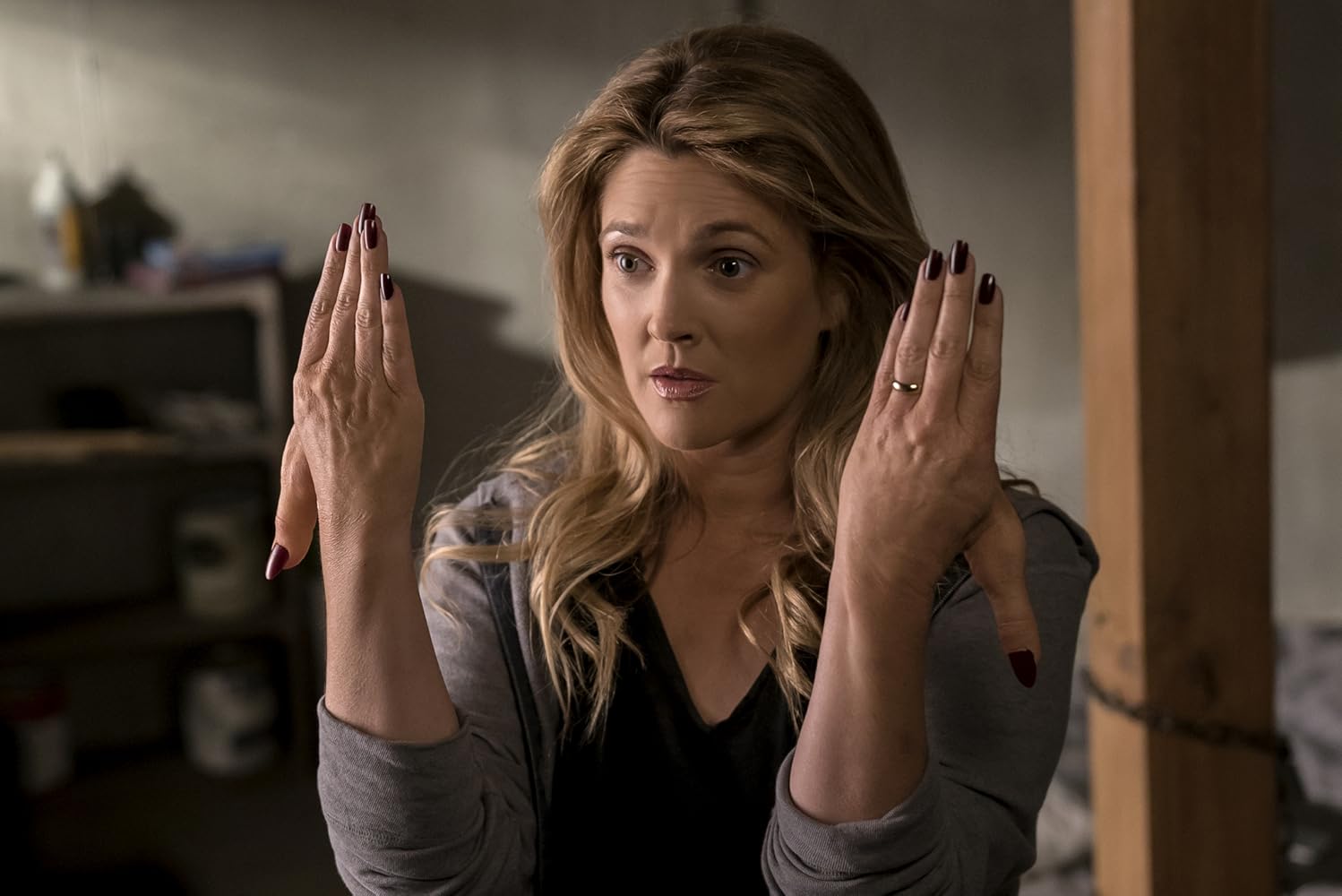
Drew Barrymore in Santa Clarita Diet (2017)


Two weeks ago, I was supposed to present a paper on “Santa Clarita Diet,” zombie narratives, and the monstrous-feminine on a panel at the Pop Culture Association Conference in Philly. I was looking forward to this all year, but alas, COVID-19 canceled it, along with every other conference. The conference organizers made the right move in canceling the event for everyone’s health and safety.

Luckily, the essay is available to read online, and it will eventually be available in print via The Schuylkill Valley Journal. I am incredibly grateful for this and the fact that folks can still access my work. Here is hoping that next year’s conference in Boston happens.

Stay safe and well everyone!

My 2018 Zombie Film Recommendation

Confession: I am tired of the zombie subgenre of horror. I think that “The Walking Dead” should have been canceled at least 2-3 seasons ago. I can’t think of a zombie film I watched all that recently that I found that innovative or attention-worthy, other than Cargo (2017), available to stream on Netlflix. Most of the more interesting zombie films, such as 28 Days Later or Shaun of the Dead, belong to the previous decade. Zombie films tend to come in waves, but this most recent wave has limped along for far too long, like a  corpse waiting to be put out of its misery.

With all of that said however, there is one zombie film released this year that warrants viewing, Night Eats the World by French director Dominique Rocher, an adaptation of Pit Agarmen’s novel. Sure, the film checks off a lot of the cliches, including a sudden outbreak and loose social commentary, but more than anything else, the film is a meditation on loneliness. It begins when moody protagonist Sam (Anders Danielsen Lie) attends a party hosted by an ex. He heads into an empty bedroom by himself, falls asleep, and wakes up to a zombified world, including the apartment caked in blood. He sees some of the party’s stragglers wandering outside, roaming the streets, hungry for human meat.  Suddenly, he realizes that he’s trapped in a building alone with little possibility of escape.

The rest of the film mostly includes quiet scenes, including shots of Sam running around the mostly vacant building to stay in shape. Days, weeks, and possibly months pass. Sometimes, Sam ventures into one of the units to stock up on canned food, but is forced to bolt the doors shut after encountering more of the living dead. He forms a relationship of sorts with a balding zombie trapped in an elevator. This gnawing corpse is played by Denis Lavant, who, though he has no speaking parts, is utterly stellar through his haunting facial expressions. This zombie is humanized and distinct, like Bub in Romero’s Day of the Dead, and in his milky eyes, Sam sees a reflection of his isolated, melancholy state.  Who is really worse off in this situation?

There are times when Sam’s frustration erupts, including a scene where he launches into a pounding drum solo that draws a horde of zombies to the apartment complex. Yet, scenes where Sam is truly in danger of becoming zombie meat are relatively few and far between. Instead, the film focuses on what it would be like to be a survivor in a zombie apocalypse, when, as far as you know, all of your family and friends are dead. How do you go on living?  Throughout the film, time becomes elastic, and it’s unclear how much time has even passed between the beginning of the film and its conclusion. Will Sam even be better off if he makes it to the final scene? That much is unclear.

Stephen King called The Night Eats the World “a perfectly amazing film” a few weeks ago on Twitter, adding that it will “blow your mind.” I think King’s praise of the film is a little overblown, but I will say that the film deserves attention and has fallen under the radar, unfortunately. It tries to do something different with the zombie genre, and it generally succeeds.


The Zombie Is Dead, Long Live the Zombie!

The various sub genres of horror, like everything else, go in and out of fashion. The slasher. The possession movie. The ghost story. The monster movie. The zombie film. For much of the 2000s, the zombie dominated the horror genre. Think of the impressive box office success of films like 28 Days Later (2001), Dawn of the Dead (2004), Shaun of the Dead (2004) and the high TV ratings of AMC’s “The Walking Dead” (2010).

Yet, for the last few years, the zombie genre has waned. Lately, horror has focused more on the internal and the psychological, specifically films like Hereditary, A Quiet Place, Get Out, and to some extent, It. Frankly, I can’t even think of the last time that I saw a zombie film in the theaters. Even “The Walking Dead,” which was a ratings Juggernaut for so many years, may be facing its apocalyptic sunset since Andrew Lincoln, aka Rick Grimes, and Lauren Cohen, aka Maggie, have announced that this season will be their last season, and they will only appear in six episodes. How can the show function without Rick and Maggie? Like a staggering corpse, it needs to be put out of its misery. It had a long, good run.

The more recent horror films that are doing well deal with socio/political issues (Get Out), or deal with the terror that is bringing a child into this world, specifically A Quiet Place, and, to some extent Hereditary. This has been the trend of the last few years, and based upon the United States’ political turmoil and polarization, coupled with the threat of climate change and other big issues, it is not likely this trend is going to subside anytime soon.

This brings me to a newish zombie film that I recommend: Cargo, an Australian film directed by Ben Howling and Yolanda Ramke. Cargo is currently streaming on Netflix and well worth your time.

The plot of the film is rather simple. A father, Andy (Martin Freeman), tries to protect his infant daughter after an epidemic spreads and turns people into zombies. Yes, this formula has been done time and time again, but Cargo works so well because it focuses on character, on Andy’s anxieties of  raising a child in  an unforgiving, uncertain world.  The visuals of the film are striking, nightmareish, and sometimes surreal. The zombies are not your typical rotting flesh corpses; instead, they have green fungus growing from their skin. Read into that any environmental metaphor that you may.


Zombies have survived for decades and decades because they have managed to evolve. They started out on the silver screen as a monster that alluded to Haitian and West African voodoo lure/myths. They then became Romero’s slow-walking flesh-eaters, until they become something even more menacing, relentless, and faster in 28 Days Later and the Dawn of the Dead remake.

I am not saying that Cargo is going to remake the genre. It doesn’t have enough mass appeal to do that, but it does show that zombie films can still work and work well when they focus on character and a believable plot, like a father trying to protect his daughter. The fungus aspect gives the familiar monster a new angle that taps into deeper environmental concerns. As the zombie trend that dominated so much of the 2000s finally wanes, the creature will need to evolve again to suit the times and the larger global anxieties. Cargo provides a path forward for the flesh-eating, familiar creature.


RIP, Romero

images


As a kid, I used to watch horror movies with my dad, typically on Friday evenings, rented from Blockbuster. One of his favorites was Night of the Living Dead, and I credit that initial viewing experience for getting me into horror. There was so much about the movie that I loved and still love, especially the opening, when Barbara (Judith O’Dea) stumbles around the graveyard and encounters the film’s first zombie. Of course, there is also that famous “They’re coming to get you, Barbara” line, one of the most classic quotes in any horror movie. After seeing that movie as a boy, I was hooked.

Romero’s work resonated with me a lot more when I grew older. Upon first viewing, I didn’t realize the significance of Romero choosing a black male lead, Duane Jones, for Night of the Living Dead in the late 1960s, or the significance of that final shot, when Ben is shot in the head by redneck vigilantes and then his body is burned. In college, I hung a poster on my dorm room wall of the young zombie girl who killed her parents in the film. Imagine a movie with that type of scene hitting in the 1960s!

I didn’t see Dawn of the Dead until college, but I was struck by its campiness and cartoonishness (the blue zombie make-up and bright red blood) coupled with the not-so-subtle commentary on consumerism. However, my favorite installments in Romero’s zombie legacy may be Day of the Dead and Land of the Dead. The zombies are a lot scarier, smarter, and angrier, for one, but the social commentary pushes deeper and really makes us think about ways in which human beings are worse than the monster/other. Day of the Dead raises the question  whether or not human beings would be able to survive an apocalypse-like scenario without killing each other or resorting to militarism or fascism, and Land of the Dead railed against the 1 percenters before Occupy Wall Streeters ever pitched tens in Zuccotti Park. It was one of the perfect films for the Bush age, shortly before the economic crash and bailout. Diary of the Dead is worth watching, too, and I only wish that we could witness a final installment in Romero’s zombie canon, especially in the Trump-age.

Romero is part of an important wave of American horror movie filmmakers from the 1960s and 1970s, the likes of which also included Wes Craven, Tobe Hopper, John Carpenter, among others, who realized, as Mary Shelley did while penning Frankenstein, that horror is a wonderful vehicle for exploring social commentary. As I noted in another blog post, horror is undergoing a wonderful revival now, and it is mostly thanks to independent filmmakers and indie studios like A24. However, if it wasn’t for films like Night of the Living Dead, shot in Western, PA. on a shoestring budget, with no household names, the horror films generating buzz today probably wouldn’t have been possible. Night of the Living Dead, Halloween, Texas Chainsaw Massacre, and other small-budget films from that time caused studios to take risks and made them realize there is an audience out there for smart, boundary-pushing horror movies.

I’ll forever be grateful to my dad for getting me into horror, specifically through Romero’s work. A few months ago, Gravel published a poem I wrote about Night of the Living Dead. In honor of the filmmaker, I’ll share it again. Check it out here.