Best of 2019: Horror Films

I have no doubt that when we look back on this decade, we’ll consider it to be a horror renaissance. Films like The Conjuring and Insidious spawned entire franchises. Sleeper hits like It Follows, The Witch, Get Out, and Hereditary sparked the “elevated horror” debate, which I still despise, but I suspect may come to define the decade in horror. Even in TV, horror reigned supreme, with shows like “American Horror Story” and “The Walking Dead” killing  ratings and spawning massive fan bases. Furthermore, streaming services like Hulu, Netflix, Shudder, and Amazon Prime brought horror to even larger audiences and made the genre that much more international. The final year of the decade and my best-of list largely reflects these trends. My entries include work by directors who avoided the sophomore slump and created solid second feature-length films that I suspect we’ll still be talking about heading into the new decade. Like last year’s list, this one includes plenty of work by international directors who found a platform for their work thanks to streaming services. Additionally, more and more women are getting behind the camera, and that’s a good thing. There’s plenty of female representation on this list, and the horror genre is all all the better for it. Without further ado, here’s my best-of horror list for 2019!

Runner-ups

Scary Stories to Tell in the Dark directed by André Øvredal. This popular book series finally came to life on the big screen, and Øvredal did a good job establishing a frightful Halloween atmosphere and bringing some of the books’ most famous monsters to life, including the Pale Lady and Harold the Scarecrow. This film, and the director’s previous work, Troll Hunter and The Autopsy of Jane Doe (one of my favorite films of the decade), prove that Øvredal is one of the best directors currently working in the genre, especially when it comes to establishing mood and tone.

Child’s Play directed by Lars Klevberg. I can’t tell you why this remake of the 1988 classic underperformed so much at the box office when compared to last year’s record-breaking Halloween reboot.  Maybe Michael Myers is just more popular, and maybe Halloween grossed millions upon millions because it brought back so many familiar names, specifically Jamie Lee Curtis. Child’s Play did something drastically different and made Chucky a large-eyed AI doll. Yet, the movie fit for our time period, and the way that Chucky evolves after witnessing violence was a fascinating take on the iconic Good Guy. Mark Hamill gave the doll surprising characterization and pathos, and his voice work alone makes this one of the better horror films of the year.

The Nightingale directed Jennifer Kent. Kent is the first director on this list whose highly anticipated second film came out this year. The Nightingale is a drastic departure from her debut film, The Babadook (also one of my favorite films of the decade). Her sophomore feature is a revenge flick that is incredibly hard to watch, especially the first 20-25 minutes. It has some of the most intense violence that I’ve ever witnessed on screen. In short, the film follows Clare (Aisling Franciosi), a young Irish convict, who chases a British officer through rugged Tasmanian wilderness, hell-bent on revenge for the terrible violence he inflicted upon her family. The film has stunning cinematography and much to say about colonialism, gender, and race. This film is NOT for the squeamish.

Now, on to the top 10:

10. Little Monsters directed by Abe Forsythe. At the beginning of the decade, “The Walking Dead” reinvigorated the zombie genre, but at the end of the decade, its formula has grown stale and its weekly viewership has declined. Though Little Monsters isn’t the first movie to inject horror comedy into the zombie genre, it does so with gusto, thanks in part to the stellar performance by Lupita Nyong’o, who plays Miss Caroline, a teacher who does what she has to do to keep her kids safe, be it playing a song to calm their nerves or slaying zombies.

9. Doctor Sleep directed by Mike Flanagan. Fresh of the success of Netflix’s “The Haunting of Hill House,” Flanagan had the difficult task of being the man behind the camera for Doctor Sleep and trying to please the fan bases of Kubrick’s initial masterpiece and both of Stephen King’s novels. Largely, he succeeded. As I noted in my review for Signal Horizon, Doctor Sleep is a film that acknowledges the past, specifically the legacy of The Shining, but is not trapped by it. At its core, the movie is about addiction, be it the monstrous True Knot or a grown-up Danny Torrance, played superbly by Ewan McGregor. This is an intertextual film that’s also not afraid to make changes when they’re warranted.

8. Midsomar directed by Ari Aster.  How do you follow-up the craziness and heaviness that was Hereditary? The answer: create a folk-horror film set in broad daylight that follows American college friends as they get swept up in a Swedish cult. If you haven’t seen it, see it. Then watch it again. There’s not much else I can say about this one that hasn’t been said already this year. Aster is yet another director on this list whose sophomore effort really came through.

7. Into the Dark: Culture Shock directed by Gigi Saul Guerrero. I’d be hard-pressed to find a film on this list, other than the top slot, that better defines the times we live in. Hulu/Blumhouse’s holiday horror anthology series “Into the Dark” has really been hit or miss so far, but Guerrero’s July 4th entry may be the best one yet. The film follows the journey of Marisol, a Mexican woman  (Martha Higareda) who pursues the American dream, crosses illegally into the United States, and wakes to an American nightmare. This film is so rich in visuals, especially its use of the July 4th imagery, that the cinematography alone makes it worth the watch.  Keep your eye on Guerrero. She’s poised to do great things in the genre, I suspect.

6. Crawl directed by Alexandre Aja. I can’t think of a film that kept me more on the edge of my seat this year than Crawl. If you know Aja’s work, then you know the film will have a lot of gore. In short, the flick is about crocodiles and a few survivors just trying to overcome the gators. Do I really need to say more?  Order a pizza, buy a six-pack, and watch this one with some friends.  If you want to read more, then check out the review I wrote for Horror Homeroom.

5. Us by Jordan Peele. The tethered, like the sunken place, may now be part of the lexicon, thanks to Peele, whose sophomore effort will make you think about who or what lurks underground. You’ll never look at Hands Across America the same way again. Watch this and then watch it again because like Aster, Peele is a meticulous filmmaker. There are loads of references to other horror films in this, and Nyong’o gives one heck of a performance. The dance sequence in the last 20 minutes is one of my favorite scenes of the year.

4. Ready or Not directed by Matt Bettinelli-Olpin and Tyler Gillett. For me, this film was the surprise hit of the year, and not only because it did well at the box office, but because I enjoyed it far more than I thought I would. It’s campy. It’s funny. It’s gory. It has a social-political undertone that doesn’t whack you over the head. Samara Weaving plays one heck of a final girl in Grace, whose rich boyfriend lures her into some sick game where the rich hunt the lower-class bride. Believe me, you’ll root for Grace the moment she picks up the shotgun and does what she has to do in order to survive, wearing blood-splattered Chucks and a shredded wedding dress to boot.

3. Horror Noire: A History of Black Horror directed by Xavier Burgin. This horror doc is a must-see for any fan of the genre, or anyone interested in film history in general. It features countless interviews with actors and directors and looks at the history of the genre through the lens of race. If you don’t have a Shudder subscription yet, get it for this film alone and for my final two entries.

3 (also) The Lighthouse directed by Robert Eggers, Eggers proved with his debut The Witch that he can make one fine period piece. The Lighthouse is set in the late 19th Century, and it was shot using some of the same lenses from that time period. This film’s ratio and shooting techniques means it really should be seen on the big screen. Williem Dafoe and Robert Pattison play off each other SO well in this film as they slowly descend into madness and their truths/narratives never quite match up. Oh, major props to the seagull, too. Give that bird an Oscar!

2. One Cut of the Dead directed by Shin’ichirô Ueda.  Simply put, One Cut of the Dead is one of the most innovative films I have seen in a long time. It features a nearly 30-minute continuous shot as the opening scene, and from there, it’s one big love letter to indie film making, as a crew tries to complete a zombie film on time. This Japanese film will make you laugh, make you cry, and most importantly, endear you. Again, if you don’t have Shudder, what are you waiting for?

1. Tigers Are Not Afraid directed by   Issa López. This isn’t just one of my favorite films of the year, it’s one of my favorite of the decade. This is an incredibly beautiful and tragic film that calls to mind the early work of Guillermo del Toro, specifically The Devil’s Backbone and Pan’s Labyrinth. Like those films, López created a fairy-tale like story to address a much deeper issue, in this case the Mexican drug cartel and a group of five children trying to survive amidst the violence after losing their parents. This film is visually stunning, heart-wrenching, and powerful. López is another director to watch. She’s already received high accolades from del Toro, who produced this film, and Stephen King, who raved about it on Twitter. Watch this, but not without a box of tissues nearby.

Finally, I want to add that I considered adding Parasite to the list, in part because it has some light horror elements and its director, Bong Joon-Ho has created horror films in the past, most notable The Host, but the film is more of a drama comedy than anything else, and it’s already on a number of best-of 2019 lists. It very well may snag some Oscar nominations, deservedly so.  I tried to stick to the horror and offer a few films that deserve more attention.

In the coming days/weeks, I’ll post about which horror films I’m most excited about in 2020, as we enter a new decade.  Have a wonderful holiday season and happy new year! Please feel free to share your own favorite films of 2019 by commenting below.


Holiday Horror!

Tis the season for spiced eggnog, candy canes, and of course, Christmas horror movies. Compared to Halloween, there aren’t as many options, but with multiple streaming services now available, there a few gems worth checking out this year. So warm yourself by a yule log and spend the month of December checking out some of my recommendations below.


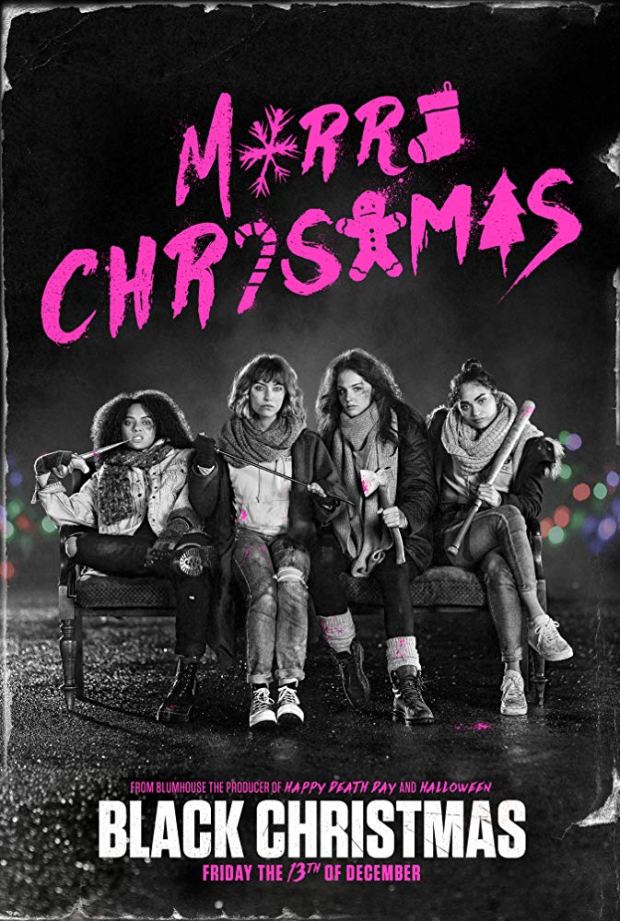
Black Christmas (1974/Directed by Bob Clark) This Canadian film about a group of sorority girls stalked by a stranger is a sheer classic. Many slashers that followed this, especially John Carpenter’s Halloween, owe a debt to Black Christmas for some of the techniques it used, namely the killer’s POV. Before you see the remake later this month, watch the original. A special yuletide kudos goes to Margot Kidder for playing Barb, the sorority sister who drinks and swears with the best of them.


Deadly Games (aka Dial Code Santa Clause/1990/directed by Renee Manzor) This bonkers French film deserves to be seen, and now that it’s available on Shudder, it should find a wider audience. Its 9-year-old protagonist Thomas (Alain Lalanne) is reminiscent of a certain blonde-haired kid from Home Alone because of the way he booby traps his house against a crazed Santa Clause, but make no mistake, this is NOT a kid-friendly movie. This  movie features one terrifying Jolly O’ St. Nick whose facial expressions alone will give you nightmares long after the credits roll.


Better Watch Out (2017/directed by Chris Peckover) It’s best if I don’t spill too much about this film because it has a lot of turns. In short, the film follows 12-year-old Luke (Levi Miller), who has a crush on his 17-year-old babysitter Ashley (Olivia DeJonge). After she rebuffs him as he tries to make a move as they watch a horror movie, strange things start to happen, indicating there’s someone who has a sinister motive. This one, especially its ending, is not for the squeamish.

Silent Night, Deadly Night (1984/Directed by Charles E. Sellier Jr). Are there any horror fans who haven’t seen this popular holiday slasher about little Billy who grows up to be a murderous Santa? If not, what are you waiting for? Stream this one and its first sequel. Skip the later movies.

Gremlins (1984/Directed by Joe Dante) This is another one that most folks have probably seen, but it’s my favorite Christmas movie. Is there anything cuter than Gizmo wearing a Santa hat and playing the keyboard in Billy’s (Zach Galligan) bedroom? I don’t think so! Even if you’ve seen this movie 100 times, it’s always worth a re-watch. Fun fact: Joe Dante wanted the film to lean into its horror elements more. One of the initial scripts called for the Gremlins to behead the mother and bounce her head down the stairs like a basketball. What could have been….


Happy watching!

Cue the Remakes

I desperately wanted Mike Flanagan’s adaptation of Doctor Sleep to do well, not only because it’s a good movie, it is (read my review of it over at Signal Horizon), but because its box office success could have meant that big studios like Warner Brothers would take a chance on fresh, character-driven horror films. Its opening weekend earlier this month grossed about $14 million dollars, which is not terrible, but certainly below expectations when you consider all of the marketing that was pumped into the film. On the other hand, when you compare Doctor Sleep’s opening to that of Halloween 2018, which grossed about $78 billion during its opening weekend, it’s likely that big studios are going to support more remakes and reboots of well-known franchises. Recent news stories over the last few weeks confirm this.

I can only speculate why Doctor Sleep is not drawing more people to the theater. It has a stellar performance by Ewan McGregor as a grown-up Danny Torrance, battling demons and struggling to not repeat the sins of his alcoholic, abusive father. Rebecca Ferguson commands every scene she’s in as the terrifying vampire Rose the Hat. Still, even though it’s a sequel to The Shining, and even though Stephen King is undergoing yet another renaissance right now, Doctor Sleep doesn’t have a franchise icon associated with it as recognizable as Michael Myers. The Overlook Hotel is in the film but only in the final act. Maybe Warner Brothers should have released the film during October or even late September, instead of waiting until Nov. 8.

One thing is certain, though, we vote with our dollars, and as Halloween 2018 has proved, if a studio realizes a reboot or sequel makes money, they will continue making more of them. Halloween 2018 is getting two more sequels, Halloween Kills and Halloween Ends, to be released in October 2020 and October 2021.

Meanwhile, a slasher film that heavily influenced John Carpenter’s Halloween, 1974’s Black Christmas, is getting a reboot set to open on Friday, Dec. 13. I assume that its studio, Blumhouse, which helped produce Halloween 2018 in partnership with Universal, suspects there are dollars to be made rehashing some of these well-known slasher films. Judging from a recent TV spot (see below), this very much looks like a film for the “woke” era.

In the TV spot, you see a group of sorority women fending off a black-robed, masked killer, and in one scene, a character who appears to be the head of a fraternity questions one of the women about power. My real question about this film is why now? The film was already remade in 2006 and was panned, especially by the horror community. There are several more interesting films that have come out in the last few years that deal with female power, be it The Witch, The Nightingale, or Revenge. Why doesn’t Blumhouse and Universal invest their dollars into an original script? Furthermore, for its time, Black Christmas was innovative. It featured a killer inside of the house, which was one of the most terrifying twists in horror history. It established the killer’s POV shot, which was used by Carpenter and others, and it generally had strong, forceful women who drank, smoke, cursed, and generally held their own. What new is a remake going to add?

Shortly after the release of Black Christmas, Universal/Blumhouse is set to relaunch the classic Universal Monsters in hopes of establishing a Dark Universe (yet again). The remake of The Invisible Man is set to drop in February. See below.

Now, I will admit this remake looks much more interesting than Black Christmas, especially because of Elisabeth Moss’performance and the theme of abuse that is so evident in the trailer,especially when Moss’ character says, “He said that wherever I went, he would find me.”  That said, this film looks like it has little in common with H.G. Wells’ novel and James Whale’s classic 1934 adaptation. The Invisible Man looks like a totally different character in this, not a mad scientist. The name was kept, most likely, in hopes that it will attract viewers and make money, thus creating a Dark Universe that Universal has wanted and has so far failed to launch after the remake of The Mummy totally bombed.

These remakes/reboots by Universal/Blumhouse aren’t the only ones on the horizon. It was reported recently that there is going to be another Scream movie that operates within the universe Wes Craven established. Speaking of Wes Craven, his estate is apparently listening to pitches for a new Nightmare on Elm Street. You can’t blame these studios for moving forward with these projects after they saw the immense amount of money that Halloween 2018 grossed. With all of that said, there are plenty of young, innovative directors out there doing great things, like Robert Eggers, Jordan Peele, Jennifer Kent, and Coralie Fargeat, and thanks to streaming services like Shudder, horror is now an international market.

Still, though, I’m upset that Doctor Sleep isn’t making more money at the box office. It’s poor showing is going to encourage studios to keep making remake after remake. Meanwhile, unique stories won’t be seen by as wide of an audience and a good script may get passed over. We vote with our dollars, and when an interesting horror movie comes along, we need to support it, see it, and talk about it.


Review: Parasite (2019)

Image result for parasite movie

It’s hard to define which genre best fits Joon-hon Bong’s latest feature, Parasite, a story about the unemployed Ki-taek family that takes interest in the glamorous lifestyle of the Parks. There are elements of drama, comedy, and horror, especially within the final act, and beneath all of the genre-bending scenes, there’s a message paramount to the film about the class divide that is especially resonant. Bong has created a layered film that makes the audience laugh in one scene, before sympathizing with characters who literally live underground. Parasite is a prefect film for this moment.

As the film opens, we’re introduced to the Ki-Taek family, who live in a cramped semi-basement and devour snacks and soda for dinner. The character presented first is the son, Kim Ki-woo (Woo-sik Choi), who roams from tiny room to tiny room, searching for a free wifi signal, until he finally secures one in the corner of the open bathroom. Desperate for cash, the mom, Kim-Chung-sook (Hye-jin Jang), instructs her children to check Whatsapp so the family can take work folding pizza boxes. Not long after, trucks roar by, pumping chemicals into the air to kill off stink bugs. The fumes waft into the home, and the living conditions feel especially dire and squalid, as the family coughs in a cloud of chemicals.

Image result for parasite movie

The Ki-Taek Family

Kim Ki-woo is soon tapped by his friend Min (Seo-joon Park) to tutor the daughter of the wealthy Park family. He questions why Min would ask him and not one of his university buddies, but essentially Min sees him as a place holder, someone who can keep an eye on her until he returns from studying abroad and can date her when she’s old enough. Kim Ki-woo forges his credentials, and one by one, helps the family ease their way into the Park residence by booting out the rest of the help, including the driver and housekeeper.

It’s during these scenes of chicanery and masks that Bong builds some of the film’s most comedic scenes, especially when daughter Kim Ki-jung (So-dam Park) fools the Park matriarch, Park Yeon-kyo (Yeo-jeong Jo), into thinking that her son has a mental disorder that shows up in his art. At the same time, she humors the mother into thinking he’s some prodigy, especially after the mom compares him to Basquiat, despite the fact he spends most of the film running around, shooting arrows, and pretending to be an Indian. According to the mother, however, he’s destined for greatness, even if he comes across to everyone else as a typical, high-energy kid.

Watch the trailer below:

Around the midway point, the Ki-taek clan fully occupies the Park living room after they depart for a camping trip.  They load the coffee table with fancy snacks and suck down shots of alcohol, while the dad muses that it’s their house now and they’re already living in it. Here, they dream about power and wealth, which forever seemed out of their reach, until they schemed and eased their way into the Park residence by forcing out the rest of the help. They also comment on the Parks, calling them naive, free of creases because their wealth is like a iron that keeps them stress and wrinkle-free. This scene portrays best the class conflicts woven throughout the film. Of course, this dream can’t last because the Park family returns prematurely due heavy rain. The thunderclaps mark a darker turning point within the film’s last act, when it really leans into elements of horror.

The turn occurs when the Ki-taek family learns that the former house keeper, Moon-gwang (Jeong-eun Lee), kept her husband in a bunker accessible via a secret passageway in the Park’s basement. She and her hubby are a class level below the Ki-taek family, literally hidden away in a bunker, invisible from the world. At one point, the husband confesses he doesn’t qualify for the national healthcare system, and he can’t ever remember a time when he didn’t live underground.This idea of layers, lines, and people living beneath each other is reinforced throughout the film. Moon-gwang’s husband hides out in a bunker. The Ki-taeks live in a semi-basement, and the Parks live in a spacious home with open rooms and large windows with a  wooded view. They can move around freely, unlike the other two families. At one point, Park Yeon-kyo comments that having a ghost in the house is lucky because it brings wealthy. This one line gives the audience much to ponder. Are Moon-gwang and her hubby ghosts, especially because he’s SO invisible? Do the upper class exist by living on top of those beneath them? The film seems to imply as much.

The class tensions escalate after the Ki-taek’s patriarch, Kim (Kang-ho Song), overhears Mr. Park (Sun-kyun Lee), comment on his smell, comparing it to an old radish and then a boiled rag. Any further summary would spoil the film too much, especially the stunning last 30 minutes or so, but needless to say, Mr. Park comes across as a grade-A prick. Kim is useful to him in that he never “crosses the line,” and probably never can class-wise, but it’s the smell that perturbs him, the constant reminder of people different than him, without the luxuries that he can afford.

All of this is contrasted by the young Kim-ki woo, who, despite his family’s status living in a semi-basement, believes that if he has the right plan, he can get ahead. He thinks that if he goes to college, gets a job, and marries, he can buy the Park home if it’s ever on the market. Yet, at the same time, as he looks upon the Parks and their wealthy friends during a birthday party, he questions if he fits into such a scene. Still, he remains optimistic, trapped by his youthful idealism.

Bong has created an film of divides, layers, and divisions, one in which everyone is wearing a mask. The Ki-taeks pretend to be more credentialed than they are to move into a home they desire. The Parks act friendly on the surface, but the parents especially reserve their true feelings about people like the Ki-taeks for private conversations. At the same time, Parasite is a genre-bending film very much rooted in the idea of ghosts, of those we don’t see even though they exist all around us. They are drivers, tutors, and housekeepers. Yet, below those jobs, there’s a class we hardly acknowledge or discuss, best exemplified by a bunker-bound husband who has no health insurance and is only comforted by the love of his wife. Parasite is a film that truly exemplifies 2019, when the world constantly feels like its on the brink of collapse, driven, in large part, by a yawning class divide, and controlled by families like the Parks who don’t want anyone else “crossing” that invisible line.


Review: The Lighthouse (2019)

In the age of constant advertising and ramped up social media campaigns, it’s easy to call a film one of the scariest of the year or “elevated horror.” Last year’s Hereditary was dubbed “the scariest movie since The Exorcist.” This year’s The Lighthouse, directed by Robert Eggers (The Witch), is earning similar praise. So does the film live up to the buzz? Perhaps we need to ignore the hype and appreciate a film for what it is, not expecting the next Exorcist. The Lighthouse, like The Witch, Hereditary, Get Out, and Midsommar, deserves to be viewed without unrealistic expectations. Doing so increases the enjoyment of the hallucinatory, black and white nightmare that Eggers has created, buoyed by superb performances by William Dafoe and Robert Pattinson.

Image result for The lighthoue"

Like The Witch, The Lighthouse is a film heavy on mood and atmosphere, in this case bleak tones and a 4:3 ratio that makes for tight frames. At times, it tests a viewer’s attention, since most of the plot details are revealed through dialogue between Pattinson’s Ephraim Winslow and Dafoe’s wide-eyed, Captain Ahab-like Thomas Wake. This isn’t a film heavy on action or jump scares. Half of the scenes focus on Winslow’s day to day grind as a lighthouse hand during the late 19th Century in Maine. He scrubs floors, shovels coal, and even empties pots of shit and piss. He’s doing what he has to do to earn a living, essentially. Meanwhile, he has to deal with his boss, a seasoned seaman who constantly looms over him, berating him to work faster, while taking notes in a brown leather journal that he locks away in a wooden cabinet each night. If Winslow is the proletariat just scrapping by, then Thomas is a boss holding a bullwhip, telling the worker he’ll suck the rust off of nails if that’s what he’s asked to do. Otherwise, he’ll withhold his wages. Eventually, Winslow has enough, and the longer the men are stranded, the more he slips into drinking and madness, especially once a storm seizes the island and ocean waters and howling winds pound the feeble shelter. As water surges through the windows and pours through the old roof, you can feel the dampness and hopelessness.

Watch the trailer below:

Much has been made of the folk horror elements of The Witch. Trying to even define folk horror can be tough, but in short, it’s a subgenre that references European and pagan traditions and/or emphasizes the horrific side of folklore. In The Witch, the Puritan family brings their superstitions to the new world and blames their farming woes on witchcraft and the devil. The oldest daughter, Thomasin (Anya Taylor-Joy), bears the brunt of the blame once the patriarch, William (Ralph Ineson), accuses her of witchcraft. The Lighthouse doesn’t have any specific references to Europe or pagan traditions, per say, but in Thomas, a wild-haired, grizzled man of the sea, it does have references to ancient superstitions. He warns Winslow not to anger or kill any seagulls because they carry the souls of sailors. The film also has plenty or references to sirens, especially during some of the more dream-like sequences. Sirens are known for luring sailors to their death through their song and seduction. Thomas is a product of the old world in his own way, since he maintains ancient traditions and superstitions. He even recites the same lines each time that they toast before dinner. Winslow, meanwhile, is a product of the new world and the industrial revolution. He worked as a logger in Canada before taking the job at the lighthouse. He does what he needs to do to get by. A job is merely a job to him, unlike Thomas, who caries the history, tradition, and rituals into the present. Additionally, nature strikes back against the men the moment that Winslow ignores Thomas’ advice and refuses to play nice with the gulls, whose squawking is but one factor that pushes him over the edge. One seagull in particular becomes a star in the film as much as Black Phillip in The Witch.

Perhaps even more than folk horror, The Lighthouse is influenced by German Expressionist films, and not only because of the black and white, 35 mm factor. It has as much of a dream-like quality as The Cabinet of Dr. Caligari, and it uses shadow and stark imagery to evoke the same type of dread as Nosferatu. In a recent interview, Eggers again brought up his desire to direct a remake of the classic vampire film. Let’s hope it happens.

The Lighthouse is a film whose images will stay with you after the credits roll, but it’s as much of a slow-burn as The Witch. That said, witnessing Pattinson slip into madness the louder the lighthouse horn bellows is worth it. Dafoe, meanwhile, delivers on the dialogue in the second half, including one scene where he urges the sea gods to smite Laslow simply because he insulted his cooking. It’s also a film where you question what’s real and what isn’t, including the backstories the men tell each other as the weeks wear on. The film should be seen in theaters for the way that Egger shot it. All the labels and hype aside, Eggers has created a nightmare at sea. Let the speculation commence regarding his next project.


Halloween Streaming Season (Pt. 4)


This is my final post regarding streaming recommendations for the Halloween season. This post will focus on Amazon Prime, only movies that you can stream for free with a membership. You can check out my Hulu recommendations here.,  my Netflix recommendations here, and my Shudder recommendations here.

Let’s get down to business!

Gothic (Directed by Ken Russel, 1986) This is a strange little movie that, in part, recounts the story of the Romantic poets sitting around Lord Byron’s castle and telling each other ghost stories, which is how Mary Shelley found the inspiration for Frankenstein.

Hell House LCC (Directed by Stephen Cognetti, 2016) Since the release of the Blair Witch Project in 1999, there has been a slew of found footage films within the last 20 years. Some are better than others, but Hell House LCC is one of the most  interesting of the last few years and one of the best contemporary films to watch around Halloween. The plot is simple: On October 8th, 2009 a haunted house attraction opened its doors to the public in upstate New York. The entire crew was found dead, except for one. Five years later, a documentary crew found her…and the video footage from inside the house.

The Exorcist III (Directed by William Peter Blaty, 1990) To this day, The Exorcist III doesn’t get the love it deserves. This is a much more philosophical, slow burn film than The Exorcist. There is no preteen spewing pea soup at priests. Instead, this film is more concerned with the nature of good v. evil, but it also has one of the best jump scares in all of horror cinema. Both Brad Dourif, as the Gemini Killer, and Jason Miller, as the tortured Father Karras, give superb performances.

High Tension (Directed by Alexandre Aja, 2005) This is one of the best and still one of the most controversial films of the French Extremity movement from the first decade of the 2000s. It’s also the film that made Aja a director to watch within the horror genre. Before he filmed the remake of The Hills Have Eyes, he filmed this brutal home invasion flick. Saying more about the plot would give too much away. Check it out now.

Shadow of the Vampire (Directed by E. Elias Merhige, 2000) This is a retelling of F.W. Murnau’s classic German Expressionist film Nosferatu, sort of. In this take, John Malkovich plays Murnau and William Dafoe plays the vampire. During filming, people start disappearing, and the surviving cast and crew suspect the vampire may not be acting at all. For anyone who is a fan of the horror genre and film in general, this is a must watch.

Amazon Prime has a number of classics to stream as well, including Night of the Living Dead, Return of the Living Dead, Dario Argeno’s Opera and Inferno, just to name a few.

So this concludes my horror recommendations per streaming service for the Halloween season. If you have any of your own recommendations, please feel free to comment below. Happy Haunting!

Halloween Streaming Season (Pt. 3)

My recommendations for horror movies to stream continue this week with my top picks for Hulu. This year, the service even has a special section entitled Huluween, where you can find plenty of horror genre staples like Hellraiser, Saw, A Quiet Place, Child’s Play, and “Buffy the Vampire Slayer.” However, per usual, I’m going to recommend some lesser-known content.

Little Monsters (Directed by Abe Forsythe): I have no doubt that this film and One Cut of the Dead will make my best-of, year-end horror movie list. Both are incredibly earnest, heart-warming films that do something unique with the zombie narrative. In this case, Lupita Nyong’o plays a preschool teacher who has to protect her class from the dead on a farm. Need I say more?

Ghost Stories (Directed by Jeremy Dyson and Andy Nyman): This was one of my favorite horror films from last year, a three-story anthology with a wrap-around that deals with skepticism and the supernatural. Generally, this is for fans of slow-born horror, so if you like that, then check this out.


“Intro the Dark: Culture Shock” (Directed by Gigi Saul Guerrero). Hulu’s original series “Into the Dark” has far more misses than hits, but “Cultural Shock,” which debuted on July 4, is the exception. This is one of the strongest political works of horror from this year, following the story of a young Mexican woman who seeks the American dream and risks her life to reach the border. At a film festival Q and A, director Guerrero called the situation at the border “everyone’s horror story.” Pay attention to her because she’s a name in horror to watch.


Check out my Netflix recommendations here and my Shudder recommendations here.

Next up, I’ll offer my recommendations for Amazon Prime. Happy spooky streaming!

Fall Poetry Events

This week, I’m taking a brief pause from posting horror movie recommendations to share some upcoming poetry events that I’m partaking in with other writes. Check them out if you’re so inclined! One in particular is a special Halloween-themed reading.

Monday, October 21 6:30-8:30 p.m.

Lower Macnungie Library Coffee House

Reading and craft talk with Robb Fillman, David Bauman, Eric Chiles, and I.

Open mic to follow

Lower Macungie Library, 3450 Brookside Rd., Macungie, PA

Image may contain: 5 people, including David J. Bauman and Robb Fillman, beard and text

Tuesday, October 29 7-9 p.m.

Poems at the Pub

I will be the featured reader. An open mic will follow. Costumes are encouraged!

Dugan’s Pub, 385 Main Street, Luzerne, PA

Check out the FB event page for more details.

Saturday, November 16 7-9 p.m.

Writer’s Showcase at the Olde Brick Theater

I will be co-hosting this event with Dawn Leas. Featured readers include Dan Pape, Marcie Herman Riebe, Brianna Schunk, Chris Eibach, Tara Lynn Marta, and Robb Fillman.

126 W. Market Street, Scranton, PA