Review: 3 from Hell

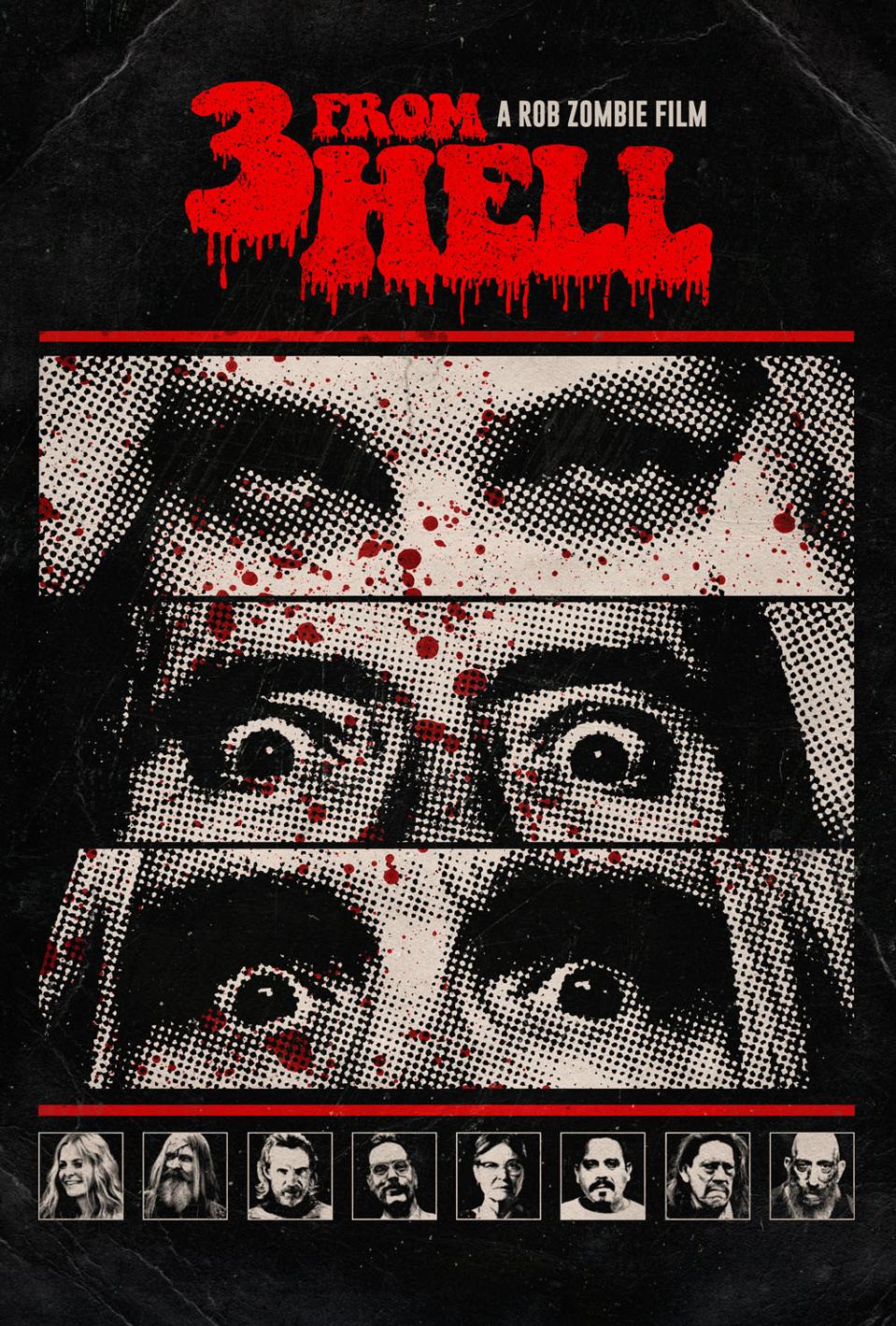
3 From Hell

Did Rob Zombie’s The Devil’s Rejects really need a sequel, especially after the memorable anti-heroes were sprayed with bullets to the tune of “Free Bird?” The short answer is no, but here we are, more than 10 years later, and Baby Firefly (Sheri Moon Zombie), Captain Spaulding (Sid Haig), and Otis Firefly (Bill Moseley) are back to inflict their warped sense of humor and sadism upon a new batch of victims. This time around, they’re joined by Winslow Foxworth Coltrane (Richard Brake), a relative of the Firefly family who also relishes in dishing out pain because, well, why not? As pointless as this sequel may be on paper, it’s fun to hang out with the Firefly clan again, especially during the first half of the film. Say what you want about Zombie, but he’s consistently pushing the boundaries of horror and offering a bloody, abject contrast to most of the mainstream fare out there.

The film begins with several shots of Baby, Spaulding, and Otis coming to and from jail, talking to the press when they can. Since the events of The Devil’s Rejects, they’ve amassed quite a number of fans that are convinced the trio is innocent. Otis’ hair is so long and his brow so furrowed during these sequences that he’s not hard to mistake for Charles Manson, or perhaps a warped inversion of Christ. Baby, meanwhile, blows kisses towards the camera and flashes a peace sign, which endears her to whatever post-60s hippies still exist during the film’s 1970s opening. These early sequences are about the only commentary the film has to offer, namely exploring why we’re  so entranced with serial killers, be it Manson or Ted Bundy. Here, Zombie uses the camera to hold a mirror up to society and our fascination with the macabre.

The Devil’s Rejects is such an interesting film because Zombie makes you root for the bad guys. Here, it’s Baby who really breaks out. Simply put, Sheri Moon shines, be it when she’s clenching a knife, twirling around the room, or laughing manically. She’s menacing, devious, playful, kitten-like, and crazy, often within the same scene. The first chunk of the film deals with her time in prison, after Otis breaks out and devises a plan to free her. Left alone, she suffers abuse at the hands of Greta, a security guard played by horror icon Dee Wallace. When Baby finally gets her revenge on Greta, it’s hard not to root for the kill, especially after witnessing the abuse unleashed upon the only female of the Firefly clan, including an attempted rape scene orchestrated by Greta.

The first half of the movie is solid, as the Firefly family checks off each name responsible for their imprisonment. The conversation among the clan, which features plenty of film references, including everything from Humphrey Bogart to Lon Chaney, is generally interesting and well-written. It humanizes the characters, while making us wonder why we’re rooting for such a malevolent bunch yet again.
3 From Hell

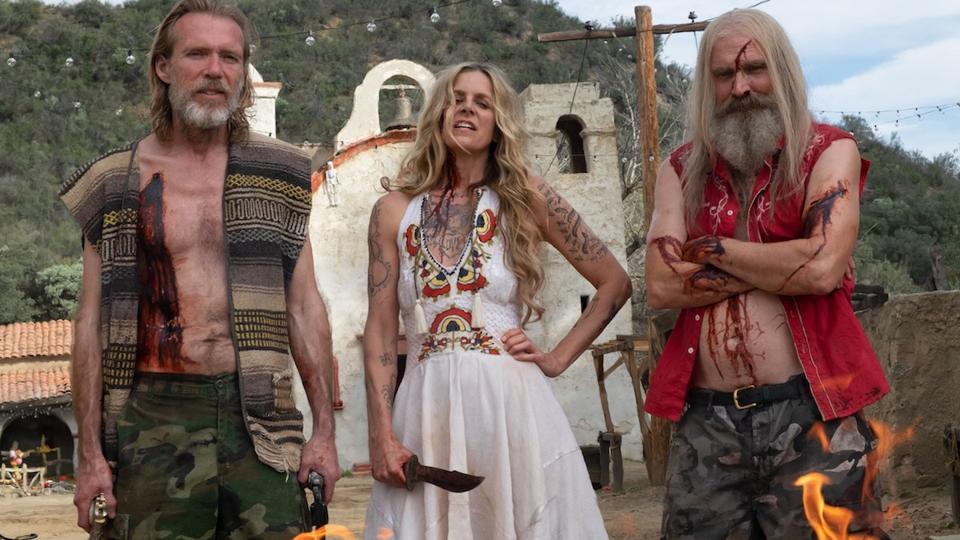
Winslow (Richard Blake), Baby (Sheri Moon Zombie), Otis (Bill Moseley)

The second half of the movie often feels rudderless as the gang escapes to Mexico, only to be tracked by a mob related to a victim they killed early in the film. Here, there is no real character development, but rather kill, after kill, after kill. Sure, the excessive gore is stylish in typical Rob Zombie fashion, and the ending is about as violent as anything Zombie has filmed thus far, but one gets a sense that the director didn’t know what else to do with these characters. That’s a real shame. The first half of the movie was so engaging that I didn’t even care about the absurd explanation for the clan’s initial survival after The Devil’s Rejects. I can’t say the same about the last hour or so of the film. Once the group busts out of prison and satiates their thirst for revenge, there’s simply not much for them to do.

That said, 3 from Hell is worth viewing simply for Sheri Moon’s performance. She  outperforms her counterparts, and it made me wish the film just focused on her. She’s just as devious and often times bolder than the men. Additionally, 3 from Hell is worth viewing just for Sid Haig’s (RIP) final performance as the memorable and terrifying Captain Spaulding. Though his waning health limited his role, it’s worth it just to see him in the grease paint one last time.

Initially, the film was only going to be released during a 3-night run last week, but since it grossed nearly $2 million, it’s returning to theaters for one more night on Oct. 14. Check it out while you can. Zombie is playing with familiar characters here, while still mimicking the 70s grind-house  films he grew up with. 3 from Hell is worth the price, at the very least to hang with the Firefly clan one more time. Who knew that serial killers could make playing cards or discussing old films so interesting.

IT: Chapter 2 Drags Amid Some Solid Scares and Strong Performances

Image result for it chapter 2

2017’s It: Chapter 1 is the highest grossest horror film of all time, raking in $700 million globally at the box office. Already, there are rumblings that Chapter 2, also directed by Andy Muschietti, is going to smash box office records and surpass the $123 million opening weekend that its predecessor had. Chapter 1 resonated primarily because of the story-line of the Losers, a group of misfits and outcasts who come together to battle not only bullies but Pennywise the Clown (Bill Skarsgård), an ancient, cosmic entity who feeds upon human fear. Chapter 2’s greatest strength is the continuation of that story-line, when the Losers return to Derry, Maine to defeat Pennywise 27 years later, after children start disappearing. When the adult cast is together, the film soars. At a near three-hour running time, however, there are moments when the film feels bogged down by meandering side adventures and a CGI fest, especially during the prolonged finale.

The film’s opening 15 minutes are as powerful as Chapter 1’s beginning when poor Georgie (Jackson Robert Scott) is sucked into a sewer by Pennywise. Without giving much away, I will simply state that the opening  sets one of the main themes of Chapter 2: bigotry is alive and well and the only way to confront it is by banning together, hence why a grown-up Mike (Isaiah Mustafa), the only Loser who still lives in Derry, calls his scattered childhood friends and urges them to come home to confront Pennywise one last time. The initial reunion of the Losers (Jessica Chastain as Beverly, James McAvoy as Bill, Bill Hader as foul-mouthed Richie, Jay Ryan as Ben, and James Ransone as Eddie), is one of the film’s strongest scenes, especially as they go around the table ribbing each other, while clinking beer glasses and toasting to the Losers. The casting is perfect and each of the adult performers give it their all. In fact, I venture to say they’re as likeable as the kid actors in Chapter 1.

Image result for it chapter 2

The Losers as adults

After the reunion, the film sprawls out into several side adventures, focusing on each individual Loser, as they attempt to recover an “artifact” that pertains to their childhood and a traumatic encounter they had with Pennywise, who fed on their deepest insecurity. Some of these side stories are scarier than others, and, at times, I wish that Pennywise was on the screen more. In fact, I wish that Skarsgård had more to do in the film in general. Too many scenes feature CGI zombies instead of the clown. For the most part, the film is faithful to the second half of Stephen King’s novel, but sometimes what works on the page doesn’t work as well in film, especially the flashbacks featuring de-aged child actors. Weird. That said, there are some great scares, especially the Paul Bunyan scene from the novel and a scene involving Pennywise, a little girl, and a ballpark at dusk. This particular scene reminded me of  the monster’s encounter with Georgie and how terrifying Skarsgård can be just in the make-up, tricking children and luring them to a grisly death. I wish there was more of that and less CGI.

It’s clear throughout the film that if the Losers are separated, they’re in greater danger. It could be said that the film drags the most when they’re dispersed, wandering around Derry. When they’re united, going toe to toe with Pennywise, or joking around, the film hits some of its highest emotional notes. Out of all the cast, Hader especially steals the show. He’s as funny as his childhood counterpart Finn Wolfhard in Chapter 1. He also has some of the greatest character development that takes Richie way beyond the one-liners.

There’s no doubt that It: Chapter 2 is going to bring in the big bucks this weekend. Pennywise is now as iconic as Freddy Kreuger, Jason Voorhees, and Michael Myers. It’s just a shame he wasn’t given more screen time, especially more one on one scenes with the children of Derry or the grown-up Losers. He’s far more terrifying as a human-sized clown than a CGI spider. That said, when Chapter 2 has the right beats, namely when the Losers are on screen together, the film is quite arresting. Adapting a 1,000 page novel loaded with surreal imagery about an ancient, evil presence was never going to be an easy task. Chapter 2 would have benefited from a little less fidelity and firmer editing. If trimmed more, it could have been as strong as Chapter 1.

Make sure to look out for the fun cameo by Stephen King and one of the original Losers.

Overall grade: B

Ready or Not: A Bloody Good Time That Has Fun at the Expense of the 1 Percent

With Labor Day weekend here and summer winding down, several of horror’s heavy hitters will be released in theaters soon, most notably It Chapter 2 and The Lighthouse, director Robert Eggers’ follow-up to The Witch. That said, there’s another film in theaters now deserving of attention, Ready or Not,a gory blend of comedy and horror that lampoons the one percent while creating a memorable final girl in the process.

The story opens just as Samara Weaving’s Grace marries into the family from hell, the Le Domas clan. This is a family that adheres to absurd traditions, including a card game that’s played each time one of the family members marries. Grace picks the Hide and Seek card and asks, “Are we really going to play this?” To her, the game is childish and silly, but the clan isn’t about to break tradition. Grace soon learns that the game doesn’t involve merely hiding in elevator shafts or closets. The clan has to maim her and then sacrifice her in a ritual before dawn, or else, they all die. This is part a deal made years ago with the satantic figure Mr. Le Bail, whose portrait still hangs on the wall. The premise sounds absurd, and on paper it is, but under the direction of Matt Bettinelli-Olpina and Tyler Gillet, and with a smart script penned by Guy Busick and Ryan Murphy, the film works surprisingly well.

Samara Weaving holds a gun, wearing a wedding dress, in the movie Ready or Not.

Samara Weaving as Grace

Grace is an incredibly likeable character. We see the world through her eyes, including the family’s swanky, multi-room mansion. Even when she escapes the maze-like home and dashes across lawn after lawn, seeking an exit from the property, we’re left wondering how much land the clan owns and who in their right mind needs so much acreage. She also has several of the best lines and reactions in the film, especially her simple, yet forceful  remark “Fucking rich people!” in the closing minutes. It’s clear that Grace, who wears Chuck Taylors with her wedding gown, is never going to be a Le Domas, no matter who she marries. Furthermore, the family is so bumbling that she’s better off.

(L to R) Kristian Bruun, Melanie Scrofano, Andie MacDowell, Henry Czerny, Nicky Guadagni, Adam  Brody, and Elyse Levesque in the film READY OR NOT. Photo by Eric Zachanowich. © 2019 Twentieth Century Fox Film Corporation All Rights Reserved

The Le Domas clan

This is another strength of the movie. Typically, hunters/the wealthy are depicted as skillful and cunning, but not in this case. In the opening 20 minutes, one of the family members shoots another in the face with a shotgun. Even the Satanic ritual in the closing minutes is foolish and over the top. Generally, the film mocks the elite  while building up Grace as an every woman that earns cheers and sympathy. In an interview with Vanity Fair, Gillet said that one of the film’s intentions is to play with the class rage that’s been brewing over the last several years. “There are a lot of people who feel like they’re helpless, and that they want change, but they don’t know how to be part of it. There are a lot of people that just want to fucking scream right now. There’s a lot of rage, and a lot of anger, and a lot of fear.” This idea is underscored in several scenes. For example, at one point, Grace makes it to the open road just outside of the family’s sprawling property. When a driver sees her, he zooms by in his sports car, even as she flails her arms and wails for help. “What is it with rich people?” she asks.

As the film progresses, Grace endures one trial after the other, until her grown is bloodied and shredded. At times, the directors zoom in on her body as a nail goes through her hand or a fence’s spear tears her skin. These scenes are not for the squeamish, but they certainly make the audience root for Grace and feel her pain. Additionally, Ready or Not’s final minutes are the perfect blend of humor and horror that is threaded so carefully throughout the movie. It’s utterly satisfying.

Ready or Not is one of 2019’s best horror films. It’s smart, bloody, and funny, buoyed by a stellar and unique final girl. Grace’s frustration and role as an outsider is relatable, and her simmering rage at the  1 percent is utterly justified.


Blinded by the Light and the Duality of Springsteen’s American Dream

Anyone who knows me knows how much I like Springsteen, especially his output from the early 1970s to the mid-1980s. Born to Run, The River, and Darkness on the Edge of Town especially are records that I still spin frequently. The characters that populate those songs remind of my hometown of Scranton, PA, or any other city that has fallen on hard times and is a gutted husk of its industrial past. With that said, I have to address the new film Blinded by the Light, which focuses heavily on those albums and draws off of Sarfraz Manzoor’s memoir, Greetings from Bury Park. I will admit there are several cheesy scenes in the film, but it’s an earnest attempt to highlight the universality of Springsteen’s music and his conflicting depictions of the American dream.

Set in 1987, Blinded by the Light is the story of a young Pakistani writer Javed (Viveik Kaira), whose conservative father, Malik (Kulvinder Ghir), moved his family to the hardscrabble town of Luton, England to make a better life for his family. Initially, the plan works, until Malik looses his job after the factory closes down. As a result, his wife, Noor (Meera Ganatra), spends hours slaving away over her sewing machine to fulfill extra orders for neighbors as a means to support the family. The children are also forced to find odd jobs so the family can stay afloat. This economic struggle is reinforced several times when tracks like “Promised Land” play throughout the narrative, echoing the family’s woes and Javed’s frustration because he wants to be a writer, despite his father’s insistence that he become a lawyer or doctor. Their relationship is one of the driving conflicts throughout the film, and it’s exacerbated by the family’s economic woes. Springsteen is the only thing that makes any sense to Javed, and when his friend Roops (Aaron Phagura) introduces him to the Boss, his life changes. He realizes that he wants to be a writer, and he understands that his family’s economic strain at the height of Margaret Thatcher’s rule is not limited to England. The film draws overt parallels between Thatcher’s England and Reagan’s America, underscoring how working-class people were left behind as unions were busted and factories shut down, despite the fact both leaders initially appealed to the white working-class. Sound familiar?

The father/son conflict draws on Springsteen’s own life. Time and time again, including while introducing a song live, the Boss has talked about his hardworking, conservative dad and the clashes they had when he was a teen. His dad didn’t want him to play rock n roll and wanted him to go to college to make a good living.

There is a duality that exists within the film that reflects Springsteen’s music. On the one hand, Javed is attracted to the romanticism of Born to Run- era Springsteen, especially a track like “Thunder Road” about getting out of your hometown and chasing something bigger, the American dream, so to speak, with a lover. In one of the cheesiest scenes, Javed sings the song on the street to his love interest, Eliza (Nell Williams), an activist who spends her days handing out petitions and flyers to free Nelson Mandela, while wearing a pin-plastered black leather jacket and namedropping The Smiths.

Yet, as the film progresses, and as Javed’s dream, as well as his father’s dream, become more and more difficult, the music shifts to The Darkness on the Edge of Town-era Springsteen, an album that is lyrically quite a contrast to Born to Run. The lyrics show what happens when dreams are dashed, when the characters on Born to Run run out of gas, essentially. This is the recession-era Springsteen, set in 1980,  on the cusp of Reaganism and the explosion of economic inequality, trickle down economics. Other tracks highlighted in the film, like “The River,” about a young couple who marry early and essentially have no future in their dead-end town, also reflect the struggles of the people in Luton whose jobs were outsourced.


Lastly, the film doesn’t whitewash the story line. The immigrant experience is another central arc. The Pakistanis like Javed’s family that moved to England for a better life are terrorized by neo-Nazis and the National Front. Javed is harassed and chased several times by young skinheads. His family is later assaulted during a white power rally, and in one of the most alarming scenes, children pee in the mail slot of a friend/neighbor and repeat, “Stinky Pakis.” This story line is powerful and done just right, without being preachy. It shows the darkness that existed in Thatcher’s England when neo-Nazis marched in public.

Yet, despite all of this, Javed works hard at becoming a writer, and he’s still drawn to the promise of Springsteen’s music, the idea of chasing a runaway American dream, the idea that anything is possible. That romanticism, even to this day, still exists in the Boss’ music. He’s always encouraged an all inclusive America, one that celebrates the immigrant experience and praises the hands that built this country. At the same time, he’s always acknowledged economic exploitation and the consequences of trickle down economics. Blinded by the Light gets both sides of Springsteen right. Though cheesy at times, it’s an incredibly uplifting film. It probably won’t win any Oscars, but it’s very much a movie we need right now.


Scary Stories to Tell in the Dark: Fun, PG-13 Horror

Related image


It’s nearing mid-August, and back-to-school ads are running non-stop, Starbucks has announced that its pumpkin-spiced drinks will return by the end of the month, and stores are putting Halloween decorations front and center. It’s that time of year when summer is winding down and fall is inevitable. With that comes the release of Scary Stories to Tell in the Dark, directed by André Øvredal, produced by Guillermo del Toro, and based on the popular books by Alvin Schwartz.  The film adaption may have some narrative lulls, but overall, it’s a fun film with some cool monsters and decent scares.

Set in 1968, the film has a quasi main protagonist in Stella (Zoe Margaret Colletti), who wants to be a horror writer and whose bedroom is plastered with posters of Vincent Price, Bela Lugosi, and other genre icons, including a Gil-man action figure. She and her friends, Auggie (Gabriel Rush), Chuck (Ausin Zajur), and the mysterious Ramon (Michael Garza), venture to a haunted house on Halloween night and stumble upon the book of Sarah Bellows (Kathleen Pollard). Lone behold, the stories start to write themselves one by one in blood. There is some narrative arc surrounding the group of friends and the torment Sarah faced as an Other/outcast because of her albino skin, which caused her to write the stories and punish others, but some of the narrative falls flat. The most interesting thread is Stella’s story, who sympathizes with Sarah because she feels like an outsider and believes it’s her fault that her mom and dad split. Her pain is genuine, and it’s why she also bonds with Ramon, who is Othered by a bunch of jocks and called a wet back.

Image result for scary stories to tell in the dark film stella

Stella played by Zoe Margaret Colletti

The real highlight of the film, however, are the monsters. This is where Øvredal really. shines, when the characters are running through shadowy, creaky corridors of the Bellow estate or through corn stalks, hunted by Harold the Scarecrow. The monsters are top notch, not only Harold the Scarecrow, but also The Jangly Man, who’s composed of rotting body parts, and the Pale-faced Lady, whose permanent smile is chilling. The concept of the book reading each character’s fears is a nice touch, especially pertaining to Ramon’s story and The Jangly Man.

The film’s real weakness is the time and space between the stories, the narratives among the friends, some of whom feel like under-cooked stock characters shoe-horned into the film to justify another scary story. But when the bloody ink starts filling the blank pages of Sarah’s book and a new story is about to begin, the audience is in for a real treat.

Øvredal is one of the most interesting directors in horror right now. The Autopsy of Jane Doe is one of the most nerve-wracking flicks of the last few years. Scary Stories to Tell in the Dark is his first big budget film, and he generally does a good job with it, especially when the film leans into horror and lifts the monsters off the page. The film is bogged down by too much dead weight at times, but it’s certainly worth the price of admission during these waning weeks of summer.


Finally, Something Regarding The Lighthouse

It’s been known for a while now that Robert Eggers, director of The Witch, was going to release a movie shot on 35 mm and filmed in black and white. It was also stated early on that it would star Willem Dafoe and Robert Pattinson stranded on a mysterious New England island in the late 19th Century. Other than that,  very little about the film was leaked. This week, however, the trailer finally dropped.


After watching this, I have many thoughts. First, the sirens and foreboding music that shortly follow the A24 opening credit are nerve-rattling, and after that, we get a little bit of the plot when Dafoe’s character asks Pattinson’s character what, exactly, would drive him to such an island. From the rest of the trailer, it’s clear that Pattinson’s character masks some kind of secret. We see him digging a hole shortly after Defoe’s character implies that he’s on the run from something. Did he commit a crime? Did he murder someone? We’ll have to see.

It’s also clear that this is going to be a film about descent into madness. We see the men hugging, drinking, dancing, shouting at each other, gripping each other’s throats, and losing all sense of time.  One of them even chases the other in pounding rain with an axe! At one point, Defoe’s character asks, “How long have we been on this rock?” When he asks that, the camera pans to Pattinson, who looks pale, wide-eyed, and dazed. Other brief flashes of various scenes appear to be hallucinations, maybe?

Additionally, the film looks just as atmospheric and brooding as The Witch, and like Eggers’ previous film, nature’s not apt to be kind to the humans .In The Witch, the crops rot, thus causing the 17th Century Puritan family to blame it on witchcraft and the oldest daughter, Thomasin (Anya-Taylor Joy). In this film, it’s clear the sea is just as harsh, busting through the windows of the lighthouse, while thunder and lightening crack outside. Furthermore, that sense of isolation that the Puritan family faces, due to the fact they were exiled from their community, only deepens the eventual madness and unraveling. It appears isolation has a similar effect here.

The film is scheduled for wide release on Oct. 18.

Even MORE Halloween news

After it was announced recently that Halloween (2018) is getting not one, but TWO sequels, “Halloween Kills” and “Halloween Ends,” more news has been trickling out. We already know that Jamie Lee Curtis will reprise her iconic role as Laurie Strode. Now it’s been reported that the original Shape, Nick Castle, will  also return. Castle was in a brief scene in the last film, but an important one, the moment when Strode first sees Myers, thus confirming her worst fears that he’s still alive. Additionally, it’s been reported that James Jude Courtney will return as the Shape, most likely for the duration of both films. This is positive news, as fans seemed to have enjoyed his performance.

Image result for Halloween 2018, michael myers in window

Nick Castle playing the Shape again in Halloween 2018

Even more interesting are the rumblings that the character of Tommy Doyle will return for “Halloween Kills.” Doyle was the little boy that Strode babysat in the first film. He returned as an adult in Halloween 6, played by Paul Rudd, but since Halloween 2018 ignores all of the other films, other than the original, it’s best to forget that movie.

Related image

Laurie (Jamie Lee Curtis) and Tommy (Brian Andrews)

If Tommy Doyle is being written into the script, it raises a lot of questions.

  • How is this narrative actually going to work? Ignoring all of the sequels, and focusing on this timeline, it has to be acknowledged that Laurie and Tommy have not seen each other in over 40 years. How and why would they actually reconnect?
  • Will their meeting be organic? Let’s hope David Gordon Green and his screenwriting team don’t just thrust this character into the script for the sake of merely adding him and trying to please fans.
  • Will Tommy’s story focus on trauma? Halloween 2018 was about Laurie’s trauma and confronting/overcoming her past. Is it possible that a similar theme will be explored with Tommy’s character? How did that night in 1978 affect him?
  • Will Lindsey show up? Whatever happened to the other kid that Laurie babysat that same night, Lindsey, the one who had a crush on Tommy? Is she going to make an appearance?
  • Who will actually play Tommy? If the character is indeed part of the next chapter, who’s going to be cast? A few articles noted that Paul Rudd was approached but declined, due to a conflicting filming schedule.  We’ll have to wait and see.

Feel free to share your thoughts about the rumors that Tommy Doyle may in fact be part of the next Halloween sequel. How/why could it possibly work?


Some Questions Regarding Those Halloween Sequels

Image result for Halloween, 2018, michael myers

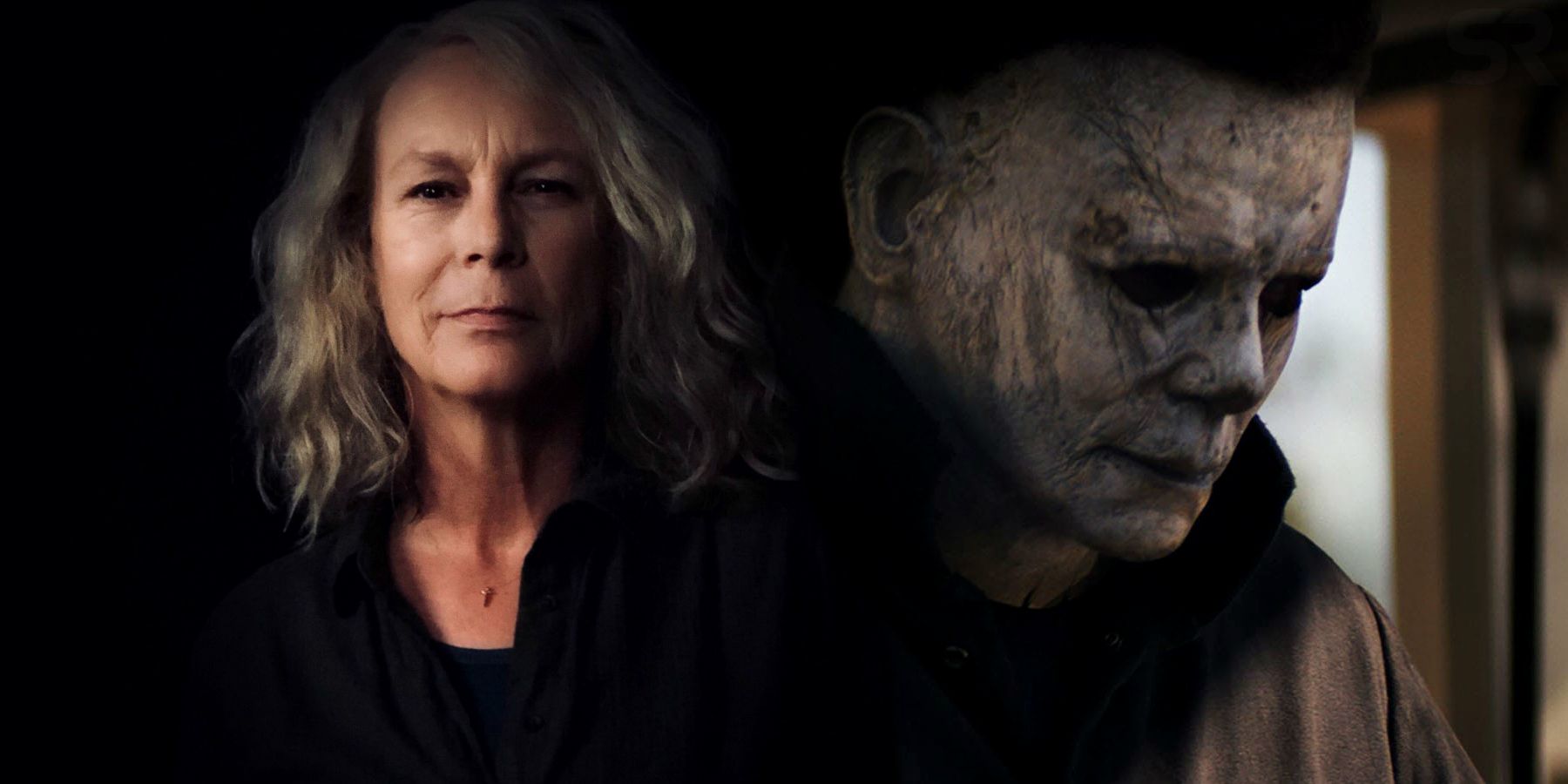
Since Blumhouse’s reboot of Halloween earned over $250 million at the box office last year, it’s no surprise that the production company is bringing Michael back to the big screen for not one but TWO sequels.It was announced last week that Halloween Kills will be released in 2020 and Halloween Ends will be released in 2021. Jamie Lee Curtis will reprise her role as Laurie Strode, and writers Danny McBride and David Gordon Green, who also directed Halloween 2018, are also returning.  John Carpenter is staying involved, too, most likely to score both films.

The world could always use a little more Michael Myers, but there are some serious questions to ponder in the meantime:

Related image

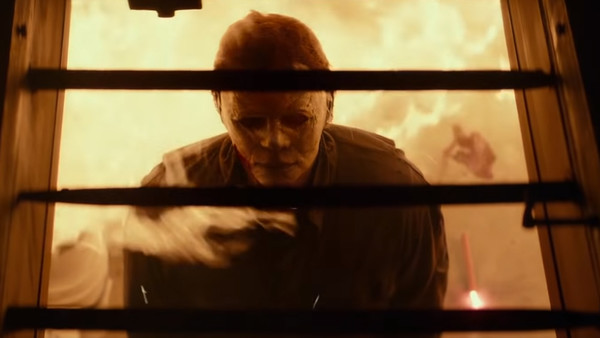
  • How is Michael still alive? Okay, okay, I know that Michael has survived many times before. Heck, at the end of the first film, he’s shot by Dr. Loomis before falling off of a balcony. Cue the famous end shot where he’s GONE. That said, Halloween 2018,  like the original, made Michael fairly human again. The last time we saw him, he was engulfed in flames in the Strode basement.


  • How does Michael reconnect with the Strodes? Like the original film, Halloween 2018 made it clear that Michael has no specific connection to Laurie. He is merely a ubiquitous presence and agent of evil. Laurie just happened to cross his path in 1978 and became an iconic Final Girl. The new film ignores all the sequels, especially Halloween II, that made them brother and sister. So in that regard, Michael really has no need to go after her or her daughter and granddaughter who featured prominently in the last film. It is possible and maybe likely that she hunts him, since that’s the role she assumed in the last film.

Image result for strode women halloween 2018

  • What role will the other Strode women play? We know Jamie Lee Curtis is coming back, but what about Judy Greer, who played Laurie’s daughter, Karen, and Andi Matichak who played granddaughter Allyson? These three together on screen, especially in the closing 20 minutes, were a real highlight of the last film and there is SO much untapped story potential there. The ending of the film was poignant in so many ways. It featured the ladies working together to defeat the boogeyman, but it also had an interesting and ambiguous ending, featuring the women riding in the back of a vehicle, blood-soaked, after defeating Michael, with Allyson clenching the butcher knife. The last shot is a nice reference to both The Texas Chainsaw Massacre and Halloween 4, but that’s for another day. Let’s hope all three ladies will be together again to kick ass.


  • Will the sequels resonate? Halloween 2018 is really Laurie Stode’s story and how she’s processed what happened to her 40 years earlier. The film is rooted in trauma. What happens to the Final Girl after all of her friends are dead? The last film hit at the right time during the #MeToo Movement and only a few short months after the powerful testimony of Dr. Christine Blasey Ford during the tumultuous Kavanaugh hearings. Will the sequels also resonate? We’ll have to see. Sometimes, headlines make a film all the more powerful.


  • Who is going to play Michael/The Shape? The original Shape, Nick Castle, returned to the role just for a scene or two in 2018, but the Shape was mostly played by James Jude Courtney. No word yet on whether or not he’s returning.


Blumhouse is taking a risk launching two Halloween sequels, while also rebooting the Universal Monsters, with the first being an updated version of The Invisible Man. Halloween 2018 proved, however, that these iconic horror figures can still bring in the big bucks. Feel free to share your thoughts on the Halloween sequels and where you’d like the franchise to go from here.


Crawl: A Summer Favorite

This has been a busy summer season for horror films, with the releases of Brightburn, Child’s Play, Midsommar, and now, Crawl, the new film by Alexandre Aja (High Tension, The Hills Have Eyes, Piranha 3D). Some of these films address broader issues, like AI and technology (Child’s Play), or female trauma (Midsommar), but Crawl is simply a creature feature that knows what it wants to be with a lot of nods to Jaws thrown into the mix. It’s one of the best times I’ve had at the movies this summer. For my full review, check out Horror Homeroom.

Additionally, I highly recommend this article from Bloody Disgusting about Aja’s career, the French extremity movement he was initially part of, and the impact of his early films, especially High Tension. It’s a great read.