Review: The Hole in the Ground (2019)

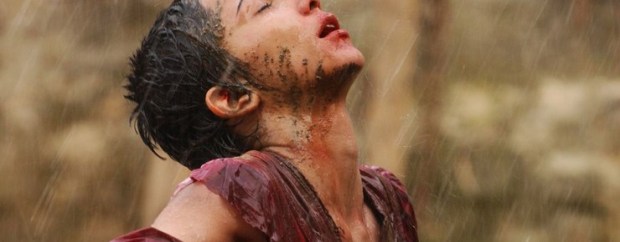
The last few years have seen a resurgence in horror films that deal with motherhood, including The Babadook (2014), Hereditary (2018), The Prodigy (2019), and most recently, A24 Studio’s Irish film The Hole in the Ground, which generally works with familiar tropes but includes stellar performances from its leads, masterful cinematography, and references to classic horror/sci-fi films, most notably Invasion of the Body Snatchers. It’s a slow-creep monster movie that centers around a woman trying to keep it together, while raising her son.

Directed by Lee Cronin, the film contains a simple but efficient plot: Sarah O’Neill (Seana Kerslake) tries to escape her broken past and moves with her son,  Chris (Jame Quinn Markey), from the city to the countryside. Not much is stated about Sarah’s past, other than she used to teach and her ex gave her a cut on her forehead. We never see her ex, and no flashbacks are presented to flesh out the backstory. We just know, from the outset, that Sarah is trying to move on with her life. Yet, her decision to move to a drastically different location triggers the start of the narrative and angers Chris, who tells his mom that she took him away from his father.

hole-ground

Sarah played by Seana Kerslake

The film is a slow-burn, one heavy on atmosphere,  especially dim lighting, gray tones, and the engulfing forest surrounding their new home. One of the film’s first scares occurs when a creepy elderly neighbor played by Kati Outinen tells Sarah  that Chris isn’t her son. Not long after that, Chris  disappears one night and then reappears in the house after Sarah searched everywhere for him. Yet, his appearance and actions seem different.  His mother presses her ear to his bedroom door and hears him growling and making other animal-like noises. Eventually, she becomes convinced that he isn’t her son.

In the last act, Sarah approaches the edge of the forest and the hole in the ground, where she encounters strange, alien-like creatures. The premise that they can take over humans and use them as a host is a nice call-back to Invasion of the Body Snatchers, while the creatures themselves and the shots of Sarah crawling under ground in tight spaces resemble The Descent, which has Earth-based, cave-dwelling monsters that aren’t too dissimilar from what’s presented in The Hole in the Ground.

The image of a hole occurs throughout the film, through a coffee mug, water draining in a sink, and eventually the gaping hole in the forest. There are a lot of ways to interpret this image. Perhaps Sarah feels that she’s going to be consumed and swallowed by her shattered past, the abuse of her last relationship, and the struggles of raising a child on her own. Moving on from the past also altered and strained her relationship with her son. It caused them to see each other differently. The forest and hole loom larger as the film progresses and the relationship between the mother and son grows more fractious.

The Hole in the Ground  is a solid horror film that takes its time with its scares, using its all-consuming atmosphere to build dread and illustrate Sarah’s struggles and insecurities. No doubt horror fans will appreciate the nods to other staples in the genre. More importantly, the film explores the difficulties a single mom faces moving on from an abusive relationship and upending her son’s life, though necessary. The Hole in the Ground doesn’t do anything that different with the usual tropes, but it’s one of the year’s most solid horror entries so far, buoyed by strong performances and the cinematography.

The film is currently available to rent and stream on Amazon Prime. Lionsgate plans to release it on DVD in late April.


She Kills Is the Horror Podcast You Should Be Listening To

Shudder is quickly becoming a must-have streaming service for horror fans. For one, they keep acquiring exclusive rights to some of the most interesting and innovative films. Last year, they featured Mandy, Terrified, and Revenge, films that made several year-end, best-of lists. This year, they’re expanding their content in new ways to highlight the history of horror. This started in February with the release of Horror Noire: A History of Black Horror and Eli Roth’s 7-part series “A History of Horror,” which first aired on AMC last fall. Both of these series are well-worth the watch for the casual horror fan or horror scholars.

SheKills.png

The latest entry into their horror history content is the 10-episode podcast entitled “She Kills,” hosted by horror icon Adrienne Barbeau (The Fog, Escape from New York, Creepshow). “She Kills” analyzes the genre through a female lens and looks at several different tropes through the perspective of gender. Some topics covered include the Final Girl, witches, technology and horror, religious horror,  and rape/revenge. Each episode includes a rotating cast of guests, some of whom include Rotten Tomatoes senior editor and film critic Grae Drake, actress Jennifer Tilly (Bride of Chucky), actress Alex Essoe (Starry Eyes), Blumhouse.com editor-in-chief and professor Rebekah McKendry, actress Barbara Crampton (Re-Animator, You’re Next), among others. Generally, the content is a mix of historical perspective and the political. For example, one episode compares the gas-lighting that Toni Collette’s character endures in Hereditary at the hands of men with the current state of politics in the U.S, but there are several lighter moments, too.  Jennifer Tilly chats about horror fandom and Bride of Chucky artwork that she enjoys seeing on Instagram.

Some other films analyzed include Rosemary’s Baby, Halloween, Revenge, and The Shining Most importantly, what makes the podcast unique is that it’s totally female run, from the host, to the guests, to the content.  In one episode, the guests predict that in the age of Trump, the Kavanaugh hearings, and the constant threat to women’s rights, there is going to be more female-centered horror films. Kudos to Shudder for realizing that and for releasing an all-female horror podcast.

The podcast is available on iTunes, Shudder, Player FM, and other podcast-hosting sites.


May Poetry Retreat

With March underway, it’s time to start thinking about spring. I’m looking forward to doing a few poetry readings during the warmer months, and my creative juices always flow a little easier once winter is in the rear-view. If you’re looking for a writing retreat, I highly suggest the poetry retreat at King’s College in Wilkes-Barre, PA on Saturday, May 11. The cost is only $25 and includes lunch and dinner, several workshops, readings, and reserved space to write and/or read. I’ll be one of the workshop leaders, most likely teaching a fun class on incorporating pop culture into writing. If interested, check out the RVSP form.

MayPoetryRetreat_Flier-1


TWD Finds Some New Life and Direction, but Is It Enough?

“The Walking Dead” is now in the second half of its ninth season. Yes, nine seasons.  Few TV shows amble along for as long as TWD has. Despite a continued ratings decline, the show continues to stagger along, like one of its zombies.  On the one hand, it’s hard to see how the show continues for a few more seasons. Rick Grimes (Andrew Lincoln) has been written off the show, though AMC has promised to make a few Rick-centric films, and last week, it was announced that Michonne (Danai Gurira) is leaving after next season.  Gurira’s role in Black Panther and her work as a writer and producer have thrust her even more into the spotlight, which is well-deserved. Bigger opportunities await. It’s hard to fathom a sustained viewership of TWD without its key characters. Daryl (Norman Reedus) may be popular, but I’m not sure he can sustain the show as its main protagonist.

That said, the ninth season, under new showunner Angela Kang, has been one of the best in a long time. For the first time in a few years, TWD feels like a horror show again, one with character development and moral divides. A large part of this has to do with The Whisperers, the comic villains who wear skin masks of zombies to blend in with herds. This season has had two especially strong episodes. The mid-season finale, featuring The Whisperers first proper introduction, contained  well-done atmospheric horror elements, including a graveyard, fog, pounding rain, and the group of survivors surrounded by the new villains. This confrontation led to the death of a series regular, and The Whisperers immediately felt like a more immediate danger than the cartoonish Negan (Jeffrey Dean Morgan) and the war with the Saviors that lasted way too long.  Additionally, their stitched, Leatherface-like  masks are chilling!

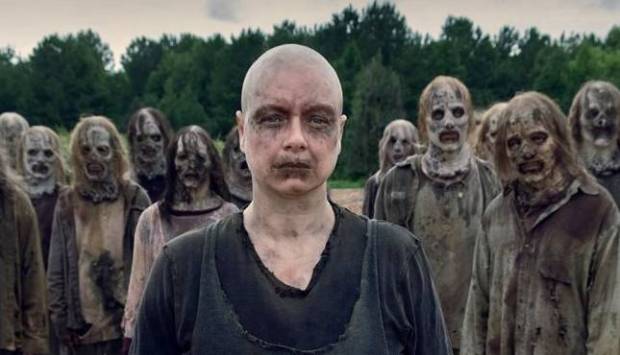
The second highlight of this season includes the latest episode, “Omega,” which focused on The Whispers’ leader, Alpha (Samantha Morton). The flashback-heavy episode fleshed out Alpha’s story and her abuse towards her only child, Lydia (Cassady McClincy). Simply put, Alpha is a layered and terrifying villain, one who killed her loving husband and then made her daughter think it was her fault. She is much more realistic than Negan because her story centers around domestic abuse. Unlike previous villains, there is no indication that the new world made Alpha the way she is. “Omega” indicates that she was always an abusive monster.  We see the effects of it on her daughter, who has gashes and scars on her arms, and has been emotionally manipulated over the years to believe her mother was the loving one, not her father. At one point, Lydia has a hysterical breakdown because she’s so certain Alpha is going to find her. Currently, Daryl and company have her prisoner at Hilltop to find out more about their latest threat.

Like her mother, Lydia, at least so far, is one of the more interesting characters the show has introduced recently. In “Omega” her story is interwoven with that of Daryl, who was abused by his father as  kid, and Henry (Macsen Linz), who found loving parents in Carol (Melissa McBrde), his “second mother,” and Ezekiel (Khary Payton). In the show’s first season, Carol suffered abuse from her husband Ed. Over the years, she took back her power, and now Daryl and Henry are in the position to help Lydia triumph over her scars. There is a lot the show writers can explore here. Of note: Carol’s hair is short during the duration of the show, especially in the first season, and in “Omega,” Henry tells Daryl that she initially cut it off because her husband used to drag her around by it. Now that she’s with Ezekiel, a loving, supportive man, she’s comfortable enough to grow it out. One of the most emotional moments occurs when Henry tells Daryl, “I’m glad you and my mom are friends.” Understanding the deep ramifications of abuse, Daryl and Henry want to be a support system for Lydia.

The-Walking-Dead-Omega-645x370-thumb-700x402-207826.jpg

Alpha (Samantha Morton) and The Whisperers

The episode concludes with an unmasked, bald-headed Alpha approaching the community and telling Daryl and the good guys that she only came for one thing, her daughter. Flanked by her merry band of rotting skin masked Whisperers, this final shot of Alpha is one of the most unnerving scenes the show has featured in a long time. Unlike Carol, Daryl, and Henry, Alpha has fully embraced her darkness, and she’s clearly going to be a major threat to the group.

All of that said, it’s hard to know how much life is left for TWD. It’s mid-season premier netted about 5 million viewers, which again, would be considered high ratings for most shows, but for a juggernaut like TWD, it’s a sharp decline. Had TWD not made so many mistakes over the last few years (Glenn’s fake death, Glenn’s real death, killing Carl last season, pretending like Rick was going to die this season), then it would be in better shape. It’s too bad Angela Kang didn’t take over the show earlier. She brought the horror and character development back, but it remains to be seen if that’s enough to stop the bleeding.


Horror Noire: The First Must-See Horror Feature of 2019

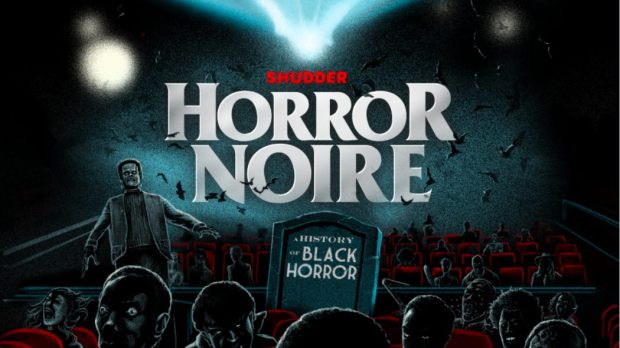
This month, the streaming service Shudder released its exclusive documentary, Horror Noire: A History of Black Horror, based on the book Horror Noire: Blacks in American Horror Films from the 1890s to Present by Robin R. Means Coleman. For any horror fan or film fan in general, this doc is a must-see. Featuring interviews with black directors, actors, actresses, and scholars, the film traces the history of black representation in horror (and film in general), beginning with 1915’s Birth of the Nation to 2017’s Get Out. In an hour and a half, the doc analyzes where we’ve been and where we’re going.

Horror-Noire-Header-3_1050_591_81_s_c1.jpg

The film covers over 100 years and draws attention to certain time periods and eras to highlight racist stereotypes and also show the evolution of black horror. The doc begins with D.W. Griffith’s Birth of a Nation and spends the necessary amount of time analyzing the impact that it had on public consciousness (President Woodrow Wilson screened it in the White House and praised it) and the racist stereotypes that it fostered, namely that black men were a threat to white women. The film’s positive depiction of the KKK helped contribute to the resurgence of the Klan during the Jim Crow era. The doc then looks at other early Hollywood films, including King Kong, and their presentation of the monster/Other, drawling parallels, for instance, between Kong’s looks and negative depictions of black Americans in advertising and print. It also looks at the trope of the “magical negro” and faithful servant.

From there, the doc points to Spencer Coleman, known for creating films with all-black casts for black audiences, as writing the first ever horror film with an all-black cast, 1940’s Son of Ingagi. Spencer went on to create other horror/fantasy films, but he’s a name relatively unknown in the horror community today. Horror Noire brings much-deserved attention to his historic role in the genre.

From there, the doc shifts to films of the 1960s and 1970s, including George A. Romero’s Night of the Living Dead, which featured a black protagonist Ben (Duane Jones), the cerebral vampire film Ganja and Hess, also starring Jones, and Blacula, a smart contrast to the Blaxploitation films of the 1970s. Then, the doc points out the regression that occurred in the 1980s, when black actors and actresses were  killed off early, especially in slashers, or only served the narrative of the white protagonists.

The doc ends with sufficient attention given to the 1990s and the 2000s, with the success of Candyman, Tales from the Hood, and most recently,  Get Out. Throughout the run-time, the doc boasts impressive interviews with a number of black filmmakers and actors/actresses, including Tony Todd (Candyman), Jordan Peele (writer/director of Get Out and Us), Rusty Cundieff (director of Tales from the Hood), William Crain (director of Blacula), Rachel True (The Craft), among many others.

Horror Noir is the first must-watch horror entry of 2019. It covers over 100 years of film history and underscores the various racial stereotypes that have existed during that time period. Yet, the film also shows where the horror genre is going and how it will continue to evolve and become more inclusive. Horror Noir also gives much-needed attention to films that have been forgotten over the years, including Son of Ingagi, Ganja and Hess, and Blacula, thus creating new audiences for those films.


Review: Suspiria (2018)

Recently, Italian horror director Dario Argento said that Luca Guadagnino’s remake of Suspiria “betrayed the spirit of the original.” Anyone who goes into the two and a half hour film expecting a shot by shot remake of the 1977 giallo masterpiece is going to be disappointed. They are vastly different films, similar in name only and some key plot points. Guadagnino’s “remake” should be viewed as a separate entity, and if viewers are willing to do that, they will find much to enjoy.

hero_suspiria-image-2018.jpg

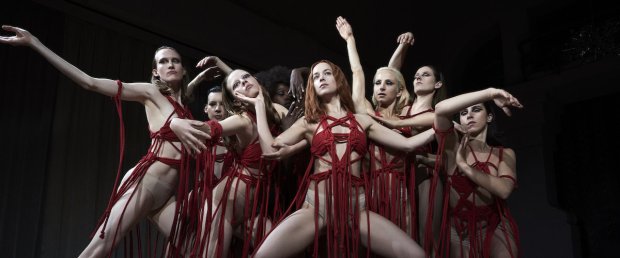
Like the original, Guadagnino’s film focuses on a prestigious German dance studio run by witches, specifically three mothers who oversee a coven and are interested in a young dancer named Susie (Dakota Johnson), who possesses uncanny skills and talent. Since she was a little girl, raised in a religious household in Ohio, Susie dreamed of attending the school. Susie eventually becomes the favorite pupil of the mysterious Madame Blanc (Tilda Swinton), the school’s central choreographer who commands every frame she’s in, whether  chain-smoking and instructing the young dancers or using Susie’s body as a vessel to punish any young dancer who challenges her authority.


The most harrowing scene occurs about 30 minutes into the film, when Susie showcases her talent, hungry to earn the lead role in a performance. As she twists, crawls, and stomps, another dancer, trapped in a mirrored studio space bellow, is yanked violently around the room, her body twisted and contorted in excruciating ways. Guadagnino seamlessly cuts between both scenes, as the dancers build to their crescendos. For any horror fan, this footage is a must-see.

Following that mesmerizing scene, Guadagnino takes his time building the setting and exploring every crevice and shadowy hallway of the dance studio. This is another area where his film differs greatly from the original. Argento’s body of work, and giallos in general, are known for their popping technicolor and gore. Guadgnino’s tones are bleak, and even the outdoor shots  feature pounding rain and muted gray tones. The historical backdrop and the lasting repercussions of WWII loom over the film, especially through news reports about social and political upheaval. This is a Germany of the 1970s that has not fully reconciled or confronted its past.  Susie’s red pony tail is the only splash of brightness throughout much of the film. This bleakness is underscored by Thom Yorke’s haunting score, which enhances the mystery and the cackles and whispers that echo in the hallways.

Some of the film’s middle acts sag, more specifically the story of Dr. Josef Klemperer (also played by Swinton under a lot of make-up ), who doesn’t bring much to the film. Yes, he helps jumpstart the narrative and Susie’s story, and he works with student Sara (Mia Goth) to uncover what the witches are up to, but the film feels overstuffed at times. However, the mind-blowing sixth act, which features an orgy of red tones and blood, is well-worth the wait and will satiate any horror fan.

Overall, Suspiria is a grim meditation, a film where men are pretty much useless and female energy reigns supreme. The voodoo doll dance scene, the interactions between Blanc and Susie, and the blood-drenched conclusion, elevate the film, but patience during the middle acts is needed to reach the crescendo.


A Look Back at Xavier Gens’ Frontier(s)

It’s been over a decade since the emergence and popularity of the French Extremity horror films.  Today, films like High Tension, Martyrs, and Inside are generally considered classics of the 21st Century by horror fans, and the directors, especially Alexandre Aja and Pascal Laugier, have gone on to have successful careers as  directors. When looking back on the last decade and the success of these films, there should be more attention given to Xavier Gens’ 2007 film Frontier(s), which accurately predicted and responded to the rise of right-wing populism in Europe.

The term the New French Extremity was first coined by Artforum critic James Quandt, and while it may be impossible to fully define the term or this particular style of cinema, film blogger Matt Smith once said that this wave of films does have two common themes: home invasion and/or fear of the Other.

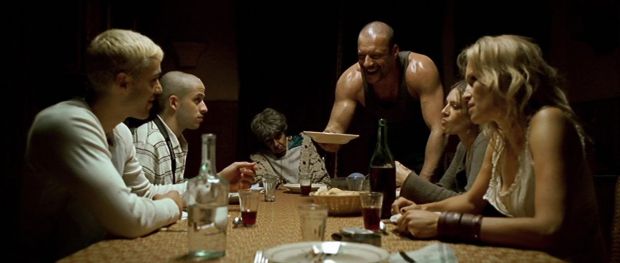
The second theme is especially applicable to Frontier(s), which opens in Paris, torn apart by riots due to the election of a far-right candidate to the presidency. The rest of the film focuses on a group of four Muslim teens who plan to run away from Paris to Amsterdam with a bag full of robbed money.  Two of them, Tom (David Saracino) and Farid (Chems Dahmani), decide to stop in a b & b, where they encounter neo-Nazis/cannibals. Eventually, the remaining teens, Alex (Aurelien Wiik) and Yasmine (Karina Testa), go looking for their missing friends at the b & b, and from there, things don’t go well. More specifically, the cannibal family’s patriarch and former SS officer, Le Von Geisler, wants to make Yasmine a mother for the new Aryan race.

Like other French Extremity films, Frontier(s) is seeped in heavy gore and violence, similar to some of the American horror films of the early 2000s, such as Saw and Hostel. The cannibal Nazis, meanwhile, are Gens’ nod to The Texas Chainsaw Massacre and grindhouse films of the 1970s, especially some of the dinner scenes.

Yet, looking back at the film over a decade later, it’s the political backdrop that stands out. In an interview with the website Horror Pilot, Gems described his influence for the film, stating, “I started to think about the story in 2002 during the presidential elections in France. When the extreme right arrive in the second turn, I got really scared. And that gave me the idea of the film.”

This fear is obvious in the opening minutes, which features cops dressed in riot gear, protestors flooding the streets of Paris, and sheer chaos of tear gas and bullets that forces the group of four Muslim friends to flee the country. The sadistic cannibals are a reminder of how the old ghosts and ideas of white supremacy still linger, to the point that a living  Nazi war criminal is the one who orchestrates the events, including the severe torture that occurs in underground chambers. The film features other torture too, including a scene in which the family feeds pork to Tom and Farid, suspecting that they are Muslim.

Frontiers1.jpg

Tom (David Saracino) and Farid (Chems Dahmani) sitting down for dinner with the Nazi cannibals

When the film was released, the reviews were mixed. Writing for Slant Magazine, Ed Gonzalez had this to say:

The film unspools as a seizure-inducing succession of nonstop screaming, references to horror-film freakouts old and new, and slick market-tested shocks, beginning with a protest rally in the wake of the election of a French right-wing nut and ending with Karina Testa’s Last Girl Standing “escaping” from an inn where a deranged posse of cannibalistic neo-Nazis is trying to renew the blood of their family. It sounds enticing, but Gens’s engagement with the contemporary racial discord currently tearing at France’s bowels isn’t sincere but rather a transparent ploy to give the film a sense of gravitas.

Looking back, the political turmoil evident in Gems’ film, especially the opening sequence, does seem sincere. As he said in the interview with Horror Pilot, he was inspired to create the film after the election results of 2002 and the rise of the far-right. Beyond that, the film’s opening predicted the turmoil that would consume Europe over the next several years and the rise of the AdF Party in Germany, Marine Le Pen’s National Front Party in France, and the authoritarian regimes that have swept power in Poland, Hungary, and most recently, Italy. The fear of the Other by white Europeans, underscored to the extreme by the cannibalistic neo-Nazis, foreshadowed the immigration crisis that would consume the EU for the next decade.

The power that Le Von Geisler  wields over the family is also built on abuse towards women. Two of the family’s members, Gilberte (Estelle Lefebure) and Klaudia (Amelie Daure), are forced to offer sex to any brown-skinned newcomers that stumble upon their b & b. This is a way to convince them to stay, and early in the film, the friends discover several passports belonging to others that were kidnapped, tortured, and cooked. Yasmina, meanwhile, is only spared when it’s discovered she’s pregnant and the Nazis find a use for her in their desire to create the master race. It should be noted that Yasmina is one of the strongest Final Girls in any of the French Extremity films, enduring countless waves of torture, including watching her friends and boyfriend die, and yet enduring and resisting such a brutal form of patriarchy.

yasmina2.jpg

Frontier(s) feels eerily relevant a decade after its release. From the opening scenes of unrest in Europe, to the female protagonist’s survival against a relentless patriarchy, the film is one of the real standouts of the French Extremity films from the last decade. It was speaking to issues that would only become more prevalent in the years following its release.


No Oscar Nomination for Toni Collette/The Horror Genre?

2018 was another strong year for horror. There were several indie films that made waves, such as Mandy, Terrified, and Revenge, but two films specifically broke into the mainstream, generated buzz and conversation, and were deserving of the Academy’s attention.  I am talking about A Quiet Place and Hereditary. Both films were snubbed, though A Quiet Place did earn a nomination for Sound Editing. That said, I’m not surprised that the horror genre has once again been shut out of the awards season, even if the genre has been earning more and more attention over the last five years or so. Last year, I argued that Get Out deserved Oscar nominations, and it did receive a few, including Best Picture. Jordan Peele, meanwhile, won an Oscar for the screenplay. When writing about Get Out, I noted that very, very few horror films have ever won an Oscar. The Silence of the Lambs won Best Picture in 1992. The Exorcist was nominated for several Oscars, but only scored two for Best Adapted Screenplay and Best Sound Mixing.

A Quiet Place is at least deserving of a nomination for Best Original Screenplay, which was penned by John Krasinski. The film is one of the most innovative horror movies of the last decade, a metaphor on grief and losing a child. While the film may not be the first to use sound, or a lack of sound, so effectively in the genre (think Hush or Don’t Breathe), it does so in a way that makes us really feel for the family, especially after the tragedy that occurs within the first fifteen minutes. Additionally, the film contains strong performances by Krasinski and Emily Blunt, who do everything they can as parents to keep their children safe and alive. We generally want them to survive, especially after they endure one calamity after another.

collette

(Toni Collette as Annie in Hereditary)

Hereditary is a much more difficult film to watch. It begins with a funeral for the family’s matriarch, and within the first half an hour, it takes a sudden twist with the loss of another major character. Yet, it’s one of the strongest portrayals of grief that I’ve ever seen on film, let alone the horror genre. Furthermore, Toni Collette’s performance as Annie is never-jangling. Her facial expressions alone are powerful and unnerving. She is a mother who can’t take anymore loss. Additionally, I think the film should have received nominations for Best Director (Ari Aster), Best Original Screenplay, and perhaps, maybe even Best Picture. Yet, it was totally shut out…

So, after giving a single Oscar to Jordan Peele last year, which was well-deserved, it looks like the Academy is back to ignoring the horror genre. Meanwhile, fans can continue enjoying the state of horror right now because there’s a lot to be excited about, even if the Academy doesn’t think so. Horror is having a moment.

What do you think about the Oscar nominations? Were A Quiet Place and Hereditary deserving of the Academy’s attention? Feel free to let me know what you think.

List of Oscar nominees.


Writer’s Showcase: All-Female/Winter Edition

The next installment of the Writer’s Showcase at the Olde Brick Theater in Scranton will take place on Saturday, Feb. 9 at 7 p.m. This one will be the annual all-female Showcase, featuring live readings of poetry and prose by Kimberly Boland, Aurora Bonner, Rachael Hughes, Laurel Radzieski, and Alyssa Waugh.

Writers  Showcase Winter 2019-page-001.jpg


Author bios:

Kimberly Boland writes poetry, prose, and drama. She is a recent graduate of Keystone College, where she received her bachelor’s of arts degree in Communication Arts and Humanities, and she’s continuing her studies at Gonzaga University where she has just begun her master’s of arts degree in Communication and Leadership Studies. She lives in North Abington Township in her beloved farmhouse home with her cherished, loving family, and her hobbies include tabletop board gaming, swing dancing, listening to audio dramas, and being active in her synagogue’s community. Her first prose poetry chapbook, titled Maybe This Is It, an analysis and reflection on overcoming destruction, told through a feminist lens, came out in 2017 and she hopes to follow it up with a sequel of equally autobiographical poems soon.

Aurora D. Bonner is an environmentally driven writer and artist living in the Endless Mountains of Pennsylvania. She is a regular review contributor for the Colorado Review and her writing has appeared or is forthcoming in Brevity, Assay: Journal of Nonfiction, Under the Gum Tree, and Hippocampus Magazine. She holds an MFA in Creative Writing from Wilkes University. Follow her @aurora_bonner or aurorabonner.com for more information.

Rachael J. Hughes writes with retractable, comfort-grip PaperMate Ink Joy pens in groovy hues. She was founder of Word Fountain and earned her Creative Writing MFA at the Maslow Family Graduate Program in Creative Writing at Wilkes University. She strives to make the world laugh, heal, and love books. She is the author of Us Girls: My Life Without a Uterus. She writes and resides in Central Pennsylvania with her family, including four cats. Check out her musical musings at: http://kindalikeapoet.wordpress.com.

Laurel Radzieski’s debut poetry collection, Red Mother, was published by NYQ Books in 2018. She earned her MFA in Creative Writing from Goddard College and her BA from Keystone College. She has been a Writer-in-Residence at the Wormfarm Institute and is a poetry editor for Clockhouse. Laurel’s poems has appeared in The Golden Key, Really System, The Slag Review and elsewhere, including on roadsides in rural Wisconsin. She has worn many hats in the theatre and can often be found writing on-the-spot poems for strangers at local events. Laurel lives in Scranton with her husband and a fish named Buddy.

Alyssa Waugh is the editor of I AM STRENGTH: True Stories of Everyday Superwomen and the author of Hell’s Laughter and Other Spooky Tales. Her short stories have been published in Beyond Science Fiction Literary Magazine, her poetry has been featured on Writing in a Woman’s Voice, and she won first place in Inkitt’s Running Scared Horror Writing Contest. She is a manuscript reader for the James Jones Novel Writing Competition, a copy editor for Etruscan Press, and teaches creative writing classes at King’s College and fiction workshops at Wilkes University where she received her M.F.A. These days she spends most of her time as the Editor in Chief of Blind Faith Books and trying to write without her cats stealing her pens. You can learn more about her at alyssawaugh.com and blindfaithbooks.com.

Check out the Facebook event page for additional info.