Black Panther and Colonialism

Confession: I am not a fan of the endless barrage of Marvel/Disney superhero movies. More specifically, I’ve always thought that the Avengers movies were a long, arduous CGI fest containing a few over-the-top political metaphors mixed in with all of the explosions. There is also the concern that Disney owns so much of the mainstream film/entertainment industry, including Marvel Studios, Lucas Films, and now 20th Century Fox, which gives them the rights to the X-men films.

With all of that said, I went to see Black Panther this weekend, especially after the stream of editorials that hailed it as a cultural moment. My initial response to the movie is that it very much felt like any other Marvel superhero movie, with lots of fighting and lots of CGI, especially  during the last 30 minutes/final battle. (Those rhinos!).

However, over the weekend, I kept thinking about the film, something I’ve never done with any other Marvel movie. I found myself starting to agree with some of the editorials, namely that director Ryan Coogler makes us seriously think about the effects of colonialism and what Africa could have been like without the slave trade and white, European conquerors.

The film is primarily set in the fictional country of Wakanda, an African nation that is technologically advanced, well beyond any first world country, but veils itself from the outside world and generally keeps outsiders at bay. Its true identity is threatened when Killmonger (Michael B. Jordan), defeats the Black Panther (Chadwick Boseman) and ascends to the throne. Unlike the rest of the nation, Killmonger wants to make Wakanda known to the rest of the world. More specifically, the Oakland-born villain wants to use Wankanda’s technology to arm the oppressed and encourage them to overthrow their rulers. Killmonger is the most nuanced Marvel villain I’ve ever seen on the screen, and his politics are not paper thin or simplistic. His views formed after watching his father get killed by the Black Panther’s father/King of Wakanda. Killmonger also questions why Wakanda keeps itself a secret when so many are suffering. He  says at one point to the Black Panther that anyone who descended from Africa are all one people and their struggle should be Wakanda’s struggle. It is also no mistake that he was born in the city that was the birthplace of the Black Panthers.

Unlike the Black Panther, however, Killmonger is quick to resort to violence and immediately kills a few of the kingdom’s female warriors and threatens violence against anyone who opposes him. However, by the film’s conclusion, the Black Panther and his  counsel, mostly women, and badass women at that, take some of what Killmonger has to say to heart, deciding to reach out to the rest of the world, including the Oakland neighborhood where Killmonger was raised and watched his father die. They are determined to open outreach centers and use Wakanda’s technology to help the suffering.

The Black Panther poses a lot of questions, first and foremost, what would Africa have been like without the oppression of colonial powers? There are a lot of reasons the film probably resonates with audiences, but it’s really the first time we’ve seen an African country on the big screen far, far more advanced than any other country. It also deals with issues of identity and what W.E.B. labeled as double-consciousness.

For a far more nuanced analysis of the way the film deals with colonialism and African history, check out Jelani Cobb’s article in The New Yorker.


Netflix’s Worthy Horror Flick The Ritual


A Netflix horror flick released this month is catching a lot of buzz. The Ritual, a story about four friends who get lost on a hike in Sweden, has been much-hyped on horror social media pages. The film is based on the novel of the same name by Adam Nevill. For the most part, the film primarily centers around the first half of the book, when the friends encounter something ancient and menacing in the woods, which, for the most part, is unseen to the viewer. In that regard, the film uses some of the same tricks that The Blair Witch Project used- don’t show the monster. Instead, just show their reactions to twigs snapping and other creepy sounds. For a majority of the film, the monster is described only through their dialogue and leaves a lot to the imagination, which works. This allows the viewer to question whether or not they’re actually seeing and hearing something, or, is there something deeper going on. Is the monster a form of madness or grief manifested over the loss of their friend? This question is especially relevant when it comes to the protagonist, Luke (Rafe Spall), who watched their friend get killed by junkies in a convenient store. The hike is in honor of his memory. When the monster terrorizes the friends, Luke often has flashbacks of that moment when his friend was murdered and he failed to act, thus the monster is frequently associated with Luke’s grief.

The first half of the movie is generally suspenseful and has strong character build-up. The long-shots of the mountains and the woods create an eerie, moody atmosphere and makes the viewer feel like the setting is going to engulf the characters. The second half shifts the narrative somewhat when Luke encounters some locals who worship the monster. This half is not as strong, but it does not pull down the entire film.

Overall, The Ritual is a strong entry into the horror genre at the beginning of 2018. It is atmospheric, well-shot, and generally knows how to exercise some restraint regarding he use of a monster as a threat.

Some Poetry News

cover

I wanted to share a quick update on the poetry front. I have a new review published over at 4squarereview on Ariel Francisco’s latest collection, All My Heroes Are Broke. I really like his work, and in the context of the immigration debates occurring in the U.S., his poetry feels especially powerful and resonant at this moment. Check out the review here. 

I also have three poems in the new anthology Misrepresented People: Poetic Responses to Trump’s America, out this month through NYQ Books. The collection includes work by Patricia Smith, Kaveh Akbar, Ariel Fransisco, Kyle Dargan, Gregory Parldo, Maria Mazziotti Gillan, and dozens of others. Proceeds will be donated to the National Immigration Law Center. You can order a copy through several retailers. Click here for more info. There will be a launch in mid-March at the Bowery Poetry Club in NYC.


Joe Kennedy Avoided the SOTU Rebuttal Curse, but Let’s Calm the Presidential Chatter

Visit any progressive blog today or the social media platforms of your Democratic friends, and you’ll probably notice many of them gushing about Joe Kennedy III’s rebuttal to President Trump’s State of the Union address last night. Kennedy largely avoided the SOTU curse that so many others have fallen into. Remember former Louisiana Governor Bobby Jindal’s rebuttal to Barack Obama? I don’t remember anything about the content, but I do remember his sweater and the number of times he was compared to Mr. Rogers. I also remember the excessive water sipping by Sen. Marco Rubio a few years ago.

Speaking at Fall River, MA, Rep. Kennedy was generally confident and poised. He also drew a sharp contrast between the United States depicted in Trump’s speech and the actual effects of some of his policies. Here are some lines from the speech that drew that stood out to me:

“Many have spent the last year angry, anxious, afraid… we see an economy that has made stocks soar, but failed workers.”

“This administration isn’t just targeting the laws that protect us, they’re targeting the very idea of the laws that protect us.”

“Turning American life into a zero sum game where for one to win, another must lose…. a long list of false choices — five up safety net for safety. Dreamers or poor kids. Coal miners or single moms. The answer that Democrats offer — we choose both. We fight for both. The greatest strongest nation in the world should not have to live anyone behind.” Support for child care, living wage, education, infrastructure, health care.”

In general, the speech was strong enough to appeal to the base and maybe some independents, too. This is especially important heading into the fall 2018 elections, when the Dems will have to get out their base, which traditionally stays home during mid-term elections.

If I have one main critique of the speech, it is this: what are the Democrats offering other than being anti-Trump? Kennedy didn’t pitch anything bold, such as universal health care or even something less risky like a higher federal minimum wage or paid maternity leave. All of these, including Medicare for all, generally poll quite well and they are part of the Democratic Party’s platform, but they were absent from that speech last night.

I do think 2018 will be a good year for the Democrats. Right now, the momentum is on their side. The base is fired up. They keep winning state-wide elections that they shouldn’t be winning, including in deep red states, and math and history is on their side to win back the House in November.

With that said, the Democratic Party needs to offer a clear platform and policy proposals when the 2020 race gets closer. I am not convinced that being anti-Trump is going to be enough. I’m also not convinced that a 30-something with the Kennedy name is enough to challenge Trump, who will go as low as he needs to to win re-election, if he even decides to run again.

Kennedy’s speech was good. It drew a sharp contrast between Trump’s words and the reality that some Americans are living in, Americans who still haven’t seen their wages rise, or DREAMERs who have been here since they were children and now fear deportation. Kennedy’s speech reached out to them, especially when he promised that the Dems would fight for DREAMERs. Lets hope so because the GOP won’t, at least not without insane immigration demands. However, I would like to see him serve a few more terms in the House and perhaps get bumped into a leadership position to raise his profile more before he’s seen on any type of presidential ticket.


Get Out, the Oscars, and the Horror Genre

get-out-jordan-peele_jpg_CROP_promo-xlarge2 

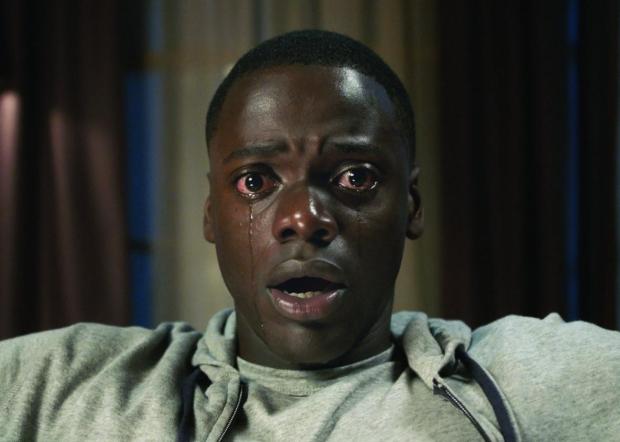
Get Out has scored big in the 2018 Oscar race. The film has been nominated for Best Picture, Jordan Peele has been nominated for Best Director, and Daniel Kaluuya has been nominated for Lead Actor.

If Get Out wins Best Picture, it will be the only horror movie, other than 1991’s The Silence of the Lambs, to do so. Recently, there has been an ongoing debate as to whether or not Get Out is a horror picture. From the get-go, I have stuck with the belief that Get Out is indeed a horror film. AMC’s FilmSite defines horror films as, “unsettling films designed to frighten and panic, cause dread and alarm, and to invoke our hidden worse fears, often in a terrifying, shocking finale, while captivating and entertaining us at the same time in a cathartic experience.”

The definition is pretty standard, and Get Out certainly fits into it, despite the fact that it was placed in the comedy category at the Golden Globes.   Peele was quoted in Newsweek as saying about comedy and horror, “They’re both about truth,” adding, “If you are not accessing something that feels true, you’re not doing it right…you have to be very tuned into the audience and their emotion.”

Get Out works so well as a horror film because it hits all of the right psychological notes, specifically pertaining to racism and white liberals’ compliance. In that regard, Get Out stands with some of the best horror films, the ones that are keenly aware of their audience and issues pertaining to their time periods.

I will be rooting for Get Out to snag some Oscars. I’ll also be rooting for The Shape of Water, a film that leads the Oscar race in nominations and borrows much from the Universal Monsters golden age.


Two Movies for Our Time

tonya2.jpg

There are two films in theaters right now that are Oscar contenders and feel especially relevant. The first is The Post, which tells the story of The Washington Post’s decision to publish the Pentagon Papers in 1971, detailing the United States’ decades-long involvement in Vietnam, spanning multiple administrations. The second is I, Tonya, which, believe it or not, makes Tonya Harding a sympathetic character and uses the lens of class to do so.

The Post, directed by Steven Speilberg, comes at a time when the current president of the U.S. attacks the press day in, day out and labels stories that he doesn’t like as fake news. The most chilling parts of The Post occur when the film recreates parts of the Nixon tapes, including a line in which Nixon says he doesn’t want any Washington Post reporters in the White House. Tom Hanks does a fine job playing Post editor Ben Bradlee, and Meryl Streep gives a strong performance as Post publisher, Kay Graham. The film has drawn several comparisons to the 2015 film Spotlight, which tells the story of the Catholic Church’s sexual abuse cover-up  and The Boston Globe’s coverage of it. In some ways, The Post feels like it was written specifically for the Trump era, and maybe it was. There is a chance that the film may not age as well as Spotlight, but regardless, The Post is an important reminder of why we need a free press.

The Post also resonates because of Kay Graham’s challenges of being a woman in a leadership position, unsure if The Post was even going to survive financially. Not only did she have to decide whether or not to publish the Pentagon Papers, while the NYT was fighting the Nixon Administration in court, but she had to confront a board of all-male bankers, once The Post went public, who were eager to overrule her decisions, including the decision to publish the Papers.

I, Tonya is also a docudrama, but one that is more focused on issues of class. The film portrays Olympic figure skater Tonya Harding (Margot Robbie) in a sympathetic light. At least half of the movie centers around the relationship with her domineering, abusive mother, LaVona Golden (Allison Janey), who, at one point, throws a knife at her daughter that sticks in her arm. Even in that scene, she doesn’t apologize. Golden is quick to remind Harding that she works so many hours  as a waitress to pay for figure skating.

The film offers the premise that the judges often disliked Harding and saw her as white trash, while they viewed Nancy Kerrigan as the all-American girl. At one point, Harding chases a judge down in his car in a garage and asks what exactly she can do to earn a fair score. Essentially, the judge tells her that she isn’t the type of girl they want representing the U.S. In another scene, Harding, dressed in a pink outfit that she sewed herself, blurts out to a panel of judges that she’ll never be able to afford a $5,000 figure skating outfit that’s more to their liking.

I, Tonya deconstructs and rewrites the media narrative that was created around Harding in the mid-90s, after Kerrigan’s leg was clubbed. The film focuses on the abuse she suffered at the hands of her mother and husband, Jeff Gilloly (Sebastian Stan), while highlighting some of the class barriers she had to overcome. Like The Post, I, Tonya feels especially relevant in 2018.


Quick Poetry Update

I mentioned a few weeks ago that in the new year, I would be writing poetry book reviews for 4squarereview.com and more essays for the Schuylkill Valley Journal. My first review for 4squarereview, on Aaron Coleman’s forthcoming book, Threat Comes Close, was published last week. You can read it here.  I also have an essay on Robert Bly and environmentalism in the new online edition of SVJ. This essay was a multi-month project, so I hope anyone interested in poetry or environmentalism takes the time to check it out. You can read it here.

This summer, I’ll be working on a new poetry manuscript, though I  feel no rush to publish it. I am merely going to start the process of ordering the poems. At least one section of the book will contain poems written in response to horror films. Three of those poems were published in the November issue of The Horror Zine and one was published in the debut issue of Rockvale Review. Check them out!

Aside from blogging about film, horror, and literature, I’ll still post poetry updates on here now and then.


The Truth Is Still Out There, Apparently

03-x-files.w710.h473.jpg


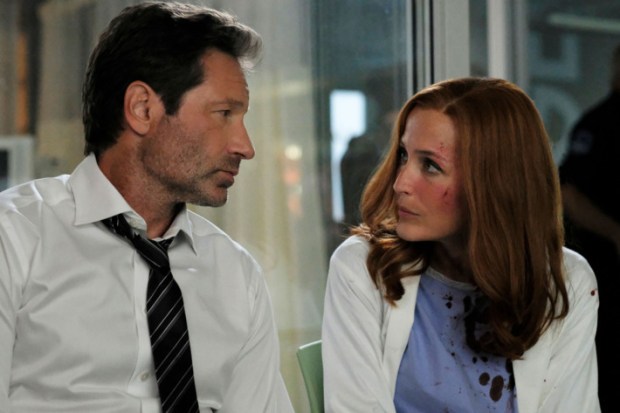
Last night marked the season 11 premiere of “The X-files,” which was brought back to life two years ago in a short, six-episode season that garnered mixed reviews and ended on a major cliffhanger, with the fate of Mulder and Scully uncertain, due to impeneding alien colonization. Thus far, this season has generated positive reviews and is slated for 10 episodes. Last night’s premiere was generally strong and marked the return of some other long-standing fan favorites.

There are some spoilers ahead, so you may want to avoid reading if you haven’t seen the episode yet but plan to.

The premiere was a mythology episode that generally focused on the ongoing alien invasion story line. Well, it turns out that the aliens are no longer interested in planet Earth, due to global warming and waning natural resources. With the alien invasion put on hold, the show’s long-standing big bad, the Cigarette Smoking Man (William B. Davis), plans to wipe out most of human kind with an alien plague and let the chosen few survive, thus essentially wiping the slate clean. The key to stopping him centers around Mulder and Scully’s son, William, who is poised to be a major figure this season. Near the end of the regular series, we learned that he is part alien and was hidden for his own protection.

The Cigarette Smoking Man had some of the best dialogue during last night’s premiere, dialogue centered around the Trump era. In a show that has thrived on the notion of conspiracy theories, the villain said how truth is now fluid, how nothing is crazy anymore, how it’s so easy to label truth and hard science as fake news. The opening moments of the show featured a relatively powerful voice over by the Cigarette Smoking Man talking about U.S. history and power. This voice over was juxtaposed with images of the moon landing, the JFK assassination, the Clintons, the violence in Charlottesville this past summer at the hands of neo-Nazis, and yes, Trump. The point of this seemed to be that events and politicians will pass, but there will always be a chosen few working behind the scenes to control the outcome of world events. This has generally been the long-standing premise of “The X-files.” The syndicate, a group of shadowy conspirators, were always the real enemy.

Last night’s episode felt fresh and new, while still maintaining general aspects of “The X-files” mythos. Gillian Anderson and David Duchovny were great in their reprisal of Mulder and Scully. I look forward to seeing them on screen more together this year.

My only real gripe about the premiere, and the show in general, is the way that its creator, Chris Carter, keeps rewriting the main story line. First, the aliens wanted to colonize Earth. Now, they suddenly aren’t interested in that. Is the Cigarette Smoking Man lying about this? Also, how is he still alive? He appeared briefly in season 10, but at the end of season 9, which was meant to be the show’s finale, he was blown up. How did he survive that? I always got the sense that the show’s writers had no idea where the alien mythos story line was going. I  still feel that way after watching the season 11 premiere. It often feels like the writers make up or change the mythos with each season, with no clear end in sight.

With that said, I’m eager to watch the remaining nine episodes, especially the monster-of-the week entries. Gillian Anderson recently said that she doesn’t plan to revive the role of Dana Scully after this season, so this season very well may be her “X-files” swan song. In the meantime, I’m going to enjoy watching Mulder and Scully search for the truth once again.


Political Predictions for 2018

Borowitz-Capitol-Citigroup


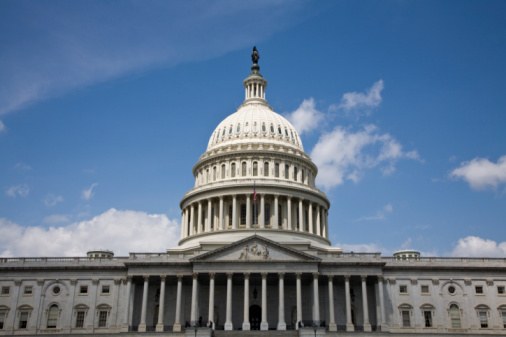
I’m taking a break from blogging about films, literature, and the horror genre to offer some political predictions for 2018. First, I will preface this post by reiterating what a news editor told me about 10 years ago when I worked as a full-time political beat reporter for a daily outside of Philly. Politics is fluid. Nothing is certain. Anything could change. If we’re talking about the 2018 mid-terms, which feel like the most consequential mid=terms in a long, long time, then we need to acknowledge that the 10 months that separate January and November is a very long time in politics. Anything can happen, and 2016 and 2017 certainly proved that.

1.The blue wave builds…. but when does it crest/peak? This is my biggest question heading into 2018. Just how big will the blue wave be? Any statistician or political junkie/pundit will tell you that there will be a blue wave next year. The Democrats lead on the generic ballot for control of Congress by about 15 points. Their margins are especially high among 18-34 year-olds and women. Their odds are split among independents. Meanwhile, The Hill and Politico reported last week that behind closed doors, Senate Majority Leader Mitch McConnell has been fretting that the GOP may lose control of the House and Senate. So yes, a blue wave is building, but we won’t know how big it is until November comes and goes.

2. The Democrats gain control of at least one branch of Congress. If I made a bet on Democrats regaining control of Congress, I would put most of my money on Dems retaking the House. They need to gain 20 plus seats to make this happen. Yes, a lot of the districts are heavily gerrymandered, but the Democrats are running an incredible amount of candidates next year, especially compared to the GOP’s numbers and the number of GOP reps retiring, probably because they know a wave is coming. Control of the House will come down to suburban Philadelphia districts, suburban DC districts in Virginia, and a few districts in CA where the Dems should be able to topple some moderate GOP reps. It is also likely the Dems will win some seats in districts they typically wouldn’t win in other years because though Trump will not be on the ballot, he will still be a drag on the ballot for the GOP. In 2010, the GOP netted 63 House seats and 6 Senate seats. They obliterated the comfy majority the Dems had in the House and nearly retook the Senate, which they’d do two years later in 2014. Historically, the party that occupies the White House loses a lot of seats in the first mid-term. So, if the Dems retake any branch of Congress, my money is on the House.

3. The Dems don’t retake the Senate. This is the prediction I feel most iffy about. Since Doug Jones won in Alabama and will keep that seat until 2020, the Senate is now within Democratic reach. However, it is still a major, major uphill slog, even though the Dems only need to flip two seats for control. This prediction comes down to basic math. The Democrats have to defend 25 seats this year. The GOP only has to defend 10. The Democrats best chance to flip a seat is to defeat Dean Heller in Nevada, a state that has been trending blue since at least 2010. The path to the majority for Dems cuts through pretty red states, including Tennessee, Arizona, Mississippi, and Texas. Doug Jones won, but he won because of the awfulness of Roy Moore and because of incredible black turnout. The Dems may be able to repeat a similar turnout pattern in a state like Mississippi, but Tennessee does not have the make-up that Alabama has. Meanwhile, Texas is the great big elephant, the state that the Democratic Party is sure will trend purple in a few election cycles, but so far, that hasn’t occurred or even come close to happening. If the Dems are going to win a Senate seat in Tx by defeating Ted Cruz, then they are really, really going to have to focus on getting out the Hispanic vote and focusing on turnout in major cities like Austin and San Antonio. Is Democratic control of the Senate possible? It is, but it’s still unlikely.  The path for Democratic control is extremely narrow, and meanwhile, there are  A LOT of deep red state Dems on the ballot next year, including in the states of West Virginia, Missouri, Indiana, and North Dakota. The Senate map will be far, far more favorable to Dems in 2020 and 2022.

I will note that the health of John McCain in Arizona and Thad Cochran in Mississippi, both Republicans, also factor into all of this.

4. Dems win big at the state level and gain control of more governor’s mansions. Again, this comes down to math. There are a lot of blue state Republican governors on the ballot this year, including in Maryland and Illinois. In purplelish Maine, the unpopular GOP governor, Paul LePage, will be termed out. The GOP won a whole lot of governors mansions and state legislatures over the last two mid-term election cycles. In fact, one of Barack Obama’s legacies is the fact that his party lost a historic number of state houses under his tenure. This should really be the year when Dems reverse that trend. In fact, Obama has stated he plans to grow the Democratic bench once out of office. The Dems won a lot of state races in 2017, including in places like Georgia, Oklahoma, and Virginia. The party is poised for a lot of pick-ups at the state level this year.

5. Dems win the House but DON’T move to impeach Donald Trump. I don’t find it likely that the Democratic Party will seriously move to impeach Trump, unless Mueller really uncovers something huge. If a Democratic House majority drafted articles of impeachment once the new Congress is sworn in come next January, nothing would happen. I say this because the Senate has to convict. The Democrats won’t have 60 plus votes at the beginning of next year to convict and impeach the current sitting president. Impeachment is a fantasy of the left, but I don’t see a path for that to happen. I also don’t think it’s the best move politically for the Dems.

6. Donald Trump’s approval numbers stay in the mid-low 30s. Simply put, Donald Trump’s base loves him. They will continue to love him in 2018. They make up about 1/3 of the country. Trump is losing independents and white, suburban women. I don’t see him changing in the new year. I don’t see anyone around him making him change. He is even presiding over a fairly strong economy, but that hasn’t helped his numbers. He is who he is.

7. Donald Trump pushes for an infrastructure bill. This is something that I assume Dems would like to work with Trump on, but they won’t work with him if the infrastructure plan involves a complete privatization of the nation’s highways. I predict Trump will push an infrastructure bill early this year, but it’s only happening if he is willing to move to the middle on this, along with Ryan and McConnell. Otherwise, it’s not happening.

8. McConnell and Ryan butt heads over “entitlement reform.” I hate using the term “entitlement reform,” so instead, I’m going to use the term cut to benefits. House Speaker Paul Ryan really, really wants to slash the social safety net and cut Medicare, Medicaid, and Social Security, programs we all pay into via our taxes. Along with lowering the corporate tax cut, Ryan has dreamed of burning the social safety net since he was a college student reading Ayn Rand. He probably has enough votes in the House to do this, but the GOP only has a one-seat majority in the Senate now, due to Doug Jones. It’s hard for me to imagine how they pass any major cuts to these benefits in the Senate, but hey, crazier things have happened.

7. A deal is reached on DACA before the March deadline. Are we really going to be a country that boots 800,000 Dreamers? I sure as hell hope not. Most Republicans are not for ending DACA and kicking people out of the country that have been here since they were children. I don’t think Trump really wants to end DACA, despite his anti-immigrant fervor. I assume the parties will come up with an agreement, maybe by mid-January, when they need to fund the government again, since they only passed a short stop-gap measure before Christmas. I predict the deal will include increased funding for border security. I sure hope I’m right that they come to some deal here and protect the Dreamers….

8. Climate change will continue to wreck havoc and cause extreme weather globally, but the U.S. will continue to do nothing and Trump will continue to deny science, slash the EPA, and keep dismantling Obama-era environmental policies. We may be past the point of no return regarding climate change. 2017 saw a lot of extreme weather, and that will continue in 2018. Countries like China, India, France, the UK, and others will continue to take the lead on this issue, since the U.S. has withdrawn from the Paris Agreement and has essentially given up being a leader on this issue under this administration

These are my predictions for 2018. Again, nothing in politics is certain, and 10 months is a very long time until the mid-term elections. That said, there are some trends from 2017 worth looking at, especially Democratic turnout and wins at the state level that are good indicators of where 2018 will go politically.

I hope that everyone has a safe, happy, and healthy New Year!


The Shape of Water: A Monster Movie/Love Story for the Trump Age


In a recent interview on NPR’s “Fresh Air,” director Guillermo del Toro said his latest creature feature, The Shape of Water, is a movie that on the one hand is a tribute to his love of monster movies, including Universal Studios The Creature from the Black Lagoon, and on the other hand a love story. The Shape of Water is indeed a love story between Elisa (Sally Hawkins), a mute cleaning lady at a Cold War-era government facility, and the Amphibian Man (Doug Jones). More impressive, though, is the way that the film rewrites some of the classic monster tropes while serving as a metaphor for the Trump age and xenophobia.

The film will probably draw some comparisons to The Creature from the Black Lagoon, one of the later installments of the Universal Monster films. The Amphibian Man looks incredibility similar to the Gil-man/Creature. In the NPR interview, del Toro states that he was drawn to some of the visuals of the 1954 film, especially the scenes of the Gil-man  under water, watching a young woman swim, unbeknownst to her. Like Frankenstein’s Monster, both Mary Shelley’s creation and director James Whale’s Universal Studios adaptation of the Monster, the Amphibian Man is a sympathetic creature, one pulled out of a river in South America by a misogynistic brute/government worker, Richard Strickland (Michael Shannon), and tortured by him throughout the film. However, unlike the Universal Monsters, the Amphibian Man never kills anyone or poses a threat. He is a creature of beauty with blue lights on his scales and the ability to heal wounds with his touch.

The real monster in the film is Richard Strickland. Not only does he constantly harm the creature using a taser/billy club that he refers to as his “Alabama stick,” he is also incredibly sexist. He silences his wife during sex and propositions Elisa, confessing it’s a turn- on that she can’t talk and that’s how he likes his women. When he isn’t trying to maintain power over women, he demeans the cleaning staff, who he deems as beneath him. Strickland is also like Sheriff Jim Clark, the baton-wielding segregationist who took pride in assaulting Civil Rights demonstrators during the march on Selma for voting rights. A few times, he makes racist comments towards Elisa’s friend, Zelda (Octavia Spencer), a black cleaning lady.

Those who help the Amphibian Man escape are also the Other. Elisa is mute. Zelda is an African American woman in the Cold War age, and Elisa’s neighbor/friend, Giles (Richard Jenkins), is a gay man. All of them relate to and show empathy towards the Amphibian Man because they know what it is like to be different, to be thought of as less than human by people like Strickland.

Though the film is set in 1962 and includes a Cold War subplot, the film, like much of del Torro’s work, is  metaphorical and can be read as a love story/monster movie for the Trump age. A lot of  Strickland’s dialogue could have been said at a  Trump campaign rally when he talks about Muslims,  immigrants, or anyone non-white, for that matter. del Torro takes the classic monster tropes and rewrites them so that the monster isn’t really the one we have to fear. The real bad guy is the man in power who wants to silence women and thinks that the Amphibian Man should be killed simply because it is different. As the film progresses, Strickland grows more monstrous and less human, both physically and mentally. The film is also unique because it tells the story from the perspective of the early 1960s help. It is their story as much as it is the monster’s story. It is likely that The Shape of Water will be an Oscar contender. It is visually striking and has a powerful story. It is appropriate for this current moment without being preachy.