Preorder of Waiting for the Dead to Speak Now Available!

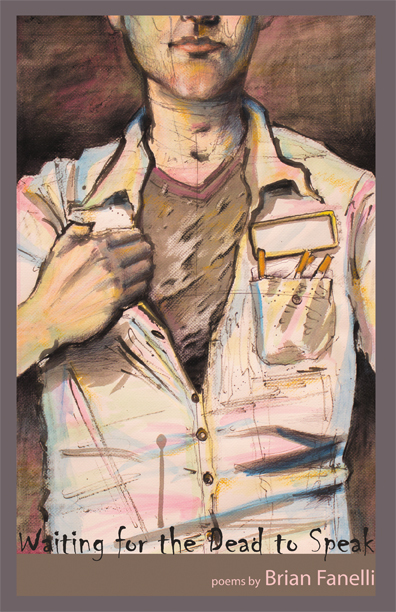
My new book, Waiting for the Dead to Speak, (NYQ Books), is now available! The book will officially be released on Sept. 12, but you can order today. Here is the link.  You have the option of ordering from a number of different places, including Barnes n Noble, Small Press Distribution, and elsewhere. If you want to preorder from Amazon, you can do that too. Here is the link.

Every writer hopes to grow in time and strengthen his/her craft, and I will state that I am eager to share these poems with the world. They are much different than Front Man and All That Remains. I hope that readers like them, and I will be doing  A LOT of readings throughout the fall. More details to come on that when the fall is closer.

WaitingforDeadtoSpeakCover


Two New Reviews

I had the chance to review two new collections of poetry for At the Inkwell and TheThePoetry, George Wallace’s A Simple Blues with a Few Intangibles (FootHills Publishing) and Stay with Me Awhile by Loren Kleinman (Winter Goose Publishing).

Checkout the review of Wallace’s book here, and check out the review of Kleinman’s new collection here.

Come Celebrate the Re-Launch of Word Fountain

I’ve been saying for years that northeastern, Pennsylvania has a vibrant art community and literary scene. Those scenes have just become stronger thanks to the re-launch of the literary magazine Word Fountain, which makes its return to the world this Friday, via a launch party.Check out the Facebook event page here. The reading will be from 7-8 p.m. at the Osterhout Library in Wilkes-Barre.

As a preview, here is an image of the new cover!

Owl

Where the Revolution Goes from Here and How Bernie Lands the Plane

Following a string of victories last night in New Mexico, New Jersey, and California, Hillary Clinton made history by clinching the Democratic nomination for president. Less than a 100 years after women earned the right to vote, she became the first female presidential candidate of a major political party. Despite one’s feelings about Hillary, this moment deserves its spotlight. Following the wins, Clinton said, “It may be hard to see tonight, but we are all standing under a glass ceiling right now. But don’t worry, we’re not smashing this one…It’s the first time in our nation’s history that a woman will be a major party’s nominee.”

She also noted that her mother was born on the day that Congress passed the 19th Amendment, giving women the right to vote. She then remarked that the first convention dedicated to women’s rights happened in the state where she stood that evening: New York, at Seneca Falls in 1848.

Browsing my social media accounts, I noticed that some Sanders supporters griped that Hillary was anointed the nominee and did no win it fairly. Putting the super delegate issue aside, Clinton had a few more million votes than Sanders, and for that matter, she earned more votes than any of the presidential nominees thus far, including Trump. The question now becomes where does the Sanders campaign go from here? Last night, he vowed to keep fighting until the convention in Philly at the end of July, and I’ve said all along that he should do so. At this point, Sanders has no chance to be the nominee, other than the very remote possibility that Hillary will be indicted over the e-mail saga. That said, Sanders’ campaign has been about remaking the Democratic Party, so that it resembles the party of FDR or LBJ rather than a party led by the DNC or Clintons. So far, Sanders has had some major successes. He got the chance to appoint five members to the DNC platform committee. Clinton appointed six, and the DNC appointed four. His picks have included African American scholar Cornel West and environmental activist Bill McKibben. On the campaign trail, he has forced Hillary to make income inequality a major part of her platform, which will most likely last through the fall, since Trump has been successful, in part, by tapping into white working-class anger. Now that the general election match-up is clear, Clinton can’t ignore the issues that Sanders made relevant.

If Sanders manages to unite the party, while continuing to push for the issues that matter to him, it is likely that he will return to the Senate as one of its most powerful members, and most likely the chair of the banking committee, if the Democrats retake the Senate, which seems likely, considering the map and Trump’s recent self-implosion over the judge remarks and Trump University scandal.

Following the age of Occupy and increasing anger directed at Wall Street, it is unlikely that the Democratic Party will continue to resemble  a party of triangulation. The financial crisis of 2008 and the bank bailouts that followed have made it impossible for the Democratic Party to not address economic inequality and the working-class anger that Trump has managed to tap into when he talks about the devastating effect of some Clinton-era policies, specifically NAFTA, and the gross effect of big money on politics.

As the convention draws closer, Bernie and his supporters need to make a $15 minimum wage, a major jobs plan, universal healthcare part, and campaign finance reform part of the platform. They should also push to rework the primary rules, even the order of states that votes and open primaries v. closed primaries.

Yes, another Clinton will is now the Democratic nominee for president in 2016, but this Clinton has made economic inequality a major part of her platform, and in doing so, she has had to address her husband’s legacy, including the loss of manufacturing that came as a result of her husband’s free trade policies. The Democratic Party is undergoing a major change, and if Bernie and his supporters seriously organize and continue what they started, it is possible policies he advocated will come to fruition. If his supporters remain engaged and come into the fold more, then perhaps next time around, a candidate like Bernie Sanders will win the nomination.

Some Thoughts on the Ph.D. and M.F.A. Debate

I had the opportunity to write about my experience getting a Ph.D. after an M.F.A. The article was published in The Write Life, a publication that is part of Wilkes University’s M.F.A. program. More and more, I have friends with an M.F.A. pondering whether or not they should get a Ph.D. in order to get out of adjunct limbo. My article goes into the pros and cons, including the tough job market for the Humanities. That said, getting my Ph.D. at Binghamton University was one of the most rewarding, enriching experiences of my life. It challenged me intellectually and allowed me to befriend other writers and academics that will probably be life-long friends and colleagues. With that said, there are serious considerations for anyone thinking about a Ph.D., including the job market. There are so few tenure-track positions, and openings attract hundreds of applicants. I feel fortunate for the job I have, but I always adjuncted at the institution prior to landing the job. I had other teaching experience, too.  For anyone considering a Ph.D., I want to stress the importance of getting work experience, including as a teaching assistant. I don’t advise anyone to take out debt to complete the degree because finishing it doesn’t necessarily mean a tenure-track job afterwards.

Inside Higher Ed’s Tips for Summer

Inside Higher Ed just posted this helpful article for educators regarding how to make the most of summer vacation. I am already taking stock in some of what is proposed in the article, namely to do most of the prep work for the fall in the early part of the summer, including syllabus revisions or new course development. The article theorizes that doing this in the beginning of the summer will declutter the mind and leave more time for writing and research during the rest of the summer. In addition, the article also suggests keeping a shadow syllabus throughout the semester to write down what worked and didn’t work in a class, so changes can be made early in the summer, while the comments are still fresh. I have never kept a shadow syllabus, but I do take notes regarding what worked and didn’t work, especially if I need to change an exam or change some of the readings, based on student response.

Lastly, the article stresses the importance of setting realistic goals for writing and publishing and ensuring to plan vacation time to reset and recharge the batteries. It’s worth a read! Anyone else have any helpful suggestions regarding how to make the best use of summer?

A Little Preview

I don’t want to give too much away about my forthcoming book of poems with NYQ Books entitled Waiting for the Dead to Speak, but it will drop in September. I’m doing a lot of readings for it. Stay tuned, and bam, here is the cover art! Thanks to Mikayla Lewis for the cover image!


A Fractured Left

After Hillary Clinton’s double digit win in New York last night, the path for Bernie Sanders to win the Democratic nomination for president is impossible. The delegates aren’t there for him. Even more so, Clinton is ahead of him by double digits in a number of the states that vote next Tuesday, including delegate-rich Pennsylvania. I will state for the record that I have always liked Bernie Sanders. He has been preaching about money in politics for years. That said, I have been appalled by what I have seen on social media, especially after Clinton’s victory last night. The Democratic primary has turned into name calling and growing divide between Clinton and Bernie supporters. Some of his supporters feel as though she has not won any of the races legitimately, as though there is some big DNC conspiracy to ensure she’s the nominee. Meanwhile, I have seen some of his supporters declare that they will vote for Trump or Cruz because they can’t stomach voting for Clinton in the fall. This especially boggles my mind. Hillary never would have been my first choice for the Democratic nominee. That said, the Democratic bench was never going to be that deep because in the last few mid-term elections, Dems got obliterated, thus they don’t have a farm league at the state or national levels to groom into major presidential contenders, unlike the GOP, who controls majority of state legislatures, the House, and the Senate. With that said, there is a major difference between Hillary and Trump and Cruz. On women’s issues, Hillary has always been pro-choice and a supporter of equal pay. She is also more liberal on immigration than Obama. In addition, she favors a major raise in the minimum wage, to at least $12. Trump, meanwhile, runs around the country talking about a wall, banning Muslims, and punishing women for having an abortion. Cruz is even more extreme. So while Hillary may not be my first pick, I understand that the differences between she and whomever the GOP nominee will be, most likely Trump, are quite stark.

My fear right now is that this election, on the Democratic side, is going to be a redux of 1968 or 1980, when the party was so fractured that it handed the White House to the GOP. Recent polling shows that between 25-35 percent of Bernie supporters state that they won’t back Hillary Clinton if she is the nominee. Now, I will point out that in the heat of the 2008 primary between Obama and Clinton, polling showed that about half of her supporters said that they would not support him if he won the nomination. Ultimately, the party came together. However, this feels… different. Some Bernie supporters feel as though Clinton is everything wrong with the system, everything Bernie has been railing against. To them, she represents big money in politics, someone who can be bought and sold and changes positions when it is best for her to do so.

I also question if Bernie supporters will back her because some of them have no loyalties to the Democratic Party. Their man is not even a Democrat. He was always registered independent in Congress, called himself a Democratic Socialist, but caucused with the Democrats. During this campaign cycle, meanwhile, he hasn’t done much for Democrats down ballot, even though the “revolution” he speaks of would only be possible with a Congress far, far more progressive than its current make-up.

In 1968, at the height of Vietnam, the Democratic Party was split in SO many different ways. Eugene McCarthy, a socialist, ran. Bobby Kennedy ran, and establishment candidate Hubert Humphrey ran and ultimately won the nomination after Bobby Kennedy was gunned down. Humphrey ultimately lost the race to Richard Nixon, but it was one of the closest elections in our country’s history. Nixon ran on a platform of law and order and ending the Vietnam War, even though he escalated it once in power. However, after major riots, blood shed, and heads cracked with billy cubs at the Democratic Convention that summer, it’s no surprise Nixon won. The country yearned for some type of stability after a turbulent decade and an especially turbulent year. It also didn’t help that the Dem party was split so much, between three candidates initially and then two after Bobby was gunned down. In 1980, meanwhile, Ted Kennedy challenged Jimmy Carter in a primary and seriously hobbled him in the general election. As a result, Ronald Reagan was elected.

I would like to see the Bernie people get seriously engaged, long-term in the process. That means voting for Hilary if she is the nominee, but keeping pressure on her to pull her to the left and propose progressive solutions to get money out of politics, create a more stable Middle East, and create more economic equality, ideas that are central to Bernie’s campaign and his supporters. In addition, I want to see his supporters get active in grassroots activism, such as unionism and the fight for $15 campaign. I want to see them more beyond presidential politics and work to seriously remake the Democratic Party in the image of FDR, Bobby Kennedy, LBJ, and some of its other leaders of the past. That also requires working for down ballot candidates and reshaping Congress.
Writing with Teens

I want to give a shout out to the fine folks at the Osterhout Library for letting me teach a poetry workshop for teens last week, in honor of National Poetry Month. The workshop was just what I needed, as the semester winds down and I, like my college students, start to feel the burnout that comes with a waning school year. At first, I was unsure if the workshop would be successful, since every teen wrinkled their noses confessed to me that they dislike poetry and don’t want to write it.

However, I first wanted to share with them contemporary poets and ideas that I thought they could relate to. I handed them a packet containing poems about teen/parent relationships and poems about place/location. We launched into Maria Mazziotti Gillan’s poem “Betrays.”  After I read the poem out loud, I was surprised by the number of comments. In fact, their comments were on the same level as some of my college literature courses. We probably could have spent the entire workshop discussing their poems and their reaction, but I wanted them to write. I wanted them to overcome that hurdle and their disdain for the genre. I gave them a simple prompt, in response to Maria’s poem. Write about your parents or a specific childhood memory.


At first, 20 minutes passed, and then 30. They barely looked up from their paper. By the end of the block of time, they each had a solid draft. One teen told me that he never tried writing before, but now he wants to start a writing group! Another teen mined his memory to address the day his dad left. Heavy stuff! We went over one more poem and did one more prompt. By the end, their minds opened to poetry, and I committed to doing another poetry workshop with them at some point, most likely over the summer. This is what National Poetry Month should be all about, not worrying so much about publication credits, but reaching communities that need poetry as a means of expression and communities that may not be that exposed to the art form.