Every Word Handwritten….

Back when the Gaslight Anthem only had one full-length album out and a just-released four-song EP, I saw them open for the Loved Ones at the Unitarian Church in Philly, as part of a record release party for the Loved Ones’ second album. Only a dozen or so people were there for Gaslight Anthem, myself included. After the band finished its set, I met front man Brian Fallon and told him his band was going to get big. He shrugged it off, and came across as sheepish and shy. I saw the band several times over the next few years since that show, and they played bigger and bigger venues each time, and Fallon was more comfortable on stage, offering banter and smiles. At another show, I met the band again at the Trocadero in Philly because they were featured on the cover of Wonka Vision Magazine, a publication I was writing for at the time. I had the duty of handing out free copies of the magazine at the show, and the band showed it to their parents, who beamed with smiles. Far bigger things were to come for the group, which made the Wonka Vision cover pale in comparison. Since then, the band has gained a rabid fanbase, toured all over the world, and shared the stage with one of its biggest influence, Bruce Springsteen. The foursome has been featured in Rolling Stone, the New York Times, and countless other publications.

Today, the Gaslight Anthem released its fourth album and major label debut Handwritten. Anyone who heard the band’s first album, Sink or Swim, when it came out back in 2007, knew the band was capable of writing an album like Handwritten. Under the punk rock grit of Sink of Swim are big choruses and catchy hooks.

Handwritten is a stellar album on so many levels. The opening track, “45,” is reminiscent of old Gaslight Anthem, It’s fast, catchy, and fun. It also hits on a major theme of the band’s music- loss and nostalgia. “Let her go/Let someone else lay at her feet,” Fallon croons. The only other track that sounds like Sink or Swim-era Gaslight is “Howl,” one of my favorite songs on the record, and also the shortest, clocking in at about 2 minutes. The song doesn’t have any guitar solos or a huge hook, and because of that, it’s a welcome change in the middle of the album.

The rest of the tracks showcase the band’s ride range of influences. “Biloxi Parish” pays homage to the blues, and it has been a staple of the band’s set list for the last year and a half or so, though the studio version has a major lyrical change. The original version includes references to Asbury Park  music shows and the band’s Jersey roots in the final verse, but Fallon removed those lyrics for the album version, perhaps because the band is well beyond the Asbury Park days at this point.

The album’s title track, “Too Much Blood,” and “Desire” feature some of Fallon’s most heartfelt, emotive singing to date, as well as impressive, searing guitar solos by Alex Rosamilia. Lyrically, Fallon still references the past and long-lost eras just as much as he did on previous albums. There are plenty of references to youth, cars, and “Betty Davis eyes.” And on the track “Howl,” he poses the question, “Radio, oh radio, do you think there’s still some magic/left in our souls?”

The album concludes with the quiet track “National Anthem.” This song is just as haunting and well-written as the band’s other softer songs- “Blue Jeans and White T-shirts” and “Here’s Looking at You, Kid.” Like those other songs, “National Anthem” references fleeting youth and old loves. Fallon declares, “I will never forget you, my American love.”

Handwritten is the album the Gaslight Anthem has been building up to, ever since they released Sink or Swim. More than any album, it includes all of their influences: punk rock, Bruce Springsteen, classic rock ‘n roll, the blues, gospel, and soul. I wouldn’t be surprised if these songs land the band in arenas, which is the obvious next stage of the group’s career. The new album’s huge hooks would sound great played to 20,000 new fans.
Musings on the Dark Knight Rises

Last night, Jenna and I went to a midnight showing of The Dark Knight Rises. I wish the movie was making news this morning for other reasons than the horrific shooting that happened in Colorado at another midnight premiere. With that said, I wanted to offer some thoughts on the film. If you haven’t seen it yet and don’t want the plot to be ruined, then read this blog post after you see it.

First, I’ll admit that Batman was never my favorite comic book hero. I always was and still am an X-men guy, both the comics and movies. That said, I have loved the way that director Christopher Nolan has treated Batman in his three movies. He brought a grittiness to the character that represents some of the best Batman arcs in the comics. I also love some of the ways in which Nolan addresses social and political issues in the films. You can consider the last movie, The Dark Knight, one of the best takes in cinema on the post-9/11 world. I say that because you can draw some resemblance to the videos the Joker makes of the victims he kidnaps to the videos Bin Laden has made over the year. But more importantly, the film addresses the issues of enhanced interrogation, spying, torture, and ethics.  Batman has a major computer system that spies on millions of citizens in Gotham, using cell phones. His technology guru, Lucious Fox, played by Morgan Freeman, opposes the technology and calls it unethical, but ultimately uses it, just once, before destroying it after locating the Joker. Prior to that, there is the issue of how Batman deals with the Joker as a terrorist once he has him alone in a cell. He punches him and bangs his head off the table. There is much in that film that alludes to the Patriot Act, torture, and the way we deal with terrorists post-9/11.

This brings me to the latest and final installment in Nolan’s take on the Batman saga, The Dark Knight Rises. Going into the film, I had high expectations. The trailers only made me more excited. Yet, in the back of my mind, I knew it probably wouldn’t top The Dark Knight, let alone Heath Ledger’s performance as the maiin foe of the caped crusader.

After walking out of the theater around 3 a.m. and thinking about the movie before bed and the morning after, I felt a little let down. The third Batman movie feels like a huge action flick and little more at times. There are explosions galore, especially near conclusion when the Gotham police department and Bane’s revolutionaries face off. There are car chases, motorcycle chases, and multiple fisticuffs. At times, it felt like too much. I also took issue with the plot. Nolan tried to squeeze way too many classic Batman story arcs and too many characters into one three-hour film. I didn’t find the main villain, Bane, nearly as menacing as the Joker. In fact, I found him difficult to understand throughout most of the film, due to his mask and the effects placed on his voice, which I know, is part of Bane’s character. I’m uncertain why he does what he does , why he wants to destroy Batman and Gotham. The speeches he gives are often muddled and vague. He speaks of wanting to liberate Gotham and turn it over to the people, but why exactly, and why does he then want to blow it up with an atom bomb? The Joker’s intentions were clear. He reveled in upsetting the system,  causing chaos, and destroying any sense of structure, order, and safety.

I found some of the main themes of the film as hazy as Bane’s speeches.  I guess a viewer can draw distinctions between today’s economic/class issues and The Dark Knight Rises. Bane’s people overtake and imprison the superrich, including Bruce Wayne and his plutocrat friends; however, we never actually see the wealthy doing anything destructive to the poor at any point in the film. Still, Catwoman hisses to Bruce Wayne early on that he and his friends have taken too much for too long, leaving too little for everyone else.

Another issue I had is the way the lower and middle-classes are depicted.  Early in the film they are shown as janitors, construction workers, and shoe shiners, and they join Bane’s army.  Even though these people may be desperate and may be working for very little money, would they really follow a psychopath who’s new in town? I was also annoyed that the only ones who can save the city are Batman and his friends that are superheroes and plutocrats. The only semi-average/normal guy who helps out is a beat cop played by Joseph Gordoon Levitt. But even he becomes something more. Here is a major spoiler- he turns into Robin. By the time the credits rolled, I felt as though Nolan was saying that the only ones who have the power to save America from itself, from the great class divide and economic turmoil, are the plutocrats, the upper 1 percent, people like Bruce Wayne who have billions to invest in noble causes.

The movie does have a lot of positives. It is stunning visually, especially some of the arial shots of the city, and kudos to Nolan for shooting all of the movie on film, not using CGI. Some of the acting is just as strong. Anne Hathaway does a wonderful job as Catwoman. She is badass and sexy. Joseph Gordan Levitt is solid as cop/detective Blake. Christian Bale is good in his final performance as the caped crusader. Tom Hardy is a good actor, but Bane just isn’t as menacing or twisted as Heath Ledger’s performance as the Joker.  Like a lot of other trilogies, Batman’s weakest link is its third part.  I got the sense that Nolan wanted to be done with the Gotham saga and he didn’t quite pour everything he had into the last movie. I’m sure that Heath Ledger’s death made filming the last movie that much more difficult, but we can all be thankful that we have his haunting performance  as the Joker preserved on film.

If you’ve seen the movie, I’m curious to hear what you thought of it.

What’s the Matter with Poetry Today?

Today, I came across an interview with John Timberman Newcomb on Inside Higher Ed. The interview centers around Newcomb’s new book, How Did Poetry Survive? The Making of Modern American Verse. I haven’t had a chance to order the book yet, and I’ll have to save for it, since it’s currently available in hardcover only and $75. However, the subject fascinates me, and I’m glad someone is exploring what has caused the current status of poetry and why so few Americans read it.

That said, I disagree with a lot of what Newcomb says in the intervew. Near the end of it, he makes the argument that part of the problem with contemporary American poetry is that it fails to address historical and world issues, and what he calls, “ordinary life.” He states, “Don’t turn your back on the world around you, or on history, or on ‘ordinary  life.’ I am not an expert in very recent American poetry so it’s presumptuous  for me to say so, but some recent verse I’ve read seems primarily or entirely  concerned with the inner life of the poet — his or her responses to the natural  world, to works of art, to somewhat rarefied emotional states.” He also says, and this part I do agree with, that some contemporary American poets and scholars feel poets writing now should not address the political. Is this advice given to ensure young poets aren’t just writing diatribes?

There are plenty of contemporary American poets that address the world around them. Terrance Hayes, Major Jackson, Brian Turner, Kim Addonizzio (her most recent book, Lucifer at the Starlight), Patricia Smith are only a few examples, and there is the generation before them, Carolyn Forche, Adrienne Rich, Maxine Kumin, and SO many more. Jackson, Hayes, and Smith do an excellent job addressing race. Turner has two collections out about the war in Iraq. Forche, Rich, Kumin, and others have a long history addressing feminism and gender roles. Last year’s poet laureate, Philip Levine, is a champion of the working-class, so again, I don’t understand Newcomb’s statement, and it makes me question how much contemporary verse he has read.

I think several other reasons exist for poetry’s problems, the least of which is the content currently offered. It is sometimes a challenge to get young people to read much of anything, let alone a collection of poems. Furthermore, there is the issue of bad poetry, meaning people that get up there at open mics with very little practice, having read very little poetry, and as a result, the work is melodramatic and cliche, rife with too many worn-out references to Greek myth, or it sounds like it was written in the 19th Century. One bad reading can turn a lot of people off. There is also the issue of how poetry is taught in schools, especially  middle schools and high schools, where it is reduced to a disection of meter and form, nothing more. Yes, those elements are important to know, but poetry is not a math formula. Restricting poetry to only a formal aspect squeezes all pleasure out of it.

I am eager to purchase Newcomb’s book and understand more his views on contemporary American poet and how it got to the state it’s in.

And the Summer Readings Roll On

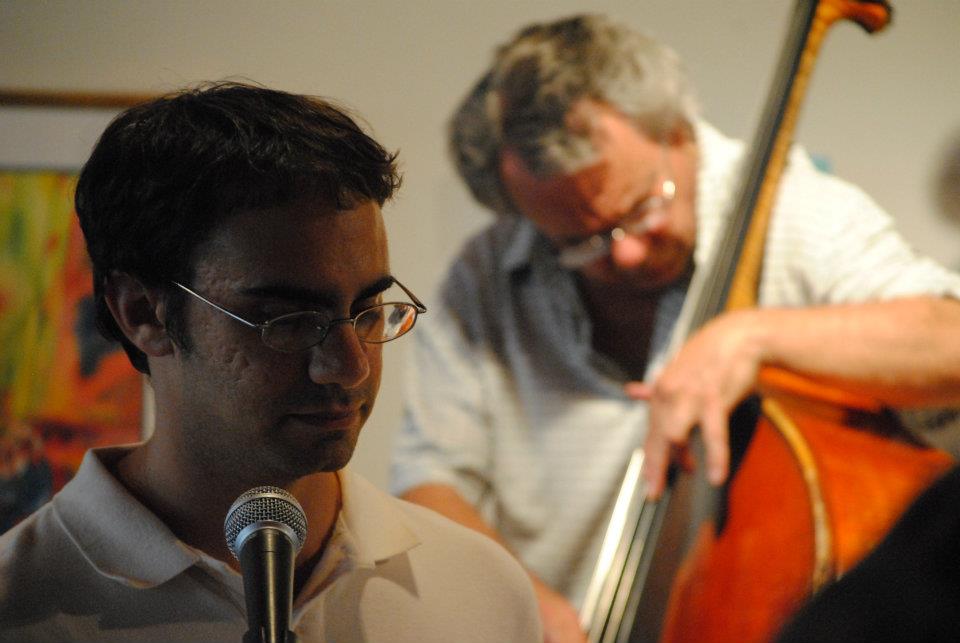
Last weekend, I had the chance to read with a jazz band and some other poets at the AFA Gallery, as part of the weekly drawing social. At first, the challenge of reading with a band was not easy, and I may have read a little too fast through the first two poems or so, but after a while, I feel into a groove, and slowed down the rhythm for the band to chime in, which featured a harp, sax, cello, and drums. As I said during the reading, I’m a fan of combining art forms as a way to draw other people in who may not care about poetry, or jazz, or art. I hope to participate in more events like this in the future. Here are some pictures that my friend Rich Howells took. He also read and was a co-organizer of the event.

Image

Image


This Saturday, I’m reading at the Hawley Silk Mill with my friends and fellow writers Alexis Czencz Belluzzi and Susan Luckstone Jaffer. Following our reading, there will be a Q and A session and open mic. Check it out if you’re in the area. I haven’t been to this venue yet, but I’m excited to read there.

My Hometown’s Making National News

Over the last several days, my hometown of Scranton has been in the news, including a feature story on NPR, an article on FoxNews.com, an article on the HuffingtonPost.com, and a mention on CNN, Unfortunately, Scranton has not been a news maker for any positive reason. Media outlets are focusing on the old coal mining city because it’s utterly broke, and Mayor Chris Doherty has decided to pay the police officers and firefighters minimum wage, despite a judge stating that it is illegal to do so.

Scranton’s financial woes are nothing new. Since the loss of the coal mining industry, the city has never recovered. Every 10 years, with every new census report, the city’s population shrinks, and now stands at about 78,000. There have been numerous revitalization projects and a lot of money poured into beautifying the city. Some of the efforts have strengthened local arts and culture. Scranton does have a wonderful First Friday art walk, a growing literary community, and a small music scene. However, the city struggles to maintain young people, due to the lack of industry and  a stable work force.

Now the city leaders have to determine how to solve this massive debt. A headline in the local paper the other day read that the city is broke, and only has $5,000. Unfortunately, the mayor and the city council president, Janet Evans, have not been able to address the issue because they are political foes and spend most of their time threatening to sue each other. It is like that the city will have to raise taxes and there is talk of a commuter tax, meaning that employees that work in the city but don’t live there will have to pay a tax to Scranton. The city already has a high tax rate, and it’s likely that a massive tax hike will drive even more people away.

What a lot of the stories didn’t touch on is that Scranton isn’t the only place with major financial woes. Other small cities and infrastructures are crumbling, due to a grim economic outlook, tight state budgets, and  little help from the federal government because one political party is hellbent on austerity. But cities like Scranton desperately need help, especially when its own leaders fail to solve the crisis.

For more info about the financial mess in Scranton, you can read or listen to the NPR story here.

From Poetry to Fiction

This summer, I’m teaching English 211: Intro to Creative Writing, a class I’ve taught a few times in the past. I split the course into two genres, poetry and fiction. The more times I teach this class, the more I realize there is a lot prose writers can learn from writing poetry, and I tell my students that, especially when some of them groan about having to write poetry. The genre teaches writers compression, to cut out all of the fat. During workshop sessions, I tell my students to ensure that ever word in their lines counts, and to remove what they don’t need, especially conjunctions and prepositions. This skill of careful editing  is useful in fiction because you don’t want your short story or novel to get bogged down by unnecessary details and extraneous sentences. Poetry teaches a writer to make every word matter, to capture a reader’s attention from the first line.

There are other techniques paramount to poetry that are useful in fiction, especially extended metaphors, similes, and concrete imagery.  In fact, image/metaphor/simile/sensory detail are the first techniques I cover in the poetry section. These tools energize the language and imagination, and they do the same things when employed in prose.

Right now, my class just started the fiction unit, and as someone who writes poetry and thinks about it daily, it’s nice to step away from my familiar genre. Meanwhile, the students now have some techniques they learned from writing poetry that they can use in their fiction.

The Varying Voices of America

I hope that everyone is having a wonderful 4th of July week! This year, to celebrate the holiday, I’m rereading the book Working by Studs Terkel, a collection of interviews about what people do for a living. All professions are covered, everything from teachers to sports agents to secretaries.

I came to Terkel’s work fairly late, long after he passed away. I first heard of him after seeing a blurb he wrote for Kevin Coval’s book Everyday People, which, much like Terkel’s work, is a celebration of the working-class in Chicago, though told in poetry. A few years later, I found Terkel’s book Hard Times: An Oral History of the Great Depression at a used bookstore. Then I picked up Working, and now I’m going back to it as a way to think about America during this holiday week.

I like Terkel a lot as a historian because he does a good job capturing America as best as he can, giving voice to all classes and all races, as well as both genders. In some regards, I think Terkel did a better job addressing America than Howard Zinn, who always told history from the underclass’ point of view. Terkel covers both sides and lets all voices speak. If you haven’t checked out his work, please do. You can find much of his work used and in libraries.

The Wise Owl and Poets’ Quarterly

Yesterday, I read at The Wise Owl Bookstore in West Reading, and if you’re in the area, I recommend stopping there. It’s a quaint bookstore with a lot of contemporary fiction, some classic literature, a little poetry and drama, and some non-fiction. The books range from new to used, and the store also has some $5 bag sales.

Each month, the owner books a few author events and other activities, and you can find out more info by clicking here. Visiting that store made me miss the used bookstores I used to frequent when I lived in West Chester and the Philly area, and it made me long for Anthology New and Used books, which was a staple of a Scranton literary community for a few years, before it closed last year. You never know what gems you’ll find at indie bookstores.

I was joined yesterday by poet Dawn Leas and fiction writers Gale Martin and Barb Taylor. They did a wonderful job reading, and we had an attentive, enthusiastic audience that asked some good questions regarding our writing process, publishing, and inspiration after our reading.

Here is a picture of all the readers.


I also want to share some other news. Poets’ Quarterly just relaunched, and you should check it out. The journal is unique because it does not publish any actual poetry, but rather interviews with poets, book reviews, and critical essays. I was named one of the contributing editors to the journal a few months ago, and I’m happy to have a review and essay in the new issue. The review is of Sandee Gertz Umbach’s debut collection of poems The Pattern Maker’s Daughter. If you are into working-class poetry, check out her work and the review by clicking here. The essay I wrote is about the musical influences of  Patricia Smith, Major Jackson, and Kevin Coval, and how hip-hop, jazz, and the blues has influenced the form and content of their poetry. You check out that essay here.  Read the rest of the issue too because it’s packed with a lot of great content.

And the Affordable Care Act Lives On

A few months ago, when the solicitor general was arguing in favor of the Affordable Care Health in front of the nine Supreme Court Justice, I felt, as did many others, that Obama’s signature health-care law was doomed. The justices, other than the four usually liberal ones, had stern questions regarding the bill, including Chief Justice John Roberts, who continually questioned whether or not the federal government has the power to make people buy health insurance.By 2014, the bill will require that 30 million uninsured people buy insurance, and if they can’t afford it, they will be a given a tax credit/government subsidies to do so.

When I learned of the ruling today, I was shocked, especially since Roberts was the one who joined four liberal justices in voting to uphold all of the law. My hunch is that Roberts does not want to be on the wrong side of history. Another health-care bill is not going to be discussed, not with the government as divided and partisan as it is. I think Roberts and the other four justices that voted to uphold the law realized this could be the only shot in a long, long time at revamping and improving our health-care system and granting health-care coverage to millions of more Americans.

Shortly after the court’s ruling, Mitt Romney got on TV and vowed to repeal the bill if elected president. However, that likely won’t happen. He would need at least 60 votes in the Senate to get that, and it won’t happen, especially if the Dems maintain control of the Senate. Romney also doesn’t have much room to rail against the law, since he passed the same exact thing in MA when he was governor, and said  in 2006 that the mandate should be the model for the rest of the country.

President Obama still has a lot of work to do explaining to the American people what is in the bill and how it impacts them. Here are some positives of the law:

Young people can stay on their parents’ insurance until they are 26.

Insurance companies will not be able to deny people coverage based on pre-existing conditions.

Women will no longer pay higher premiums than men.

Seniors will get discounts on their prescription drugs.

About 30 million uninsured people will have to buy insurance by 2014, when the mandate kicks in, and if they can’t afford it, they will be given a tax credit/government subsidies to do so.

I was not a fan of the mandate back in 2010, and I wanted the Democrats to push for a public option, but I understand that this is a first step, and by 2014, millions of American will be insured. I am also optimistic that a lot of states will go to single-payer, nearly universal healthcare coverage. I say this because the law states that by 2016, states can set up whatever healthcare systems they want, and they don’t have to create a pool of just private insurance companies. Vermont and Montana are nearing creating a single-payer system, and it is predicted to save the states a lot of money. If it succeeds there, it will most likely spread to other states.

Upcoming Readings

I have a few readings coming up over the next few weeks that I want to share.

On Tuesday, June 26, I’m reading at the Osterhout Library in Wilkes-Barre. The reading starts at 6:30 p.m., and I’ll be joined by Charlie O’Donnell, Dawn Leas, Richard Aston, and Rachael Goetzke. An open mic will follow the featured reading portion of the event.

On Saturday, June 30, I’m reading at the Wise Owl Bookstore, located at 624 Penn Ave. in West Reading, PA. I’ll be joined by Dawn Leas, Barb Taylor, and Gale Martin. The reading starts at 1 p.m., and a Q & A will follow.

On Sunday, July 9, I’m taking part in a reading for the Drawing Social held at the AFA Gallery in Scranton, starting at 7 p.m. The event is being organized by local writer Rich Howells.

Finally, on Thursday, August 2, I’m reading at Farley’s Bookshop, located at 44 South Main Street in New Hope. A Q & A will follow that reading, which starts at 8 p.m.

If you’re in the area, you should also stop by the Library Express Bookstore in the Steamtown Mall this Thursday at 6:30 p.m. for a poety open mic. There will be 12 open spots, so get there early to sign up.