National Poetry Month Readings

I’m happy to announce that I’ll be taking part in two big readings for National Poetry Month. The first will take place this Thursday, April 19 at the Library Express Bookstore. It starts at 6:30 p.m. I’ll be reading with local poets Scott Thomas and Dawn Leas, as well as John Amen, author of three collections of poetry and editor of the award-winning journal The Pedestal Magazine. The event is free and open to the public, and we will have books for sale.

There has been some nice press about this reading. Go Lackawanna ran a story recently about it and all of the literary events the Library Express has hosted. Check it out here. WVIA’s ArtScene radio program also ran an interview Scott, Dawn, and I did with Erika Funke. You can listen to the interview here. It is the second link on the page.

The second reading I’m doing for National Poetry Month will take place on Friday, April 27. It is the launch party for the new issue of Harpur Palate, in which my poem “After Work” appears. I’m reading with three or four other poets whose work also appears in the issue. That event will begin at 7 p.m., and it will take place at RiverRead Books in Binghamton New York. It is also free and open to the public.

That store is also hosting Christine Gelineau this Friday at 6:30 p.m. She is a fantastic poet, and if you are in the area, you should check out her reading.

Beyond National Poetry Month

It is April again, the one month of the year when schools and other institutions care about poetry and invite poets to give readings, lectures, or workshops. About a year ago, I was asked to write something regarding National Poetry Month for the blog/website The Write Life, which is run through the Wilkes University M.F.A. program. An idea for an article came to me after I saw that Oprah had dedicated a whole issue of her magazine, O, to poetry for April, highlighting mostly mainstream poets such as Billy Collins and Mary Oliver. The magazine drew some debate and criticism, including an article written by David Orr for the New York Times. The main point of my article was to weigh the pros and the cons of National Poetry Month and to stress that poets and poetry lovers need to look beyond National Poetry Month in terms of getting people to care about the genre. This involves teaching workshops in the community, sharing work of other poets at readings, and blending poetry with other art genres. The article was first published a year ago, but it is still relevant.

You can check out my article here.  Let me know what you think in terms of looking beyond the month of April and getting people to care about poetry for more than 30 days a year.

American Poet

I just finished a novel that I want to recomend. It is entitled American Poet, written by Jeff Vande Zande, who started out writing poetry but now focuses on fiction. The novel centers around Denver Hoptner,  a recent college grad frustrated with his hometown of Saginaw, MI, as he  struggles to find a job with his B.F.A. in poetry. Anyone who graduated college with a fine arts degree can probably relate to the protagonist’s sense of isolation and doubt.

The novel is loaded with well-crafted scenes that anyone involved in a writing community can relate to. One of my favorites is an open mic scene that spans a few pages and includes a writer who insists on being called Coyote and howls after every poem. I am sure most of us have suffered through open mics just as painful, if not more so.  In another memorable scene, Denver is interviewed by a bank manager for a teller position, and the manager pokes fun at his B.F.A. in poetry, saying the poetry stuff is a real “head scratcher” to most people. The employer’s comments follow a moment in which Denver tries to explain to the banker a course he took in scansion, making chopping motions in the air with his hands to try to explain dividing poetic lines into feet and leaving Denver to comment, “The face he made suggested he was trying to figure out what mental disorder I might have.”

The story also highlights father/son relationships, specifically the relationship Denver has with his blue-collar father, which evolves as Denver changes for the better throughout the novel. The book also cautions against writing programs that breed writers who care solely about publishing credits rather than building community and supporting other writers.

I am writing a review of the book that will eventually appear over at PANK. When the review is live, I will post a link on here. Until then, you should check out the book, which is available here.

Ordering a Manuscript

The other day, acclaimed poet Patricia Smith visited Keystone College for a reading. Before her performance, a student asked for advice on the order of poems in a manuscript. Her advice was unique and challenged my notion of how to structure a book of poems. Time and time again, I have been told that you should place your strongest poems in the beginning and the end of the manuscript to start and end the book with a bang. But Smith offered different advice, that you should place your strongest work in the middle of the manuscript because it is by that point you really want to keep and maintain the reader’s attention. You should think of a manuscript like a short story or novel, with rising action, a climax, and resolution. That climax should happen in the middle of the book.

She said this is especially important when you have a collection that does not follow a narrative arc or particular thread. Perhaps more importantly, she advised to simply follow your gut and trust your own familiarity with the poems to decide where to place them.

Her advice was also useful to me because I have until the end of the summer to make major changes to my full-length collection of poems before Unbound Content and my editor begin the layout process. So, I have been questioning the order of the poems, now that I have a limited window to change it. But, like Smith said, I am going to trust my own gut and instincts on this.

I am curious what the process of manuscript creation and the order of poems has been like for other writers. Is there an easy solution?

New Visions Recap

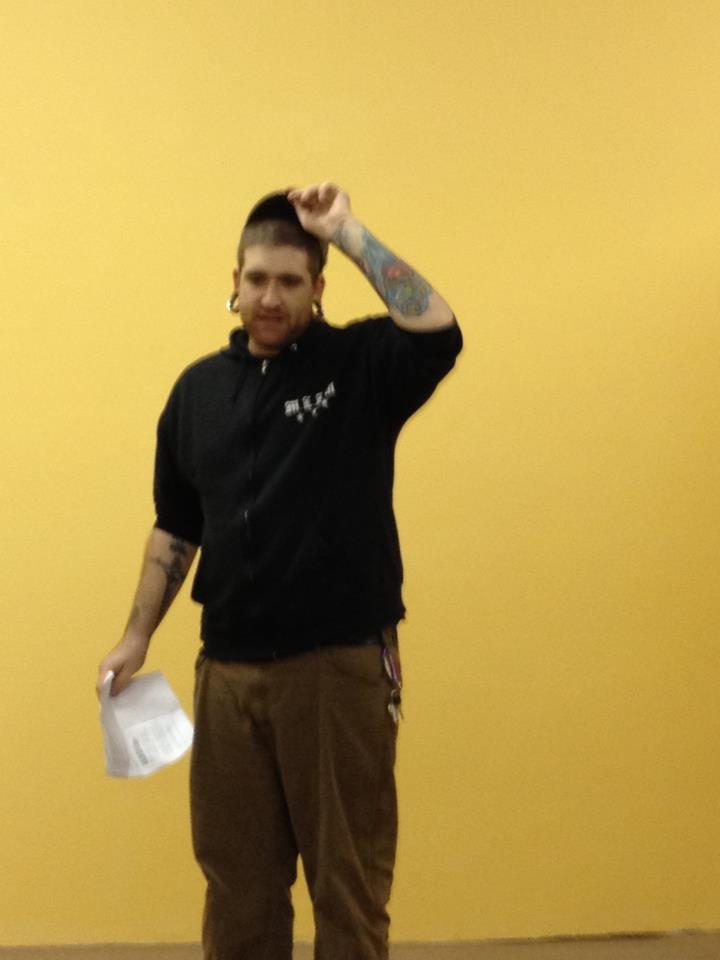
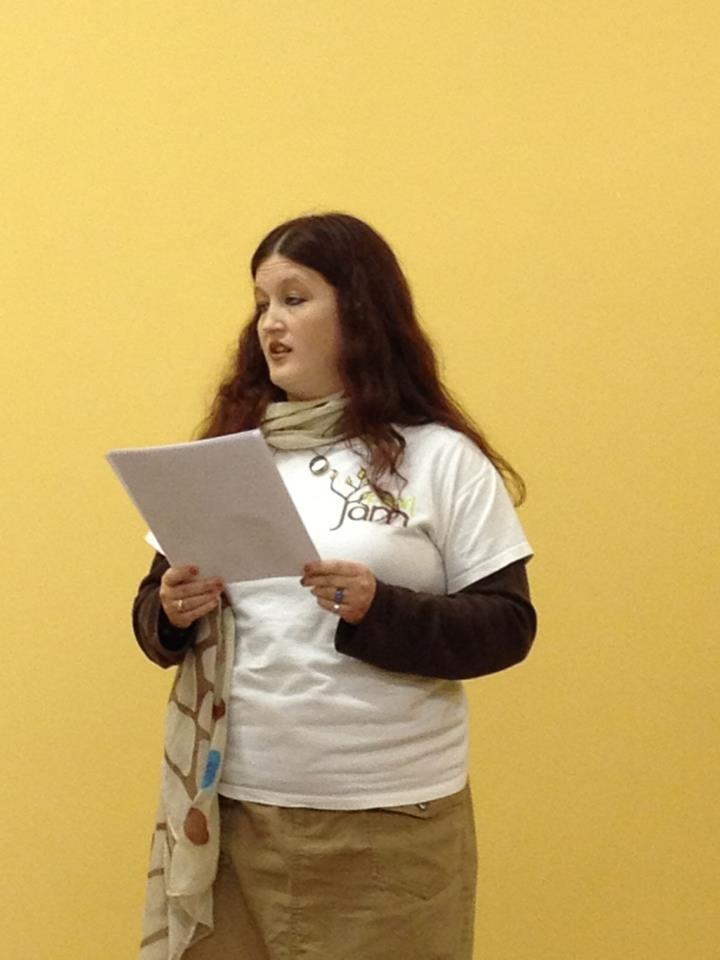
I want to thank everyone who came out to the New Visions Writers Showcase on Saturday. We had a packed house and a very attentive audience. Our featured readers, Rachael Goetzke, Charlie O’Donnell, Reena Ranells, Sandee Gretz Umbach, and William James, did a fantastic job. William concluded the night with some of his SLAM pieces, and he blew the roof off, drawing raucus applause at the end of his set.

We plan to keep this reading series going for as long as we can, especially since the audience for it keeps growing and growing. We do indeed have a wonderful, supportive writing community here, and I hope it only continues to grow. Here are some pics of the event, courtesy of Sandee Gertz Umbach.

Rachael reading from her memoir

Sandee reading from her collection, The Pattern Maker’s Daugther

Me reading bios of the readers

William James getting us started with an opening poem


Our next New Visions Writers Showcase will be in May. We already have most of the readers lined up, and I promise they will not disappointment. I will write about the event more when it’s closer.

Third New Visions Writers Showcase

The third New Visions Writers Showcase is set to take place this Saturday at  7 p.m. at New Visions Studio and Gallery, 201 Vine Street in Scranton. I’m proud to again co-host this event with my friend and fellow writer Jason Lucarelli. This event is different from our first two readings because we are bringing in some folks from out of town, including national slam poet William James, who will be entertaining, that I can promose. Known for his punk rock ethos and performance-based poetry, James will surely keep the crowd’s attention. Go Lackawanna ran a wonderful article about the event, focusing on James’ work. Check it out here.

To give you a little more info about our six featured readers, here are their bios.

Rachael Goetzke: Raised in the Blue Ridge Mountains of southwestern Virginia, Rachael Goetzke currently calls Sugar Notch, PA her home. She lives with her cats, Cinnamon and Sugar, and works as an Early Literacy Specialist at the Osterhout Free Library. She also founded and is the Managing Editor of Word Fountain, a literary magazine housed at the library. Rachael received her B.A. in English from Radford University and her MFA in Creative Writing from Wilkes University. She enjoys discussing creative projects, especially music-related ones, over fair-trade coffee beans.

Sandee Gertz Umbach is a poet and writer from Western Pennsylvania, currently residing near Pittsburgh.  Her poems have been published in numerous literary journals, including Poet Lore, The Ledge, Gargoyle, and The Green Mountains Review. She has been the recipient of a Pennsylvania Council on the Arts fellowship grant and is a Sandburg-Livesay Award Winner. Her recently released poetry collection, The Pattern Maker’s Daughter, (published by Bottom Dog Press) is set in the industrial steel city of Johnstown,Pennsylvania and reflects coming of age themes with a strong narrative sense of place and landscape.

Reena Ranells is the author of the recently published collection of poems Dancing Trees of Life. She is also a member of the Mulberry Poets and Writers Association. Besides writing poetry, Reena has worked as an RN for the last 25 yeras, and recently started a non-profit for farm and animal rescue.

Keith Gilman has been a police officer in the Philadelphia area for over 15 years. His most recent novel is My Brother’s Keeper, and he is also the author of one previous novel, Father’s Day, which won the Private Eye Writers of America’s Best First Novel Award.

Charlie O’Donnell graduated from King’s College where he majored in English and minored in psychology. He was a mental health worker for many years and now works at the Arts Seen Gallery on Public Square in Wilkes-Barre, where he organizes the Third Friday of the Month Spoken Word series.

William James is a member of the Steel City Slam and current host of the Yount Steel Youth Slam. He has performed over 300 shows across America, touring both as a solo act and in support of musical acts ranging from punk rock to folk. He has featured or competed at poetry slams, readings, music venues, and basements in almost every state east of the Mississippi.

This event is free and open to the public. Wine and snacks will be provided.
L’vis Lives!

Kevin Coval is one of my favorite poets on the contemporary American poetry scene. He is the co-founder of Louder than a Bomb, a youth poetry festival in Chicago that works with high school students, and he is the author of three collections of poems, the latest L’Vis Lives, published in 2011 by Haymarket Books. What I like about Coval’s work is his reference to contemporary music, especially hip-hop, which shapes the form and content of some of his work. I also like the theme and thread of identity that weaves his three collections together. His first book, Slingshops:A Hip-Hop Poetica, certainly has the hip-hop references, but it also has several poems that address his own identity being Jewish and white. His second collection, Everyday People, is a praise song to the working-class that populate Chicago, and his latest collection addresses the white black boys, meaning white suburban kids into hip-hop.

As a regular book reviewer for PANK, I had the chance to review Coval’s latest book of poems, and I was struck by how honest, brave, and bold these poems are, how they address the fact white people made a lot of money co-opting black culture. And at the heart of the collection is again the issue of identity. You can read my review of L’Vis Lives online by clicking here, and check out Coval’s work because he doesn’t run from the truth.

Here is a video of Coval performing quite a few of his newer poems. Enjoy!

Award-winning Poet/Iraq War Vet Brian Turner Coming to Scranton

A few days ago, I announced that Patricia Smith is coming to Keystone College on April 3 at 7 p.m, and now I’m happy to announce that another big name poet is coming to the area- Brian Turner, an award-winning poet and Iraq war vet. He is going to read at the University of Scranton on Tuesday, March 27 at 7 p.m. as part of the university’s annual This is Justice Event. Turner will read in the Moskovitz Theater, located in the DeNaples Center.

Turner’s debut collection of poems, Here, Bullet, details his experience fighting in Iraq, and it also covers the war from the point of view of Iraqi civilians. He is also the author of the collection Phantom Noise, published in 2010.

The event is free and open to the public. You can find several audio/print interviews and some samples of his work on his website. I’ve never seen Turner read, though I have read his first book. I look forward to this event and getting a chance to hear some poems from his second book, which focuses on what happens when the soldiers return home and how they carry war with them.

Patricia Smith at Keystone

I am eager and happy to announce that Keystone College is hosting Patricia Smith on Tuesday, April 3 from 7-9 p.m. at Evans Hall. This event is free and open to the public, and if you are looking for something to do to celebrate National Poetry Month in April, I recommend seeing Smith.  She is the author of five books of poetry, and her work has appeared in Poetry, TriQuarterly, The Paris Review, and other journals.  She is also a four-time individual champion on the National Poetry Slam, and she has been featured a few times on HBO’s Def Poetry Jam.

What I enjoy about Smith’s work is is the way that she has used music over the years to address various social issues, especially race. “What I Would Have Told Oprah if She Asked,” a poem about Michael Jackson’s insecurities and decision to whiten his skin, does this especially well.  Her poems are loaded with references to jazz, blues, Motown, rock ‘n roll, and hip-hop.

My favorite book by Smith is Blood Dazzler, a finalist for the National Book Award in 2008. It features poems solely about Hurricane Katrina and its aftermath. That book truly shows the range of voice and persona Smith is able to capture in her work. It includes poems from the point of view of George Bush, a dog, the hurricane, and various residents of New Orleans, rich and poor, black and white.

I’ve often taught Smith’s work when discussing voice/persona in creative writing classes, and I’m happy some of my students will get to see her live. Here is a video of Smith performing the poem “Medusa.” You can also find a lot of her work online if you Google her name of visit the Poetry Foundation’s website here.

Doylestown Reading Recap

On Thursday, I had the pleasure of reading at the Doylestown Bookshop with fellow local poet Dawn Leas. We were invited back after reading there a few months ago. At the time, Doylestown did not have any steady poetry series going on, but now it does. Every third Thursday of the month, starting at 6:30 p.m., the store runs a poetry series that includes at least one featured reader and a limited open mic. I recommend that poets check this out because it has a nice built-in audience, mostly young people and some poets from around the Philly area that make their rounds at various open mics. The audience is also generally responsive and receptive, eager to talk about the poems after the reading concludes.

The bookstore also has a unique selection of books. Its poetry section includes a lot of chapbooks and full-length collections from local authors and smaller presses. Some of the only more well-known poets I saw on the shelf included Billy Collins, Robert Frost, and Tony Hoagland. Its other sections are also expansive.

If you’re looking for something to do in the Philly suburb area, I recommend stopping at the Doylestown Bookshop. You can also visit the quaint restaurants, bars, and cafes that line the streets downtown. For a full list of author events at the bookstore, click here.

Next Sunday, March 25, from 3:30-5, I’m taking part in a reading and Q & A session at the Belmar Arts Council Boathouse in Belmar, NJ. I’ll be joined again by Dawn Leas and our friend and prose writer Anne Henry. The three of us will be joined by some writers from NJ. I feel confident the experience will be as pleasant as the reading in Doylestown.