A Little bit of Irish Verse

Parade Day may be over in Scranton and Wilkes-Barre, but that doesn’t mean the celebration of Irish heritage and culture is quite over in NEPA. This Friday, on the eve of St. Patrick’s Day, the Art SEEN Gallery on Public Square in Wilkes Barre is presenting a unique St. Patty’s Day event. There will be a reading of work by Irish writers starting at 8 p.m. A limited open mic will follow. Anyone can sign up to read, and if you aren’t sure what to share, just Google W.B. Yeats, James Joyce, Seamus Heaney, Frank McCourt, or any other Irish writer. There will also be some books on hand to chose from.

To get you in the mood for this event, here is one of my favorite love poems by Yeats.

When You are Old

When you are old and grey and full of sleep,
And nodding by the fire, take down this book,
And slowly read, and dream of the soft look
Your eyes had once, and of their shadows deep;
How many loved your moments of glad grace,
And loved your beauty with love false or true,
But one man loved the pilgrim soul in you,
And loved the sorrows of your changing face;
And bending down beside the glowing bars,
Murmur, a little sadly, how Love fled
And paced upon the mountains overhead
And hid his face amid a crowd of stars.

March Events

Over the next few weeks, I’m partcipating in several poetry-oriented events that I want to let everyone know about.

This Wednesday, March 14 at 11 a.m. Marywood University’s English Club is hosting me for a reading. It will be held in the second floor of the library.

On Thursday, March 15, I’m reading at the Doylestown Bookshop with Dawn Leas. The reading starts at 6:30 p.m. and a limited open mic will follow.

On Tuesday, March 20 from 6:30-8, I’m teaching a workshop at the Osterhaut Library in Wilkes-Barre. The event will focus on finding literary journals for your work.

On Sunday, March 25 from 3-5:30, I’m reading in Belmar, NJ at the Belmar Arts Council Boathouse with three PA-based writers and three NJ-based writers. A $5 donation is encouraged. We will also take questions from the audience after the reading.

On Saturday, March 31 from 7-9 p.m., I am co-hosting the next New Visions Writers Showcase with Jason Lucarelli. Our featured readers this month include Rachael Goetzke, Charlie O’Donnell, Renna Ranells, Sandee Gertz Umbach, Keith Gilman, and Pittsburgh-based SLAM poet William James.

For a full schedule of upcoming events, check the events page of my website here.

Be sure to also check out the Art SEEN gallery in Wilkes-Barre this Friday. Starting at 8 p.m., there will be a reading of work by Irish writers. An open reading will follow.


Springsteen’s America

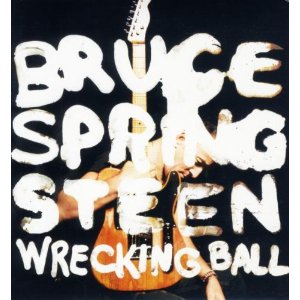
Throughout Springsteen’s career, he’s always done a good job of documenting the times we live in. Darkness on the Edge of Town features gritty working-class characters in over their heads and trying to survive. Born in the U.S.A. also tackles blue-collar issues, especially Ronald Reagan’s trickle down economics and what it did to our country in terms of increasing economic disparity. Then, in the 1990s, Springsteen released the quiet acoustic album The Ghost of Tom Joad with a lot of songs from the immigrant’s point of view. On his latest album, Wrecking Ball, out this week, Springsteen addresses these issues again and the financial crash and economic meltdown that put a lot of people out of work. This album, in my opinion, is one of Springsteen’s best. It is big and epic, topical and direct.  Springsteen manages to contrast reality with the promises of the American dream and point out the stark differences.

Musically, Wrecking Ball is one of Springsteen’s most diverse albums, a criss-cross of genres, folk, gospel, rock, and even some hip-hop. “Shackled and Drawn” sounds like an old chain gang song. It also has some of his most poignant working-class lyrics. He sings, “Gambling man rolls the dice/workingman pays the bill/It’s still fat and easy up on banker’s hill/up on banker’s hill, the party’s going strong/down here below we’re shackled and drawn.” Has there been a song, poem, or novel in the last few years that so clearly highlights the economic inequality that has skyrocketed in this country?

Some of the tracks feel like sequels to some of his earlier work. “Death to My Hometown” could be seen as a follow-up to “My Hometown” from Born in the U.S.A. In the new track, there’s nothing left in the hometown. Springsteen sings, “They destroyed our families, factories/and they took our homes/They left our bones on the plains/The vultures picked the bones.” What a rustbelt anthem and truth!

However, the tracks on Wrecking Ball differ from some of Springsteen’s other working-class narratives in the sense that the working-class is starting to rise up and fight back. On “Death to My Hometown,” he sings, “Be ready when they come/for they’ll be returning/sure as the rising sun.”  Springsteen wrote a lot of the songs before the Occupy movement really took off, but he obviously realized enough was enough and America needs a social movement again to challenge power.

The album’s title track is also punctuated with some optimism in the simple refrain, “Hard times come and hard times go.” That seems to be a reoccurring theme on the album. A lot of the tracks state that America has always had periods of economic divide and great uncertainty, so it’s important for people to take care of each other through difficult times, and somehow, we’ll survive.

Wrecking Ball accurately depicts the times we live in, the great economic divides and  inequality, and while the album may feature some of the angriest lyrics the Boss has ever penned, it is clear he believes we will get through this if we take care of each other. Hard times come and hard times go.
Yes, Obama Could Lose

In the most recent episode of “Real Time with Bill Maher,” Maher offered an apt metaphor for the possibility that yes, Obama can lose the election. He admitted that the GOP has been ruining its brand as of late, due to the long primary battle and the fight over birth control and women’s reproductive rights, but Maher compared the GOP to a horror movie slasher that won’t die. First, the hand starts moving, and then the whole corpse  comes back to life. As Maher pointed out, the GOP will eventually ends its primary season, probably quite soon if Romney wins a majority of the states this Tuesday (a Super Tuesday race). Then, the party will coalesce around the nominee and work on defeating Obama. The Koch Brothers and other right-wing billionaires will pour millions into Super PACS to unseat the president.

Maher’s comments reminded me of friends who believe Obama will definitely win re-election.  As an Obama supporter and someone currently working with his campaign in Luzerene County, I have told friends time and time again that the president can indeed lose re-election. The GOP may be in disarray now, but they will unite to defeat him.

Even Paul Begala, a major Democratic strategist, wrote in his column in the new issue of Newsweek that this election may very well be a toss up. Begala points out that there are a few foreign policy factors that can upend the election. He cites the Iran nuclear issue and skyrocketing oil prices as two major factors, as well as uncertainty and possible conflict in Pakistan. He also envisions the GOP uniting once the primary season is over. He writes, “The GOP will unify. Where once their central organizing principle was opposing communism, now it is opposing Barack Obama. As long as he is on the ballot, the Republicans will be able to reunite. There is not much the White House can do about that. The reality is the GOP demolition derby will end soon enough, and the president will be in a neck-and-neck race all year.”

The Election is still about 8 months away, and in a lot of ways, it feels much more important than it did in 2008, due to all of the problems facing this country, including growing income inequality, high unemployment, and impending foreign policy issues. Months ago, Obama started laying the groundwork for his campaign. Even here in NEPA, an office has already opened in Scranton and one is set to open soon in Wilkes-Barre. The White House must know that the landscape this time will be different than it was in 2008 and nothing is certain, especially since the economy is still fragile and serious foreign policy challenges loom.

It makes the canvassing and voter registration drives all that more important.


Amazon Vs. The Bookstores

I came across a bit of news this week that should be of interest to anyone interested in the publishing industry and how Amazon is changing it. Recently, some of the biggest chain bookstores, including Barnes ‘n Noble, Books-a-Million, and Canada’s Indigo Books, have decided they will no longer sell Amazon books. This news, which I first read on AWP’s website/newsletter, came after Amazon announced it had begun its own publishing program, which could present yet another major challenge to bookstores and the struggling publishing industry. The article states that, “Amazon has cut out the traditional system of publishers publishing books and then working with booksellers in order to market them. Amazon, which already created a lot of stress for publishers with its decision to produce Amazon-exclusive e-book titles, now publishes and sells its own books and major publishers and retailers don’t want any part of it.”

The bookstores aren’t alone in their protest over this. The American Booksellers Association has made its subsidiary, IndieCommerce, remove all Amazon titles from its listings. IndieCommerce provides indie bookstores access to the latest titles via an online database. Meanwhile, the Christian Science Monitor has reported that Amazon plans to open its own bookstores based on the model of the Apple stores.

If Amazon does expand its publishing house and also opens bookstores, this certainly could drive more bookstores and publishers out of businesses.  If we eventually live in a world where Amazon is the main publisher and seller of books, what impact will that have on allowing for a variety of voices in literature? I seriously doubt Amazon would take a chance on a young, experimental writer. Furthermore, bookstores, especially indie ones, provide something Amazon does not-community. Local bookstores are where writers and poets go to do readings and sign books, and local bookstores host other events for all ages, including lectures and workshops. I simply don’t foresee Amazon bookstores being as friendly to local communities as indie bookstores or even Barnes ‘n Noble.

Rita Dove Talks 20th Century American Poetry

Rita Dove, one of my favorite contemporary American poets, former U.S. Poet Laureate, and author of Thomas and Beulah, winner of the Pulitzer Prize, recently sat down with journalist Bill Moyers to talk 20th Century American poetry. Dove recently edited The Penguin Anthology of 20th Century American Poetry. In the interview, Dove talks with Moyers about some of the selections in the book, which include some of the most well-known poems of the last 100 years, including T.S. Eliot’s “The Love Song of J. Alfred Prufrock,” Ginsberg’s “Howl,” Lucille Clifton’s “Homage to My Hips,” and some lesser known selections.

The interview is worth a watch and can be seen here. I love Dove’s readings of some of the poems in the collection, including one of her own. I also like her commentary on some of the poems, including Eliot’s “Prufrock” and all of the uncertainty and dread the poem captured about entering a new century. The interview also features archived clips of some of the anthology’s poets reading their work, including Lucille Clifton and Stanley Kunitz, both deceased now.


Dove was also asked what she would do if she was made director of education for the United States. She replies that she would make teachers end the day by reading one poem. Students would not have to analyze the poem, but simply listen to it. That way, poems will become a greater part of their lives and they will get accustomed to listening to poetry daily. Pretty good idea, eh?

If you aren’t familiar with 20th Century American Poetry, and its different movements, everything from Modernism to the Harlem Renaissance to Confessionalism to Neo-Formalism, then you should consider picking up Dove’s collection because it does seem like she did a good job selecting poems that accurately represent the most important poetic movements of the last 100 years. The only other anthology I can think of that did so is 20th Century American Poetry, edited by  Dana Gioia, Dave Mason, and Meg Schoerke. But Dove’s collection may be a little more diverse.


Osterhout Library Poetry Workshop Series

Last year, the Osterhout Library in Wilkes Barre hosted free poetry workshops each month by a variety of different writers with publishing credits. The series has returned again this year, and tonight, my friend and fellow poet Dawn Leas will be hosting a workshop on found poetry. The event begins at 6:30 pm and is slated to run until 8 pm.

I am also going to teach a workshop in the series again. Mine will be held on Tuesday, March 20, also from 6:30-8 pm. The subject of my workshop is finding journals to place your poetry. We will look at different methods of finding journals suitable for your poetry and writing a cover letter for editors. What I will stress the most, though, is that you should NEVER send your work out to any journal if it is not ready for prime time. Revise, revise, and revise some more.

Check out the workshop series as it progresses through the spring months. The series will conclude on Tuesday, June 19 with an open reading of students and instructors. All of the workshops are free and open to writers of any level. The library is located on 71 S. Franklin St.

PSU Cuts Its M.F.A. Program, Thanks to State Budget Cuts

A week or so ago, I blogged on here about the proposed budget Gov. Tom Corbett presented to the General Assembly in Harrisburg. Like last year’s budget, his new budget proposes deep cuts to education, including a 20 percent cut to state universities and a 28-30 percent cut to state-sponsored schools, which include Penn State, Temple, and the University of Pittsburgh. If this passes as is, this will surely lead to tuition hikes, larger class sizes, and possibly fewer faculty members. The other day, the Association of Writers and Writers Programs (AWP) put out a news blurb that Penn State is cutting its M.FA. program, due to the budget cuts.

According to the blurb, “All applicants hoping to start their MFA at Penn State in the Fall of 2012 received a notice that, since funding had been cut, there would be no acceptances mailed out. Current students will be able to finish their degree with the same funding they were promised and no faculty from the English department will be laid off.” The blurb goes on to mention that in order to keep venues open for creative writing at PSU, the English Department is considering developing a new program that combines a bachelor’s and master’s degree in creative writing. The program should take students five years to complete.

The fact PSU had to chop a whole program is evidence of the dire impact deep budget cuts have on education and on specific schools. What’s a real shame is that nationally, the economy is improving. The jobless rate fell to 8.3 percent last month. Jobless claims are at a four-year low, according to reports out this week. And yet, Pennsylvania is falling behind, cutting social programs and funding to affordable schools. Support for education is absolutely necessary for PA to compete with other states and keep students within the state after they graduate. The governor’s budget has yet to come up for a vote in the state legislature, but he does have GOP majorities in the House and Senate. Even if they tweak the budget, as they did last year to offset some of the deep cuts, some of the damage has already been done, as witnessed by PSU deciding to cut its M.F.A. program.

.

Some Updates

I’m excited to announce some recent publication news. Two of my pieces, “Summer at the Press Plant” and “Lone Protestor,” appear in the current issue of the online journal Blue Lotus Review. My friend and fellow Wilkes M.F.A. alum Andrea Janov also has a poem in the new issue. Check the work out here.  Another one of my poems, “After Work,” appears in the new print issue of Harpur Palate. That journal has rejected my work about 5 or 6 times in the past, so I’m happy to finally land a poem in its pages.  It’s a tough nut to crack.

I also want to announce that Library Express, a bookstore on the second floor of the Steamtown Mall, is going to have open mic nights for writers the fourth Thursday of each month from 6:30-8 pm. This event is free and open to writers of any level. It would be wonderful if a lot of people came out to the first one, slated to run Thursday, Feb 23. Support the only bookstore downtown Scranton has!

More Cuts to Education in PA

A few weeks ago, I posted on here about PA Gov. Tom Corbett’s plan to slash education even more, especially to state universities and state-affiliated university. As I write this, the governor is delivering his budget speech before the General Assembly in Harrisburg. But most papers across the state have already run articles today outlining what’s in his budget, and it’s not good for education. According to an article in the Scranton Times, Corbett plans to slash funding to state universities (West Chester, Kutztown, East Stroudsburg, etc) by 20 percent, and for some state-affiliated universities, the proposed cuts are even worse. The article states he wants to slash funding to Penn State, Temple, and the University of Pittsburgh by about 30 percent. The article also points out that PSU will now have only half of the funding it had in 2010-2011, the last year of former Gov. Ed Rendell’s budget.

Some other highlights of the proposed budget include the loss of about $8 million in funding to community colleges, about a 5 percent cut in funding to public libraries, and deep cuts to the Department of Public Welfare. Corbett thought that there would be a greater budget surplus at the end of the year, but there hasn’t been. So he’s using that to justify the proposed cuts. However, there are ways to prevent these steep cuts, including raising taxes on the wealthiest who can afford to pay a little more or creating a tax on the gas companies.

The budget still has to get approval from the state House and Senate. Last year, they somewhat reduced his proposed cuts to education, though not by much. The best way to influence the outcome of the budget is to contact your local state rep. and state senator and let him or her know you oppose these cuts. Our community services across the state and funding to schools have been cut so much. How can we afford even more of this?