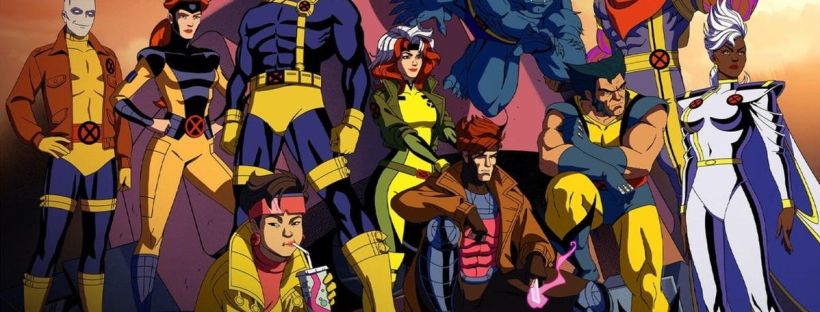
Anyone who knows me knows I’m not a Marvel fan. I don’t particularly enjoy any of the movies or most of the flagship comics. However, there’s one exception to that. I’ve always, always been fond of The X-Men. This was largely in part due to the animated series that ran on Fox in the 90s. Over time, though, I also collected the comics, sticking to the flagship title, Uncanny X-Men. My collection contains some of Chris Claremont’s peak story arcs, including the Mutant Massacre, Inferno, the original Dark Phoenix saga, Gambit’s first appearance, and Jubilee’s first appearance. I continued collecting shortly after House of M and X-23’s two-part first appearance. Because of the many, many storylines that bled into other Marvel books, however, I stopped collecting.
Still, I’ll always have a soft spot for the mutants. They always felt like the more sophisticated Marvel heroes, an early 60s metaphor for Civil Rights, with Charles Xavier as Dr. King and Magneto fulfilling the more aggressive Malcolm X role. Though to be clear, Malcolm never committed one act of violence. We can’t say the same for Magneto. Malcolm’s “any means necessary” mantra though certainly served as inspiration for Magneto.
When I heard Disney Plus was rebooting the X-Men animated series and setting it in 97, I had no desire to watch it. However, it felt like I couldn’t avoid it. Continually, I heard about how good it was. My social media feeds soon populated with posts praising show. Eventually, slightly past the halfway point of the 10-episode relaunch, I tuned in. I’m glad I did. The new animated series is certainly better than a majority of the Fox X-Men movies. Showrunner/producer/head writer Beau DeMayo simply gets the mutants and cares about them. This is most obvious if you scroll his Twitter feed, which has been non-stop commentary about the show, including which comics to read before each episode.
DeMayo certainly understands the cast of characters he’s working with, which largely includes a team of Cyclops, who acts like a leader and gets the spotlight he deserves, Beast, Rogue, Gambit (until that tragic fifth episode), Jubilee, Jean Grey, Storm, Bishop, Wolverine. Morph, and eventually Nightcrawler, who finally gets a long-due spot on the team and more focus. The villains include Bastion, Madelyne Pryor, Mister Sinister, and somewhat, Magneto, who waves between hero and villain. Every single character, both good and bad, is given an ample story arc. Unlike the Fox movies, this isn’t a Wolverine-centric X-Men series with a cast of supporting characters. No, here, The X-Men work as a team. They use their powers to assist each other and to strengthen the team’s resolve. They’re a unit and a family.
Though this is an animated series, I’m hard-pressed to say this series is for kids. It goes to some damn dark places. Cyclops has sex and has a kid (Cable) with Jean Grey’s clone. Magneto continually references his pain and torment from the Holocaust. He gives a speech before an Interntional court talking about persecution against anyone deemed the Other. There’s more than one sexual reference, including Charles Xavier quipping to his space lover, Lilandra, that he’d be her pet anytime. Yep, this is a cartoon for adults, likely older millennials like me, edging or already in their 40s, who grew up with the first series.
If you haven’t seen the show yet, then avoid reading this next paragraph. The season’s fifth episode, tilted “Remember It,” doesn’t hold back. In fact, it features a genocide against mutants on the planet Genosha, meant to be a safe haven for mutants, free of violence, discrimination, and persecution. Giant, super sentinels attack and kill hundreds, if not thousands of mutants, including many long-term X-Men characters, including Banshee, Dazzler, and several of the Morlocks, such as Calisto and Leech. The last 10 minutes of this episode are more gut-wrenching and devastating than anything I’ve watched lately.
The biggest moment comes when Magneto, Gambit, and Rogue try to stop a Godzilla-like sentinel and save whatever mutants they still can. Magneto throws everything he has at it, including a freakin’ train, but it doesn’t work. Gambit and Rogue attack it, even though Magneto tries to stop them to save them. When Gambit launches himself into the air, he’s impaled and killed, right in front of his long-time lover, Rogue. He’s able to use his mutant ability to charge the metal and blow up the sentinel. He goes out a true hero, with his final words being, “The name’s Gambit. Remember it.” Just prior to that, the remaining Morlocks cling to Magneto for protection, but he can’t stop the robot’s blast that wipes them out, including Leech, who looks up at Magneto, moments before death, as Magneto says to him in German, “Do not be afraid.”
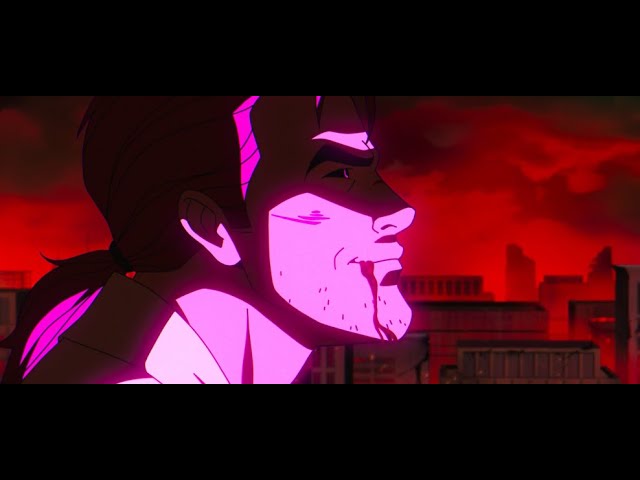
For several reasons, this is an incredibly gusty move on behalf of the writers. Gambit is one of the most popular X-Men, so to kill him off mid-season is bold. His death looms over the rest of the season and directly ties into Rogue’s character arc. At his funeral in New Orleans, she takes off to punish those she deems responsible. She decides Magneto is right and briefly joins him when he returns to the role of the villain after surviving the massacre on Genosha. Anger replaces her heroism and rightfully so. They tried it Charles Xavier’s way, to live in peaceful co-existence with humans, and it led to genocide. At the conclusion of that fifth episode, Rogue holds Gambit’s dead body in her arms, and as the credits roll, you hear her say, “I can’t feel you, Sugar.” OOOF!
It’s unlikely the events of “Remember It” will be reversed, at least fully. Cable, a time-traveling mutant, goes back in time to try to stop it, briefly reuniting with his mom, Madelyne Pryor, who’s on Genosha at the time, but apologizes to her before she’s killed. He knows he can’t stop the slaughter, no matter how many times he tries. It’s going to occur.
Though there’s a good possibility Gambit will be revived, likely as the big bad Apocalypse’s Horseman of Death, a role he fulfilled briefly in the comics, that episode is still jaw-dropping. Gambit’s death pushed the broader narrative forward, and he goes out fighting and saves who he can, including Rogue, whose grief feels palpable. The stakes in this show are high.
When I heard about The X-men relaunch, I feared it would be a cash grab, veering solely into 90s nostalgia. I’m glad I was wrong. This may be the best on-screen adaptation of The X-men we’ve ever had. If I have one main gripe, it’s that they move through too many storylines way, way too fast. I hope in season 2, they just focus on Apocalypse, whose introduced in the finale briefly, hinting at Gambit’s return as a horseman, which, if it does occur, will also have a profound impact on the team, especially Rogue. I’m thrilled DeMayo knows, understands, and loves The X-men, who have always been a metaphor for the Other and outsiders. It’s a bummer DeMayo won’t be back for season two, though it’s been confirmed his main storyline ideas will be used. For now, let’s bask in just how great season 1 is. The muties are back, baby!








 Brian Fanelli