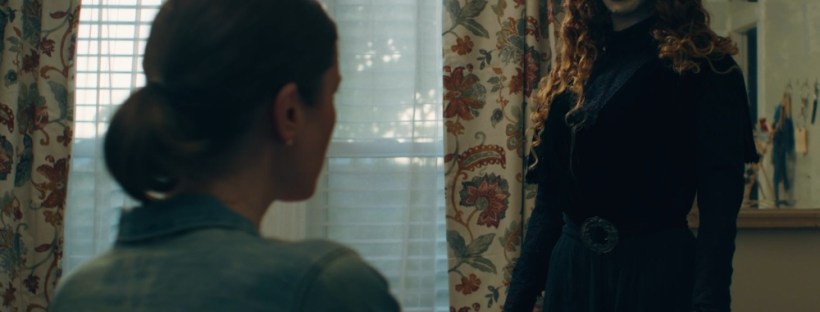
Something sinister is afoot in the small town of Larkin, Texas, and popular YouTuber Lucas Page (William Magnunson) is determined to unravel the eerie mystery. That’s the general premise of co-directors/writers Paul Gandersman and Peter S. Hall’s feature debut Man Finds Tape, a film that combines found footage, mockumentary, and even cosmic horror. For a first film, the directors crafted an unsettling narrative, and though the movie is a bit uneven overall, it’s worth the ride.
Early in the film, we learn that Lucas found a tape with his name on it after cleaning out his parents’ home and old barn. It should be noted that his parents died of a mysterious illness, but prior to that, they passed on their love of filmmaking to Lucas and his sister, Lynn (Kelsey Pribilski). The tape shows a stranger entering Lucas’ childhood bedroom. It’s a hair-raising sequence that drives the rest of the film and leads to a much larger plot. Lucas wants to discover who the heck the stranger is, and he consistently enlists the help of Lynn to unravel the mystery, though she’s reluctant at first. The popularity of Lucas’ YouTube channel, Man Finds Tape, earned Lynn unwanted attention. Lucas made a name for himself by showing graphic videos.
For the most part, the film is shot in a mockumentary style, with Lynn handling most of the voiceovers and narration. The feature shifts to found footage and analog when Lucas or Lynn show off what they’ve filmed or what they’ve discovered on older tapes, like the recording of the stranger entering Lucas’ bedroom when he was a kid. These grainy videos avoid the shaky, handheld effects of other found footage movies, most notably The Blair Witch Project. The old tapes also show everything, and I mean everything. They don’t cut away. There’s one video Lucas constantly shows on his channel of a van running over and killing a person
By the halfway point, Lucas and Lynn draw a connection between the stranger, played by Brian Villalobos, and Reverand Endicott Carr (John Gholson). For years, the reverend hosted a public access, faith-based TV show. Lucas and Lynn’s parents filmed the show for a while. During parts of his taped sermons, viewers, including Lucas, nod off. The feature does a stellar job keeping the viewer in the dark until the last act about who’s responsible for what’s going on in the town. It’s not clear if the stranger or the reverend is part of some larger diabolical plan to control the town and infect its residents.
The constant shifts between mockumentary-style filmmaking and found footage can be a little bit jarring, and the film’s ultimate explanation doesn’t quite land, including a convoluted plot regarding Lucas’ ex-girlfriend, Wendy (Nell Kessler). That said, the final 30 minutes feature some impressive special effects and veer into cosmic horror territory. Meanwhile, Pribilski and Magnunson’s performances really sell the film, especially when the premise grows more and more bonkers. Pribilski’s character is not quite the believer that Magnunson’s Lucas is, and the dynamic between the two characters strikes some conflict early on.
The film also touches briefly on internet fame and YouTube influencers, especially within the first 20 minutes. The more Lucas’ channel grows in likes and subscribers, the harder it is on his mental health. It even has ramifications that affect Lynn, since it brings her unwanted notoriety, including people filming her on the street. That said, a lot more could have been done with this premise.
Man Finds Tape, though uneven at times, is still an impressive feature debut from Gandersman and Hall. If you like found footage or cosmic horror, this is definitely worth a watch. It’s a slow-burn mystery that eventually evolves into an otherworldly nightmare.
Man Finds Tape is now playing in limited theaters and available on VOD.
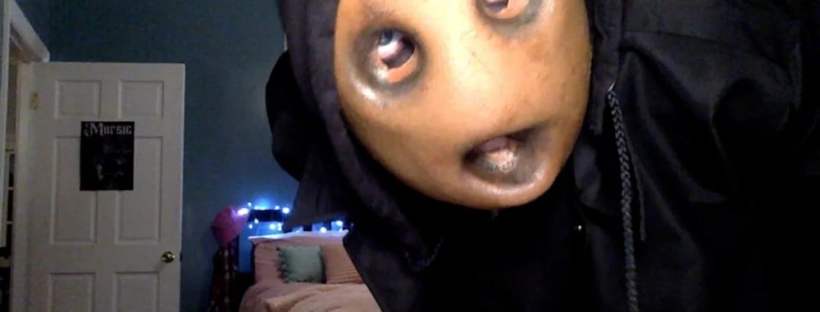
Chris Stuckmann built a fan base over the years as a YouTube horror critic. He also used a Kickstarter campaign to raise money for his debut horror feature, Shelby Oaks. Because of the impressive fundraising campaign and Stuckmann’s built-in fan base, Shelby Oaks earned buzz almost from the get-go, to the point NEON scooped it up for distribution.
Prior to the film’s October 24 release in theaters, I had the chance to chat with one of its lead actresses, Camille Sullivan, who plays Mia, a character reeling from the eerie disappearance of her sister, Riley (Sarah Durn). Shelby Oaks combines found footage, mockumentary-style filmmaking, and juxtaposes old YouTube videos, online discussion posts, and grainy footage to tell a missing person story. The film also has a LOT of narrative twists and will likely generate discussion once it’s out. This is the type of movie to see in a packed theater during opening weekend.
Camille, what, in particular, drew you to the role of Mia?
Camille Sullivan: When I first read the script, I was really drawn to the relationship between the two sisters and the way that Riley’s disappearance has affected Mia and the weight she carries with her through her whole life and how that’s affected her relationship to her husband and how that’s affected all of her choices. She can’t move on from it. I thought that was an interesting place to start a character.
Can you comment more on Mia’s relationship with her missing sister, Riley, and how that drives the film’s initial narrative?
Camille Sullivan: The bond between the two sisters is so strong. The movie is set up so they lost their mother and there is no father in the picture. They were each other’s family. I have two sisters, and I’m very close to them. The love was easy.
There’s a really chilling scene where Mia comes across a tape showing the minute Riley disappears and the man responsible. As viewers, we see the tape and Mia’s reaction to it. How did you prepare for that sequence and did you also watch the tape in real time?
Camille Sullivan: From an actor’s perspective, the way we filmed it was perfect. Chris set it up so that I had the real tape from start to finish. It was a 15-minute take, and I could just watch it. I had not seen it before. I think we only did one take, and we switched angles so I could do a couple of pick-ups. I was able to just really take it in in real time, and then they were able to pull out the moments. This was really a dream.
Can you comment on the film’s narrative structure? The film is told through old tapes and YouTube videos featuring Riley, online discussion posts, and Mia’s commentary in front of the camera, almost like a mockumentary at times.
Camille Sullivan: It was really fun, actually. The way I look at Mia is that she starts us in this one place, and then her life cracks open. Something changes for her. Then, she gets to take off in an entirely new direction. It’s almost a renewal of hope. For me, as an actor, that helped me with the changes in different styles. For me, the changes in style seemed natural because I could follow the flow of story.
Shelby Oaks – Courtesy NEON
The film takes another turn in the last act where it veers into a totally different direction. Without spoiling anything, what was your reaction to those additional narrative turns and some of those creepy set designs?
Camille Sullivan: The set designs were amazing. We shot, during that last section, in a warehouse at night. It was completely dark in there. I was feeling pretty beaten down at that point in time. [Laughs]. It was sort of perfect for the script. It just takes off again in a whole new direction, something unexpected. The secret that Mia uncovers is something that the audience uncovers at the same time. It’s not at all what you expect.
What was it like working with Chris Stuckmann, and did you give him any tips or advice, since it’s his first film?
Camille Sullivan: I really like working with first-time directors. It’s their baby, so all of their heart is in it. I love it, and that’s how I like to approach a film, too. We were able to collaborate. He knew exactly what he wanted, and he was super prepared. However, on the day, if I had ideas, he was really open to them. We had good conversations. Sometimes, things would change a little, or maybe they wouldn’t. The dialogue was there back and forth. He’s a really generous director.
How did you prepare for the role of Mia?
Camille Sullivan: I did a little research on people who had loved ones go missing. There’s quite a bit out there, and it’s heartbreaking when you really delve into it. There’s a very good documentary called Who Took Johnny about this child who goes missing. I started with that place of realism because I figured, if you’re on the path to find your loved ones, anything that comes at you, you keep moving forward. Nothing can stop you, no matter how crazy or dangerous. I knew that if Mia had that focus the whole time, it would be believable.
Is there anything else you’d like to add?
Camille Sullivan: I just want to give a shoutout to the locations. We shot at some really cool places in Ohio, including the Shawshank Redemption prison. It was fun. We were in there at night. I was wandering around, looking for ghosts. I thought I found one.
Can you talk about that more, specifically your search for ghosts?
Camille Sullivan. I did a scene where I was running into the darkness. I heard a little voice go, “No, no, no.” I asked if someone was there. I heard someone say, “It’s just me.” That wasn’t reassuring. It was terrifying. It turns out, it was one of the PAs. For like 30 minutes, I told people I saw a ghost. [Laughs].
Last fall, during Fantastic Fest, I had the chance to interview director Stuart Ortiz about his film Strange Harvest: Occult Murders in the Inland Empire, and stars Peter Zizzo and Terri Apple, who play detectives Joe Kirby and Alexis Taylor. The film is currently in theaters, and while Weapons has dominated the genre conversation lately, I highly recommend Ortiz’s film. It’s a deeply unsettling and grisly take on true crime. Since the movie just had its theatrical release, I thought it would be a good time to share the interview, which was initially published over at HorrorBuzz.
Stuart, what made you want to film a faux true crime documentary? Is it simply because of the culture’s obsession with serial killers?
Stuart Ortiz: In my first film, Grave Encounters, which is a found footage film, we had a little bit of documentary elements in that. I always thought it was a cool approach to a horror movie and a horror story that I haven’t seen utilized that much. It was always on my mind, trying to return to that and do something that was a documentary horror movie.
During COVID, Tiger King came out. It was a phenomenon. Tiger King, at its core, is basically a true crime story. Even though it has all this other silly stuff, it’s basically a true crime story. It occurred to me that true crime was huge and everywhere. It wasn’t just a small thing. It really had legs.
I was also very influenced by True Detective. I’ve always been a fan of police procedurals. When you inject a bit of weird, uncanny, otherworldly stuff, it’s perfect for me. It’s up my alley creatively.
The Mr. Shiny character was kind of a conglomeration. Some of the Zodiac Killer is in there. His motivations are not the more conventional. Our killer in the film has his own motivations that are otherworldly. He’s obsessed with this mythology and a cult element. If I had to say there were any serial killers [that influenced the film], probably David Berkowitz, the Son of Sam killer. He thought he was talking to some entity. There was this guy, Herbert Mullin, who killed because he thought an earthquake would destroy the world if he didn’t. These were guys who were driven by a higher purpose in their minds. I kind of used them as examples.
Peter and Terri, can you talk about playing these two detectives and also how you dealt with subject matter that’s so heavy, and at times, shocking?
Terri Apple: It was very interesting because I get freaked out by this kind of thing, even though I watch a lot of it. When I was a kid, my father owned a building, and they had Halloween there. I never went through the haunted house. It freaked me out. My dad took me to meet all the actors in character. Then, he finally convinced me to go through the house, which was a four-story building. It was such a funny thing. I thought I could do this character. That’s what got me onto set.
I realized it looked really realistic, but I have a big empathy for this. I’m also fascinated by serial murders and the genre in general. From that perspective, I always thought if I wasn’t an actor, I would have loved to have been someone who helped solve serial murders in real life.
In general, I liked playing her [Det. Alexis Taylor] as real as possible. That was her passion, to get to the bottom and solve this because of her childhood and her background.
Peter Zizzo: Like Stuart and Terri, I’m already a big fan of the genres, both horror and true crime. I immediately was drawn to the approach to this film and wanted to bring as much realism to a character that requires the buying in of the viewer.
My therapist knows a retired New York City homicide detective. I got on the phone with him a couple of times and had him tell me stories. I really paid attention when he described some horrific things. There was a certain grace about the guy and a certain empathy that somehow came through this matter-of-fact way he’d describe really horrible things. I thought it was a great lens to view my character through. You can see behind his eyes that there’s a lot of sorrow.
Stuart really specified that he wanted micro expressions. I thought it was a cool thing for me to bring to this character. It wasn’t just me sitting there, running lines in a suit. It also led me to work on my voice a little bit.
There’s a moment in the film when a victim’s mother says that the names of serial killers become infamous, but too often, we forget the victims. Does anyone want to comment on that powerful concept?
Stuart Ortiz: I think that is completely true. That’s just the reality of the times we live in. There’s been a fascination with these killers. It’s a sad truth that their victims are lost in the shuffle. They become numbers and faceless names. It’s a tragedy. It was important in this to highlight the victims. They couldn’t be left out or on the sidelines.
Terri Apple: I worked with Find the Children about 20 years ago. I went into schools to talk about missing kids. It really always has been a personal passion. I do think the police need a stronger thorough thread to connect these victims and to give these victims a platform. It is true that serial killers get a bigger name. We’re desensitized now. I think it’s important to emotionally connect with the families.
When I walk in on that family, in the beginning of the movie, it’s real. It does happen. It’s a real family. It’s a true component.
Peter Zizzo: Typically, in life, when you hear about something horribly tragic, one of the things you’ll say is, God, I can’t imagine what that must be like. With most horror films, you don’t have to imagine. They show you the kills and the horror all the time. With this film, you have two level-headed narrators that walk you through these unbelievable, horrific things. I think it involves more empathy and more shock when you imagine what it must have been like. You just see the end result.
Terri and I, our characters, talk to you calmly about how their blood was drained. You can see it really bothers us, but you don’t see it happen. You hear about it, and in a way, that’s almost doubly effective. It’s a great approach to a horror film.
It feels like each murder case we learn about is more brutal than the last. Can you talk about filming some of those gruesome scenes?
Terri Apple: I want to jump in from a woman’s perspective and from the character’s perspective. I thought I wasn’t going to be able to handle it. Stuart and I had a conversation about it. I told him I couldn’t do it. The character could do it, but I can’t do it. Peter had no problem with it. [Laughs]. I was freaked out for a very long time. I kept saying that I can’t. I realized I’d have to be on set with this in actuality. It’s not play acting. You’re recreating. It was so life-like on the set.
I have to tell you I was extremely surprised by the brilliance of the way Stuart set it up. Yes, it’s brutal, but guess what? These murders are freakin’ brutal. It was really weird, but this is the reality of what goes on. I played a character who has a real problem with it, but her passion of solving it was greater. That’s my own perspective, as someone who was so nervous about doing it.
Stuart Ortiz: It was a pivotal thing to try to get the realism right. Tom Savini, a famous make-up artist who did Friday the 13th, Dawn of the Dead, and all of these amazing movies, would talk about how you just know when it’s right and when it looks right. I can’t exactly say what that barometer is for me, but when we set up the bodies and crime scenes, I tried to go for the realism and not have it be more of a Hollywood thing, where it’s cleaner and more presentational with a dead body. It was about the awkwardness and trying to capture the reality of death as closely as we could.
Peter Zizzo: We did a screening in Beverly Hills. Some of the people who came out to support me are my friends, but they don’t necessarily want to see gore and violence. It’s a real testament to the way the film handles it. For them, it was a lot, but they still loved the movie. You have these shots, snippets, and flashes of something. It doesn’t linger enough where you get up and walk out. The film handles it deftly. For those repulsed by violence and gore, I think they can handle this. What I come away with is the story. I think that’s why people that doesn’t necessarily gravitate towards the kill count will also be good with this. It’s just the right amount to freak you out, but it doesn’t feel exploitative.
Terri Apple: With all these really gory movies that we do watch, like Friday the 13th, you’re actually watching people be murdered. Here, we walk into scenes post. This is a different perspective.
Stuart Ortiz: Mostly what you see are things in the aftermath and examine crime scenes after things have happened. I think that’s why true crime is so popular. It gives people who listen to it or watch it a context and safe space to experience these horrible things. It’s always with commentary. Your hand is held through the whole thing. Usually, it’s something that happened in the past. It’s not a direct threat now.
I think that helped us with our film. Even though we do have horrific crime scenes and violence, it’s always with the examination and lens of a true crime documentary. Like Terri is saying, it helps people and lessens the blow. It’s a sugar with medicine kind of thing.
I’ve probably watched at least 15 movies from this year’s Fantasia’s Film Festival, and The Undertone just may be my favorite. Nina Kiri plays podcaster Evy, who self-medicates to deal with daily stresses, including caring for her ailing mother. Evy and her podcast partner listen to 10 audio files that follow the haunting/possession of Mike and Jessa. The film is a true auditory nightmare with a heck of a performance by Kiri. This feature has the creepiest sound design that I’ve heard in a long time, and the film draws inspiration from the likes of Paranormal Activity and The Exorcist.
As part of my festival coverage for HorrorBuzz, I interviewed the writer/director, Ian Tuason, and Kiri. You can read the full interview here. I also included some of it below. I also reviewed the film, which you can read here.
Can you talk a bit about the experience of shooting this film, since so much of it relies on the audio and sound design and Evy’s reactions to those factors?
Nina Kiri: During the first week, we did most of the podcast stuff and the entire length that’s part of the podcast. We did it in chronological order, which was really helpful. She [Evy] slowly starts to descend and unravel, and it was helpful to do that in chronological order, to be honest. Once that was over and a lot of the dialogue was over, I felt more relaxed. I could live in the scenes more.
Michele came the second week. I think that was really nice for everyone. It brought a new energy that was so much more than what we expected. It didn’t really feel like acting on my own because the person playing Justin [Evy’s podcast co-host] wasn’t yet cast, but someone was on location, in a different room, speaking to me live for every take. It really didn’t feel like I shot the movie on my own and didn’t have any scene partners.
Regarding the audio recordings, I didn’t hear them until the day we shot the scenes. That created an organic response. I never felt alone in the parts where it’s just me, which is a lot of the movie.
Ian Tuason: I didn’t really direct Nina specifically about what to do when she’s listening or even speaking to Justin. She could be looking at anything.
Nina Kiri: It starts nonchalant, with the first audio file, but then it gets creepier and creepier. There’s a weight to it that felt more specific. Instead of just looking around, there’s a lot more concentration. She has to hear things correctly because she’s not sure what’s going on. I think keeping things small until it merits being bigger was a really good choice. I remember thinking that so much of this movie is listening. I don’t want to act while listening. I don’t want to try to make it interesting at all. I want to do what feels right. Then there are moments I realized, while watching it, where it becomes a bigger performance and it really pays off. There’s a lot of stillness, and I think there’s a lot of fear around stillness. But with everything else going on in the movie, it’s enough to be authentically listening.
Talk about the eerie narrative regarding the audio files and the characters of Jessa and Mike. Where did that idea come from, and Nina, what was your experience like hearing those audio files for the first time?
Ian Tuason: Three films creep me out. The Exorcist is number one. Number two is The Blair Witch Project, and number three is Paranormal Activity. Paranormal Activity is what the audio files are. It’s the couple in bed. They’re recording themselves asleep, and that scared me.
Undertone started off as a radio play, something that I was going to publish as a narrative podcast. Then, all of a sudden, life events happened, and I became the caregiver to my parents. I had this script written already for the podcast, and I thought it would be perfect to make into a film. Then, I added my first favorite film, The Exorcist, in between recordings of the podcast. I feel like I combined my two favorite horror genres, which are possession and found footage, except, in this case, it’s found audio, not found footage. That’s why I think people are going to get creeped out. I think everyone will be scared when they watch this movie.
Nina Kiri: It was basically kind of what I said before. It allowed me to have the experience. Because so much of it is me listening and because listening doesn’t have to involve movement or performance, hearing them for the first time felt like a genuine reaction and not put on in any way. It kind of took my brain away from having to think about being compelling or interesting. I was really listening, and they’re so good. Those recordings are incredible. I don’t think there’s much acting involved when you hear something that good. It always makes me feel better as an actor knowing that the director is trying to help me and support me by helping my performance be genuine.
Ian, can you address the film’s incorporation of folklore and the female demon Abyzou?
Ian Tuason: It’s based on an actual demon from the Book of Solomon. I did some research because I wanted to do the same thing that The Exorcist did regarding an ancient entity. When I was writing the story and needed to find a female demon, and one that threatens pregnant women, I found that one. I used it, and then weird stuff started happening in my house. But I saged my house, and it’s fine now.
For HorrorBuz.com, I recently interviewed Hell House LLC series creator Stephen Cognetti about his latest film, 825 Forest Road, debuting on Shudder this Friday. We chatted about the film’s more traditional narrative storytelling, haunted histories, small town America, and the fact he filmed in the Victorian-looking town of Jim Thorpe, PA, localish to me.
825 Forest Road stars Joe Falcone as Chuck Wilson, who, after a family tragedy, moves to the sleepy town of Ashland Falls with his little sister, Isabelle (Kathryn Miller), and his wife, Maria (Elizabeth Vermilyea). Yet, as the family soon finds out, the town harbors a dark secret.
What was your experience like transitioning from the found footage genre to more traditional narrative storytelling?
Stephen Cognetti: It was a great transition for me to leave found footage behind. I shot this right after Hell House 3. It was in between Hell House 3 and Hell House: Origins, so this happened between two found footage films. It was great to step away from found footage and do a traditional narrative. That’s the style of filmmaking I like doing in production, but I also love found footage horror, as a consumer of it and making it as well. I had fun making the Hell House movies, and I have fun watching found footage movies myself. But I had already done three found footage movies and I wanted to do something else. It’s a specific kind of filmmaking. It’s fun to do, but it’s not a kind of filmmaking to always live in. It’s good to try other styles of filmmaking.
How did you come up with the mythos surrounding Helen Foster and her ghost? Is she based on any specific local folklore?
Stephen Cognetti: She, specifically, is not based on any folklore. The whole story is based on any small town America folklore. I left New York City and moved to a small town in the Scranton [Pennsylvania] area. This town has its history. Everyone I met always had a story to tell about the town’s history. I imagined, what if one of these stories is about a ghost? I wanted to create my own fictional small town folklore and small town legend. What if it wasn’t a legend but something still affecting the town to this day? If you talked about it, you’d talk about it while looking over your shoulder because you don’t want to bring too much attention to yourself by talking too much about it. If you talk about it to a newbie, it’s a secret warning.
The truth of it came from my own move from New York City to small town Pennsylvania and learning about the history. It didn’t have any ghosts in it, so I created my own.
The idea of locations with haunted histories factors heavily in this film and even the Hell House series. Can you comment on that aspect of your work?
Stephen Cognetti: I can’t actually answer that because I think it’s organic and comes with each story. I’m a history guy. I love history. I was a film major and history minor in college. I took every history class that I could. I love history as a story. There might be, in the back of my head, a story that derives from some place. I think that goes to Hell House and 825 as well, along with films coming up in the pipeline that haven’t been announced yet. It’s always been of interest to me. I don’t know why that is, other than I have a love of history itself.
Speaking of small towns, you filmed this in Jim Thorpe, PA. For anyone who’s never been there, it looks like a Victorian town. What factored into your decision to film there?
Stephen Cognetti: I started exploring towns all around Northeastern Pennsylvania, Southeastern Pennsylvania, Central Pennsylvania, and everywhere. I drove into New York, too. I spent a lot of time driving. Jim Thorpe had a bit of everything. It already had that whole look, that look like it has history. Every building looks like that. The town is cool. The people are great, and it’s a good town to shoot in. It was accessible for me and everyone working on the film coming in from New York. It fit the accessibility, and it had the look.
825 Forest Road is also about loss and family dynamics. Can you touch upon the relationships in this film, especially between Chuck and his sister Isabelle?
Stephen Cognetti: I think Chuck starts out as a sympathetic character and a central character in the film. That’s how the first act is presented to us. As the film goes on, especially as we see Isabelle and Maria’s stories, Chuck can be considered an antagonist in this. He’s not actually any hero at all. I love that development of him and when you see him from a different perspective than his own. When you see him from a different perspective, he’s aloof and has a poor way of dealing with people going through something. I think everyone knows a person like that. Chuck is the kind of person that’s only there to lend very broad support but doesn’t understand it. He thinks he does, but he doesn’t really understand it. Therefore, he can’t really offer any help. He thinks he knows everything. When you see Chuck in other perspectives, you see he’s not the guy presented in the first act. His personality has a lot of flaws
825 Forest Road haunts Shudder beginning Friday, April 4 as part of their Halfway to Halloween celebration.
I was 14 when I saw The Blair Witch Project in theaters, and boy, did it creep me out. Released in 1999, the film utilized the early days of the internet. It ignited a marketing campaign that included a website with journal entries, fake missing persons flyers, and other tidbits about the Maryland witch and the three leads who went missing in those deep and dark woods. That final shot of Mike (Michael C. Williams) standing in the corner, where Heather (Heather Donahue) finds him, before the witch, or some other entity knocks attacks her, remains just as chilling today as it did 25 years ago. It’s one of the most iconic final shots in contemporary horror.
Since Blair Witch, Williams has starred or made cameos in several other movies, including The Objective and the anthology movie Satanic Hispanics. His role in Satanic Hispanics, and his connection to Eduardo Sanchez, who co-directed Blair Witch, led him to his latest film, Ghost Game, a movie that toys with home invasion tropes and the traditional ghost story, as well as a prank knowing as phrogging. Here’s part of the interview I conducted with Williams for 1428 Elm, and again, you can read the full interview on the site.
Eduardo Sanchez is one of the producers of Ghost Game, and he also co-directed The Blair Witch Project. Did he lead you to Ghost Game? How did you get involved?
Michael C. Williams: I did a cameo in Satanic Hispanics with Eduardo a couple of Junes ago. I met one of the producers on that, Carlo Glorioso, who later contacted me, and Sam Lukowski, who I’ve known for years, but never worked with. They both contacted me about the script and really wanted me to read it. They thought it could be a lot of fun.
They were making some films out of Maryland that were smaller, independent horror films. The culture on Santastic Hispanics was that smaller film community in Maryland making part of the film, which was an anthology. It was the connection through Ed, but then I met people who had me read the script. I loved it. I hadn’t even heard of what they call phrogging. I soon came to find out that it is a thing that exists.
I had an initial conversation withJill Gevargizian, who directed. Then, I watched The Stylist and really loved her work. I always root for young people in film, especially young people in horror, for probably obvious reasons. It seemed like a no brainer to me. The script was strong. The role for me was exciting because there are definitely turns and twists in the role. It was an awesome experience.
What was it like playing Pete, an alcoholic writer and conspiracy theorist? We’re not used to seeing you play a character like this.
Michael C. Williams: For me, that was somewhat of what was exciting about it. I do play a lot of Nice Guy Mike [roles]. We all have shades of other things in us. Pete gets dark, although as a human being, he doesn’t walk around saying he’s going to be dark today. This guy tries to do the best he possibly can do for his family. It falls apart. He tries to hold it together, but it’s just not working out.
It has to feel authentic. You can’t go into it saying you’re going to play mean or dark. It wouldn’t work as well compared to it naturally evolving. That’s what attracted me to that role, certainly shades of that anger and what happens around him.
It’s been 25 years since The Blair Witch Project and you’ve done other horror and sci-fi projects since then, including Altered, The Objective, and now Ghost Game. What keeps you interested in genre filmmaking and genre movies?
Michael C. Williams: Well, likely the filmmakers and the connection I have to the horror world. I went to do a cameo in Satanic Hispanics, and that was through Ed Sanchez. Through him, I met Carlo Glorioso, and he turned me towards Jill Gevargizian’s script. I ended up talking to her. You work with these pockets of folks who are kind, cool, and creative. That’s where it’s landed me over the years, and I’m grateful for it.
Ghost Game will have a limited theatrical run on Oct. 18, before it hits digital on Oct. 18.
Last year, I wrote about a short horror film called The Chair that became a viral sensation. The short, which you can watch for free on YouTube, is all kinds of creepy, blending possession with what may be a metaphor for old age/Alzheimer’s. The short was created by the folks in That’s a Bad Idea, which initially started as a sketch comedy group but now keeps making more and more horror films.
Their latest film, Milk & Serial, also directed by Curry Barker, who stars as lead character Milk, is an inventive, non-linear found footage film that was created for $800. In less than a month, it already has over half a million views on YouTube. Cooper Tomlinson stars alongside Barker as Seven, who plans a bday party for Milk. The two are pranksters, constantly filming new content to upload their channel. Except, in this case, the pranks lead to one escalating crisis after another.
If you want to read more of my thoughts, check out this piece I wrote for 1428 Elm. In it, I explain that what’s so effective about the 62-minute film is the DIY, punk rock energy it has. You can tell Tomlinson, Barker, and the rest of the small crew had a hell of a good time making this.
Yet, the film also works because of what it has to say about voyeurism and livestreaming. The non-linear narrative works at keeping viewers engaged, as one event after another is teased, often out of order, at a break-neck pace. Yet, when one prank early on causes Seven and Milk to cover up a crime, you feel like you’re a witness to it, rubbernecking, unable to look away or unsubscribe from their channel.
After a few viral hits now, shot on a shoestring budget, it wouldn’t surprise me if Barker and crew are tapped for bigger projects. Still, I hope that they continue to make films on their own terms with the sort of DIY, indie filmmaking, punk rock spirit that Milk & Serial has.
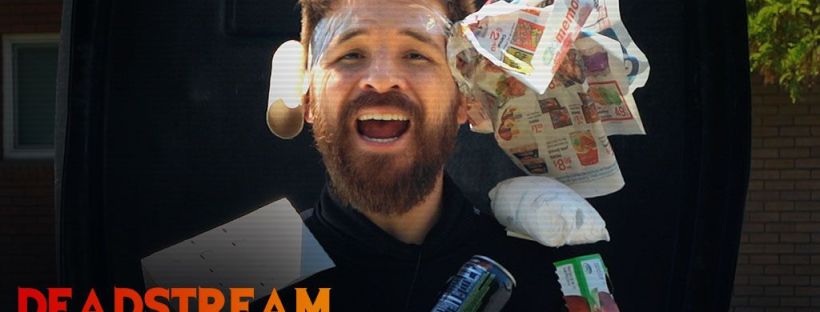
For 1428 Elm, I had the pleasure of chatting with Joseph Winter, co-director/star of the found footage horror comedy Deadstream. You can read the full interview here. We talked found footage, what scares him, and of course, horror comedies.
Winter plays Shawn Ruddy, an influencer who livestreams from a haunted house and is generally spooked by everything that goes bump in the night. The film also stars Melanie Stone as Chrissy, an apparent superfan of Shawn’s livestreams. The movie draws a lot of influence from the Evil Dead franchise, and it’s a rare horror comedy that gets both the comedic beats and scares just right.
While there has been a lot of screen horror lately, reflecting the times we live in, Deadstream is unique for some of its gross-out horror and jokes. It was one of my favorite films last year, a true standout compared to the glut of screen horror we’ve seen these last few years.
Deadstream is currently streaming on Shudder, and a physical release, including a Walmart exlusive Steelbook, will be released on July 18.
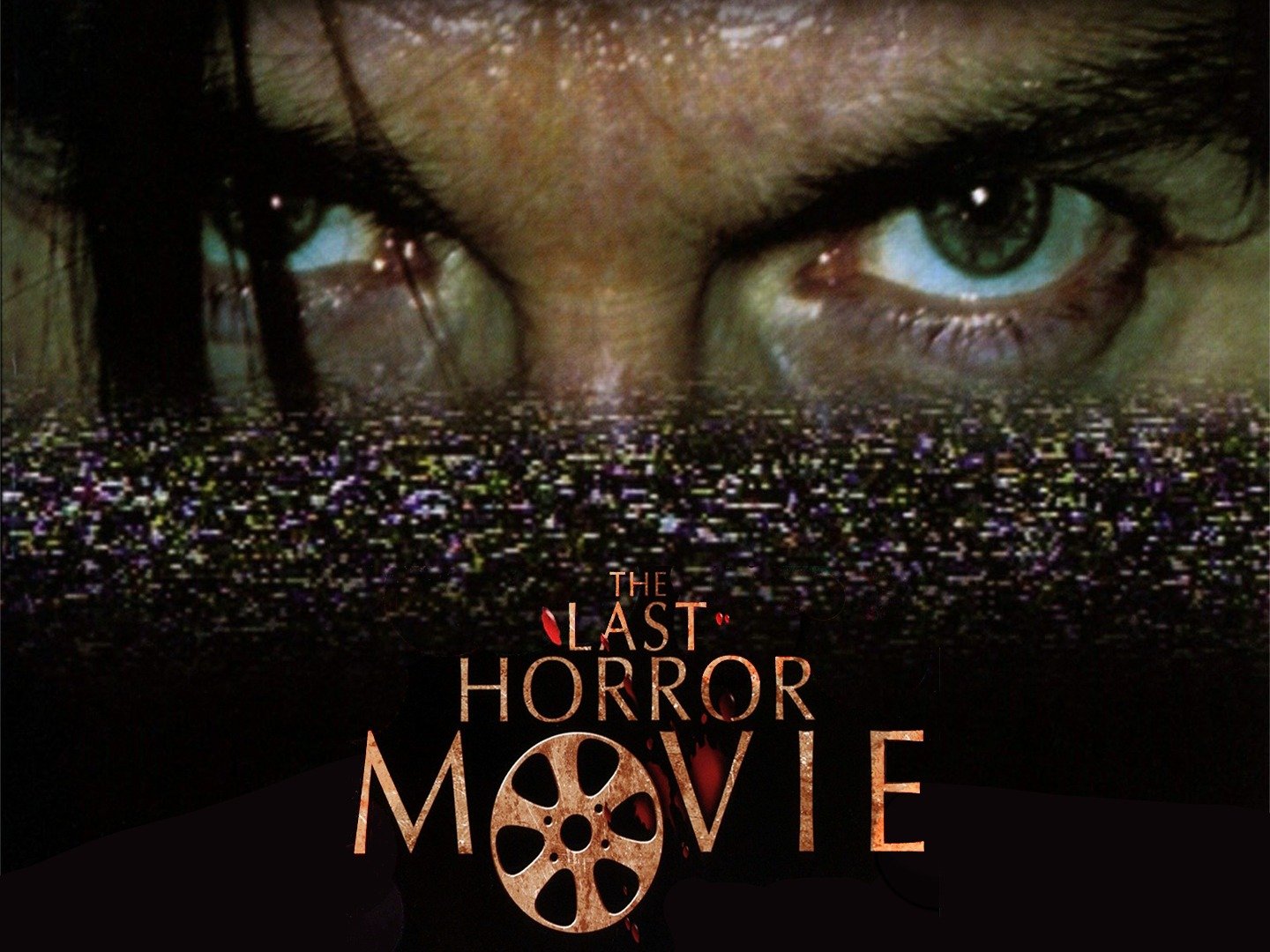
I admit that I’ve never heard of The Last Horror Movie until I saw it on a list of potential assignments for Signal Horizon Magazine. For whatever reason, the movie didn’t catch much buzz during the 2000s found footage boom that followed the massive success of The Blair Witch Project (1999). I confess that I’m not as crazy about the subgenre as some other fans, but I was equally disturbed and fascinated by The Last Horror Movie.
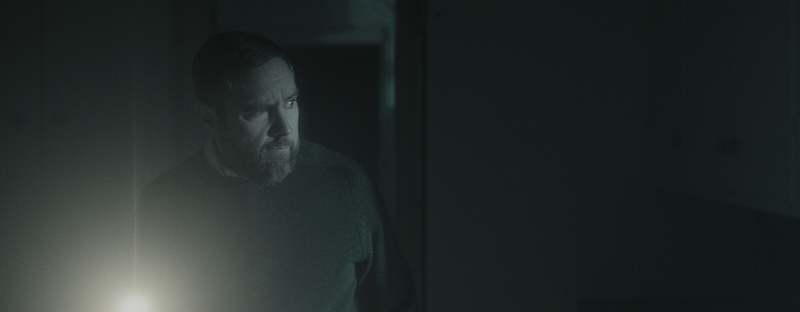
Directed by Julian Richards, the film primarily features one character, Max (Kevin Howarth), a serial killer who films his murders over horror movie rentals. Much of the movie plays out like a snuff film, and though that’s certainly uncomfortable, the real way the film disturbs is through its commentary on spectatorship. Several times, Max asks the audience why they keep watching, and as the film becomes more and more brutal, we, as viewers, have to stop and ponder why we stay tuned in. Why not shut it off? Do we also have lust for on-screen violence? Max has some warped logic, but he’s likeable in an odd way, sort of like Henry (Michael Rooker) from Henry: Portrait of a Serial Killer. That’s another reason why The Last Horror Movie is effective. Like Henry, it presents us with a character who comes across as generally normal, at least at first.
It’s difficult to find the film on any major streaming platforms, and it hasn’t gotten a proper physical media release in some time. That’s a shame. It stands a cut above most of the found footage films from that era.
For more of my thoughts on The Last Horror Movie, please check out my articles over at Signal Horizon.





 Brian Fanelli