No Oscar Nomination for Toni Collette/The Horror Genre?

2018 was another strong year for horror. There were several indie films that made waves, such as Mandy, Terrified, and Revenge, but two films specifically broke into the mainstream, generated buzz and conversation, and were deserving of the Academy’s attention.  I am talking about A Quiet Place and Hereditary. Both films were snubbed, though A Quiet Place did earn a nomination for Sound Editing. That said, I’m not surprised that the horror genre has once again been shut out of the awards season, even if the genre has been earning more and more attention over the last five years or so. Last year, I argued that Get Out deserved Oscar nominations, and it did receive a few, including Best Picture. Jordan Peele, meanwhile, won an Oscar for the screenplay. When writing about Get Out, I noted that very, very few horror films have ever won an Oscar. The Silence of the Lambs won Best Picture in 1992. The Exorcist was nominated for several Oscars, but only scored two for Best Adapted Screenplay and Best Sound Mixing.

A Quiet Place is at least deserving of a nomination for Best Original Screenplay, which was penned by John Krasinski. The film is one of the most innovative horror movies of the last decade, a metaphor on grief and losing a child. While the film may not be the first to use sound, or a lack of sound, so effectively in the genre (think Hush or Don’t Breathe), it does so in a way that makes us really feel for the family, especially after the tragedy that occurs within the first fifteen minutes. Additionally, the film contains strong performances by Krasinski and Emily Blunt, who do everything they can as parents to keep their children safe and alive. We generally want them to survive, especially after they endure one calamity after another.

collette

(Toni Collette as Annie in Hereditary)

Hereditary is a much more difficult film to watch. It begins with a funeral for the family’s matriarch, and within the first half an hour, it takes a sudden twist with the loss of another major character. Yet, it’s one of the strongest portrayals of grief that I’ve ever seen on film, let alone the horror genre. Furthermore, Toni Collette’s performance as Annie is never-jangling. Her facial expressions alone are powerful and unnerving. She is a mother who can’t take anymore loss. Additionally, I think the film should have received nominations for Best Director (Ari Aster), Best Original Screenplay, and perhaps, maybe even Best Picture. Yet, it was totally shut out…

So, after giving a single Oscar to Jordan Peele last year, which was well-deserved, it looks like the Academy is back to ignoring the horror genre. Meanwhile, fans can continue enjoying the state of horror right now because there’s a lot to be excited about, even if the Academy doesn’t think so. Horror is having a moment.

What do you think about the Oscar nominations? Were A Quiet Place and Hereditary deserving of the Academy’s attention? Feel free to let me know what you think.
List of Oscar nominees.


Horror in 2019

Happy 2019!

With 2018 behind us, let’s look at some of the horror films dropping in 2019.

US

Slated for release on March 15, this is probably the year’s most anticipated horror film, especially after the success of 2017’s Get Out, which earned Jordan Peele an Oscar. While Get Out had some comedic beats, especially in the first half, US looks more like a straight-up horror film, with echoes of The Strangers and Funny Games, at least judging from the trailer.


A few weeks ago, it was reported that Peele had US star Lupita Nyong’o watch a list of horror films to prepare for her role. This list only adds to the excitement and features pretty diverse selections, everything from Let the Right One In to The Birds.

Pet Cemetery

The last few years have featured a serious resurgence of interest and fandom in Stephen King, both on the big and small screens, so it’s no surprise that one of King’s most popular novels is getting another adaptation. The latest  is directed by Kevin Kölsch and Dennis Widmyer and written by Jeff Buhler. It stars Jason Clarke, Amy Seimetz, and John Lithgow. The trailer looks promising, and the film will be out in April.


The Prodigy

I’m unsure what to think about this film. Based on the trailer, it looks like it could be decent. Director Nicholas McCarthy does have experience in the horror genre. He was a writer for 2012’s The Pact and 2014’s At the Devil’s Door, and he directed a segment for 2016’s horror anthology Holidays. Maybe The Prodigy will be another solid entry into the creepy kid subgenre of horror,  a la The Omen. Who knows, but we’ll see once the film drops in February.


The Curse of La Llorona

This is another film that I think has potential. This supernatural horror film, directed by Michael Chaves,  is based on a Mexican folk tale about a legendary ghost called La Llorona. The film will be released in April.

It: Chapter 2

While I wasn’t a huge fan of the first installment of this remake, the second chapter is supposed to be darker and will feature members of the Loser’s Club all grown up, battling Pennywise one last time. I predict this will be the highest-grossing horror film of 2019. It comes out in early September. No trailer has been released yet.

The Lighthouse

Directed by Robert Eggers (The Witch), The Lighthouse is currently in post-production and was shot in black and white 35 mm. The film stars Willem Dafoe and Robert Pattinson. Not much is listed on the IMDB page, other than this brief synopsis: “The story of an aging lighthouse keeper named Old who lives in early 20th-century Maine.” The Witch was one of the most atmospheric horror films of the last several years, so I’m excited to see Eggers’ latest effort, which will also be distributed by A24 films.

The Nightingale This film is currently making its round at the festivals, and I’m including it because it’s by The Babadook’s director Jennifer Kent. Here is the synopsis, “Set in 1825, Clare, a young Irish convict woman, chases a British officer through the rugged Tasmanian wilderness, bent on revenge for a terrible act of violence he committed against her family. On the way she enlists the services of an Aboriginal tracker named Billy, who is also marked by trauma from his own violence-filled past.”

I am sure there will be several films that make my year-end of list for 2019 that currently aren’t gaining much attention. Who heard of Revenge, Terrified, or Apostle a year ago?

TV:

In terms of TV, Shudder has green lighted Greg Nicotero’s (executive producer of “The Walking Dead”) reboot of Creepshow.  Nicotero promises the show will honor the legacy of Stephen King and George A. Romero’s original film. We’ll see. Speaking of Shudder, one of the highlights of 2018 for horror fans was the return of Joe Bob Briggs, who hosted three horror movie marathons dubbed “The Last Drive-in” for the streaming service. In 2019, he’ll be hosting a regular series. Long live Joe Bob!

Meanwhile, Jordan Peele is hosting a rebooted version of “The Twilight Zone” for CBS.  AMC has renewed the criminally underrated “The Terror” for a second season, though the new season won’t have anything to do with Dan Simmon’s novel. Season 2 will be set during WWII. Lastly, let’s hope that “Channel Zero” has at least one new season this year. Based on Creepy Pasta stories, “Channel Zero” is one of the most innovative horror television shows in years.

Happy New Year, and please feel free to comment about your predictions, hopes, or horror movies for 2019!


New Horror Essay Published by SVJ

I am fortunate and grateful to have an essay on early horror cinema published by The Schuylkill Valley Journal, both print an online. The essay, entitled “The Progressive Politics of Early Horror Cinema: Gender, Female Empowerment, and Sexuality,” looks at Nosferatu and James Whale’s Frankenstein and Bride of Frankenstein. You can read a version of the essay by clicking here.

A Look Back at A Girl Walks Home Alone at Night (2014)

Over the last decade, the vampire has evolved on film. What I’m namely talking about is  Let the Right One In (2008), an adaptation of John Ajvide Lindqvist’s brilliant novel, What We Do in the Shadows (2014), a hilarious spoof, and The Transfiguration (2016). All of these films take the vampire away from the image of a Bela Lugosi or Christopher Lee-type fanged, cape-wearing monster. Let the Right One In features a beautiful friendship between its child-like vampire and a bullied boy named Oskar. The Transfiguration has much in common with George A. Romero’s brilliant vampire flick Martin, in that you’re never fully sure if the protagonists are a vampire or not, but each is obsessed with the idea of being a vampire  the vampire mythos.

Classic monsters, such as vampires, need to change with the times, and their ability to do so is why they’ve been around for hundreds of years. One of the most innovative vampire films of this decade is A Girl Walks Home Alone at Night (2014), a genre-bender by Iranian director Ana Lily Amirpour, who was transplanted to the states with her parent as a kid.

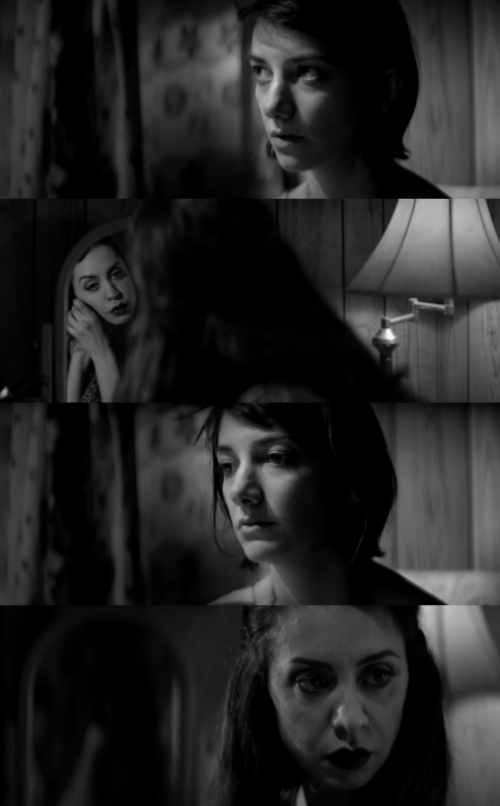
The plot of the film is simple. It takes place in a fictional town called Dead City, and it features a female vampire simply named Girl (Shelia Vand), who feeds to live and ultimately falls in love with a James Dean-type character, Arash (Arash Marandi). The black and white film is a lot of things- noirish, a western, horror, incredibly sleek, stylized, and subversive.  It also features one of the coolest vampire figures ever seen on screen. She skateboards,  steals jewelry from deserving victims, murders abusers and pimps, and dances around her apartment to indie pop. She warns Arash that to love her is to know and accept all of the bad things that she does. She is endearing but also terrifying, telling a young boy in one scene that if he doesn’t behave, she’ll rip out of his eyes and feed them to dogs.


In an interview with Wired back in 2014,  Amirpour didn’t downplay the feminist underpinnings of the film, saying,  “I think [the film] can be feminist if that’s what people think,” adding, “People also say, ‘Is it political? Are you making a political statement?’ I just know what I am; I don’t know what everyone else is.”

It’s hard not to acknowledge some of the feminist undertones of the film, especially if you accept that Dead City is supposed to be in Iran, a county not exactly known for women’s rights. Even the title and the fact the female vampire skateboards or walks alone at night is significant. Furthermore, Girl dances and wears eye-shadow and  lipstick. Some of her victims are so ridiculously masculine that it’s hard not to laugh at their absurdity. For instance, one of her first victims, Saeed (Dominic Rains), invites her to his pad, which looks like a scene from Scarface, including a coffee table dusted with cocaine and a gun. He dances in front of the mirror to thumping techno music, gazing at his muscular body, before advancing on Girl, who gives him what he deserves.

In another scene, Girl avenges Atti (Mozahn Marno), a prostitute who is shot up with heroin by Arash’s father, Hossein (Marshall Manesh), a junkie. Besides Arash, Atti is one of the only relationships that Girl has  and admits that she watches her and notices her sadness.  Girl says to her, “You’re sad. You don’t remember what you want. You don’t remember wanting. It passed long ago. And nothing ever changes,” to which Atti responds, “Idiots and rich people are the only ones who think things can change.”

a_girl_walks_home_alone_at_night

Girl (Shelia Vand) and Atti (Mozahn Marno)

While Atti’s dialogue fits her character, someone hardened from a life on the streets, the actions of Girl  as both a female avenger and subversive portrayal of feminine power in a restrictive culture, show that resistance can exist, even in the most oppressive societies. Furthermore, A Girl Walks Home Alone at Night takes the image of the vampire, traditionally masculine, and subverts it as much as Let the Right One In did. This is probably why when Girl first meets Arash he’s wearing a cape and vampire fangs, stumbling home from a costume party. He’s a parody of the male vampire figure in that scene, in such a drunken state that he can’t even find his home, say his name without slurring, or cause any harm to Girl. He is totally powerless.

Since the release of A Girl Walks Home Alone at Night, Amirpour already has another film under her belt, The Bad Batch, and she directed an episode of “Castle Rock.” Here’s hoping that she continues directing horror films because the genre, and film in general, needs more women behind the camera, especially ones like Amirpour, willing to make previous horror staples, like the vampire, unique and interesting.


,


My 2018 Zombie Film Recommendation

Confession: I am tired of the zombie subgenre of horror. I think that “The Walking Dead” should have been canceled at least 2-3 seasons ago. I can’t think of a zombie film I watched all that recently that I found that innovative or attention-worthy, other than Cargo (2017), available to stream on Netlflix. Most of the more interesting zombie films, such as 28 Days Later or Shaun of the Dead, belong to the previous decade. Zombie films tend to come in waves, but this most recent wave has limped along for far too long, like a  corpse waiting to be put out of its misery.

With all of that said however, there is one zombie film released this year that warrants viewing, Night Eats the World by French director Dominique Rocher, an adaptation of Pit Agarmen’s novel. Sure, the film checks off a lot of the cliches, including a sudden outbreak and loose social commentary, but more than anything else, the film is a meditation on loneliness. It begins when moody protagonist Sam (Anders Danielsen Lie) attends a party hosted by an ex. He heads into an empty bedroom by himself, falls asleep, and wakes up to a zombified world, including the apartment caked in blood. He sees some of the party’s stragglers wandering outside, roaming the streets, hungry for human meat.  Suddenly, he realizes that he’s trapped in a building alone with little possibility of escape.

The rest of the film mostly includes quiet scenes, including shots of Sam running around the mostly vacant building to stay in shape. Days, weeks, and possibly months pass. Sometimes, Sam ventures into one of the units to stock up on canned food, but is forced to bolt the doors shut after encountering more of the living dead. He forms a relationship of sorts with a balding zombie trapped in an elevator. This gnawing corpse is played by Denis Lavant, who, though he has no speaking parts, is utterly stellar through his haunting facial expressions. This zombie is humanized and distinct, like Bub in Romero’s Day of the Dead, and in his milky eyes, Sam sees a reflection of his isolated, melancholy state.  Who is really worse off in this situation?

There are times when Sam’s frustration erupts, including a scene where he launches into a pounding drum solo that draws a horde of zombies to the apartment complex. Yet, scenes where Sam is truly in danger of becoming zombie meat are relatively few and far between. Instead, the film focuses on what it would be like to be a survivor in a zombie apocalypse, when, as far as you know, all of your family and friends are dead. How do you go on living?  Throughout the film, time becomes elastic, and it’s unclear how much time has even passed between the beginning of the film and its conclusion. Will Sam even be better off if he makes it to the final scene? That much is unclear.

Stephen King called The Night Eats the World “a perfectly amazing film” a few weeks ago on Twitter, adding that it will “blow your mind.” I think King’s praise of the film is a little overblown, but I will say that the film deserves attention and has fallen under the radar, unfortunately. It tries to do something different with the zombie genre, and it generally succeeds.


In Defense of 2018’s Horror Offerings

Last week, Vogue posed the question, remember when horror was good? The question was followed with the blanket statement that 2017 was a far superior year for horror, due to It, Split, and lesser-known indie and foreign flicks such as Raw and It Comes at Night. The writer, Taylor Antrim, also labels Get Out a “masterpiece of social horror,” but then surmises that because Get Out didn’t win the Oscar that year (Jordan Peele did, however), that the air went out of the genre. If anything, I would argue that 2018 was another strong year for the genre, extending the new golden age.

First, Antrim admits that A Quiet Place, Hereditary, and Suspiria are good films, but the writer tries to remove the horror label from them and instead calls them thrillers. This is what some critics tried to do last year when Get Out earned Oscar nods. There were articles about “post-horror,” socially conscious films concerned with bigger ideas than guts and gore. The genre, they argued, couldn’t handle such serious themes! I guess they never watched any of Romero or Hitchcock’s horror films. It is beyond me how Antrim can see these new films as anything but horror. The first 15 minutes of A Quiet Place are some of the most nerve-jangling scenes I witnessed in cinema all year. The rest of the film features creatures terrorizing a family. Citing Hereditary, Antrim says that the genre could use a dose of humor and fun. On the one hand, I’ll admit that humor and dark delight do have a place in horror. Get Out is a good example, as well as classics like Re-Animator and Dawn of the Dead. Other genre staples, though, like The Exorcist and Night of the Living Dead are pretty short on the jokes.  Would anyone question their importance to the genre because they lack punch lines?

Antrim saves most of the criticism for Halloween, this year’s highest-grossing horror film. The author’s main gripe is that the film simply wasn’t scary. I beg to differ. David Gordon Green’s film returns Michael Myers to a force of nature, and his kills are brutal without being gratuitous, unlike Rob Zombie’s two Halloween films. Perhaps more importantly, the reboot gives substance to the Final Girl, Laurie Strode (Jamie Lee Curtis), making her the hunter who wants to overcome her trauma. Even Antrim admits that the film is relevant in 2018 and the era of #MeToo.

Within the article, Antrim  says that Hereditary, A Quiet Place, Suspiria, and even the French film Revenge are good films, while trying to dislodge them from the horror label. All of these films belong to 2018, and all of these films fall within the horror genre. Vogue’s article is a continuation of the flurry of pieces last year that tried to discredit the genre. 2017 was indeed a great year for horror, but so was 2018. Hereditary, A Quiet Place, and Halloween raised a heck of a lot of money at the box office while being interesting films, short on jump scares. The year also produced a number of wonderful foreign and indie films, including Revenge, Terrified, The Witch in the Window, Ghost Stories, among others. As horror continues to do well at the box office and earn praise, it’s likely articles like Antrim’s will continue to be published. To that, I say, may the new golden age of horror extend well into 2019!


Some Poetry for Halloween

Months ago, I announced that Moon Tide Press was putting out an anthology of poems inspired by horror films. Well, the anthology is out! It features 66 poets and has wicked cool cover art by Leslie White.

Dark Ink Cover Image.jpg

If you’re interested in ordering a copy, you can do so through Moon Tide’s website here, or through Amazon here.

I have three pieces in the anthology, and as a little preview, here is one of the poems:

Imagining One More Romero Movie


I’d like to see Romero’s take on this moment,

a time as uncanny as the dead rising,

groaning, and slow-walking towards a meal.

The elite already live in towers,

like in Land of the Dead.

The president has a tower in NYC,

barricaded by police in all-black riot gear,

like the beginning of a movie

where everything is about to go wrong.

The working-class hustle below,

their hands hard and calloused, their clothes

rife with the smell of gasoline, oil, or dirt.

Sometimes, they crane their necks, stare

at those towers, maybe to imagine a gold nameplate,

a desk, leather chair, and air-conditioned office.


If Romero directed one more sequel,

I wonder where he’d place the survivors.

Shopping malls are too 1980s, but maybe Starbucks,

staring at their smartphones, plugging in

before the dead bust down the doors,

rip out espresso machines, gnaw on flesh,

or maybe he’d have a horde overtake DC,

while a few remaining politicians and lobbyists

flee down K Street under a harvest moon,

until the working-class, turned, drop the gas pumps,

hammers, or call center headsets and devour the living, fed up

with slumping and staggering from job to job.


Happy Halloween!


Apostle, Folk Horror, and Masculinity

Netflix’s continues adding to its ever-growing horror collection. One of its latest entries is Apostle, directed by Gareth Evans.  Several reviews have already compared the film to 1973’s The Wicker Man, since  both films are rooted in the folk horror subgenre, deal with religious fanaticism, and essentially build their own unsettling worlds, in each case a small, remote island. Yet, where Apostle breaks from some other films in the subgenre is in its critique of masculinity.

Apostle is set in 1905, and generally, little backstory is given to the island where the protagonist, Thomas (Dan Stevens), winds up in a quest to rescue his sister Jennifer (Elen Rhys). In one of the film’s most harrowing scenes, we come to realize why Thomas has abandoned religion. He was tortured when he tried to introduce Christianity to Peking during the Boxer Rebellion. As Thomas is tormented before a burning cross, no God comes to his rescue. This is just one of the many scenes in which poor Thomas is put through the meat grinder.

The other men in the film, namely Prophet Malcolm (Michael Sheen) and later Quinn (Mark Lewis Jones), use religion to keep the island’s inhabitants in line and to subjugate women. At one point, when Malcolm claims that Jennifer is a traitor, he parades her through the village in shackles and leaves her outside where children poke her with sticks and yank at her hair. The violence she suffers at the hands of men is only exacerbated as the film progresses.

These men also exercise strict and harsh control over women’s bodies. For example, Quinn cuts a baby out of his daughter’s womb and then uses a medieval torture device on her lover because he didn’t want them to be together and he certainly didn’t want his daughter to have the baby. Quinn is the film’s most pronounced example of ruthless, unchecked patriarchy, and his violence exceeds that of Malcolm’s.

The island, meanwhile, is inhabited by a goddess, and Malcolm claims to speak for her. He also feeds her animal and human blood, and yet, he can’t fathom why crops keep failing. The goddess, who seems to be nature personified, suffers because of the men who rule the island. They try to claim her for their own and tame her, but under their firm hand, any plant that starts to green soon withers and browns.

Apostle trailer:


Initially, Thomas is afraid of the goddess, and his first encounter with her is one of the most chilling images in the film. She is as decayed and creepy as the woman who inhabits room 237 in The Shining.  However, near the end of the film, he kneels to her and better understands her story, specifically that she isn’t so monstrous as he once assumed. Of all of the men in the film, Thomas has the most connection to the women. He comes to island because of  Jennifer, he forms a semi-romantic relationship with one of the islanders, Andrea (Lucy Boynton), and he eventually understands and sympathizes with the goddess. It should be noted, too, that both Jennifer and Andrea have their own agency, especially near the conclusion.

In the final shot, as Jennifer and Andrea escape the island via boat, Thomas and Malcolm, who evolves after witnessing Quinn’s brutality, sit together on a cliff as the women leave. New life finally grows, after Thomas and Malcolm’s blood has been spilled. There are a few ways to interpret this last scene. Maybe nothing grew on the island when the goddess was fed human blood because the island and its people were so tainted under Malcolm and then Quinn’s rule. Maybe new life grows because Thomas and eventually Malcolm transcend the negative aspects of masculinity with the help of women. Because of that, new life could flourish on the island, or maybe the cycle of life and death simply returns because the goddess is free, so to speak.

Apostle is a solid entry to the folk horror subgenre, especially for some of its critiques of masculinity. In that regard, it has some commonality to Dave Eggers’ 2015 film The Witch, which also has a menacing patriarchal figure, the father of a Puritan family who is so rooted in religious dogma and superstition that he suspects his eldest daughter is a witch as she comes of age sexually. Both films are awash in cool tones that establish the bleak atmosphere, especially as the crops fail and the violence heightens. The gore in Apostle is excessive at times, especially torture to animals, and the film could have been cut and edited slightly more, but overall, it is another noteworthy addition to this year’s already strong horror list.

Recommended: Check out this article over at Horror Homeroom about some other films that will help you better understand Apostle.


Recommendations for Netflix Horror

As a follow-up to my post on recommended horror podcasts, I wanted to offer a list of my horror picks to stream on Netflix this October, or anytime for that matter! I tried not to include many picks that made my list last year, and I tried to highlight international and independent films.

The Witch (2015): This is one of my favorite horror movies of the last five years. Set in 16th Century Puritan America, this film is a slow burn,  filled with unsettling, bleak imagery. At its heart, The Witch has a lot to say about female empowerment and uses the trope of witchcraft/fear of the female to do so. Oh, and it has Black Phillip! Director Robert Eggers is likely to be a staple in the horror world for years to come. His next project is another horror film entitled The Lighthouse, and he’s working on a remake of Nosferatu.

The Wailing (2016): Netflix has a few solid Korean horror films. The Wailing tops my list. It is loaded with biblical imagery, and even though it’s nearly three hours long, it never feels bogged down. The film takes its time establishing its world and characters, but it gradually builds to a horrifying conclusion. It also has one of the best exorcism scenes.


Raw (2016): It’s fair to say that the horror genre still needs more female directors. That can probably be said about film in general. Director Julia Ducournau is on my list of young horror directors to watch. Raw borrows a lot from the French Extremity films of the early 2000s, namely in the way that it uses gore and color. This is a film to watch more than once, if you can stomach the cannibalism. Is it a metaphor for rape and survival? A female coming of age story? I don’t have all the answers, but I know that I enjoy this film more each time I see it.

Veronica (2017): Based on a true story about a teenage girl who was allegedly possessed, Veronica is directed by Paco Plazo, who also directed REC and REC 2. Watch them if you haven’t. So far, this has generally been a polarizing film, but I really enjoyed it. You generally feel for Veronica, especially when she’s burdened with taking care of her siblings, due to her absentee father and an overworked single mom.

Hush (2016): This made my list last year, but I’m including it again. The film centers around a deaf woman who is stalked and terrorized by a masked intruder for no apparent reason. What this film does with sound is the most unique aspect of the film, thus making it stand out from other home invasion horror flicks. Oh, and this was directed by Mike Flanagan, who directed “The Haunting of Hill House” series for Netflix, which has been all the buzz and streams later this month.

Under the Shadow (2016): Set in a 1980s, war-torn Iran, the story focus on a mother and a son who confront an evil invading their home. This film is heavy in its imagery and metaphors regarding war. It’s one of my favorite films of the last few years.

The Transfiguration (2017): This takes a lot of classic vampire tropes and flips them on their head. It also references what came before, including Let the Right One In, Dracula, and Martin. The film follows a troubled teen named Milo who thinks he is a vampire. Eventually, he forms a bond with another loner, Sophie. What’s reality and fantasy blurs as the film progresses.


Train to Busan (2016): Another Korean horror film makes my list. This is about zombies. zombies on a train! It doesn’t totally reinvent the zombie flick, but it does have characters that you give a damn about, and the setting makes for some unique and creative kills. James Wan plans to produce an American-made remake. We’ll see how that pans out…

The Ritual (2017): A British Netflix horror film based on a novel by the same name. What I really like about this film is its setting, the woods that engulf the group of friends who reunite after the tragic death of a friend. Oh, and the monster that comes in the final act is pretty cool, too.

Classics available to stream on Netflix: Hellraiser, It Follows, The Babadook, Children of the Corn, The Descent, Tucker & Dale v. Evil, The Conjuring, The Sixth Sense, The Strangers, Cabin Fever, Teeth, Seven, Interview with the Vampire