Sometimes Dead Is Better: A Review of Pet Semetary (2019)

Image result for pet sematary

Over the years, Stephen King has retold the story of writing Pet Semetary and wanting to bury the manuscript because he felt like it was the bleakest novel he had written. Indeed, it is a depressing story that deals with the heaviness of grief and a family who suffers one loss after another, all within the span of a few short days. The new film, directed by Kevin Kolsh and Dennis Widmyer, is especially faithful to the novel in terms of tone, subject matter, and theme, despite two drastic changes to the story. The film’s major flaw, if it could be considered a flaw, is just how  grim and humorless it is, especially the final act.

The basic premise of the film is the same as King’s novel and Mary Lambert’s 1989 adaption. Doctor Louis Creed (Jason Clarke) relocates from Boston to Ludlow, Maine with his wife Rachel (Amy Seimetz) and their two children, Ellie (Jete Laurence) and Gage (Hugh and Lucas Lavoie), so he can take a job at a local university. Soon after relocating, the family befriends Jud (John Lithgow), who tells them about the “Pet Semetary” on their property and eventually introduces Louis to land just beyond the cemetery that has the power to reanimate the dead. At its core, the new film, like its predecessors, is a rumination on grief and loss.  One of the most powerful scenes occurs when Ellie first questions her parents about the process of death and asks why animals, including her precious tomcat Church, don’t live as long as humans. Louis tries to answer her in a rational, scientific manner, while Rachel offers a more faith-based opinion. This short scene illustrates Louis and Rachel’s different parenting styles and their contrasting views on death, while also adapting one of the most poignant scenes of the novel, the moment that a child starts to process what it means to die.

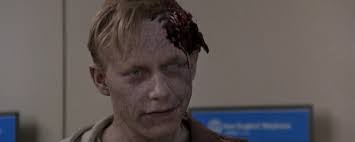
The film’s heaviness doesn’t relent, as Louis fails to save a student, Victor Pascow (Obssa Ahmed), who is hit by a car on campus and returns in Louis’ dreams to warn him that the barrier “shouldn’t be broken.” The Pascow of this version lacks the heart of Brad Greenquist’s performance in Lambert’s adaptation. Greenquist’s Pascow at least smiled every now and then, even with half of his skull busted open and bleeding. Ahmed’s ghastly version  matches the somber, gray tones of the film and the fog-heavy shots of the cemetery. Ahmed’s role is only to provide dire warnings to Louis, staring at him with red eyes, speaking to him as blood leaks from his skull.

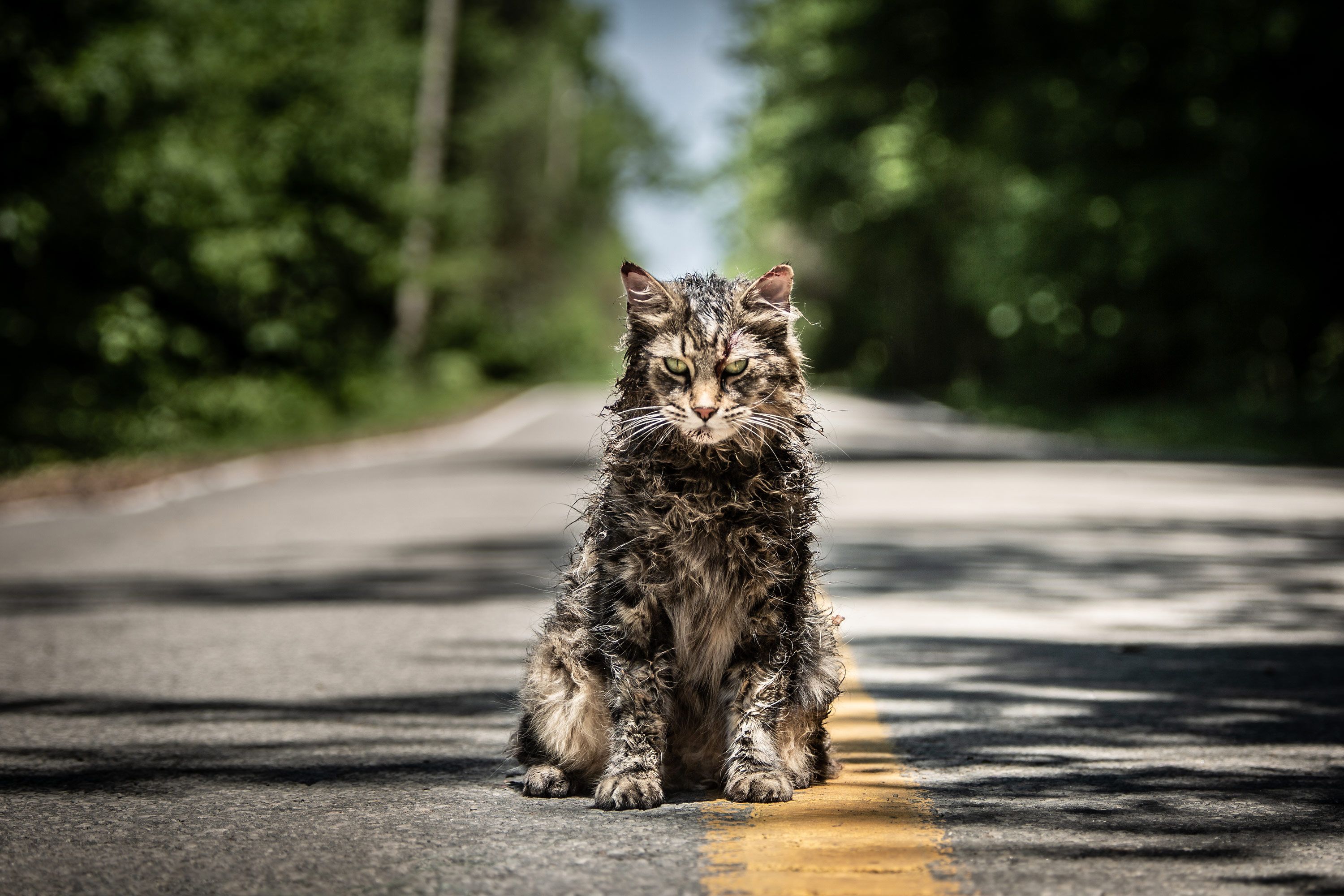
Not long after Pascow’s introduction, Church is hit by a roaring semi and Jud helps Louis bury him in supernatural soil. Of course, he returns, but different. He hisses, growls, and stinks so bad that Ellie doesn’t want  him anywhere near her bedroom.

The trailer already spoiled one of the main story changes. It’s Ellie who is hit by a truck and dies, not Gage. Her death is especially effective because the first half of the film gives her plenty of screen time and develops the close-knit relationship that she has with her family. She becomes quite an evil presence in the last act, her face marked with black veins, her voice a growl. She delivers some of the curses and diabolical lines that a reanimated Gage says in the novel, but it’s more realistic coming from a nine-year-old compared to a two-year-old.
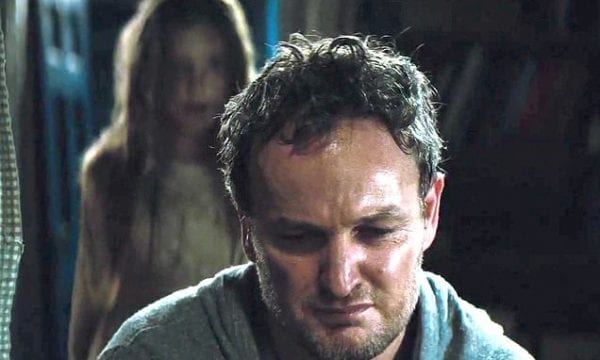
Image result for pet sematary

Ellie (Jete Laurence) and Louis (Jason Clarke)

Kolsh and Widmyer also succeeded in showing the impact of grief on the characters. By the film’s last 30 minutes, Louis is so tormented by all of the death that he becomes red-eyed and ragged. Rachel, meanwhile, is haunted by memories of her sister Zelda (Alyssa Brooke Levin), who died young from spinal meningitis. Zelda plays as large of a role in this film as she does in the novel, and she’s a terrifying presence, heard in the walls of the new house, a manifestation of Rachel’s trauma.

The second major change comes within the final minutes, and it’s a drastic departure from the novel and Lambert’s adaption. It punctuates the film with an utterly glum tone, while King’s final pages are more ambiguous. It’s likely that this ending will be polarizing for fans of the original film and King’s book, but the ending makes Kolsh and Widmyer’s film distinct and is consistent with the overall atmosphere, performances, and story of their remake.

Overall, Pet Semetary is a layered meditation on death and grief. With the huge resurgence of all things Stephen King, it’s likely that the film will do well at the box office, but its main flaw is that it doesn’t have many, if any, lighter moments, and it will undoubtedly be compared to Lambert’s 1989 film, which has amassed a cult following in the horror community over the years. Still, Kolsh and Widmyer managed to maintain the core of King’s novel, while making some changes  that are well-suited for the film that they wanted to make.


Retro Review: Pet Semetary (1989)

With the release of the new Pet Semetary about to drop, now is a good time to revisit director Mary Lambert’s 1989 adaptation of one of Stephen King’s most well-known novels. Since King wrote the screenplay and oversaw production, the original Pet Semetary doesn’t deviate much from the novel, and after 30 years, much of it still holds up well, specifically the gore and special effects. The novel’s key themes of grief and loss are handled well by Lambert, especially a child’s questioning of death’s process and the cycle of life.

Pet Semetary follows the story of a young doctor, Louis Creed (Dale Midkiff), who moves with his wife Rachel (Denise Crosby) and their children, Gage (Mike Hughes) and Ellie (Blaze Berdahl), to a small, rural town in Maine. Their new home is only feet from a busy highway, where semis roar down the road at all hours of the day. Soon after the move, the family befriends a white-haired, wizened Jud Crandall (Fred Gwynne), who shows Louis a “Pet Semetary” near their property. There are crocked wooden crosses in memorial to cats, dogs, and even a goldfish. When the Creed family’s cherished tomcat Church is killed, Louis takes Jud’s advice and buries the cat in an ancient mystical burial ground, imbued with reanimating powers. The cat doesn’t come back the same. It hisses, growls, and has glaring yellow eyes (one of the few special effects that hasn’t aged well). When Gage is killed by a semi, a grief-stricken Louis buries him in the pet semetary, and of course, he doesn’t come back the same. The scalpel-wielding, sneering Gage is one of the scariest parts of the film, especially his wicked laughter and dialogue, “Will you play with me, Daddy?” Furthermore, Louis’ realization that he’ll have to confront and kill his son and go through the grieving process all over again is a gut-wrenching scene.

Gage.jpg

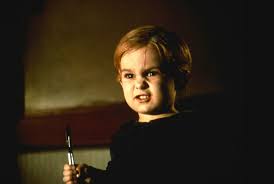
A re-animated Gage (Mike Hughes) out for blood

Lambert’s film has two key strengths: its handling of grief and its special effects. The most powerful scenes, years later, are how a family deals with heavy loss, first with Church and then with Gage. Early into the film, Ellie starts to question what, exactly, it means to die. She tells her parents that Church will eventually die before lashing out at the notion that “God” would ever take her pet from her, stating that Church isn’t God’s pet to take. In the introduction to the novel, King mentions that this dialogue was taken word for word after a conversation he had with one of his children about death. While some of the film’s dialogue and acting is  a bit hammy years later, Ellie’s questioning of death  is surprisingly powerful and realistic. Dealing with one loss after another, it’s not surprising that Louis takes Jud’s advice and buries the cat and then his son. He does what he feels is right to lessen his family’s pain.

The special effects work of Dave and Lance Anderson and John Blake enhance the film’s most terrifying scenes,  especially the moment when jogger turned spiritual guide Victor Pascow (Brad Greenquist) is shown with half of his brain visible and leaking blood, or the few scenes when Rachel’s ghostly sister, Zelda (Andrew Hubatsek), returns from the dead to torment her. The make-up and effects of Pascow and Zelda are one of the film’s real highlights 30 years later. No CGI needed to make these characters ghoulish and memorable.

pascow.jpg

Victor Pascow (Brad Greenquist)

Overall, Lambert’s Pet Semetary is one off the better adaptations of King’s work, especially in how it deals with the novel’s key themes- death and grief. While some of the dialogue and acting is a bit dated (Gwynn’s take on Jud irked me, for instance), the practical effects have aged surprisingly well.

The recent King renaissance will continue this spring when the latest take on Pet Semetary is released, directed by Kevin Kolsch and Dennis Widmyer. Unlike Lambert’s film, King didn’t write the screenplay or oversee production, so it will be interesting to see how the new film deviates from the novel. The trailer already spoiled one major change- it’s Ellie who dies and is brought back, not Gage. Why the trailer would spoil such a major change is anyone’s guess, but that alone may create a different take on King’s novel.

The trailer for the new Pet Semetary:


With that said, the new film has earned positive reviews from Blood-Disgusting and other horror sites after its screening at SxSw in March.  King also tweeted a few months ago, “This is a scary movie. Be warned.” So the new film has his seal of approval. It hits  theaters on April 5.


Review: Us (2019)

Anyone who was afraid that Jordan Peele would have a sophomore slump after the massive success of Get Out (2017) need not worry because Us  delivers as a bold, nuanced horror movie, one that strikes some comedic beats but is dark in its premise, social commentary, and kills. The core cast pulls off stellar performances, especially playing their eerie, grinning doppelgängers dubbed “the tethered.” With Us, Peele has invented  a new kind of monster, similar to the way that George A. Romero created the modern zombie in Night of the Living Dead. Like Romero’s zombies, the tethered are literally a reflection of us, or as Lupita Nyong’o’s doppelgänger Red says, the tethered are “Americans,” a reflection of what it would be like to fall a step or two down the social ladder, a lower-class that often exists beneath the surface, ignored or mocked.

Us primarily centers around Adelaide Wilson’s story (Nyong’o), who, as a little girl, wandered away from her parents at the Santa Cruz boardwalk and drifted into the fun house, where she encountered her doppelgänger for the first time. During the first 15 minutes, we don’t know exactly what Adelaide encountered in the fun house, but the story slowly unfolds as the movie progresses, until we have a clear understanding of why Adelaide is reluctant to spend another summer at the beach with her family. In the opening sequence and during the flashbacks interspersed throughout the movie, Madison Curry gives a strong performance as a young Adelaide, who, like the rest of the cast, has to also play the role of her double. As young Adelaide slow-walks and eventually enters the shadowy fun house, Peele makes it clear that this is going to be a straight forward horror movie. The film immediately acknowledges past genre movies. In the opening scene, young Adelaide is seated before a TV, watching a Hands for America ad, which has major significance to both the social commentary and the story of the tethered. The TV is bookended by VHS tapes of A Nightmare on Elm Street and C.H.U.D., which makes more sense once the story of the tethered is revealed. Some of the boardwalk scenes are a nice nod to The Lost Boys.

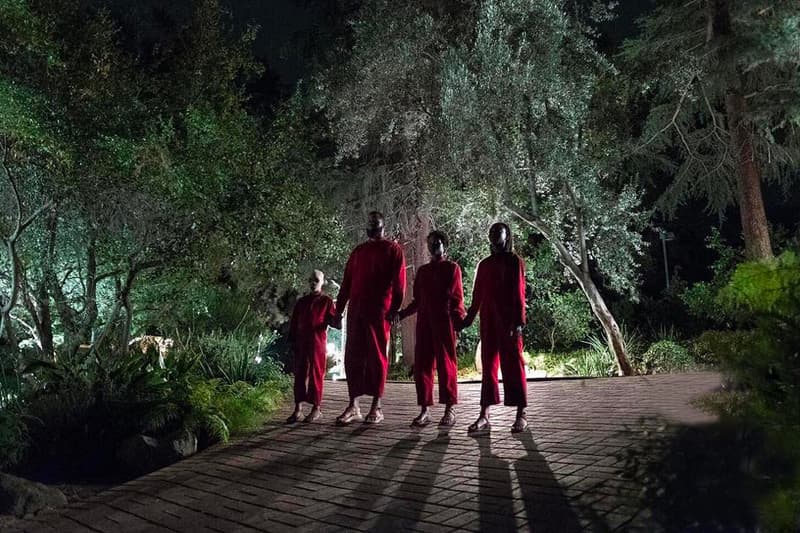
Once the first flashback concludes, the film shifts to the present, and Peele takes his time building up the family of four, making us generally care about them, from the sibling dynamics of Zora (Shahadi Wright Joseph) and Jason (Evan Alex), to the very likeable and funny family patriarch, Gabe (Winston Duke), to the rattled and wide-eyed matriarch, Adelaide. This is a family that we root for, and when their doppelgängers show up for the first time, lurking and holding hands just feet from the front door, we fear for the family’s safety and hope that they’ll make it out alive. The home invasion scene is one of the best since Funny Games and The Strangers, two films that Peele had Nyong’o watch to prepare for the role.

Related image

The Tethered

Initially, we don’t know much about the tethered, and the only one who really has any dialogue is Red, who gives a monologue about “the shadow” and “the girl,” and how the girl grew up to have a perfect, middle-class life, complete with a smart husband and two adorable children. When asked what or who they are, Red simply responds, “We’re Americans.” Through the creation of the tethered, Peele offers his social commentary, one a bit broader than Get Out. The tethered are indeed us, the Americans that we too often ignore, hence why they live underground, a failed mind control experiment, until they decide rise to the surface and launch a bloody revolution, wielding golden scissors and lining the streets of the beach town with the bodies of the upper-middle class, both black and white. They’re also an indictment of the Hands Across America initiative, which was a call for all Americans to join hands on a single day in 1986 to raise money for homelessness. Yet, at the same time, the country was facing an AIDS crisis and President Reagan was busy blaming the poor for their situation. He  said in May of that year, “I don’t believe that there is anyone that is going hungry in America simply by reason of denial or lack of ability to feed them… it is by people not knowing where or how to get this help.”

More than Get Out, Us is a film very much steeped in class issues. Gabe buys a sputtering tug boat to impress the family’s white, snobby friends, Kitty  (Elisabeth Moss) and Josh Tyler (Tim Heidicker). At one point, Gabe says that Josh bought a new car just to piss him off. Furthermore, though the Wilsons are doing just fine, they’re not as wealthy as the Tylers. Kitty drones on about her latest plastic surgeries and how she could have made it as a big movie star, if not for having kids. Yet, the Tylers also have doubles, a sign that they too can slip a few social rungs and everything they have can disappear if life takes a sudden turn for the worse. Moss is especially effective in the role of her double, tracing her lips with lipstick, grinning into a mirror, and running the blade of her scissors along her cheek. She truly embodies the inversion of what Kitty considers to be beautiful.

Image result for lupita us

Lupita Nyong’o as Adelaide

But the real highlight of Us is Nyong’o’s performance as both Red, the leader of the tethered revolution, and Adelaide, who keeps her family close and grows more primal as the film progresses, to the point that her white outfit and hands are eventually blood-soaked. As she showed in her break-out performance as Patsey in 12 Years a Slave, Nyung’o is stellar at playing a demanding, emotional role. From her facial expressions to her guttural wails when she has to kill any of the tethered, Nyong’o’s performance is a must-see, especially the final show-down between Adelaide and Red, which is a beautiful, visceral scene.

Peele made it clear in a tweet days before the film’s release that Us is a horror film. Perhaps he doesn’t want to rehash the nonsensical “elevated horror” horror debate that films like Get Out sparked. With Us, he fully embraces his love for the genre. From the multiple references to other horror movies, to the nerve-rattling score by Michael Abels, who he also worked with for Get Out, Us is a film very much aware of the genre in which its operating and how to keep an audience on the edge of its seat. It’s an ambitious film, one that shows why Peele should continue working in the horror genre. He knows that horror has always been a great vehicle to address deeper issues, and with Us, he makes a bold indictment of 1980s America and current class divisions.


Review: The Hole in the Ground (2019)

The last few years have seen a resurgence in horror films that deal with motherhood, including The Babadook (2014), Hereditary (2018), The Prodigy (2019), and most recently, A24 Studio’s Irish film The Hole in the Ground, which generally works with familiar tropes but includes stellar performances from its leads, masterful cinematography, and references to classic horror/sci-fi films, most notably Invasion of the Body Snatchers. It’s a slow-creep monster movie that centers around a woman trying to keep it together, while raising her son.

Directed by Lee Cronin, the film contains a simple but efficient plot: Sarah O’Neill (Seana Kerslake) tries to escape her broken past and moves with her son,  Chris (Jame Quinn Markey), from the city to the countryside. Not much is stated about Sarah’s past, other than she used to teach and her ex gave her a cut on her forehead. We never see her ex, and no flashbacks are presented to flesh out the backstory. We just know, from the outset, that Sarah is trying to move on with her life. Yet, her decision to move to a drastically different location triggers the start of the narrative and angers Chris, who tells his mom that she took him away from his father.

hole-ground

Sarah played by Seana Kerslake

The film is a slow-burn, one heavy on atmosphere,  especially dim lighting, gray tones, and the engulfing forest surrounding their new home. One of the film’s first scares occurs when a creepy elderly neighbor played by Kati Outinen tells Sarah  that Chris isn’t her son. Not long after that, Chris  disappears one night and then reappears in the house after Sarah searched everywhere for him. Yet, his appearance and actions seem different.  His mother presses her ear to his bedroom door and hears him growling and making other animal-like noises. Eventually, she becomes convinced that he isn’t her son.

In the last act, Sarah approaches the edge of the forest and the hole in the ground, where she encounters strange, alien-like creatures. The premise that they can take over humans and use them as a host is a nice call-back to Invasion of the Body Snatchers, while the creatures themselves and the shots of Sarah crawling under ground in tight spaces resemble The Descent, which has Earth-based, cave-dwelling monsters that aren’t too dissimilar from what’s presented in The Hole in the Ground.

The image of a hole occurs throughout the film, through a coffee mug, water draining in a sink, and eventually the gaping hole in the forest. There are a lot of ways to interpret this image. Perhaps Sarah feels that she’s going to be consumed and swallowed by her shattered past, the abuse of her last relationship, and the struggles of raising a child on her own. Moving on from the past also altered and strained her relationship with her son. It caused them to see each other differently. The forest and hole loom larger as the film progresses and the relationship between the mother and son grows more fractious.

The Hole in the Ground  is a solid horror film that takes its time with its scares, using its all-consuming atmosphere to build dread and illustrate Sarah’s struggles and insecurities. No doubt horror fans will appreciate the nods to other staples in the genre. More importantly, the film explores the difficulties a single mom faces moving on from an abusive relationship and upending her son’s life, though necessary. The Hole in the Ground doesn’t do anything that different with the usual tropes, but it’s one of the year’s most solid horror entries so far, buoyed by strong performances and the cinematography.

The film is currently available to rent and stream on Amazon Prime. Lionsgate plans to release it on DVD in late April.


She Kills Is the Horror Podcast You Should Be Listening To

Shudder is quickly becoming a must-have streaming service for horror fans. For one, they keep acquiring exclusive rights to some of the most interesting and innovative films. Last year, they featured Mandy, Terrified, and Revenge, films that made several year-end, best-of lists. This year, they’re expanding their content in new ways to highlight the history of horror. This started in February with the release of Horror Noire: A History of Black Horror and Eli Roth’s 7-part series “A History of Horror,” which first aired on AMC last fall. Both of these series are well-worth the watch for the casual horror fan or horror scholars.

SheKills.png

The latest entry into their horror history content is the 10-episode podcast entitled “She Kills,” hosted by horror icon Adrienne Barbeau (The Fog, Escape from New York, Creepshow). “She Kills” analyzes the genre through a female lens and looks at several different tropes through the perspective of gender. Some topics covered include the Final Girl, witches, technology and horror, religious horror,  and rape/revenge. Each episode includes a rotating cast of guests, some of whom include Rotten Tomatoes senior editor and film critic Grae Drake, actress Jennifer Tilly (Bride of Chucky), actress Alex Essoe (Starry Eyes), Blumhouse.com editor-in-chief and professor Rebekah McKendry, actress Barbara Crampton (Re-Animator, You’re Next), among others. Generally, the content is a mix of historical perspective and the political. For example, one episode compares the gas-lighting that Toni Collette’s character endures in Hereditary at the hands of men with the current state of politics in the U.S, but there are several lighter moments, too.  Jennifer Tilly chats about horror fandom and Bride of Chucky artwork that she enjoys seeing on Instagram.

Some other films analyzed include Rosemary’s Baby, Halloween, Revenge, and The Shining Most importantly, what makes the podcast unique is that it’s totally female run, from the host, to the guests, to the content.  In one episode, the guests predict that in the age of Trump, the Kavanaugh hearings, and the constant threat to women’s rights, there is going to be more female-centered horror films. Kudos to Shudder for realizing that and for releasing an all-female horror podcast.

The podcast is available on iTunes, Shudder, Player FM, and other podcast-hosting sites.


Horror Noire: The First Must-See Horror Feature of 2019

This month, the streaming service Shudder released its exclusive documentary, Horror Noire: A History of Black Horror, based on the book Horror Noire: Blacks in American Horror Films from the 1890s to Present by Robin R. Means Coleman. For any horror fan or film fan in general, this doc is a must-see. Featuring interviews with black directors, actors, actresses, and scholars, the film traces the history of black representation in horror (and film in general), beginning with 1915’s Birth of the Nation to 2017’s Get Out. In an hour and a half, the doc analyzes where we’ve been and where we’re going.

Horror-Noire-Header-3_1050_591_81_s_c1.jpg

The film covers over 100 years and draws attention to certain time periods and eras to highlight racist stereotypes and also show the evolution of black horror. The doc begins with D.W. Griffith’s Birth of a Nation and spends the necessary amount of time analyzing the impact that it had on public consciousness (President Woodrow Wilson screened it in the White House and praised it) and the racist stereotypes that it fostered, namely that black men were a threat to white women. The film’s positive depiction of the KKK helped contribute to the resurgence of the Klan during the Jim Crow era. The doc then looks at other early Hollywood films, including King Kong, and their presentation of the monster/Other, drawling parallels, for instance, between Kong’s looks and negative depictions of black Americans in advertising and print. It also looks at the trope of the “magical negro” and faithful servant.

From there, the doc points to Spencer Coleman, known for creating films with all-black casts for black audiences, as writing the first ever horror film with an all-black cast, 1940’s Son of Ingagi. Spencer went on to create other horror/fantasy films, but he’s a name relatively unknown in the horror community today. Horror Noire brings much-deserved attention to his historic role in the genre.

From there, the doc shifts to films of the 1960s and 1970s, including George A. Romero’s Night of the Living Dead, which featured a black protagonist Ben (Duane Jones), the cerebral vampire film Ganja and Hess, also starring Jones, and Blacula, a smart contrast to the Blaxploitation films of the 1970s. Then, the doc points out the regression that occurred in the 1980s, when black actors and actresses were  killed off early, especially in slashers, or only served the narrative of the white protagonists.

The doc ends with sufficient attention given to the 1990s and the 2000s, with the success of Candyman, Tales from the Hood, and most recently,  Get Out. Throughout the run-time, the doc boasts impressive interviews with a number of black filmmakers and actors/actresses, including Tony Todd (Candyman), Jordan Peele (writer/director of Get Out and Us), Rusty Cundieff (director of Tales from the Hood), William Crain (director of Blacula), Rachel True (The Craft), among many others.

Horror Noir is the first must-watch horror entry of 2019. It covers over 100 years of film history and underscores the various racial stereotypes that have existed during that time period. Yet, the film also shows where the horror genre is going and how it will continue to evolve and become more inclusive. Horror Noir also gives much-needed attention to films that have been forgotten over the years, including Son of Ingagi, Ganja and Hess, and Blacula, thus creating new audiences for those films.


Review: Suspiria (2018)

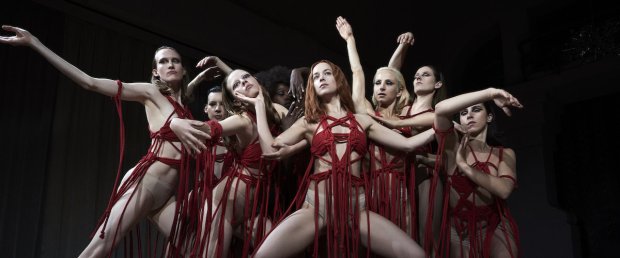
Recently, Italian horror director Dario Argento said that Luca Guadagnino’s remake of Suspiria “betrayed the spirit of the original.” Anyone who goes into the two and a half hour film expecting a shot by shot remake of the 1977 giallo masterpiece is going to be disappointed. They are vastly different films, similar in name only and some key plot points. Guadagnino’s “remake” should be viewed as a separate entity, and if viewers are willing to do that, they will find much to enjoy.

hero_suspiria-image-2018.jpg

Like the original, Guadagnino’s film focuses on a prestigious German dance studio run by witches, specifically three mothers who oversee a coven and are interested in a young dancer named Susie (Dakota Johnson), who possesses uncanny skills and talent. Since she was a little girl, raised in a religious household in Ohio, Susie dreamed of attending the school. Susie eventually becomes the favorite pupil of the mysterious Madame Blanc (Tilda Swinton), the school’s central choreographer who commands every frame she’s in, whether  chain-smoking and instructing the young dancers or using Susie’s body as a vessel to punish any young dancer who challenges her authority.


The most harrowing scene occurs about 30 minutes into the film, when Susie showcases her talent, hungry to earn the lead role in a performance. As she twists, crawls, and stomps, another dancer, trapped in a mirrored studio space bellow, is yanked violently around the room, her body twisted and contorted in excruciating ways. Guadagnino seamlessly cuts between both scenes, as the dancers build to their crescendos. For any horror fan, this footage is a must-see.

Following that mesmerizing scene, Guadagnino takes his time building the setting and exploring every crevice and shadowy hallway of the dance studio. This is another area where his film differs greatly from the original. Argento’s body of work, and giallos in general, are known for their popping technicolor and gore. Guadgnino’s tones are bleak, and even the outdoor shots  feature pounding rain and muted gray tones. The historical backdrop and the lasting repercussions of WWII loom over the film, especially through news reports about social and political upheaval. This is a Germany of the 1970s that has not fully reconciled or confronted its past.  Susie’s red pony tail is the only splash of brightness throughout much of the film. This bleakness is underscored by Thom Yorke’s haunting score, which enhances the mystery and the cackles and whispers that echo in the hallways.

Some of the film’s middle acts sag, more specifically the story of Dr. Josef Klemperer (also played by Swinton under a lot of make-up ), who doesn’t bring much to the film. Yes, he helps jumpstart the narrative and Susie’s story, and he works with student Sara (Mia Goth) to uncover what the witches are up to, but the film feels overstuffed at times. However, the mind-blowing sixth act, which features an orgy of red tones and blood, is well-worth the wait and will satiate any horror fan.

Overall, Suspiria is a grim meditation, a film where men are pretty much useless and female energy reigns supreme. The voodoo doll dance scene, the interactions between Blanc and Susie, and the blood-drenched conclusion, elevate the film, but patience during the middle acts is needed to reach the crescendo.


A Look Back at Xavier Gens’ Frontier(s)

It’s been over a decade since the emergence and popularity of the French Extremity horror films.  Today, films like High Tension, Martyrs, and Inside are generally considered classics of the 21st Century by horror fans, and the directors, especially Alexandre Aja and Pascal Laugier, have gone on to have successful careers as  directors. When looking back on the last decade and the success of these films, there should be more attention given to Xavier Gens’ 2007 film Frontier(s), which accurately predicted and responded to the rise of right-wing populism in Europe.

The term the New French Extremity was first coined by Artforum critic James Quandt, and while it may be impossible to fully define the term or this particular style of cinema, film blogger Matt Smith once said that this wave of films does have two common themes: home invasion and/or fear of the Other.

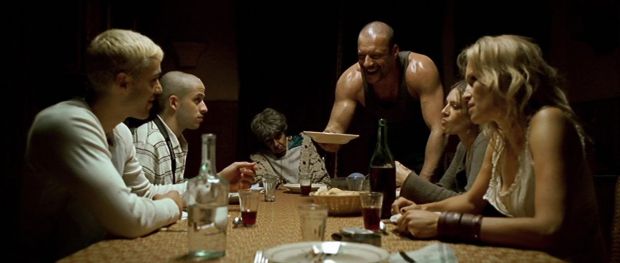
The second theme is especially applicable to Frontier(s), which opens in Paris, torn apart by riots due to the election of a far-right candidate to the presidency. The rest of the film focuses on a group of four Muslim teens who plan to run away from Paris to Amsterdam with a bag full of robbed money.  Two of them, Tom (David Saracino) and Farid (Chems Dahmani), decide to stop in a b & b, where they encounter neo-Nazis/cannibals. Eventually, the remaining teens, Alex (Aurelien Wiik) and Yasmine (Karina Testa), go looking for their missing friends at the b & b, and from there, things don’t go well. More specifically, the cannibal family’s patriarch and former SS officer, Le Von Geisler, wants to make Yasmine a mother for the new Aryan race.

Like other French Extremity films, Frontier(s) is seeped in heavy gore and violence, similar to some of the American horror films of the early 2000s, such as Saw and Hostel. The cannibal Nazis, meanwhile, are Gens’ nod to The Texas Chainsaw Massacre and grindhouse films of the 1970s, especially some of the dinner scenes.

Yet, looking back at the film over a decade later, it’s the political backdrop that stands out. In an interview with the website Horror Pilot, Gems described his influence for the film, stating, “I started to think about the story in 2002 during the presidential elections in France. When the extreme right arrive in the second turn, I got really scared. And that gave me the idea of the film.”

This fear is obvious in the opening minutes, which features cops dressed in riot gear, protestors flooding the streets of Paris, and sheer chaos of tear gas and bullets that forces the group of four Muslim friends to flee the country. The sadistic cannibals are a reminder of how the old ghosts and ideas of white supremacy still linger, to the point that a living  Nazi war criminal is the one who orchestrates the events, including the severe torture that occurs in underground chambers. The film features other torture too, including a scene in which the family feeds pork to Tom and Farid, suspecting that they are Muslim.

Frontiers1.jpg

Tom (David Saracino) and Farid (Chems Dahmani) sitting down for dinner with the Nazi cannibals

When the film was released, the reviews were mixed. Writing for Slant Magazine, Ed Gonzalez had this to say:

The film unspools as a seizure-inducing succession of nonstop screaming, references to horror-film freakouts old and new, and slick market-tested shocks, beginning with a protest rally in the wake of the election of a French right-wing nut and ending with Karina Testa’s Last Girl Standing “escaping” from an inn where a deranged posse of cannibalistic neo-Nazis is trying to renew the blood of their family. It sounds enticing, but Gens’s engagement with the contemporary racial discord currently tearing at France’s bowels isn’t sincere but rather a transparent ploy to give the film a sense of gravitas.

Looking back, the political turmoil evident in Gems’ film, especially the opening sequence, does seem sincere. As he said in the interview with Horror Pilot, he was inspired to create the film after the election results of 2002 and the rise of the far-right. Beyond that, the film’s opening predicted the turmoil that would consume Europe over the next several years and the rise of the AdF Party in Germany, Marine Le Pen’s National Front Party in France, and the authoritarian regimes that have swept power in Poland, Hungary, and most recently, Italy. The fear of the Other by white Europeans, underscored to the extreme by the cannibalistic neo-Nazis, foreshadowed the immigration crisis that would consume the EU for the next decade.

The power that Le Von Geisler  wields over the family is also built on abuse towards women. Two of the family’s members, Gilberte (Estelle Lefebure) and Klaudia (Amelie Daure), are forced to offer sex to any brown-skinned newcomers that stumble upon their b & b. This is a way to convince them to stay, and early in the film, the friends discover several passports belonging to others that were kidnapped, tortured, and cooked. Yasmina, meanwhile, is only spared when it’s discovered she’s pregnant and the Nazis find a use for her in their desire to create the master race. It should be noted that Yasmina is one of the strongest Final Girls in any of the French Extremity films, enduring countless waves of torture, including watching her friends and boyfriend die, and yet enduring and resisting such a brutal form of patriarchy.

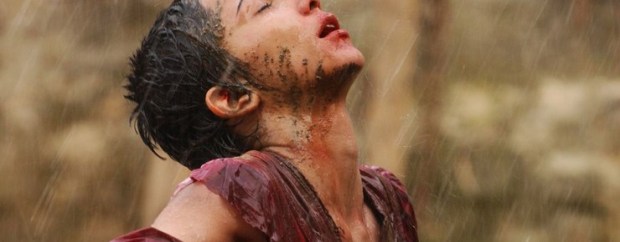
yasmina2.jpg

Frontier(s) feels eerily relevant a decade after its release. From the opening scenes of unrest in Europe, to the female protagonist’s survival against a relentless patriarchy, the film is one of the real standouts of the French Extremity films from the last decade. It was speaking to issues that would only become more prevalent in the years following its release.


No Oscar Nomination for Toni Collette/The Horror Genre?

2018 was another strong year for horror. There were several indie films that made waves, such as Mandy, Terrified, and Revenge, but two films specifically broke into the mainstream, generated buzz and conversation, and were deserving of the Academy’s attention.  I am talking about A Quiet Place and Hereditary. Both films were snubbed, though A Quiet Place did earn a nomination for Sound Editing. That said, I’m not surprised that the horror genre has once again been shut out of the awards season, even if the genre has been earning more and more attention over the last five years or so. Last year, I argued that Get Out deserved Oscar nominations, and it did receive a few, including Best Picture. Jordan Peele, meanwhile, won an Oscar for the screenplay. When writing about Get Out, I noted that very, very few horror films have ever won an Oscar. The Silence of the Lambs won Best Picture in 1992. The Exorcist was nominated for several Oscars, but only scored two for Best Adapted Screenplay and Best Sound Mixing.

A Quiet Place is at least deserving of a nomination for Best Original Screenplay, which was penned by John Krasinski. The film is one of the most innovative horror movies of the last decade, a metaphor on grief and losing a child. While the film may not be the first to use sound, or a lack of sound, so effectively in the genre (think Hush or Don’t Breathe), it does so in a way that makes us really feel for the family, especially after the tragedy that occurs within the first fifteen minutes. Additionally, the film contains strong performances by Krasinski and Emily Blunt, who do everything they can as parents to keep their children safe and alive. We generally want them to survive, especially after they endure one calamity after another.

collette

(Toni Collette as Annie in Hereditary)

Hereditary is a much more difficult film to watch. It begins with a funeral for the family’s matriarch, and within the first half an hour, it takes a sudden twist with the loss of another major character. Yet, it’s one of the strongest portrayals of grief that I’ve ever seen on film, let alone the horror genre. Furthermore, Toni Collette’s performance as Annie is never-jangling. Her facial expressions alone are powerful and unnerving. She is a mother who can’t take anymore loss. Additionally, I think the film should have received nominations for Best Director (Ari Aster), Best Original Screenplay, and perhaps, maybe even Best Picture. Yet, it was totally shut out…

So, after giving a single Oscar to Jordan Peele last year, which was well-deserved, it looks like the Academy is back to ignoring the horror genre. Meanwhile, fans can continue enjoying the state of horror right now because there’s a lot to be excited about, even if the Academy doesn’t think so. Horror is having a moment.

What do you think about the Oscar nominations? Were A Quiet Place and Hereditary deserving of the Academy’s attention? Feel free to let me know what you think.

List of Oscar nominees.