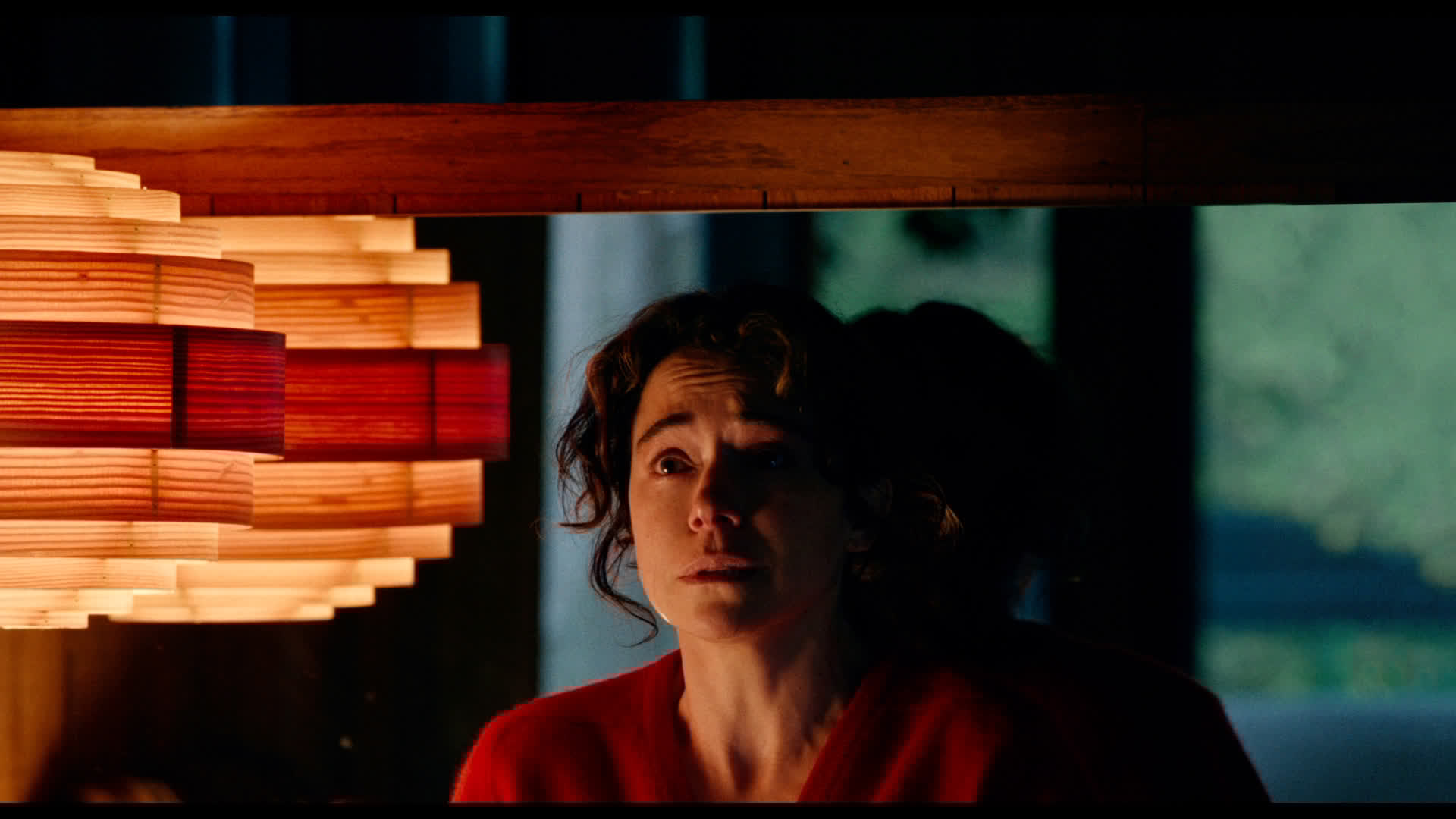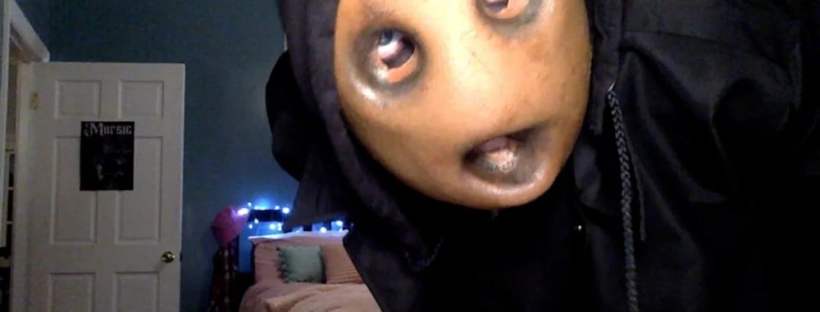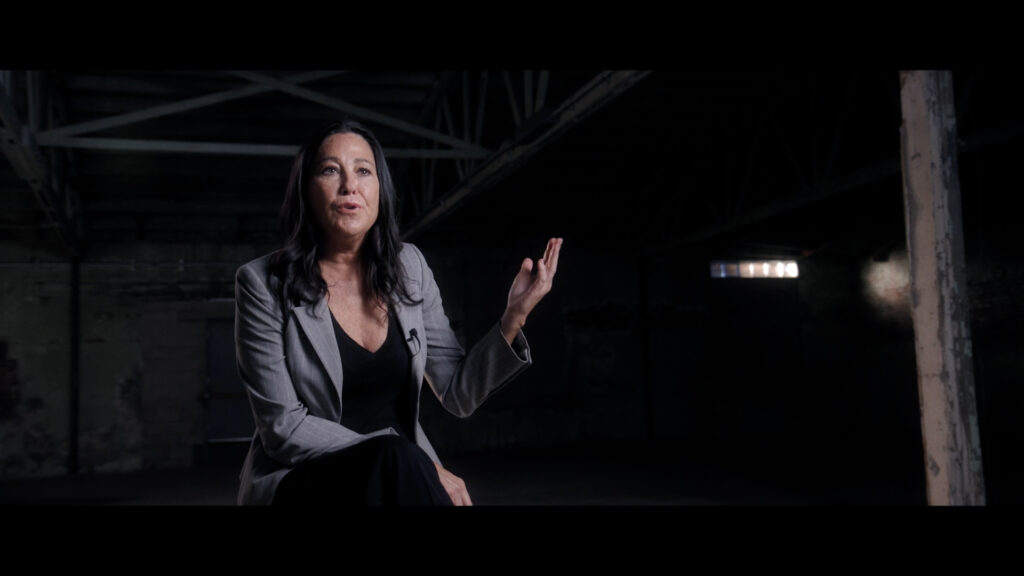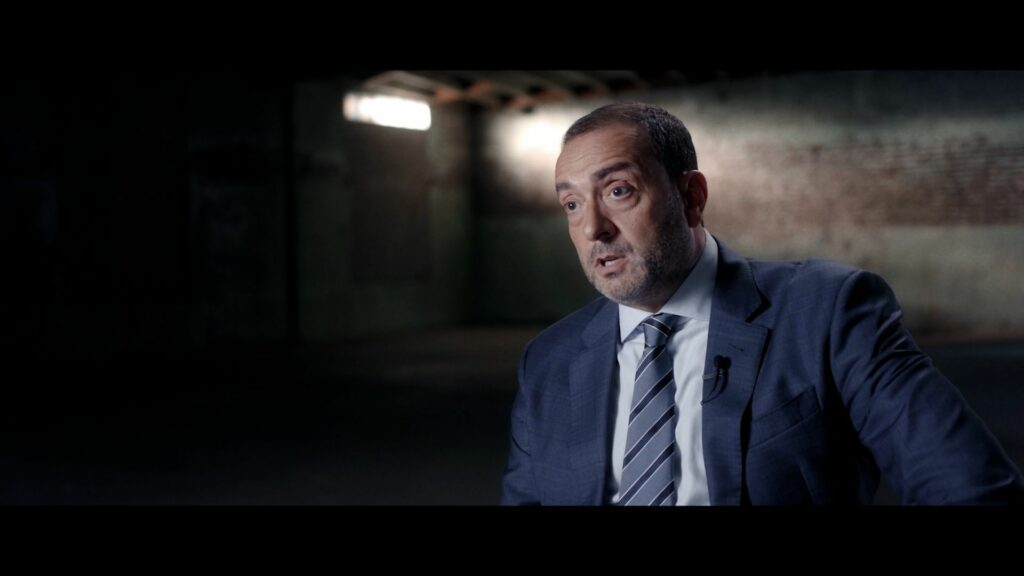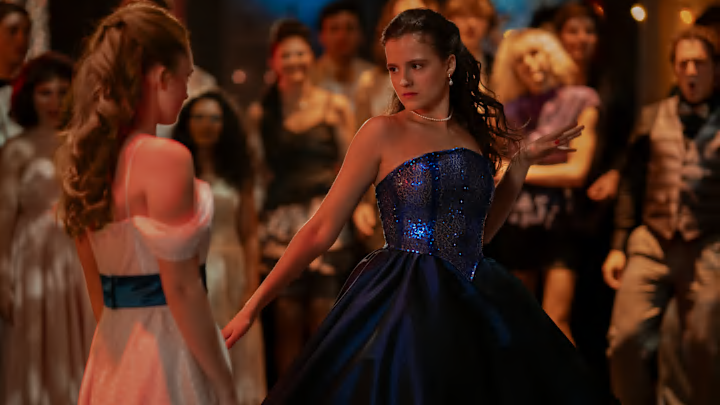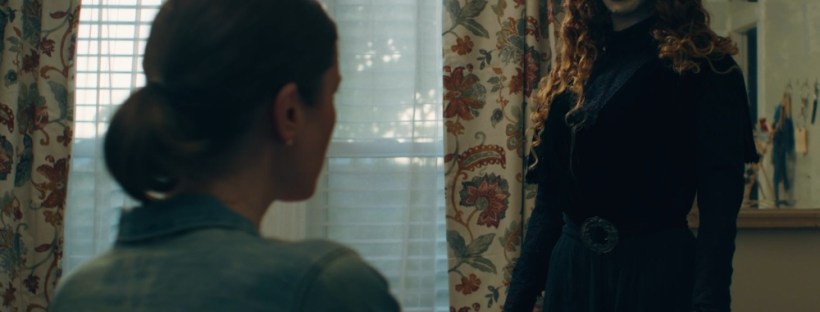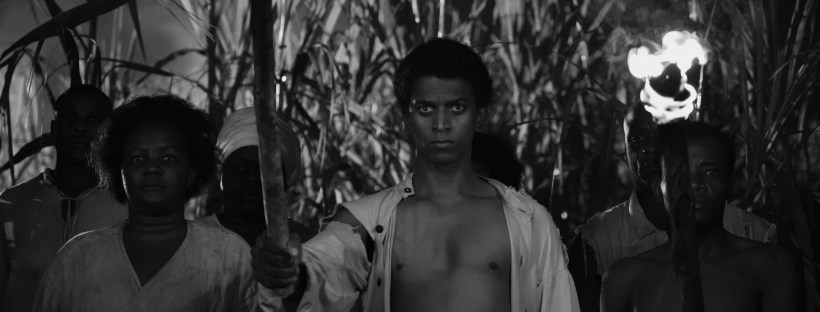
A production still from the found footage film Man Finds Tape.

Man Finds Tape: An Intriguing Found Footage Nightmare (Review)

Something sinister is afoot in the small town of Larkin, Texas, and popular YouTuber Lucas Page (William Magnunson) is determined to unravel the eerie mystery. That’s the general premise of co-directors/writers Paul Gandersman and Peter S. Hall’s feature debut Man Finds Tape, a film that combines found footage, mockumentary, and even cosmic horror. For a first film, the directors crafted an unsettling narrative, and though the movie is a bit uneven overall, it’s worth the ride.

Early in the film, we learn that Lucas found a tape with his name on it after cleaning out his parents’ home and old barn. It should be noted that his parents died of a mysterious illness, but prior to that, they passed on their love of filmmaking to Lucas and his sister, Lynn (Kelsey Pribilski). The tape shows a stranger entering Lucas’ childhood bedroom. It’s a hair-raising sequence that drives the rest of the film and leads to a much larger plot. Lucas wants to discover who the heck the stranger is, and he consistently enlists the help of Lynn to unravel the mystery, though she’s reluctant at first. The popularity of Lucas’ YouTube channel, Man Finds Tape, earned Lynn unwanted attention. Lucas made a name for himself by showing graphic videos.

For the most part, the film is shot in a mockumentary style, with Lynn handling most of the voiceovers and narration. The feature shifts to found footage and analog when Lucas or Lynn show off what they’ve filmed or what they’ve discovered on older tapes, like the recording of the stranger entering Lucas’ bedroom when he was a kid. These grainy videos avoid the shaky, handheld effects of other found footage movies, most notably The Blair Witch Project. The old tapes also show everything, and I mean everything. They don’t cut away. There’s one video Lucas constantly shows on his channel of a van running over and killing a person

A Production still from Man Finds Tape.

By the halfway point, Lucas and Lynn draw a connection between the stranger, played by
Brian Villalobos, and Reverand Endicott Carr (John Gholson). For years, the reverend hosted a public access, faith-based TV show. Lucas and Lynn’s parents filmed the show for a while. During parts of his taped sermons, viewers, including Lucas, nod off. The feature does a stellar job keeping the viewer in the dark until the last act about who’s responsible for what’s going on in the town. It’s not clear if the stranger or the reverend is part of some larger diabolical plan to control the town and infect its residents.

The constant shifts between mockumentary-style filmmaking and found footage can be a little bit jarring, and the film’s ultimate explanation doesn’t quite land, including a convoluted plot regarding Lucas’ ex-girlfriend, Wendy (Nell Kessler). That said, the final 30 minutes feature some impressive special effects and veer into cosmic horror territory. Meanwhile, Pribilski and Magnunson’s performances really sell the film, especially when the premise grows more and more bonkers. Pribilski’s character is not quite the believer that Magnunson’s Lucas is, and the dynamic between the two characters strikes some conflict early on.

The film also touches briefly on internet fame and YouTube influencers, especially within the first 20 minutes. The more Lucas’ channel grows in likes and subscribers, the harder it is on his mental health. It even has ramifications that affect Lynn, since it brings her unwanted notoriety, including people filming her on the street. That said, a lot more could have been done with this premise.

Man Finds Tape, though uneven at times, is still an impressive feature debut from Gandersman and Hall. If you like found footage or cosmic horror, this is definitely worth a watch. It’s a slow-burn mystery that eventually evolves into an otherworldly nightmare.

Man Finds Tape is now playing in limited theaters and available on VOD.

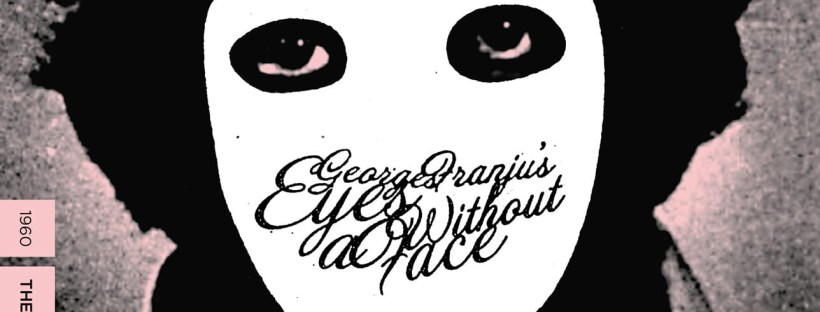
The Criterion Collection's cover art for Eyes Without a Face

Five Criterion Horror Recommendations (For the Barnes & Noble Sale)

For physical media collectors, July and November mark the Barnes & Noble Criterion Collection 50 percent off sale, the only time of the year, other than the one-day Criterion flash sales, when Criterion movies are actually affordable. The current sale lasts until December 7. In honor of the sale, I wanted to share five of my favorite horror movies within the collection.

Eyes Without a Face

This 1960 French film, directed by Georges Franju, is a masterclass in Gothic aesthetic and tone. A surgeon, played by Pierre Brasseur, kidnaps women to graft their faces onto his disfigured daughter, Christine, played by Edith Scob. This movie works so well in part because of Scob’s performance. She’s strangely mesmerizing and arresting on screen. She has some of the most expressive and haunting eyes that you’ll ever see in a film, and the thing is, she wears a blank mask through much of the film, but you’ll never forget her performance.

Additional Criterion suggestion: if you like Eyes Without a Face, also check out the black and white 1955 French mystery/horror movie Diabolique.

Night of the Living Dead

George A. Romero’s Night of the Living Dead was released on physical media a lot over the years, and it’s available to stream virtually everywhere. That said, Criterion’s recent 4K restoration looks damn good. There’s also a LOT of special features, including a radio interview with Duane Jones, who played the lead Ben. There aren’t many interviews of Jones talking about the film, so that alone makes this a must-have pick-up.

Additional Criterion suggestion: if you like Night of the Living Dead, check out 1962’s Carnival of Souls, one of the biggest influences on Romero’s film.

The Uninvited

Other than Robert Wise’s stellar The Haunting, The Uninvited is one of my favorite haunted house movies. The 1944 film follows a pair of siblings from London (Ray Milland and Ruth Hussey). They purchase an affordable cliff-top house in Cornwall, and well, soon discover the house was so affordable because it’s haunted. This film is incredibly atmospheric, eerie, and features an unforgettable score by Victor Young.

Additional Criterion suggestion: if you like The Uninvited, then check out The Innocents, which is an adaptation of Henry James’ famous ghost story “The Turn of the Screw.” Robert Eggers has frequently cited The Innocents as one of his biggest visual influences.

Cure

Few movies have crawled under my skin as much as the Japanese film Cure. Directed by Kiyoshi Kurosawa, who would direct the equally eerie Pulse just a few years later, the movie follows detective Takabe (Koji Yakusho) as he tracks a series of identical murders, committed under similar uncanny circumstances. However, nothing seems to connect the murders, despite their commonality. This is a deeply unsettling and philosophical movie about the nature of evil itself. This, along with some of Kurosawa’s other movies, are absolute must-sees.

Additional Criterion suggestion: It was just announced that Kurosawa’s latest movie, Cloud, will be released to the Criterion Collection in February. You can read my review of the film from this year’s Overlook Film Festival here.

Haxan

This silent film is important to the history of horror generally. It’s essentially a history of witchcraft and has some utterly striking visuals, including witches lining up to kiss Satan’s booty. The Criterion edition is loaded with special features, including a reedited 1968 version narrated by Beat author William S. Burroughs. Put this one on and get lost in the hypnotic visuals.

Additional Criterion suggestions: if you dig early horror, then make sure to also check out Cat People, Freaks, Vampyr, and I Walked with a Zombie, all released within the last few years. Like Haxan, these are all must-watches.

And yes, I know, I know that I didn’t include any of David Lynch’s films on this list. Almost his entire catalogue is now in the Criterion Collection, but here’s the thing, how do you pick just ONE Lynch movie to include on such a list? His movies also combine a lot of genres, including neo-film noir, drama, dark comedy, and yes, horror. So that’s why I didn’t include his work on the list, but Eraserhead, Lost Highway, Twin Peaks: Fire Walk with Me, Blue Velvet, Mulholland Drive, and Inland Empire are now all Criterion releases, many recently remastered in 4K, and they’re all horror adjacent. If you’re looking for a good place to start with Lynch, I recommend Mulholland Drive or Blue Velvet.

I also didn’t include anything from David Cronenberg because most of his films are in the collection, and I can’t pick just one. I recommend Videodrome and Scanners as starting points. Unfortunately, The Fly is not in the collection.

The Barnes & Noble Criterion sale runs until December 7.

A production still from the movie Keeper

Keeper Plays Out as a Creepy, but Flawed Dark Fairytale (Review)

Osgood Perkins has been on a real winning streak lately, with the massive success of Longlegs and The Monkey. His multi-picture deal with NEON has paid off so far. The director’s latest, Keeper, contains some of the most chilling imagery out of any horror film this year. Perkins spins a dark fairytale and a warning about toxic relationships. Yet, for all of the frightening imagery, the movie feels a bit too paper-thin, especially in its second half.

Keeper stars Tatiana Maslany as big city girl Liz and Rossif Sutherland as her boyfriend Malcolm. Hoping for a romantic weekend, Malcolm takes Liz to his remote cabin in the woods, and well, because this is a horror movie, things go horribly, horribly wrong. Before the horror kicks into overdrive, Perkins spends some time with Liz and Malcolm, and I’d argue the film’s first act may be its strongest. There’s unspoken tension between the two, though the source of it isn’t quite clear. Maybe it’s simply the different lifestyles and Liz’s love of big cities. Maybe she simply distrusts men. Regardless, she doesn’t fully embrace Malcolm, and this is most evident when they’re alone together, be it sipping wine over dinner or driving to the cabin. Something about the relationship feels off, though the source of Liz’s suspicion isn’t quite clear. Malcolm seems like a sweet enough guy.

The film enters typical Perkins territory once Malcolm’s reclusive cousin Darren (Birkett Turton) shows up, with an Eastern European girlfriend who Darren claims doesn’t speak English. This deepens Liz’s discomfort and rightfully so, especially when she warns Liz that the chocolate cake Malcolm purchased for her “tastes like shit.” Yet, once Darren and his latest arm candy leave, Liz devours the cake, even though she tells Malcolm that she hates chocolate.

At that point, the film gets really weird, even by Perkins’ standards. It feels like a fever dream into hell, as Liz grows increasingly paranoid and continually sees strange women in the background or out of the corner of her eye. Even worse, Malcolm, a doctor, claims he has to return to the city to suddenly see a patient, leaving Liz alone with her hallucinations and creepy cousin Darren next door.

A production still from the movie Keeper

By the film’s second half, Perkins barrages viewers with a series of unsettling imagery and a brooding atmosphere. There’s even a woman with multiple faces crawling around in the basement. Trust me, you don’t want her to remove that bag from her head. The film also edges dark fairytale territory once the source of the scares is explained, all involving Malcolm. This is where the film falters. The lore isn’t built up enough and some of it comes across as too absurd, even for a horror movie. The film works better when it’s more grounded in reality and when Perkins explores the growing tension between Liz and Malcolm. The film’s main weak point is the script, penned by Nick Lepard. There’s too much explanation suddenly crammed into the film’s second half, and a lot of it is given by one of Malcolm’s monologues.

All of that aside, the film does ramp up to quite a great ending. I’ll never be able to look at honey the same way again. Overall, Keeper isn’t quite as strong as Perkins’ last few films, or even his earlier work, like The Blackcoat’s Daughter, but it continues to prove he’s one of the most effective directors at creating nightmarish sequences and atmospheres that invoke dread. Keeper succeeds when it’s more based in reality and explores a strained relationship. Its second half is hampered by poor explanation and weaker writing.

Keeper is currently playing in theaters.

V/H/S Halloween Poster

Indie Horror Darling Sarah Nicklin Talks V/H/S Halloween Segment “Home Haunt”

Indie horror star Sarah Nicklin (Popeye the Slayer Man, The Black Mass) really wanted a role in the latest V/H/S installment, V/H/S Halloween, to the point she almost landed a smaller role in another segment. Eventually, directors Micheline Pitt-Norman and R.H. Norman cast her as Nancy, a mom whose husband and son bring home a cursed L.P. that transforms their home haunt into a murderous and blood-thirsty scene. “Home Haunt” closes out the anthology, and it’s one of the strongest segments, complete with 80s Halloween vibes and killer set designs.

Recently, for 1428 Elm, I interviewed Nicklin about her relationship with the horror genre and her part in V/H/S Halloween. You can read the full interview here. I included some of it below. V/H/S Halloween is currently streaming on Shudder.

How did you become involved with V/H/S Halloween?

Sarah Nicklin: The directors of my segment are Micheline Pitt-Norman and R.H. NormanI’ve been friends and fans of theirs for a long time. They did a short film a couple of years ago called Grummy that’s absolutely incredible. Besides loving them as people, I wanted to work with them.

They were selected as some of the directors for a segment. They said that they had in their script a role for a mom that I could potentially be a fit for. I was super excited. I also tried to hedge my bets a little. Just because they say they want you for something doesn’t mean it’s going to happen. The producers might want something specific or someone else. Things happen.

In this case, when they said they wanted me, it actually came through and worked out really well. I think that says everything about who they are as people. They’re very loyal and generous people. It also says a lot about the producing team of V/H/S. They trust the directors.

I did also audition for a different segment before I even realized it was V/H/S Halloween. On the audition notice, it just said the name of the segment. I did book a smaller role in a different segment. They treat each segment as their own movie. When I found out I had booked that first one, a couple weeks before “Home Haunt,” which was the last one to be filmed, I had to turn that one down before I had gotten the official offer for Nancy, which was really scary. As an actor, you never really want to turn down work. Luckly, it all came through the way it was meant to. I got to work in the role and segment I really wanted

You have an impressive list of horror movie credits. Other than the anthology format, what makes V/H/S Halloween different than your previous projects?

Sarah Nicklin: V/H/S is different because it has a big following. There are fans who really love these series of films, which I’ve learned since becoming part of it and going to conventions. There’s a good amount of pride and also pressure that comes with that to ensure you’re doing a good job, not that I didn’t want to do a good job on previous projects. It’s one of those things where you know there will be eyes on it. Other films I’ve done were very indie. They don’t have a name like Shudder behind them. You hope they’ll get picked up and be seen, whereas this one is coming out on Shudder no matter what. There was definitely some pressure that went into that.

I also think doing the found footage format is more unique, as opposed to other films, like Popeye, that are more standard. With found footage, even though you know where the camera is going, you have to be on all the time. The camera moves around so quickly and it can catch you when it’s not really meant to. It’s almost more like you’re doing a play and you forget about the camera. If the camera gets you, great. If not, you keep going. With other films, like Black Mass and Popeye, if you know you’re not on camera, you can dial it down a little bit. With this one, there wasn’t really an option to do that.

Your segment is about a family’s haunted house that comes to life and kills. What was it like walking through those haunted house rooms on set?

Sarah Nicklin: It was a dream, honestly. I’m a big fan of fantasy films. This felt like being in Labyrinth orThe Dark Crystal. I also felt like this really captured the essence of Halloween, but also that fantastical quality. There was a moment when I looked around and thought it was so cool and that it’s everything I ever wanted when I was little. It’s an incredible, magical set. I got to do a cool horror movie with people I really respect. That’s the dream. I loved every second of being there and working with the cast and crew. It felt so nostalgic, especially growing up in the 80s. It was a really special project for me in a lot of ways, especially to interact with those production designs.

I love the scene where your character takes an axe and then kills an executioner in one of the haunt rooms. What was it like filming that? Was it as fun as it looks?

Sarah Nicklin: It was very fun to do. I really like doing physical stuff, and any chance to fight monsters. is always great. All of that stuff was also very difficult, too. It’s very specific with found footage. With that sequence, they built a specific rig with the camera. It could be kicked on the ground and twisted to ensure it captured everything. All of our movements were very technical to ensure we were where we needed to be so the camera could catch it. There was also the strobing of the lights and carrying an axe, trying to make it look heavy. It was a foam axe. There was a lot of choreography that went into it.  

Sarah Nicklin in V/H/S Halloween Promo

How much say did you have over your costume design, and did you push to have the puffy 80s hairdo?

Sarah Nicklin: The look of everything was really Micheline’s vision. She has a wonderful eye for aesthetics and for detail. With the hair, she said she wanted me to have an 80s perm. She found a wig she wanted me to wear. That was all her.

We did do a series of costume fittings. A lot of the costume options for me were actually from Micheline’s personal collection. She really wanted it to be period accurate. She has a lot of her own vintage clothing from that time. We did go through a couple of different outfits. I did get to have a little bit of say in terms of what I was wearing. The sweater that I’m wearing with the hair feels very 80s mom. They went ahead with the pants that were the most 80s. [Laughs]. You had to go with the 80s mom jeans and the waist all the way up.

What’s next for you, and what keeps you coming back to the horror genre?

Sarah Nicklin: I really love horror because it’s such a great community of people. When I first wanted to be an actor, I didn’t set out specifically to work in horror. That just kind of happened. Horror is so loyal, and there’s such a community around it. That kind of snowballed, and now, I’ve been working in horror for a long time.

I go to other sets, and I feel out of place. I’ve been to sets where people look down on horror. They say it’s gross. I think that’s the most fun part, getting to do all the gore. Horror sets are the most fun. With horror sets, because such gruesome stuff happens in front of the camera, the sets are very lively. The people love the genre and put their hearts into it. I like to work in that kind of environment.

Interview: Orion Smith and Madison Lawlor on Playing a Young Ed & Lorraine Warren in The Conjuring: Last Rites

Recently, for 1428 Elm, I had the chance to interview Madison Lawlor and Orion Smith, who play a young Ed and Lorraine Warren in The Conjuring: Last Rites. The two talked about the research they did before stepping into the roles as the famous paranormal investigators. They’re also open to reprising the roles, should the series continue beyond this fourth movie. You can read the full interview here. I also included some of it below.

The Conjuring: Last Rites focuses on the Smurl haunting. The Smurls were a family from West Pittston, PA who claimed they were haunted by demonic spirits. The case drew a firestorm of local and national attention. Because The Conjuring: Last Rites made so much money this past weekend, and surprisingly had the highest opening weekend out of any of The Conjuring films, it’s unlikely this is the end for the franchise. That said, it does seem likely Verma Farmiga and Patrick Wilson are done with that universe. We’ll see.

First of all, what was it like to play the younger versions Ed and Lorraine Warren?

Madison Lawlor: It definitely felt like big shoes to fill. The Conjuring universe has built this amazing fanbase and so much of that is due to the relationship between Ed and Lorraine and Vera and Patrick. I just wanted to do it justice and honor them and the world they built.

Orion Smith: I remember that even just getting the audition for this was so cool. Then, we got the callback and got cast for the parts. There was so much excitement, but we realized we had to deliver on this. It was such an honor to play the younger versions of them. There was pressure there, but I was so glad everything turned out well, and the movie is being acknowledged as it should. I just feel so grateful.

How much research into the Warrens did you do prior to this film?

Orion Smith: It was a mixture of the real Ed Warren and what’s been created in The Conjuring universe by Patrick Wilson. I spent a lot of time watching their interviews and reading their real cases and trying to get a grasp of who they were as people and what they were like growing up, especially since we played the younger version of them. I then let all of that go and honed in on what’s been created in previous movies and appreciating the incredible relationship that Ed and Lorraine have in these movies and really honing in on who they are in that way.

Madison Lawlor: The production sent us a ton of footage and interviews that we could watch beforehand, which was very helpful. As Orion said, the version that a lot of people know of Lorraine is the version that Vera has beautifully brought to screen. I spent a lot of time studying her, the way she moves, the mannerisms, and the way she speaks, so hopefully the younger version would have a sense of familiarity with the audience.

Were you able to talk to Vera Farmiga and Patrick Wilson at all while filming? If so, did they give you any advice about inhabiting the lives of these famous paranormal investigators?

Madison Lawlor: They were incredibly kind, warm, and generous. Vera sat down with me. She has so much knowledge about Lorraine and this world. She was an open book. She taught me how to do the rosary wrap the way that she does it. She was also incredibly encouraging. She said to have ownership over this and to bring a freshness to it. She was incredibly cool, kind, and generous with her time.

Orion Smith: Same with Patrick. He sat down with me. We went through, beat by beat, my whole sequence. We talked about the voice, Ed Warren, and all these different things. It really gave me a grasp of who Ed is and how he loves Lorraine more than anything.

What was it like shooting that nerve-jangling birth scene at the hospital? Was it as intense as it comes across in the film?

Madison Lawlor: It was incredibly intense. We shot, even just the end part of that scene, over three days. It takes a lot of physical stamina that I think is hard to play around with.  It was draining and exhausting, but also beautifully satisfying. It’s such a team sport. You’re in that room with all of these other amazing actors and amazing sets. I was able to work with a midwife who talked me through the reality of what a traumatic birth feels like. There was so much support there, but at the same time, it’s physically uncomfortable. You’re on a hard, tiny, medical cot. You’re in this crazy position, and it was very exhausting. My body was physically sore. I was really concerned about losing my voice, but it was a trip. It was crazy.

Orion Smith: The physical, mental, and emotional exhaustion was real. I felt like my job was to be there for Madison, and as Ed, to be there for Lorraine and to be present as she went through this immensely traumatic experience.

This is supposed to be the final Conjuring movie, but if you’re asked back, would you return as Ed and Lorraine? This is hypothetical and nothing has been announced yet.

Madison Lawlor: I’d be grateful to be part of any of it. They built this incredible world, and it would be so fun to explore.

Orion Smith: Even from the perspective of a fan of the franchise, it’s so interesting to think about how they began. Their origin story is such an interesting concept to me. I’d be honored.

Interview: Strange Harvest Director Stuart Ortiz & Stars Peter Zizzo and Terri Apple

Last fall, during Fantastic Fest, I had the chance to interview director Stuart Ortiz about his film Strange Harvest: Occult Murders in the Inland Empire, and stars Peter Zizzo and Terri Apple, who play detectives Joe Kirby and Alexis Taylor. The film is currently in theaters, and while Weapons has dominated the genre conversation lately, I highly recommend Ortiz’s film. It’s a deeply unsettling and grisly take on true crime. Since the movie just had its theatrical release, I thought it would be a good time to share the interview, which was initially published over at HorrorBuzz.

Stuart, what made you want to film a faux true crime documentary? Is it simply because of the culture’s obsession with serial killers?

Stuart Ortiz: In my first film, Grave Encounters, which is a found footage film, we had a little bit of documentary elements in that. I always thought it was a cool approach to a horror movie and a horror story that I haven’t seen utilized that much. It was always on my mind, trying to return to that and do something that was a documentary horror movie.

During COVID, Tiger King came out. It was a phenomenon. Tiger King, at its core, is basically a true crime story. Even though it has all this other silly stuff, it’s basically a true crime story. It occurred to me that true crime was huge and everywhere. It wasn’t just a small thing. It really had legs.

I was also very influenced by True Detective. I’ve always been a fan of police procedurals. When you inject a bit of weird, uncanny, otherworldly stuff, it’s perfect for me. It’s up my alley creatively.

The Mr. Shiny character was kind of a conglomeration. Some of the Zodiac Killer is in there. His motivations are not the more conventional. Our killer in the film has his own motivations that are otherworldly. He’s obsessed with this mythology and a cult element. If I had to say there were any serial killers [that influenced the film], probably David Berkowitz, the Son of Sam killer. He thought he was talking to some entity. There was this guy, Herbert Mullin, who killed because he thought an earthquake would destroy the world if he didn’t. These were guys who were driven by a higher purpose in their minds. I kind of used them as examples.

Peter and Terri, can you talk about playing these two detectives and also how you dealt with subject matter that’s so heavy, and at times, shocking?

Terri Apple: It was very interesting because I get freaked out by this kind of thing, even though I watch a lot of it. When I was a kid, my father owned a building, and they had Halloween there. I never went through the haunted house. It freaked me out. My dad took me to meet all the actors in character. Then, he finally convinced me to go through the house, which was a four-story building. It was such a funny thing. I thought I could do this character. That’s what got me onto set.

I realized it looked really realistic, but I have a big empathy for this. I’m also fascinated by serial murders and the genre in general. From that perspective, I always thought if I wasn’t an actor, I would have loved to have been someone who helped solve serial murders in real life.

In general, I liked playing her [Det. Alexis Taylor] as real as possible. That was her passion, to get to the bottom and solve this because of her childhood and her background.

Terri Apple as Det. Alexis Taylor

Peter Zizzo: Like Stuart and Terri, I’m already a big fan of the genres, both horror and true crime. I immediately was drawn to the approach to this film and wanted to bring as much realism to a character that requires the buying in of the viewer.

My therapist knows a retired New York City homicide detective. I got on the phone with him a couple of times and had him tell me stories. I really paid attention when he described some horrific things. There was a certain grace about the guy and a certain empathy that somehow came through this matter-of-fact way he’d describe really horrible things. I thought it was a great lens to view my character through. You can see behind his eyes that there’s a lot of sorrow.

Stuart really specified that he wanted micro expressions. I thought it was a cool thing for me to bring to this character. It wasn’t just me sitting there, running lines in a suit. It also led me to work on my voice a little bit.

There’s a moment in the film when a victim’s mother says that the names of serial killers become infamous, but too often, we forget the victims. Does anyone want to comment on that powerful concept?

Stuart Ortiz: I think that is completely true. That’s just the reality of the times we live in. There’s been a fascination with these killers. It’s a sad truth that their victims are lost in the shuffle. They become numbers and faceless names. It’s a tragedy. It was important in this to highlight the victims. They couldn’t be left out or on the sidelines.

Terri Apple: I worked with Find the Children about 20 years ago. I went into schools to talk about missing kids. It really always has been a personal passion. I do think the police need a stronger thorough thread to connect these victims and to give these victims a platform.  It is true that serial killers get a bigger name. We’re desensitized now. I think it’s important to emotionally connect with the families.

When I walk in on that family, in the beginning of the movie, it’s real. It does happen. It’s a real family. It’s a true component.

Peter Zizzo: Typically, in life, when you hear about something horribly tragic, one of the things you’ll say is, God, I can’t imagine what that must be like. With most horror films, you don’t have to imagine. They show you the kills and the horror all the time. With this film, you have two level-headed narrators that walk you through these unbelievable, horrific things. I think it involves more empathy and more shock when you imagine what it must have been like. You just see the end result.

Terri and I, our characters, talk to you calmly about how their blood was drained. You can see it really bothers us, but you don’t see it happen. You hear about it, and in a way, that’s almost doubly effective. It’s a great approach to a horror film.

Peter Zizzo as Det. Joe Kirby

It feels like each murder case we learn about is more brutal than the last. Can you talk about filming some of those gruesome scenes?

Terri Apple:  I want to jump in from a woman’s perspective and from the character’s perspective. I thought I wasn’t going to be able to handle it. Stuart and I had a conversation about it. I told him I couldn’t do it. The character could do it, but I can’t do it. Peter had no problem with it. [Laughs]. I was freaked out for a very long time. I kept saying that I can’t. I realized I’d have to be on set with this in actuality. It’s not play acting. You’re recreating. It was so life-like on the set.

I have to tell you I was extremely surprised by the brilliance of the way Stuart set it up. Yes, it’s brutal, but guess what? These murders are freakin’ brutal. It was really weird, but this is the reality of what goes on. I played a character who has a real problem with it, but her passion of solving it was greater. That’s my own perspective, as someone who was so nervous about doing it.

Stuart Ortiz: It was a pivotal thing to try to get the realism right. Tom Savini, a famous make-up artist who did Friday the 13th, Dawn of the Dead, and all of these amazing movies, would talk about how you just know when it’s right and when it looks right. I can’t exactly say what that barometer is for me, but when we set up the bodies and crime scenes, I tried to go for the realism and not have it be more of a Hollywood thing, where it’s cleaner and more presentational with a dead body. It was about the awkwardness and trying to capture the reality of death as closely as we could.

Peter Zizzo: We did a screening in Beverly Hills. Some of the people who came out to support me are my friends, but they don’t necessarily want to see gore and violence. It’s a real testament to the way the film handles it. For them, it was a lot, but they still loved the movie. You have these shots, snippets, and flashes of something. It doesn’t linger enough where you get up and walk out. The film handles it deftly. For those repulsed by violence and gore, I think they can handle this. What I come away with is the story. I think that’s why people that doesn’t necessarily gravitate towards the kill count will also be good with this. It’s just the right amount to freak you out, but it doesn’t feel exploitative.

Terri Apple: With all these really gory movies that we do watch, like Friday the 13th, you’re actually watching people be murdered. Here, we walk into scenes post. This is a different perspective.

Stuart Ortiz: Mostly what you see are things in the aftermath and examine crime scenes after things have happened. I think that’s why true crime is so popular. It gives people who listen to it or watch it a context and safe space to experience these horrible things. It’s always with commentary. Your hand is held through the whole thing. Usually, it’s something that happened in the past. It’s not a direct threat now.

I think that helped us with our film. Even though we do have horrific crime scenes and violence, it’s always with the examination and lens of a true crime documentary. Like Terri is saying, it helps people and lessens the blow. It’s a sugar with medicine kind of thing.

Interview: Fear Street: Prom Queen Writer/Director Matt Palmer

Recently, I chatted with Fear Street: Prom Queen writer/director Matt Palmer for 1428 Elm about inhabiting the world of R.L. Stine’s books and ’80s slashers. You can read the interview in full here, but I posted some of it below. Fear Street: Prom Queen just dropped on Netflix. Slasher fans should enjoy it.

What was it like to step into the world of R.L. Stine and the Fear Street series?

Matt Palmer: It was exciting. Full disclosure: I think Fear Street was bigger in America than in the U.K. I’ve heard of R.L. Stine and Goosebumps, but this was my introduction to Fear Street. It was jumping into the world of R.L. Stine, but also jumping back into the world of ’80s slashers. It was a combo of those things, which was an incredibly exciting prospect.

This film has some pretty grisly kills and a lot of gore. Did you face any pushback about the level of bloodshed, or did Netflix pretty much allow you to do what you wanted in terms of the gore and the kills?

Matt Palmer: I was waiting for pushback, and then I was very surprised. As much as possible, we did practical effects. There were a few things we couldn’t do only practically. I’m a big fan of the way that Gaspar Noé does practical effects but incorporates digital effects quite seamlessly. Actually, Netflix upped our VFX budget in post-production to enhance the gore and make it more extreme. It was a fantastic moment. Not only did they allow us to do this and not ask us to cut it, but they also asked us for more.

I think there’s been a bit of a sea change in horror over the last 12 months. I think people are pushing back against the PG-13 element of it. They’re ready to go the other way. I think the horror community might be in for quite exciting times. I think things are about to get bloody. [Laughs].

Which slashers served as inspiration for the film?

Matt Palmer: I like slashers generally. My favorites are the slightly more mental ones. I’m a big fan of PiecesHappy Birthday to Me and Sleepaway Camp. I’m also a big fan of Giallo movies and Argento in particular. I feel like the shadow of Tenebrae hangs quite long over this movie. I love how in an Argento movie, there’s a ritualistic quality when a kill is coming. I thought that when we had a kill coming, we had to bring it home as far as possible and really go to town on those scenes.

I’m also really proud that all of our kill scenes are quite distinct and have quite different tones, pacing, and rhythms. Hopefully, that keeps the audience on its toes.

In terms of the soundtrack, there are some familiar ’80s bangers in the film, including Billy Idol, The Eurythmics, Tiffany, and others. How much say did you have over the soundtrack?

Matt Palmer: Some of the tracks, like Eighth Wonder’s “I’m Not Scared,” were a key track for me. The pulsating quality of that really suggested to me that it had promise visually. The prom scenes should be seen through the young people at prom, but it’s also like an idealized image of that. I felt like “I’m Not Scared” has that throbbing, pulsing quality.

The one thing that did happen is that I picked a few tracks that were very personal to me. I was happy when they came on and were in the edit for a long time. But one of the producers is younger. She’d tell me that a track sounded kind of boring. That’s when the voices were helpful. It was exciting for me because I listened to those tracks when I was 13, but we switched some of those tracks up. A lot of it was to keep the energy up. I picked some slightly down-tempo tunes. Eventually, we found that keeping the pace was the best thing for the movie.

FEAR STREET: PROM QUEEN
(L-R) India Fowler as Lori Granger and Fina Strazza as Tiffany Falconer in Fear Street: Prom Queen | Netflix

There’s a really great sequence where the two competing prom queens, outcast Lori (India Fowler) and popular girl Tiffany (Fina Strazza), have a dance off. That scene looked like it was a heck of a lot of fun to shoot. Can you talk about directing it?

Matt Palmer: I think it was a lot of fun for everyone, apart from the actresses [Laughs]. That was a really tough scene for India and Fina. Not only are they essentially dancing for a camera, but there were about 150 extras around them. I don’t care who you are. That’s intimidating.

Neither of them are trained dancers. We had a fantastic choreographer who worked with them. It was a tough day and more challenging than some of the elaborate kill scenes actually, but I was really, really happy with what we came out with. Fina, as she dances, her performance falls apart. It’s laugh-out-loud funny, the moves that she’s pulling. They’re all classic ’80s moves gone wrong.

Can you also talk about the dynamic between Tiffany and Lori? They make for good opposing characters and come from such different worlds in terms of their popularity, class, and even family.

Matt Palmer: The producer said it was a story about Lori and Megan (Suzanna Son), but now that I’m looking at the edit, it’s a story about Lori and Tiffany. It’s kind of both. There’s a little bit of an element of Showgirls, just in terms of the catty and camp and snarky and snide stuff.

The Tiffany character was a total joy to write. She’s just a meanie. The interesting thing about Tiffany that I’m pleased with is the moments in the film that you see underneath that front. There’s a vulnerable teenage girl who tries to find herself under that mean girl exterior.

Lori is essentially the opposite. She has that strength, but she needs to go through the grind of the narrative to come out on the other side and really exhibit that strength. There’s a real crossing over. One becomes weaker and the other becomes stronger as the movie goes on.

825 Forest Road Production Still

Hell House Creator Stephen Cognetti Dishes on His New FIlm 825 Forest Road

For HorrorBuz.com, I recently interviewed Hell House LLC series creator Stephen Cognetti about his latest film, 825 Forest Road, debuting on Shudder this Friday. We chatted about the film’s more traditional narrative storytelling, haunted histories, small town America, and the fact he filmed in the Victorian-looking town of Jim Thorpe, PA, localish to me.

You can read the full interview here. I also included some of it below.

825 Forest Road stars Joe Falcone as Chuck Wilson, who, after a family tragedy, moves to the sleepy town of Ashland Falls with his little sister, Isabelle (Kathryn Miller), and his wife, Maria (Elizabeth Vermilyea). Yet, as the family soon finds out, the town harbors a dark secret.

What was your experience like transitioning from the found footage genre to more traditional narrative storytelling?

Stephen Cognetti: It was a great transition for me to leave found footage behind. I shot this right after Hell House 3. It was in between Hell House 3 and Hell House: Origins, so this happened between two found footage films. It was great to step away from found footage and do a traditional narrative. That’s the style of filmmaking I like doing in production, but I also love found footage horror, as a consumer of it and making it as well. I had fun making the Hell House movies, and I have fun watching found footage movies myself. But I had already done three found footage movies and I wanted to do something else. It’s a specific kind of filmmaking. It’s fun to do, but it’s not a kind of filmmaking to always live in. It’s good to try other styles of filmmaking.

How did you come up with the mythos surrounding Helen Foster and her ghost? Is she based on any specific local folklore?

 Stephen Cognetti: She, specifically, is not based on any folklore. The whole story is based on any small town America folklore. I left New York City and moved to a small town in the Scranton [Pennsylvania] area. This town has its history. Everyone I met always had a story to tell about the town’s history. I imagined, what if one of these stories is about a ghost? I wanted to create my own fictional small town folklore and small town legend. What if it wasn’t a legend but something still affecting the town to this day? If you talked about it, you’d talk about it while looking over your shoulder because you don’t want to bring too much attention to yourself by talking too much about it. If you talk about it to a newbie, it’s a secret warning.

The truth of it came from my own move from New York City to small town Pennsylvania and learning about the history. It didn’t have any ghosts in it, so I created my own.

The idea of locations with haunted histories factors heavily in this film and even the Hell House series. Can you comment on that aspect of your work?

Stephen Cognetti: I can’t actually answer that because I think it’s organic and comes with each story. I’m a history guy. I love history. I was a film major and history minor in college. I took every history class that I could. I love history as a story. There might be, in the back of my head, a story that derives from some place. I think that goes to Hell House and 825 as well, along with films coming up in the pipeline that haven’t been announced yet. It’s always been of interest to me. I don’t know why that is, other than I have a love of history itself.

Speaking of small towns, you filmed this in Jim Thorpe, PA. For anyone who’s never been there, it looks like a Victorian town. What factored into your decision to film there?

Stephen Cognetti: I started exploring towns all around Northeastern Pennsylvania, Southeastern Pennsylvania, Central Pennsylvania, and everywhere. I drove into New York, too. I spent a lot of time driving. Jim Thorpe had a bit of everything. It already had that whole look, that look like it has history. Every building looks like that. The town is cool. The people are great, and it’s a good town to shoot in. It was accessible for me and everyone working on the film coming in from New York. It fit the accessibility, and it had the look.

825 Forest Road is also about loss and family dynamics. Can you touch upon the relationships in this film, especially between Chuck and his sister Isabelle?

Stephen Cognetti: I think Chuck starts out as a sympathetic character and a central character in the film. That’s how the first act is presented to us. As the film goes on, especially as we see Isabelle and Maria’s stories, Chuck can be considered an antagonist in this. He’s not actually any hero at all. I love that development of him and when you see him from a different perspective than his own. When you see him from a different perspective, he’s aloof and has a poor way of dealing with people going through something. I think everyone knows a person like that. Chuck is the kind of person that’s only there to lend very broad support but doesn’t understand it. He thinks he does, but he doesn’t really understand it. Therefore, he can’t really offer any help. He thinks he knows everything. When you see Chuck in other perspectives, you see he’s not the guy presented in the first act. His personality has a lot of flaws

825 Forest Road haunts Shudder beginning Friday, April 4 as part of their Halfway to Halloween celebration.

Good Boy Production Still

Good Boy and a New Type of Haunted House Film

There’s been a trend this year within the horror genre: haunted house films told from unique perspectives. At the start of the year, we had Presence, directed by Steven Soderbergh. In this particular slow-burn feature, the film is largely shot from the POV of poltergeist(s). The spook(s) torment a grief-stricken family, especially the daughter. Though the film is pretty light on scares, it’s an interesting take on a familiar subgenre. Instead of following a family moving into a home that’s haunted, we largely see the world through the eyes of the supernatural presence.

Now along comes Good Boy, which just debuted at the South by Southwest Film Festival. In this film, we see everything through the perspective of Indy, an adorable dog who’ll do whatever it takes to protect his owner from a frightening entity. Unlike Presence, Good Boy has some really solid scares. So far, it’s my favorite horror film of the year. Here’s my review of the film, which was initially published at HorrorBuzz.

********

It’s been quite the year for animals in film. Flow, a wordless film from a cat’s perspective, won Best Animated Feature at the Oscars. Flow has plenty of endearing moments, but it’s also a nerve-rattling viewing experience because the cat must survive mass flooding and life-ending climate disasters. Now along comes Good Boy. Here, we have a haunted house movie, and really a meditation on death, told totally from a dog named Indy’s perspective. Like Flow, it’s one harrowing watch.

Directed by Ben Leonberg, the film stars Shane Jensen alongside Indy. Jensen plays Todd. In the opening minutes, we see Indy at his owner’s feet. Suddenly, Todd coughs blood, just as his sister enters the apartment in time. This opening gives away quite a bit, and Todd’s condition and what’s really going on with this film become much clearer as early as the halfway point. After the foreboding start, the film cuts to various home videos of Todd and Indy, and yes, the two are adorable together, especially the grainy footage of Indy as a puppy in Todd’s arms.

Before the film meets its conclusion, there’s a creeping sense of dread and some solidly scary scenes. Indy fears the rural house that Todd lives in. It’s a long-standing family home, but hardly anyone lasted more than a few weeks in it, including Todd’s grandfather. This is where the film flirts a lot with experimentation. Instead of the typical family haunting, here we have a haunted house movie from the dog’s point of view. We see shadows in the corner through Indy’s perspective. We hear loud thumps at night and then watch Indy’s ears perk up as he whimpers and knows that whatever’s haunting the house is inching closer and closer to his owner, no matter how badly Indy wants to keep the presence at bay.

Some of the camera shots, which sometimes focus on a snowy TV or the staircase, resemble Skinamarink. This is also why I know this film won’t be for everyone. That other film has its lovers and haters. This feature risks the same thing with some of its focused shots and emphasis on the mundane within a house. Yet, like SkinamarinkGood Boy, at some of its most frightening moments, makes familiar objects really, really creepy, creating a sense of the uncanny. Suddenly, the static noise from the TV, and other familiar sounds and images, provoke a sense of dread. There are unsettling moments in this film, especially when the scares are juxtaposed with the prolonged sound of Todd wheezing and coughing. The sicker he becomes, the more his relationship with Indy changes. The word “stay” takes on new meaning here.

This has been an interesting year for both animals in film and the haunted house movie. At the beginning of the year, Steven Soderberg’s Presence showed us the point of view of a poltergeist tormenting a family, especially the grief-stricken daughter. Now, we see everything creepy in a rural spook house from a dog’s point of view. Yet, no matter how much Indy wants to protect his owner, he can’t prevent the inevitable. Though Good Boy’s experimentation may turn off some viewers, this lean feature gets right to it and has some genuine frights. Two paws up for this chilling tale.

****

I can’t say what’s causing this new wave of haunted house films, told from creative and clever POVs, but I’m all for it. The horror genre continually finds a way to reinvent itself, while tapping into our collective anxieties and fears. Presence and Good Boy make a familiar subgenre feel new again, and Indy gives one of this year’s best performances so far!

Portal to Hell Production Still, featuring Trey Holland and Romnia Dugo.

Slamdance Film Fest Interview: Portal to Hell Writer/Director Woody Bess & Actor Trey Holland

I’m grateful to be covering the Slamdance Film Festival again this year for HorrorBuzz. One of the highlights for me so far was an interview I did with Portal to Hell’s writer/director Woody Bess and its star Trey Holland. The horror comedy is a clever spin on the old Faustian bargain. It also stars genre icon Keith David, of They Live and The Thing fame. The interview ran in full a few days ago, and you can read it over at HorrorBuzz. I included some of it in this post, too.

Just prior to the fest, Raven Banner picked up the film for worldwide distribution and sales, so keep an eye out for it.

First, talk about how this story came together and the Faustian bargain at the center of it.

Woody Bess: I’m a huge fan of horror films and movies like Little Shop of Horrors that have a devil’s bargain. There’s Constantine from 2005, which I think is criminally underrated. I’ve always been interested in anything that deals with heaven and hell.

What was it like working with horror icon Keith David? 

Woody Bess: I’m the biggest Keith David fan. The Thing is a film I watch multiple times a year and even his work as the Arbiter in Halo. Getting him to be in our small film is really a dream come true for us. He’s such an incredible actor and actor’s actor. He was also a teacher. He had so many lessons of what to do as an actor for Trey and as a director for me. We learned so much from working with him. We’re so grateful he decided to be in our film.

Trey Holland: It was such a blessing. He elevated the tone to the point that we were able to go back and reshoot some of the teaser stuff because he grounded it in such a different place. For me, as an actor, it was so fun to know, as we were doing the scenes with Keith, that we’d have to reshoot some of the Dunn stuff because it was such a different thing. We asked him to help us, and we’re forever grateful. He influenced the tone so much. He was such a kind and generous actor. Like Woody said, he was fantastic to work with.

Dunn works as a medical debt collector, and some of the scenes when he’s on the phone are some of the funniest in the film. Where did the idea originate to make him a debt collector? Did either of you ever work a job like that?

Trey Holland: I’ve had experience on the other side of the phone call. I had to flip it around. I think we’ve all spent time on a customer service line. I tried to imagine myself in that job and then imagine Dunn in that job and how he’d do it. I never had experience doing it, but unfortunately, we can all relate to the state of the medical industry in the first place.

Woody Bess: Thematically, it fit with the notion of debt that we have in the film. Dunn collects on financial debts, but the demon is a mirror collecting on our ethical or moral debts. We all kind of have a debt to pay and our mistakes to own.

Talk about the role that LA plays in this film. 

Woody Bess: LA is such a beautiful, messy place. There’s so many colored lights and neon signs. It’s overwhelming but can be really beautiful if you kind of embrace it. It’s also a place where people go to pursue their dreams and other people take advantage of that. It really has the best and worst of us in Los Angeles. I’ve been here for ten years. Sometimes, I don’t know why I still live here. Then, I can’t live anywhere else. That’s LA in a nutshell. We tried to capture that visually and what a gorgeous mash of light LA is.

Trey Holland: It’s another character in the story. Like Woody said, the good and bad are here. That’s what this whole film is about, that fine line of morality. That can easily be found in a big city. LA is so pretty. At the same time, it can be very dark. We wanted to highlight those type of elements and then show the beautiful side as well. It’s a perfect backdrop for our film.

This film successfully combines comedy with horror. What were some of the challenges of blending those genres? Not every horror comedy works.

Woody Bess: A lot of my favorite films, including Shaun of the Dead and Get Out, fall in that line. It’s hard to hit both of those notes, of having a joke or scare land. It’s a fine line to walk. In theory, though, a joke structure and scare structure are the same. Get Out is a great example. A scene ends with a joke or something terrifying. We kind of tried to emulate that as best as we could. Jordan Peele is obviously incredible. I’m just a big horror comedy fan.

What was the inspiration for the demon Chip? Trey what was it like working with the demon?

Trey Holland: It was cool. Ideally, it’s the best thing to work with a practical effect as an actor. Everything becomes more real when your creature is right there in front of you and it’s not a tennis ball or a guy in a green suit. Trevor [Newlin] is over seven feet tall already. We put him in some backward hooves, so he was even taller. It was terrifying. It was so helpful, to me, as an actor, to have that right in front of me. I’ll never forget seeing him walk around that corner for the first time. It was great. Trevor did a fantastic job.

Here’s another fun thing, on that same thread. The way Trevor moved, we took that scene to New York. We watched [demon voice actor/human form] Richard [Kind] get into Trevor’s movement in the booth. They [Kind and Newlin] weren’t there together on that day. To watch Rich use Trevor’s acting and marry the two into one was really fun to watch. I think it turned out fantastic.

Woody Bess: Trevor Newlin also played the Xenomorph in Alien: Romulus. He’s just an incredible actor. He was a joy to work with, and he’s very tall. [Laughs].

Anything else you’d like to add?

Woody Bess: It was a joy to make the film. We hope it’s at least a fun time at the movies.