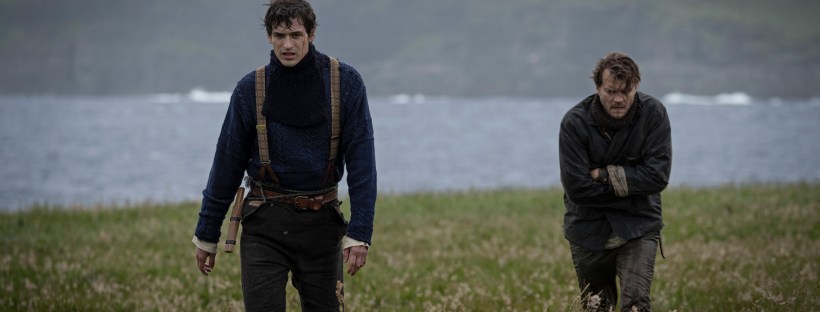
An image from the vampire movie No Rest for the Wicked, starring Egor Venned as Baldur and Pilou Asbaek as Helge, set on the Faroe Islands.

Interview: Director Kasper Kalle and actor Egor Venned on their moody vampire film No Rest for the Wicked

Another one of my favorite movies out of this year’s Fantasia Film Festival was No Rest of the Wicked, a queer vampire movie based on a 19th Century German story. The movie stars Egor Venned as Baldur, a young fisherman who meets a whaler named Helge (Pilou Asbaek). Initially, Baldur denies his feelings for Helge, considering the time period and Baldur’s small, conversative town on the Faroe Islands. Yet, eventually, he can’t deny what he feels, and of course, the movie has vampirism in it, too! The feature won two juried awards at Fantasia, including Best Director and Outstanding Performance (Asbeak).

I talked to Venned and Kalle for The Horror Lounge, and you can read some of the interview below.

The Horror Lounge: What was it like shooting at the Faroe Islands? The film does a great job depicting the natural beauty, yet danger of them.

Kasper Kalle: I’m not from the Faroe Islands. I’m from Denmark. For me, it was a big experience to come to the Faroe Islands and see it for the first time. I went there for the summer, and it was amazing. There was sun all week when I was there, which is rare for the Faroe Islands.

I also love using nature in my films. The landscape and nature of the Faroe Islands fit so well with the themes of the film. It’s so isolated, and the fog and mountains fit well for the mysteriousness of the film and the horror. But it was also really, really tough. The weather on the Faroe Islands can change in an instant. It was really tough, but I loved it.

Egor Venned: For me, I went back home to where I’m from. I was there three months in total, two months shooting, but I went there a month before to reconnect with my home. I was also ready for what we were going to get into with the weather. I don’t think the Danish crew were ready for all of that. [Laughs].

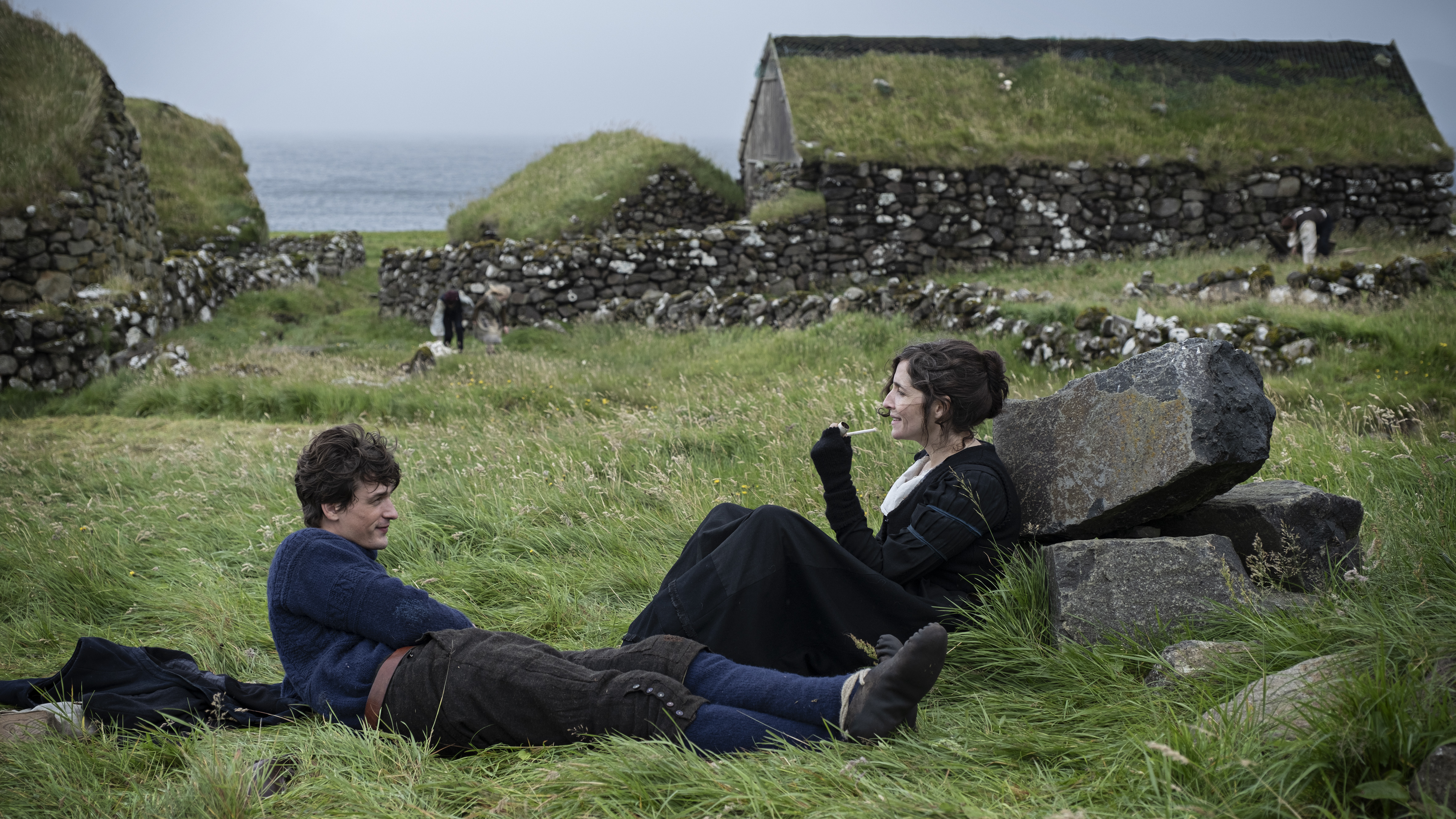
It’s rare for it to be sunny all the time. During some summers, you may never see the sun. That was a fun experience, those weather challenges, but we also got to shoot at all of these locations, including an old house from the 1600s that’s a museum now. We had learned about the history in school, so being able to incorporate so much of Faroese history and culture was just such a cool experience.
The Horror Lounge: Vampires have a long history of sexuality and even queerness. Can you address that aspect of the film?

Kasper Kalle: It’s based on a short story from 1884, written by the German author Karl Heinrich Ulrichs. It was written ten years before Dracula. When I read the short story, I could see the vampire theme, but it was so different. It was a vampire story but told in a different way, and I really liked that. We didn’t want it to be like all other vampire stories we’ve seen, but of course, it’s still about sexuality and love and the force within us that we can’t control. I think that’s typical for a vampire story.

The Horror Lounge: Egor, can you talk about working with Pilou and the relationship that your characters have in this film?

Egor Venned: Pilou is really loveable as a human being. He’s also just a very good actor, so acting with him is just really easy. It was my first experience acting. We had some conversations before starting and got to know each other. He took me under his wing and made everything less scary and less nerve-wracking. He said we’re here to play and we could make mistakes. Because of his easygoingness, it was a nice start. Once we got going, it didn’t feel nerve-wracking, and I got comfortable really quick.

Also, the whole team made me feel so comfortable and allowed me to just explore and give my take on it from the beginning. It all ended up working organically, especially with Pilou. Because of our chemistry in real life, we became friends really quickly. I had the best experience acting.

The Horror Lounge: Can you speak about the role of the town and the role that religion plays in the film?

Kasper Kalle: For me, it’s difficult to talk about the role of religion. When you’re from a Christian country, it’s just so deep in everything, in culture and your way of thinking. It’s so rooted in everybody. Even if you’re not actually religious, you still grew up in a religious country, and everything is based on that. For me, it’s not a critical comment on religion, but more about who we are and where we’re from. Religion is the culture.

The Horror Lounge: Baldur has quite a character arc in which he eventually accepts his feelings and who he is. Can you comment upon his character?

Egor Venned: In the beginning, speaking of religion and the conservatism of where he was from, they look at it as a dark force. Gay love is dark and scary. It’s demonic. He’s scared of it in the beginning. He has a lot of respect and love for his mom. He loves where he’s from, but at the same time, love is powerful. There’s nothing that can stop it. In the end, he needs it so bad. He’s willing to go to the length that he goes to. It’s just a story that love always wins.

Kasper Kalle: You start to think that Baldur has to go through this big development, but it comes natural to him when he falls in love. It’s actually the mother who goes through a bigger development. It’s more difficult for her to accept.
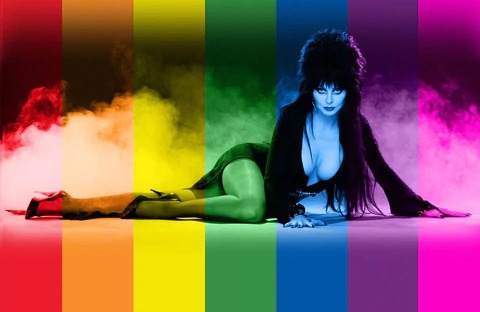
Celebrating Queer Horror During Pride

Horror has a long, rich history of celebrating queerness. This dates back to its 19th Century foundation in Gothic literature, specifically the famous story of the friendship among Mary Shelley, Percy Shelley, and Lord Byron, all sexually fluid writers whose work, especially Mary Shelley’s, explores themes of Otherness. Meanwhile, her hubs, Percy, was an anarchist who advocated for the rights of the marginalized. Queerness extends to other Gothic writers, including Oscar Wilde, author of the Portrait of Dorian Gray. Wilde is an important figure because he was put on trial in the late 19th Century for “gross indecency,” after the details of his homosexual affair with a British aristocrat became public. Needless to say, this profoundly negatively impacted the writer’s career, but he was unashamed of who he was and his sexuality.

Queerness extends to horror’s earliest film adaptations, too, including Nosferatu by gay director F.W. Murnau, and some of the most famed early Universal movies, specifically those by openly gay director James Whale, including Frankenstein, The Invisible Man, The Old Dark House, and most notably, Bride of Frankenstein, a campy feature that includes many theater actors who worked with Whale.

While horror does have some problematic depictions of the LGBTQ community, such as Buffalo Bill in Silence of the Lambs, and the “bury your gays” trope that became all too prevalent in slashers of the 1980s, the genre has become more and more inclusive, with recent examples being Freaky, Attachment, Let the Right One In, Spiral, Bodies, Bodies, Bodies, and the haunting and mesmerizing I Saw the TV Glow, by non-binary director Jane Schoenbrun. These are just a few examples in an ever-growing canon.

Horror has and always will have a relationship to Otherness and by an extension queerness. In celebration of Pride Month and my love of horror, I wanted to share two lists I composed for 1428 Elm. The first is a list of classic queer horror movies, and the second is a list of more contemporary queer horror films.

Enjoy, and Happy Pride!

Retro Review: A Nightmare on Elm Street 2

Although A Nightmare on Elm Street 2 initially faced mixed reviews and a backlash from some fans, due to  major shifts it made from Wes Craven’s original film, over the years, it’s earned a cult following because of its queerness and metaphor about repressed sexuality. With the release of last month’s documentary Scream, Queen!: My Nightmare on Elm Street, focusing on the film’s troubled production and homophobia in Hollywood, now is a good time to revisit Freddy’s Revenge, aka “the gayest slasher film of all time.”

Released in 1985, the film grossed $30 million at the box office, so it drew in some big bucks. The story picks up about a year after the original film when outsider Jesse Walsh (Mark Patton) moves into a large white house on Elm Street, which turns out to be Nancy Thompson’s (Heather Langencamp) former home, the final girl from the original film. The opening scene is a dream sequence, featuring a quiet, pale, and gaunt-faced Jesse sitting on the back of a school bus, while his classmates chuckle at him.  Soon after his classmates mock him, Jesse encounters Freddy for the first time, when the bus driver morphs into him, and he drives the bus towards hell. Jesse wakes up screaming in a cold sweat. These opening shots of Jesse not only establish him as an outsider, but they can also be read as a metaphor for the AIDs crisis.  During the dream sequences/encounter with Freddy, Jesse is always depicted as pale and sickly. When he wakes up, his body is drenched in sweat.

Image result for jesse, nightmare on elm st 2, school bus

Jesse Walsh (Mark Patton) in the opening scene

The second encounter between Jesse and Freddy is much more sexual in nature, though apparently toned down from what it could have been. Unlike the original film, Freddy’s not out to kill the protagonist because his parents burned him alive. Rather, he wants to own Jesse’s body and use him to commit murders. Jesse encounters him after sleepwalking through his house, and apparently, Robert Englund wanted the scene to be even more sexual in nature, telling Patton, at one point, to suck on one of Freddy’s blades. That part of the scene never happened, but the intimacy between Freddy and Jesse, and Jesse trying to suppress “the monster,” drives the rest of the narrative.

Image result for jesse, nightmare on elm st 2, school bus

Jesse and Freddy (Robert Englund)

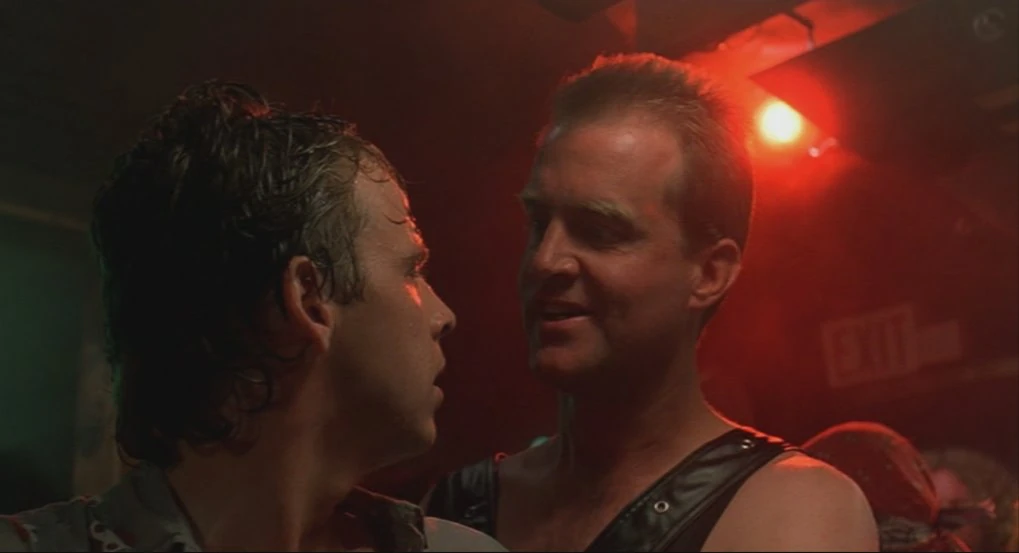
The film’s not-so-subtle subtext adds another layer when Jesse meets the jock Ron Grady (Robert Rusler) at school. Grady spends most scenes with his shirt off, and there’s more sexual tension and connection between he and Jesse than between Jesse and his girlfriend, Lisa (Kim Myers). Add to that the fact that their gym teacher, Coach Schneider (Marshall Bell), gets off on telling Ron and Jesse to “assume the position” when they act up in class, and then orders them to do push-ups. About halfway through the film, Jesse walks through pouring rain and ends up at an S & M club where he encounters the coach wearing a leather daddy outfit. Talk about a bold scene for the mid-1980s! Schneider’s murder is rooted in kink and sex. He’s tied up with jump ropes, stripped in a shower, whipped with towels, and slashed.

Image result for coach schneider

Coach Schnieder (Marshall Bell) and Jesse

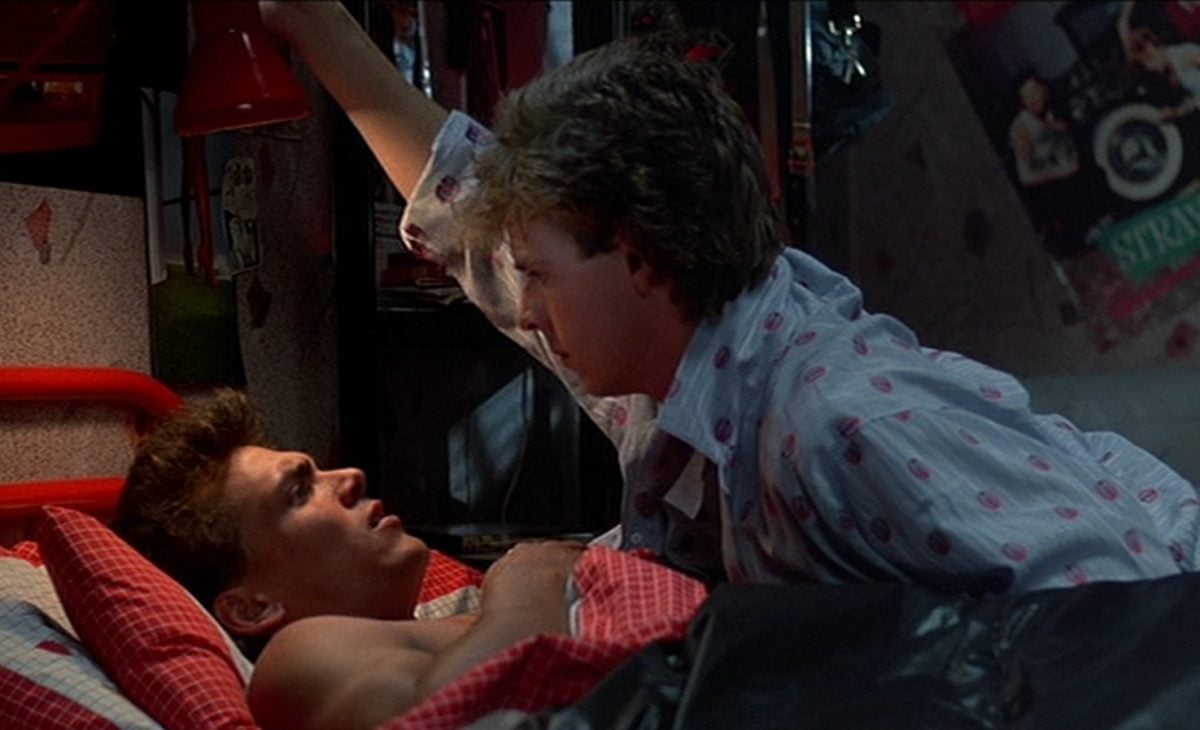
The rest of the film centers around Jesse’s struggle to fight off Freddy, as he screams,  “He’s inside me, and he wants to take me again!” This line is about as subtle as the homoerotic images in Jesse’s bedroom, including a sign on his door that says “No Chicks Allowed” and a board game called Probe. When Freddy is about to take over Jesse’s body at the beginning of the final act, Jesse rejects a heterosexual relationship with Lisa and instead runs to Grady’s house/bedroom and begs him to help him stay awake. What transpires during this scene, namely the moment Freddy slices through Jesse’s chest, is one of the best transformation/effects scenes in modern horror cinema. It’s also one of the strongest metaphors in the film. Commenting on this scene for the three-hour documentary Never Sleep Again, Englund said there are several ways to read this scene. Freddy/the monster can represent the self-hate that Jesse feels, or he can represent homophobia that others inflict upon the gay community, what Englund calls “the taunt.” This scene  is the strongest in the film, layered and nuanced, with killer special effects.

Related image

Jesse and Grady (Rober Rusler)

Several other scenes  don’t quite work as well, especially when Freddy enters reality and runs around at a pool party at Lisa’s house. This scene is just silly and ineffective.  In commenting on the film for Never Sleep Again, Craven said that much of the film feels like a series of scenes instead of a cohesive story, a problem, he said, that dogged some of the other sequels. It’s also campy to that point that most of the teenagers are taller than Freddy, so how much of a menace can he really be outside of the dream world?

The film opened to mixed reviews, and even today, it only has a 41 percent score on Rotten Tomatoes. It also nearly ruined Patton’s career, who was typically type-cast in gay roles following Freddy’s Revenge. Additionally, for years, screenwriter David Chaskin insisted he didn’t write the sequel as a gay film, but it was only because of Patton’s acting that it turned out that way. At the time of filming, Patton was still in the closet, and he’s stated in many interviews that the filming process was difficult. Only within the last few years has Chaskin admitted that there was supposed to be a gay subtext to the film. Director Jack Sholder, meanwhile, still insists that wasn’t the intent. Really?

Freddy’s Revenge is not the best sequel in the franchise. That title goes to Dream Warriors or perhaps New Nightmare. Yet, the film deserves major props for what it did in the mid-1980s, for all of the subtle and not-so-subtle gay overtones. Unlike the other sequels, it also did something different and rewrote some of the rules. Instead of a final girl, there was a final boy, and instead off remaining in the dream world, Freddy broke through reality quite frequently, which he wouldn’t do again until Craven returned to the director’s chair for New Nightmare. It took a while, but the film has found its audience.

For an interesting and in-depth read on the film, check out Buzzfeed’s long-form article from 2016 here.