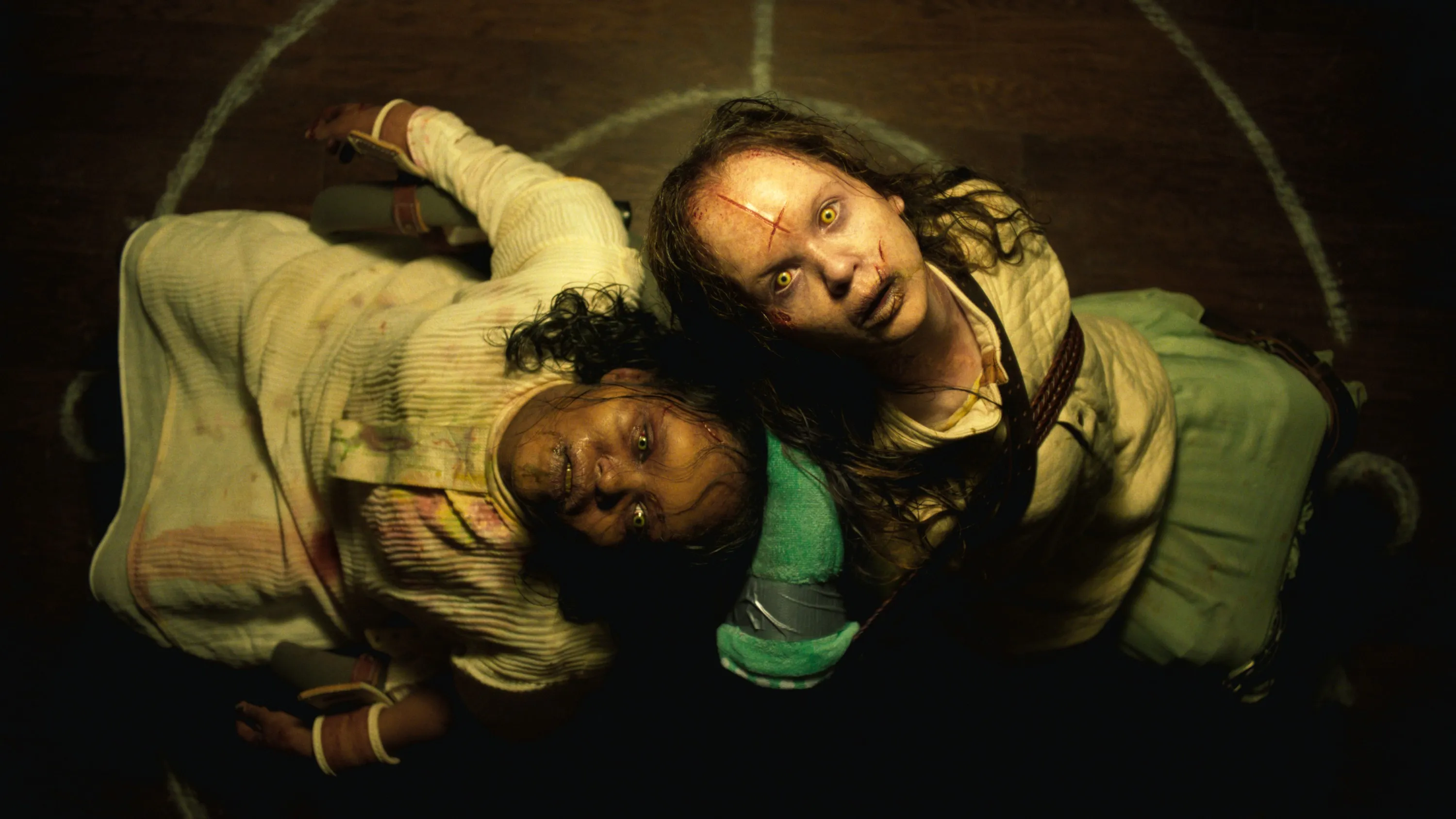
Why The Exorcist: Believer Is Weighed Down by Legacy

Let me be upfront. I don’t think The Exorcist: Believer is all that bad of a film, nor do I think it’s deserving of the 20 percent rating it currently has on RT or the fierce hate it’s facing on social media. The issue with the film is its relationship to William Friedkin’s masterpiece and the whole issue of legacy in general. If everything regarding The Exorcist universe was stripped out of the film, you would actually have a pretty unique possession movie that takes a few big swings.

No matter what, David Gordon Green had a monumental feat before him. Universal paid $400 million for the rights to The Exorcist and ordered a new trilogy. Green was already a polarizing figure to write/direct the new project after the rebooted Halloween movies. The last two entries, for various reasons, divided audiences after the massive success of the first entry, Halloween 2018. Green had a far bigger task before him when taking on the legacy of The Exorcist. Simply put, Friedkin’s film is a product of its time. Seeing Linda Blair’s Regan spew curses and pea soup at priests shocked audiences in 1973. If you want an idea of just how stunned audiences were by his film, I suggest this 20-minute documentary on YouTube, which features countless interviews with audience members at the time. You simply can’t pull that off a second time, which is why all of the sequels failed and never touched the box office success of the OG. You just can’t shock audiences in a similar fashion anymore. Most possession films feel like a retread of what Friedkin already did 50 years ago.

Cue The Exorcist: Believer. There’s actually a decent film here, but it’s pulled down by the issue of legacy. The feature follows two best friends, Angela (Lidya Jewett) and Katherine (Olivia O’Neill). They venture into the woods to perform a seance of sorts so Angela can connect to her deceased mother, who died after suffering serious injuries during an earthquake in Haiti. Angela and her father, Victor (Leslie Odom Jr), have the most compelling storyline in the film, dealing with grief and trauma. The seance doesn’t go as planned, however, and the girls go missing. Three days later, they turn up not quite right. We all know what happens next.

As a whole, the movie has some frightful scenes, but far too many quick cuts and jump scares. It also has some heavy sequences about the very nature of religion, and unlike typical possession films, Green’s feature explores other religions outside of Catholicism. This is its most interesting element that’s too undercooked and over simplified. It needed more of this aspect to make it stand out more from similar films. Again, if Green didn’t have to grapple with Friedkin’s film, he would have had more breathing room to play with his film’s more unique concepts.

The film fumbles terribly when it grapples with Friedkin’s masterpiece. To be blunt, Ellen Burstyn’s inclusion is totally and wholly unnecessary. The film adds nothing by including Chris MacNeil. The fate of the two girls is what drives the film, along with the underdeveloped exploration of the very nature of religion. Everything dealing with the first film just weighs down the new story. All callbacks and legacy characters feel shoehorned in and divert attention from the main narrative.

What’s especially frustrating about The Exorcist: Believer is that this could have been a good movie, if Green didn’t have to grapple with what just might be the best American horror film of all time. It’s never going to be topped, so why try? I truly wish that this movie did not have The Exorcist in its title or had to deal with that world. It would have been far more compelling if Green could have focused solely on the stories of two girls and their families forced to come together, despite their religious differences, to save their souls.

While Universal paid big bucks for the franchise rights, The Exorcist: Believer only earned about $27 million at the box office, an underwhelming figure considering the heavy marketing and huge money Universal spent. Will the next two movies be released in theaters? Will Green direct them? It’s too early to tell, but it wouldn’t surprise me if they’re dumped on Peacock. Maybe, just maybe, it’s time to leave this world alone and instead greenlit scripts that aren’t so tied up in classic franchises.
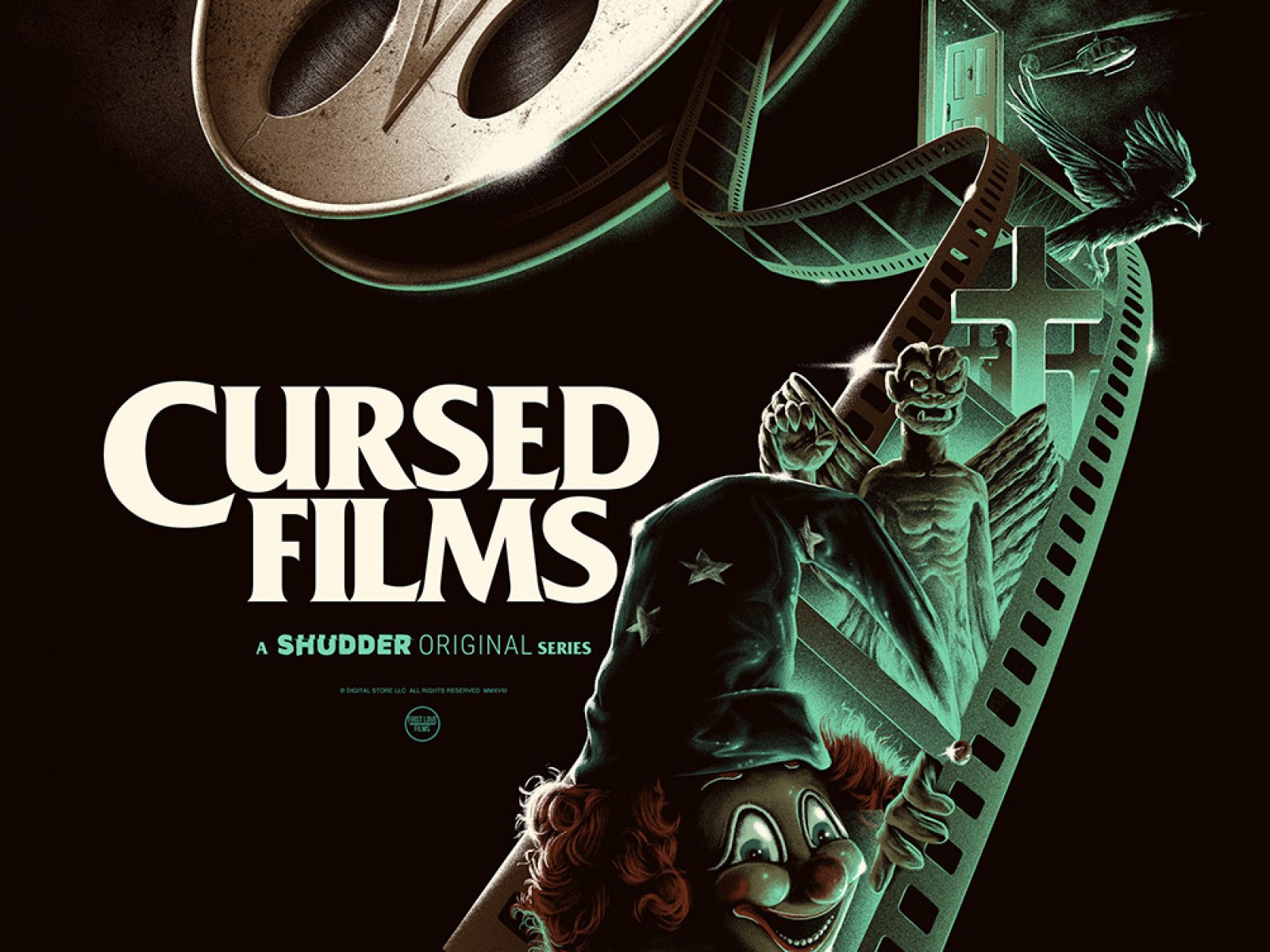
{Review} Shudder’s Cursed Films

How Shudder's Cursed Films Explores the Most Troubled Horror ...

Ever since the success of last year’s Horror Noire: A History of Black Horror, Shudder has been pumping out more exclusive horror documentaries. They have one coming out later this year focused on queer horror, and this month, they dropped Cursed Films, a five-part documentary series that explores horror films with alleged “curses” attached to them. Featured films include The Exorcist, Poltergeist, The CrowThe Omen, and The Twilight Zone Movie. Thus far, only the episode on The Exorcist has dropped, but for any horror aficionado, the 20-minute episodes are an entertaining look at some of the challenges that plagued the productions of these famous films, and in turn, led to clever marketing campaigns that increased ticket sales.

The Exorcist is the perfect example of how rumors of a cursed production could serve to cement a film’s legendary status. To be fair, the film’s production was plagued by a few unusual circumstances. Shooting was delayed after an on-set fire. Actors Jack MacGowran and Vasiliki Maliaros died when the film was in post-production, and their characters died in the film. The aftermath and reactions to the film were so intense that people thought Linda Blair was actually evil because she played Regan.

Blair is the real star of the first episode, as she opens up about how difficult the filming process was because director William Friedkin pushed his actors and actresses so much that it led to a few on-site injuries. For instance, Blair injured her back when a piece of rigging broke, and Regan’s mother, actress Ellen Burstyn, was injured during a scene where Regan throws her across the room. The blood-curdling scream heard in that shot is a result of injury. Many of the film’s performances are unmatched in horror cinema because some of the pain was real.

162525-horror-the-exorcist-screenshot

Much of this lore is already well-known, but what’s more intriguing is the impact The Exorcist had, especially when televangelists like Billy Graham stated that there was the power of evil within the film. This led to a brilliant marketing campaign that played up the hype and stories about people fainting and passing out in the theater.  The episode includes a trailer for The Exorcist that was never shown and played with the idea that the film itself was evil. Horror fans should watch the episode just to catch a glimpse of that long lost trailer. It’s a a relatively unknown piece of film history.

Fast forward to today, and the idea of possession is very much still in the public consciousness. Cursed Films credits The Exorcist’s legacy for that, and the end of the episode follows contemporary exorcists as they try to dispel demons from victims who genuinely believe that they’re possessed. Mind you, these people are not trained by the Catholic Church.  Yet, the episode poses the question  whether or not these modern demon-slayers are doing it out of the goodness of their heart or to make a quick buck. You decide.

Cursed Films doesn’t offer any evidence that the films were actually cursed. Rather, the series looks at the lore surrounding some of the genre’s most famous films, while offering some candid interviews with people like Linda Blair who are horror royalty. The behind-the-scenes tidbits and the exploration of a film’s legacy and its impact on popular culture make the series an interesting watch. The short episodes are binge-worthy.

Episodes 2 and 3 release today on Shudder.

William Friedkin’s Second Dance with the Devil

Decades after The Exorcist’s release in 1973, its Oscar-winning director William Friedkin returned to the subject matter for a documentary entitled The Devil and Father Amorth, now streaming on Netflix. Set in Georgetown, where The Exorcist was filmed, and Italy, the documentary features a real-life exorcism performed by Vatican-sanctioned Father Amorth.

Raised Roman Catholic, I was generally unnerved after first watching The Exorcist. I was less terrified by Regan’s (Linda Blair) head-spinning and vomiting scenes and more spooked by the idea that some demonic presence would chose to possess an innocent 13-year-old girl for no apparent reason other than it wanted a showdown with a priest, a battle of good versus evil. The film was an adaptation of the novel by William Peter Blatty, who based the novel and screenplay on accounts of a Georgetown boy who was allegedly possessed in 1949. Blatty believed that something supernatural was at work, and Friedkin’s new documentary contains two old interviews with Blatty that restate his belief in the story.

While Friedkin never comes out in the documentary and fully says that he believes in the possibility of demonic possession, he does acknowledge that it’s possible there is another dimension to this world that we can’t comprehend. Yet, Friedkin never fully analyzes or acknowledges the cultural impact of his 1973 film. There are featurette-like scenes where he returns to the location of filming, including the famous staircase that’s such an important part of the film’s iconic ending, but he doesn’t acknowledge that maybe the belief in demonic possession exists because of films like Rosemary’s Baby and The Exorcist, which were released at the height of the “God Is Dead” moment and got people back to church.

Fredkin1

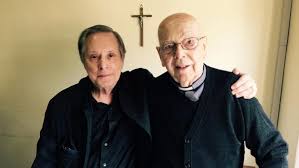
(William Friedkin and Father Amorth)

Early in the documentary, Friedkin says that there are over 60 million citizens in Italy and about 500,000 have seen an exorcist. Let that statistic sink in for a moment. Roughly half a million Italians have seen an exorcist.

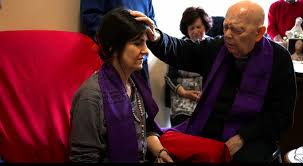
The exorcism that Friedkin films, his first time ever doing so, was performed on 40-something Cristina. It was her ninth exorcism. As Father Amorth tries to banish the demons, Cristina writhes in her seat, held down by family members and friends. She speaks in a gravelly voice not that much different from Regan’s. When I watched this scene, I had two questions: did Friedkin do something with the audio and was Cristina acting like she thinks a possessed person should behave?

In an interview with NPR, Friedkin said of Cristina:

She was an architect, and a very attractive, intelligent, soft-spoken, wonderful woman. And when she came into the room, I wondered: What is she doing here? What’s this woman doing here? She seems to me to be totally together. And then during the exorcism, she completely unraveled. She spoke in a voice that was completely different from her own. She had what I would say was an unnatural amount of strength for a woman of her size and age. And her entire personality had altered.

I was scared, seriously scared. I was two feet away from them … And it was terrifying. Gradually my fear turned into empathy for her. She was in seemingly unnatural and total pain.

The exorcism runs for about 15 minutes, and at times, it is quite dull. For most of it, Cristina squirms in the chair and growls in a trance-like state, while friends and family around her pray. It would have been more interesting if we actually knew more about Cristina and cared about her fate. Yet, the documentary never dives into her story.

Fried2.jpg

(Cristina and Father Amorth)

The director then shows the footage to neurologists at UCLA and Columbia. They admit that they can’t pinpoint what’s causing her behavior and they don’t debunk the footage. However, one of the specialists at Columbia says that if Cristina and her loved ones generally believe in the supernatural and the possibility of demonic possession, and if that is part of their reality, then an exorcism may be the best medicine for her behavior. I wish that Friedkin asked Cristina if she ever watched The Exorcist because I kept wondering how much popular culture has impacted her belief in the supernatural.

Sadly, Father Amorth, who was in his 90s, passed away not long after Friedkin finished the documentary. He was one of the warmest and funniest aspects of the film. He even had a ritual of literally thumbing his nose at the devil before performing an exorcism. Friedkin tried to reach out to Cristina again but had no luck. Her symptoms, however, did not end after the exorcism. Could there have been other reasons for her distress, financial or personal even? We’ll never know.

Even though The Devil and Father Amorth features footage of a real exorcism, it feels rather hollow. Friedkin is an accomplished filmmaker, and yet his characters in the documentary feel flat. Why didn’t he explore Father Amorth’s theories about evil and exorcisms, for instance? Why no serious interviews with Cristina? The film does raise some thought-provoking questions about belief in the supernatural, but The Exoricist makes a better case for real, raw evil because it contains characters that are fleshed out and well-developed. When a single mother watches her child succumb to the demon, we care what happens to them because we’ve gotten to know them. I can’t stay I know anything about Cristina after watching Friedkin’s documentary. Fans of The Exorcist should still check out the film because it may be the last time that Friedkin returns to the subject matter.

One Sequel Worth Rewatching

Sequels are always a risky gamble, especially in the horror genre. In the case of The Exorcist, it was always going to be impossible for any sequel to be as ground-breaking as the original 1973 film. No film prior had shown such unspeakable evil befall a 13-year-old girl, from head spinning, to vomiting, to levitation, to strings of curses that would make a sailor blush. I’ve always felt that the real horror in The Exorcist occurs in the first act, when Regan (Linda Blair) talks about her friend Captain Howdy and claims to hear scratching in the walls of her bedroom. Those unseen elements and that creeping dread that something is not right still unnerve me whenever I re-watch the film.

The film was followed by the god-awful Exorcist II: The Heretic, one of the worst sequels in horror history, two prequels, and a recent TV series by Fox that was canceled after just two seasons. Recently, I re-watched The Exorcist III: Legion (1990) in preparation for watching and reviewing the Irish horror flick The Devil’s Doorway. The third film in the franchise, written and directed by William Peter Blatty, author of the novel The Exorcist and its sequel Legion, is really the only sequel in the franchise deserving of attention. It is drastically different than the original, but in some ways, far more haunting, philosophical, and interesting.

exorist3

When speaking about The Exorcist III, Blatty once said that he was more interested in creating “creaks and shadows” than the “head-spinning” elements of the original film. Set in Georgetown 15 years after the original film, Legion follows the story of hard-boiled detective Kinderman (George C. Scott), who is jaded from years of investigating murders. The only thing he’s sure of is that evil does indeed exist but it has no supernatural elements; rather, it exits in the cruel actions of humans. At one point, he tells his friend Father Dyer (Ed Flanders) that God can’t exist because there is too much suffering in the world and humans are too imperfect, prone to self-destruction and diseases, such as cancer.

Kinderman is called to investigate sacrilegious murders in Georgetown, which have some connection to his friend Damien Karras (Jason Miller), the priest from the first film who saves Regan by asking the demon to possess him in the film’s closing minutes, before lunging out the window and falling down a set of stairs.

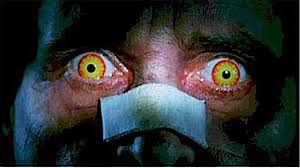
Jason Miller returns in Legion and stars as the mysterious Patient X, who looks like Father Karras, but how can that be, Kinderman wonders, since Father Karrass died 15 years earlier. Miller’s role is juxtaposed with that of the Gemini Killer (Brad Dourif), who possessed the body of Karras and spent years regenerating his brain. Dourif, most famous for voicing Chucky, is phenomenal in this film. He verbally spars with Kinderman, recounting, in gruesome detail, the murders he committed, and then speaking of his “friend,” “the master,” who made all of the murders possible. Dourif is given long monologues when he’s on-screen. Spittle flies when he talks, and his eyes become wide and impassioned.

Initially, Miller was not available to shoot the film because he was on the West Coast, but once he returned East, the studio insisted that he be included in the film. Blatty did not want Miller in the film, and his director’s cut only features Dourif. That said, the film is much better for having Miller in it, whose sunken, sad eyes speak to the torment of Father Karras’ possession.

Unlike the original film, much of the horror happens off-screen, the “creaks and shadows” that Blatty mentioned. Most of the murders are recounted either through the Gemini Killer’s monologues or through Kinderman’s detective work. When the viewer is about to witness a murder happen on screen, the camera often pulls away and we’re only given the gory details once Kinderman arrives on the scene later and gathers the facts and evidence. This is effective because it leaves much to the imagination.

The Exorcist III also contains one of the greatest jump scares in cinema in the last third of the film. Without giving too much away, I’ll merely state that it involves a nurse and the angel of death. You’ll know it when you see it.

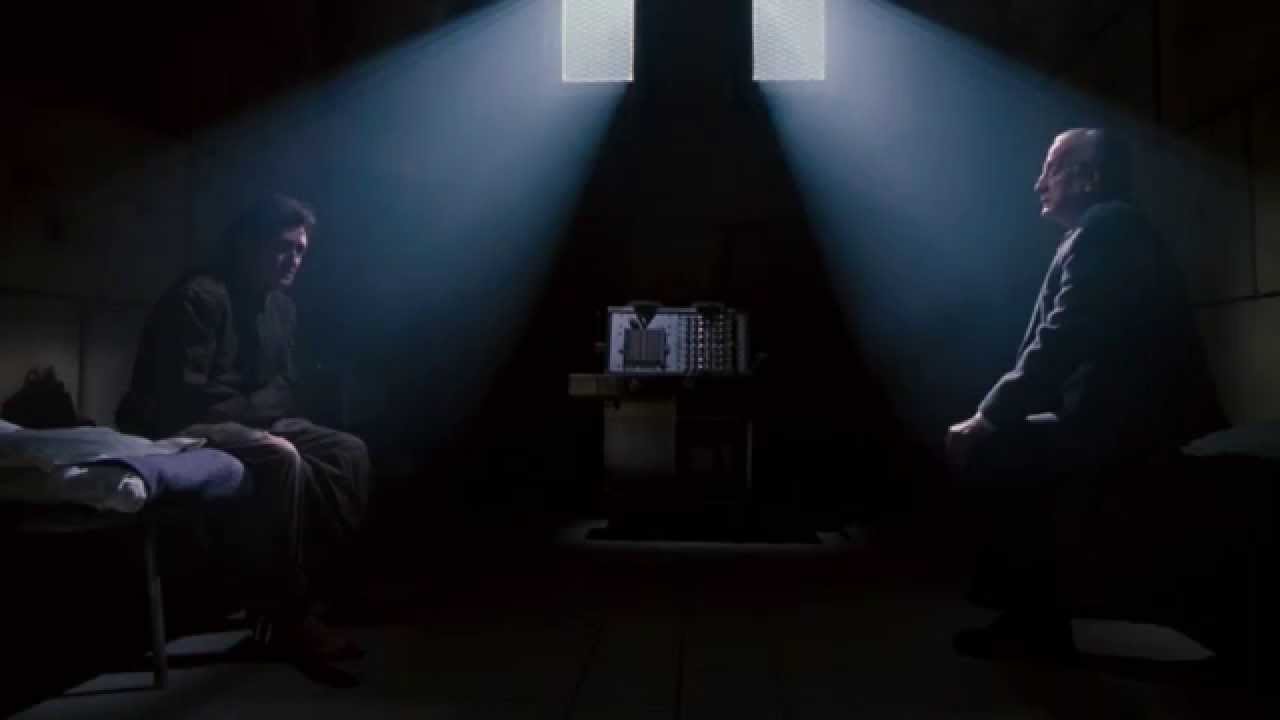
Blatty didn’t want an exorcism to occur at all in the film, but the studio demanded it. The exorcism occurs in the final act, and it feels rather silly and ham-handed compared to the rest of the film, which relies on atmosphere, mood, and tone to establish its unsettling horror. Legion varies so much from its original predecessor because of all it doesn’t show and the way it uses light and shadow. The scenes when Kinderman is alone in a cell with Karras/the Gemini Killer, specifically the use of light and shadow, are incredibly effective.

Exoristshadow

Patient X (Jason Miller) and Kinderman (George C. Scott)

Had the awful Exorcist II never been released, maybe The Exorcist III would have done better at the box office and garnered the attention it deserves. At least it currently has a cult following and has generally aged well. Miller and Dourif’s performances alone, coupled with the philosophical questions posed about the nature of evil, make it one of the best horror sequels.