Crawl: A Summer Favorite

This has been a busy summer season for horror films, with the releases of Brightburn, Child’s Play, Midsommar, and now, Crawl, the new film by Alexandre Aja (High Tension, The Hills Have Eyes, Piranha 3D). Some of these films address broader issues, like AI and technology (Child’s Play), or female trauma (Midsommar), but Crawl is simply a creature feature that knows what it wants to be with a lot of nods to Jaws thrown into the mix. It’s one of the best times I’ve had at the movies this summer. For my full review, check out Horror Homeroom.

Additionally, I highly recommend this article from Bloody Disgusting about Aja’s career, the French extremity movement he was initially part of, and the impact of his early films, especially High Tension. It’s a great read.

Midsommar: A Stylish, Hellish Folk Horror Gem

Ari Aster’s Hereditary was the breakout horror film of 2018, bolstered by the stellar performance of Toni Collette as Annie, a grief-stricken parent dealing with the unraveling of her family as tragedy after tragedy unfolds. With Hereditary, Aster flirted with some elements of folk horror, namely occultism and the use of landscape. Midsommar, however, showcases the folk horror influences far more directly, namely the original Wicker Man and the extensive research on midsummer traditions that Aster did.  In some ways, Aster’s second film is more ambitious and unrestrained, especially in its cinematography. For months, the film has been hyped, to the point that director/writer Jordan Peele called it “atrociously disturbing” and a “masterpiece” in a conversation with Aster for Fangoria magazine. So, the question is, does Midsommar live up to the hype? The short answer is yes and no. At 2.5 hours long, Midsommar is a lot to unpack. It is a film that warrants repeat viewings for those who have the patience, and, like Hereditary, it is a film rooted in female trauma.

Aster has described Midsommar as a break-up movie that unravels into a folk horror nightmare. When trying to assess the film, that’s a good starting point. We’re essentially aligned with psychology grad student Dani (Florence Pugh) from the get-go, as she frantically emails her bi-polar sister and begs her to respond, fearing the worst. Early on, we’re also introduced to her boyfriend, Christian (Jack Reynor), whose friends encourage him to break up with Dani and accuse her of “abusing” him by demanding so much of his time. Not long after, Dani is orphaned in a visually jarring and disturbing scene that is one of many throughout the film. This narrative serves as the core plot line. Essentially, this is Dani’s story, and though there are other narrative threads and many pagans in white robes, the protagonist’s trauma is the real anchor. We’re with her each and every time she’s about to have a panic attack, be it in a cramped restroom on a plane or when she and Christian’s friends take mushrooms shortly after they arrive at a Swedish commune for midsummer celebrations.

In commenting on the relationship between Dani and Christian, Aster told The Hollywood Reporter that he aimed to “present a dynamic in which neither party is awful to the other one, but they’re absolutely wrong for each other. By virtue of the fact that we’re aligned very clearly with one character in the film, the other is immediately reduced to an antagonist.” It is true that Christian never specifically does anything horrible to Dani. He is callous and often distant, but he can’t really be accused of ill-intent. They are simply wrong for each and floundering in a stagnant relationship.

Image result for midsommar

Dani (Florence Pugh)

It’s unclear why Dani stays with Christian, but after losing her family, he’s all that she has left. The pagans sense this, specifically fellow student Pelle (Vilhelm Blomgren), who leads the graduate students to the rural Swedish town where the nightmare unfolds. Pelle sees the pagans as a real family. He tells Dani that no one takes anything for themselves and they share everything.  In this context, he specifically is talking about Dani, especially since he’s sitting with her on a bed while his hand moves to her thigh. He tries to disrupt the monogamous relationship that she has with Christian and offers an alternative lifestyle.

In that sense, the film presents two very different lifestyles that are destined to clash. There is the lifestyle of Pelle’s ancestral cult the Hårga and the lifestyle of the Americans. One of the white-robed Hårga tells the grad students that what matters most is being in harmony with nature. The Hårga also do everything together, from raising babies to eating. In fact, some of the eeriest scenes involve everyone seated at long wooden tables, staring at each other, waiting and watching for one of the elders to unfold their napkin before everyone else does the same in harmony. The penetrating gazes of the Hårga are unnerving.

On the other hand, there is the lifestyle of the Americans, best exemplified by Mark (Will Poulter), who serves as comic relief but also exemplifies the worst aspects of western culture. He is rude and dismissive of the Hårga’s ancient traditions. At one point, he relieves himself on a massive tree viewed by the Hårga as  physical manifestation of their deceased ancestors. Additionally, the other friends, even Josh (William Harper Jackson), a grad student writing a thesis on midsummer traditions and history, are constantly pulling out their phones to snap photos.  Eventually, Christian, whose graduate work is rudderless, decides he too is going to write on the Hårga. However, he does this for his own benefit and doesn’t have the deep respect for the traditions that Josh has. That said, even Josh can’t put his phone away  and takes photos of sacred books, despite being told no by the elders. This conflict between modernity/western sensibilities and ancient ritual is one of the undercurrents of the film and folk horror in general.

Midsommar also contains interesting commentary on suicide and death. In one of the most gut-punching scenes, the friends witness the suicides of two elders, but the Hårga explain that it’s better to give back to the life cycle and not allow both the spirit and body to break down in old age. To the westerners, however, this concept is unfathomable. Suicide is always bad.

Image result for midsommar

The Hårga

Cinematographer Pawel Pogorzelski deserves major props for bringing Aster’s nightmare vision to life. Simply put, the visual are stunning, be it the sprawling mountainside or the blinding brightness of the constant daylight. At times, the film is disorienting to the viewer, especially in the way that it bends time, specifically when the friends are tripping and images blur together. Grass grows on Dani’s feet and hands, for instance. The film is worth seeing for the visuals alone, especially on the big screen.

It’s too soon yet to declare Midsommar a masterpiece of the genre, as Peele has already done. There needs to be some time and distance before any work of art can and should be given such a title. Aster’s sophomore release is wildly ambitious, and at times, as existential as Hereditary, while including a nice dash of dark humor.  At its core, though, it’s a film about two people who simply shouldn’t be together. This, coupled with Dani’s trauma and her desire to find a family, are what really drive the film. The visuals are a memorizing and fairy tale-like addition to the narrative.

Some resources on folk horror:

Mark Gatis’ History of Horror

Folkhorror.com

Hereditary as Folk Horror by Alexandra Hauke, published by Horror Homeroom


NEPA Horror Film Festival Needs Your Help

Image result for nepa horror film festival

Typically, I don’t post any type of call for money on my blog, but in the spirit of this horror blog, community, and independent film making, I want to note that the NEPA Horror Film Festival needs to raise the necessary funds to make the event possible this October.

There are a few different ways that you can help. You can make a donation here, buy tickets here, or purchase a sponsorship package here. The festival will be held at the Circle Drive-in Theater on Sunday Oct. 13 at 7 pm. Along with showcasing short films from national and international filmmakers, the event will feature vendors and special guests, including Felissa Rose (Angela from Sleepaway Camp), Kevin Van Hentenryck (Kevin from Basket Case), and Frank Henenlotter (director/writer of Basket Case).

For a closer look at the festival, check out this NEPA Scene podcast from last year featuring the event’s organizer/founder Bobby Keller.

Please consider supporting this event!

Review: Child’s Play (2019)

Image result for child's play

As hard as it may be, it’s best to view the new Child’s Play without any expectation that the film relates at all to the long-running franchise. Other than the doll’s red hair, infamous striped shirt, and fondness for a kitchen knife, the remake has little to do with Don Mancini’s original creation and its many sequels. There are some nods to the first film, but other than that, Child’s Play stands on its own and is a surprisingly decent remake, one that  revamps the killer doll story and makes it relevant  for 2019 by focusing on AI.

Director Lars Klevberg’s film features an especially strong performance by Gabriel Bateman as Andy Barclay, an angst-ridden teen who scoffs when his mom (Aubrey Plaza) brings home the Buddi doll as a gag gift after someone returns it to Zed Mart where she slaves away, working doubles as a single mom. When the trailer first dropped, I kept wondering why a teen would want anything to do with a doll and why they made Andy so much older than the original version of the character. Yet, as an outcast, Andy eventually bonds with the doll, whose AI capabilities make it a better-suited companion for a lonely teen than the original incarnation of Chucky.  That said, there are some initial plot points that are a stretch. When Andy fires up the doll and it asks to be named, he says Han Solo, but the doll repeats Chucky, which sounds nothing like what Andy said. Perhaps the point here is to illustrate that the AI is going to make its own decisions, but more likely, this scene shows how the remake is beholden to the Child’s Play name and because of that, it has to reach at times to stay within the lines.

Andy’s loneliness, meanwhile, is compounded by the fact he has a hearing disability and has to wear an outdated hearing aid. He spends his time hanging out by himself, slumped in the hallway, playing games on his phone, too timid to chat with other kids in the apartment building. It’s hard not to feel bad for Andy and his mom, who essentially begs him to make friends while she works at a retail job she despises just to pay the bills. Because of this core plot line, Mark Hamill’s version of Chucky is a totally different take compared to Brad Dourif’s voice work. Hamill’s version adds pathos to the character, who just wants to be Andy’s friend to the point that he’s eventually willing to kill anyone who harms Andy or threatens their friendship. To a lonely kid, having a doll who listens and doesn’t judge him is initially positive, until, of course, the doll starts murdering people in creative fashion, first with a kitchen knife and then by unleashing its full AI capabilities. By the end of the film, Hamill rages and grows closer to the foul-mouthed Chucky that Dourif made famous.

Related image

Gabriel Bateman as Andy and Chucky, voiced by Mark Hamill

At first, the Buddi doll is a blank slate, but ultimately it misconstrues human emotions, which leads to a killing spree.  In one of the best scenes, the doll watches Texas Chainsaw Massacre 2 with Andy and a few friends from down the hall. As Chucky watches the splatters of blood on TV and observes the friends reacting with laughter, he assumes that pain and bloodshed bring them pleasure. In another scene, when Andy says he wishes his mother’s boyfriend would go away, Chucky takes the words literally. Generally, the film is heavy in its messaging regarding the dangers of AI, especially the point that AI will never be able to fully comprehend the complexities and nuances of human emotions. This take on a well-known character is a solid upgrade.

As for the kills, the film features a few gory scenes, including one early butchering that involves a lawnmower and Christmas lights.  Overall, though, there is some general restraint, moments when the camera pulls away just as Chucky raises his knife in the air and plunges it into a victim multiple times. The gore is certainly not excessive, no where near Texas Chainsaw 2 levels, especially for a slasher flick. The AI capabilities of the doll make for some unique kills, however.

Regarding tone, the film is much brighter than the initial 1988 film, which is awash in gray colors. Both films are set in Chicago, and the 2019 version features Andy and friends walking through seedy neighborhoods, but it doesn’t have the same bleakness. Even the doll, which is fairly CGI heavy and features an altered face with a bigger head and wider eyes, always looks new and clean, despite coming home to Andy in a battered box after a customer return. The brightness, however, fits the film, which stresses the point that we always desire the latest technology. Heck, before Andy even unwraps the Buddi doll from its package, Zed Mart is on the verge of stocking the shelves with newer and better Buddi 2 dolls, and in one of the first scenes featuring Andy and his mom on screen together, he complains that he needs a new phone.

Child’s Play is a surprisingly good mainstream horror film, bolstered by strong performances by Plaza, Hamill, and Bateman, despite all of the drama surrounding the remake and the fact that Mancini and Dourif plan to continue the original franchise as a TV show for the Syfy network. Maybe the 2019 film should have had a different title, but now that it’s out, perhaps both versions of Chucky can exist.  The 2019 film is an entertaining and updated take on a familiar story, one that’s funny at times and relevant for our Alexa, smart phone-obsessed culture.

Overall Score: B Plus


Time to Talk about Ma

Related image

I have no doubt that Ma is going to be a polarizing film. When the trailer dropped a few months ago, Film School Rejects, The Hollywood Reporter, and other entertainment sites pointed out that though the film stars Octavia Spencer, the rest of the production, from the director, to the screenwriter, to the cast, are all white. So the question was posed how can Ma possibly be some type of biting racial commentary when it doesn’t feature people of color, other than its lead? It’s a fair question, especially when you consider that Blumhouse, one of the  biggest production companies in horror, has been criticized for having white men direct all of their movies. (To be fair, Blumhouse has promised to remedy this in the new future).

The trailer, however, doesn’t reveal very much about the film. It does provide the basic premise: Ma, aka Sue Ann (Spencer), befriends a group of teens, buys them booze, and invites them over to party. When they eventually find something off about her, she starts stalking them. The only one of the teens who really stands out is doe-eyed Maggie (Diana Silvers), a new girl in town who relocated after her mother, Erica (Juliette Lewis), divorced her father. It turns out that Erica relocated to her hometown from San Diego and faces humiliation when her former high school classmates catch her slinging cocktails at a casino in a skimpy outfit, but, as she tells Maggie, she has to pay the bills somehow.

The film at least touches upon class. Erica is a single mom doing what she has to do to get by, and Ma, who was bullied as a teen, hence her thirst for revenge,  relates to Erica and generally sympathizes with her, especially since she went from being popular in high school to an outcast when she found herself back in her rural hometown. Both single women have something in common, though this could have been explored more. The trailer also avoided revealing the torment that Ma faced as a teen, which triggers the revenge she enacts in the closing 20 minutes. Whether or not Ma’s backstory suffices is another question.

Perhaps more importantly, Ma confronts the mammy stereotype, which is fitting since the film is directed by Tate Taylor, director of The Help, the wildly successful film that made Spencer a household name but faced blow back because of its white savior trope and the way it depicted black women in subservient roles. Here, Spencer blazes her own trail, and damn, is she good. This is HER film. She does whatever she wants. At her job, she refuses to answer the phones. When Maggie’s friend Haley (McKaley Miller), tells her that she needs a man in her life, she just glares at her and plots revenge for that comment. Ma generally has her own agency, and if there are moments when she falls into the mammy stereotype, it’s simply as a means to achieve her goals. She plays the role at times only to get what she wants.

Ma is by no means a perfect film, but Spencer’s performance alone makes it worth viewing. It’s a film very much aware of the roles women are supposed to fit into, especially black women, and to its credit, it tries to challenge that.  There’s no doubt that the film will be polarizing, but, at the very least, it’s already starting a conversation, and it’s one of the horror genre’s most interesting mainstream offerings this year.

There are two commentaries on the film worth reading, both written by people of color.  The first review was published over at Graveyard Shift Sisters, and it goes into more detail about how Ma confronts and subverts the mammy stereotypes. The second article, written by black horror scholar Robin R. Means Coleman, makes an argument that we’re currently living through a black horror renaissance. Coleman writes, “The horror genre is maturing and becoming more imaginative and inclusive – in who can play hero and antihero, and who gets to be the monster and savior. The emergence of black horror films is just one chapter in a story that includes women taking on more prominent roles in horror films, too.”

That, at the very least, is worth celebrating.


Review: Brightburn (2019), A Dark and Gory Retelling of Superman

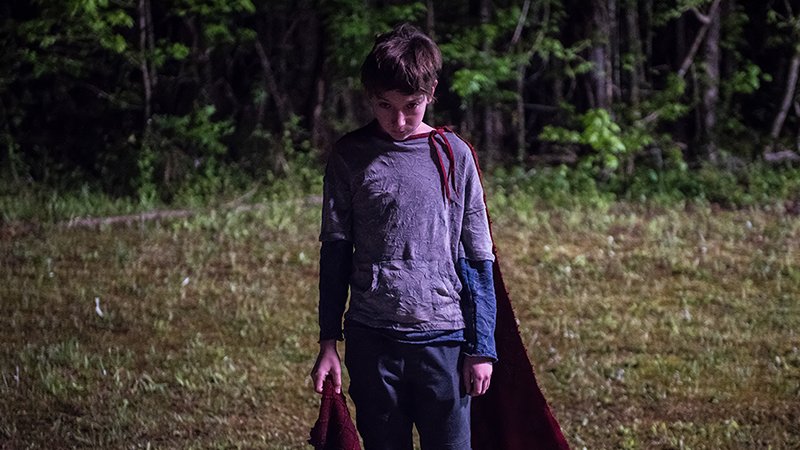
Imagine if Superman was a sexually-frustrated, 12-year-old boy who, instead of using his powers for good, uses them to stalk a classmate he has a crush on, slaughter farm animals, and terrorize anyone who gets in his way. That is essentially the plot of the new James Gunn-produced film Brighburn, a gory retelling of the Superman story that is a blend of the comic book and horror genres. It’s nice to see Gunn return to his horror roots, if only as a producer. Director David Yarovesky, meanwhile, kicks off the summer in style with a decent addition to the creepy kid sub-genre of horror.

So much of the story functions as an inversion of the Superman narrative. In the opening scene, we’re introduced to Tori Breyer (Elizabeth Banks) and Kyle Breyer (David Denman), a loving husband and wife who can’t conceive a child on their own. After we witness them about to try again, BOOM!, a red, glowing meteorite crashes on their farm in rural Kansas. Of course, they decide to adopt the boy inside the spacecraft and don’t tell him his true story until about halfway through the film, which only exacerbates their problem and sends him into another fit of rage.

The film’s first 20 minutes or so spend time establishing Brandon Breyer (Jackson A. Dunn) as a likable boy. He has a good relationship with his parents, shown, in part, through photo albums. We see him as a smiling toddler, and, for a moment at least, wonder how he could possibly kill anyone. He excels in school, to the point that he can rattle of random facts in class about the differences between bees and wasps, and he draws the affection and attention of fellow classmate Caityln (Emmie Hunter). The film would have been better served spending a little more time showing the innocent side of Brandon, before he starts butchering poor chickens and murdering people. He becomes a terrifying villain rather early in the movie, shortly after his 12th birthday, triggered by nightmares, weird chants, and visions of his spacecraft that crash-landed on Earth and that his parents keep hidden under a trap door in their barn.

Image result for brighburn

Brandon Breyer (Jackson A. Dunn)

The kills in the film are quite bloody and gruesome and may turn off comic book fans that aren’t used to a regular diet of horror films. One prolonged death scene features a shard of glass falling into the victim’s eye. The way she slowly pulls it out is reminiscent of something you’d see in a Lucio  Fulci or Dario Argento film. In another scene, one poor victim tries to escape in his pick-up truck, until the evil boy wonder raises it in mid air and drops it on the road, leaving the victim’s face split in half, with his jaw hanging loose. Brandon is rather sadistic, if nothing else.

That said, the first few kills in the film are generally characters we’re not that invested in, and many of the characters, other than Brandon and his parents, are fairly one-dimensional, mere fodder to be brutalized on screen. The deaths would have been more effective if the characters had added depth. Additionally, there’s just something uncomfortable about seeing a 12-year-old frequently invade Caitlyn’s bedroom.

The parents, however, are the best part of the film. Both Banks and Deman give solid performances. Having wanted a child for so long, Tori is the last to believe that her baby boy could be capable of evil, even when his powers ram his father against a kitchen wall. Kyle, though, is more suspecting of his son, especially once he starts disappearing late at night and lying about where he’s been. At one point, Kyle even says, “He’s not our son. He’s a thing we found in the woods.” Earlier in the film, there are a few scenes of genuine tenderness between Kyle and Brandon, before he starts killing people, of course. The film’s real strength is found not only in its special effects, but also in the dynamic between Brandon and his parents, especially Tori’s reluctance to blame him for anything because she’s always wanted a child, and she certainly doesn’t want to believe that her sweet, innocent baby boy could possibly crush a girl’s hand at school because she refused to return his affection.

Image result for brighburn

Tori Breyer (Elizabeth Banks)

Comic books have always had dark twists and turns, and they’ve certainly dabbled in the horror genre. However, no Marvel or DC movie has offered anything like Brightburn or really hit upon twisted story arcs. After years away from the genre, it’s nice to see Gunn return to horror. Brightburn is one of the more decent genre films this year, but with some heavy horror hitters on the near horizon, including a revamped Child’s Play and It: Chapter 2, as well as soon-to-be released features  by some of the genre’s most talented younger directors, including Ari Aster (Midsomar),  Robert Eggers (The Lighthouse), and  Alexandre Aja (Crawl), it has yet to be seen if Brightburn will be that memorable in the long run. For the time being, though, it’s a fun popcorn film to kick off summer, especially while awaiting some of the bigger horror hits dropping later this summer and heading into fall. It makes you wish that Gunn was still directing films like Slither and Dawn of the Dead (2004).

Oh, and for the true blue horror fans, make sure to stay as the credits start rolling for a really cool scene featuring horror icon Michael Rooker (Henry: Portrait of a Serial Killer, Slither, “The Walking Dead”).

Final Grade: B


The Ranger: Blood, Guts, and Punk Rock Mayhem

Image result for The Ranger film

If you’re looking for a contemporary slasher film with a wicked soundtrack, then check out The Ranger, the directorial debut by horror writer/producer Jenn Wexler. On the one hand, the film feels like Friday the 13th meets Suburbia and Repo Man, while on the other hand, the film takes the familiar trope of the final girl and does something interesting with it. Though the film is supposed to be set in the 1980s (I think?), it feels far less nostalgic than the recent wave of 80s throwback TV shows and films. The Ranger is surprisingly refreshing.

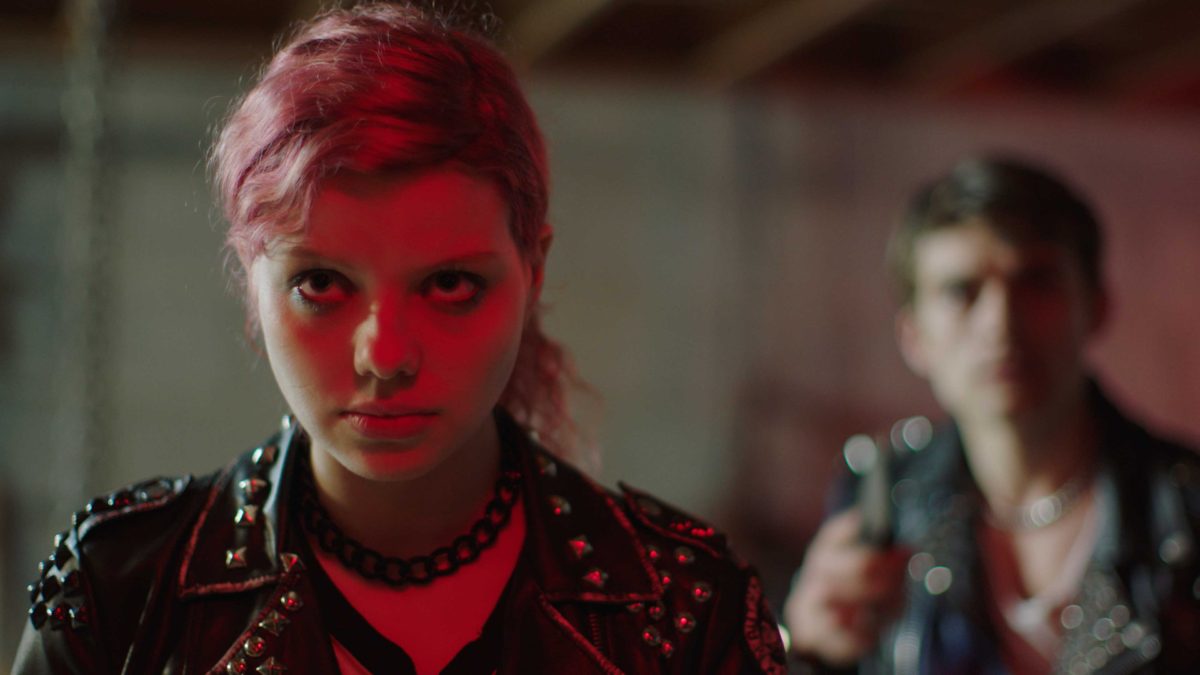
The film opens with a gunshot echoing outside of the woods in upstate New York before the camera zooms in on a distressed, younger version of protagonist Chelsea (Jete Laurence)  sitting on a rock next to the film’s  antagonist, The Ranger (Jeremy Holm). Moments later, the police arrive, and the viewer is initially kept in the dark about what transpired. The film then shifts to the present and introduces a teenage Chelsea (Chloë Levine) and her merry band of punk rock friends, four total, who thrash around at shows,  take a pink hallucinogenic drug called Echo, and wear leather jackets adorned with studs and back patches of bands (I’m pretty sure none of the bands etched on their coats are real). The narrative escalates quickly when a show is busted by  police and one of the young punks stabs a cop, causing the friends to flee in a van to the setting shown during the first scene/flashback. Once this transition is made from the city to the countryside, the film’s surreal color palate shifts too, from vibrant pinks to grays and blues.

Image result for the ranger

Chelsea (Chloë Levine) and out-of-focus boyfriend Garth (Granit Lahu)

It’s immediately clear that Chelsea feels a closeness to the cabin/wilderness, and the viewer slowly learns more about her story, specifically how she enjoyed time there as a kid with her uncle, a writer who bought the cabin  to be alone and focus on his craft. It’s also evident that Chelsea doesn’t quite fit in with the rebel rousers. They mock her when she points out perennials growing near the cabin, and they totally dismiss her when she asks them not to smoke in the cabin. Additionally, she has a respect for nature that they don’t have, being from the city. One of them, Jerk (Jeremy Pope), tags trees with spray paint, which draws Chelsea’s ire. She’s the only one, it seems, who cares about the trees. Another friend is reprimanded for starting a fire randomly, when Chelsea reminds him that there is a fire pit just feet away. Yet, the young punks don’t want anything to do with authority or rules. They’d rather jump on the cabin’s couches and howl moments after stepping inside. The friends also  dismiss Chelsea’s tragedy when she opens up to them about her uncle and her loss, which is shown through short flashbacks, often out of focus or fuzzy.

Chelsea’s boyfriend, Garth (Granit Lahu), reminds her that the punks are her family, and families are imperfect, but she’d be happier if she accepted them for who they are. And yet, it’s clear that they never fully accept her, thus complicating her place within the circle of leather-clad punks. In an interview with 25YL, Wexler commented that even the punk scene, which preaches individuality, still has its cliques. She says, “Something that’s interesting to me about the punk scene is it’s a place for individuality and it encourages individuality through fashion and raging and throwing your body around and all this stuff, but at the same time there’s still a clique element to it. I don’t know. I’ve always felt like an outsider no matter what clique I’m in, I always feel like an outsider. Even when I’m surrounded by people I still feel like an outsider, so the punk world just seemed like a thematically appropriate place to explore that. And then to position all of that against this figure of authority who’s, ya know, the complete opposite.”

Chelsea is indeed an outsider, the one carrying a trauma that her friends don’t fully grasp and that is shown to the viewer only through murky fragments, which is similar to the way memory operates, especially when processing trauma. Garth preaches that they’re the only family she has, and as imperfect as their life may be, she should accept it. However, the punks, in their own away, have a rigid code of conduct, everything from their dress to their misbehavior.

As Wexler said, The Ranger is juxtaposed with the punks’ disdain for authority and their anarchy in the woods.  He’s an excellent foil.  Before he kills in glorious fashion, using everything from axes to animal traps, he recites park rules. The punks have their own rules and so does he.  The film has just the right level of gore, and the maniacal grin that Holm gives the character, either before or after a kill, adds another layer of fun to the film. The Ranger is indeed a good slasher villain.

Image result for jeremy holm the ranger

The Ranger (Jeremy Holm)

Now here comes a major spoiler alert!

By the film’s last 20 minutes, we learn that Chelsea may not be that different from The Ranger and the viewer learns that she killed her uncle with a shotgun during target practice.  Whether it was accidental or intentional we don’t know. The film begins with dialogue from The Ranger, telling Chelsea that the forest needs more timber wolves, which were driven out long ago by European colonists. Chelsea, The Ranger says, is a wolf, just like himself, a wolf who likes to kill.  She also likes rules. After all, she’s the one who tells her friends not to smoke in the cabin. In the closing minutes, when Chelsea pummels him with a pair of binoculars, he grins and says over and over again to her, “We’re the same.” By this point, Chelsea is blood-soaked and releases a primal howl. Whether or not the two are the same is left up to the viewer.

Image result for The Ranger film

A blood-soaked Chelsea

Like Scream did in the 1990s, The Ranger rewrites the Final Girl trope.  The viewer eventually learns that she too has killed, and like Neve Campbell’s Sydney, she too is carrying around a trauma, but one triggered by her own actions. By the conclusion, it’s unclear whether or not she’ll kill again, but the wolf imagery that ends the film leaves open the possibility.  However, perhaps Chelsea will do her own thing without any type of uniform or hair dye. She wasn’t comfortable with the punk rock code of conduct, and she never admits to The Ranger that she’s just like him. Without The Ranger and without her punk “family,” she’s free to do her own thing.

Wexler’s The Ranger is a fun romp, as rowdy at times as a slam pit. Yet, beneath the power chord soundtrack, the film has some interesting layers to it, namely in the way that it handles fractured memory, trauma, and  slasher film tropes.

The film is currently streaming on Shudder.


Long Live the Drive-in and the Horror Host

My fiancé and I have stayed home for the last several Friday nights. It’s not because we desperately need to save money or because we don’t still enjoy a drink at a bar. We stay home every Friday because we tune into the horror streaming service Shudder to watch “The Last Drive-in with Joe Bob Briggs.” Every week, Briggs, formerly of TNT’s “Monster Vision,” hosts a double feature laced with commentary that’s a blend of  film criticism, humorous rants on everything from Tesla to beauty pageants, and most importantly, a serious love and knowledge of ALL aspects of the genre, from J-horror to American staples like Hellraiser and Texas Chainsaw Massacre. The return of Briggs and the success of “The Last Drive-In” (the first marathon crashed Shudder’s servers back in July), proves that it’s time for the horror host to return and resurrect a sense of community that’s desperately needed in the age of social media and streaming devices.

The-Last-Drive-In.jpg

Watching Joe Bob every Friday involves more than simply pulling up Shudder. A host of fans, which Briggs long ago dubbed the drive-in mutant family, live tweets during the broadcast. Briggs’ assistant,  Diana “Darcy the Mail Girl” Prince, interacts with fans and retweets their observations, pictures, and art work. She deserves major props for fostering a community and helping with the show’s success. She, too, has an intense love and knowledge of the genre. Because of “The Last Drive-in,” films like Castle Freak and C.H.U.D. trended on Twitter, at least for one night. The show’s popularity also stems from Briggs’ astute commentary, which occurs during breaks,  while he’s seated in a lawn chair next to a trailer, holding a Lone Star beer (he is a native Texan, after all). Even if he doesn’t love every film, such as C.H.U.D., he still respects the art form enough to research the history and production, thus providing countless interesting tidbits, like how a screenplay came together or why the director made certain choices. With the rise of social media and sites like Rotten Tomatoes, it’s become common for us to simply offer a thumbs up or thumbs down to a film or various other art forms, without much nuanced opinion. Briggs is the contrast. His commentary contains layers. He’s able to remind the audience why there’s merit in even a long-forgotten B slasher movie like Madman, which he screened during the fourth episode. Even in the cheesiest film, he can find value and remind audiences that work still went into the screenplay, the set design, and the general production.

As Briggs has said during countless print and online interviews, streaming a film can be a lonely, isolating experience. Films are meant to be a communal experience, especially horror films. We enter a darkened theater to confront our fears and anxieties and probably feel a little better once the lights turn on and the monster has been defeated. Horror, as Stephen King has said, is a safety valve. But streaming services have removed that communal experience. Even video stores, where fans once roamed rows of VHS tapes or asked a clerk for a recommendation, are extinct. Shudder’s decision to revive the horror host back in July, when Briggs hosted 13 films in honor of Friday the 13th, was a bold move, and it was supposed to be a one-off, truly “The Last Drive-in.” However, it was too successful. Briggs then returned to host Thanksgiving and Christmas marathons, until returning permanently at the end of March for the Friday night double feature. What Shudder and “The Last Drive-in” have done is unique in the sense that they’ve taken the latest medium, the streaming service, but injected a much-needed communal aspect. It’s why Briggs’ show really should be seen live. Fans have harnessed social media to interact with each other during the broadcast. This venture has become so popular and successful that now, every Friday at 8 pm, Shudder features a one-hour countdown until the next episode of “The Last Drive-in,” which is just a live shot of the set, including the adorable Iguana Ernie, who typically just chills in his tank every week. On Twitter, fans post screen shots of their flat screens and whatever beer and food they ordered, as they hunker down for the double feature, which often lasts until 2 am or so, due to the commentary.

Briggs2.jpg

Briggs and Darcy the Mail Girl

The age of the drive-in and watching movies on a big screen under a starry summer sky may be a nostalgic image of a bygone American era, but Briggs has proved that in this moment, the age of social media and broken politics, we desperately need that sense of community. The success of “The Last Drive-in” may cause other horror hosts who were once household names, like Elvira, to return to prime-time slots, either on Shudder or other streaming services.

Meanwhile, at least in northeastern, Pennsylvania, there is a chance to frequent local drive-ins, including the Mahoning Drive-in in Lehighton, which shows several horror features throughout the summer and fall months. They even host a Universal Monsters weekend and a slasher marathon in August dubbed Camp Blood, which includes games and costume contents. The Circle Drive-in in Dickson City screens newer films from spring to autumn every weekend, and last year, a Cult Movie Club formed, which focuses solely on horror. Screenings are once a month, starting in April and running through Halloween. Find them on Facebook for more info. Additionally, the NEPA Horror Film Festival is now held at the Circle Drive-in in October. The film fest showcases short independent films from filmmakers around the world. Who knows, one of them could be the next George A. Romero or Tobe Hooper. This year, there will be guests, including Felissa Rose (Angela in Sleepaway Camp), who appeared at the fest a few years ago and has been a frequent guest on Briggs’ show.

Streaming services aren’t going away, but “The Last Drive-in” has used that medium to create a community and bring horror fans together. The show’s wild success makes a definitive argument for other horror hosts to return.


Sometimes Dead Is Better: A Review of Pet Semetary (2019)

Image result for pet sematary

Over the years, Stephen King has retold the story of writing Pet Semetary and wanting to bury the manuscript because he felt like it was the bleakest novel he had written. Indeed, it is a depressing story that deals with the heaviness of grief and a family who suffers one loss after another, all within the span of a few short days. The new film, directed by Kevin Kolsh and Dennis Widmyer, is especially faithful to the novel in terms of tone, subject matter, and theme, despite two drastic changes to the story. The film’s major flaw, if it could be considered a flaw, is just how  grim and humorless it is, especially the final act.

The basic premise of the film is the same as King’s novel and Mary Lambert’s 1989 adaption. Doctor Louis Creed (Jason Clarke) relocates from Boston to Ludlow, Maine with his wife Rachel (Amy Seimetz) and their two children, Ellie (Jete Laurence) and Gage (Hugh and Lucas Lavoie), so he can take a job at a local university. Soon after relocating, the family befriends Jud (John Lithgow), who tells them about the “Pet Semetary” on their property and eventually introduces Louis to land just beyond the cemetery that has the power to reanimate the dead. At its core, the new film, like its predecessors, is a rumination on grief and loss.  One of the most powerful scenes occurs when Ellie first questions her parents about the process of death and asks why animals, including her precious tomcat Church, don’t live as long as humans. Louis tries to answer her in a rational, scientific manner, while Rachel offers a more faith-based opinion. This short scene illustrates Louis and Rachel’s different parenting styles and their contrasting views on death, while also adapting one of the most poignant scenes of the novel, the moment that a child starts to process what it means to die.

The film’s heaviness doesn’t relent, as Louis fails to save a student, Victor Pascow (Obssa Ahmed), who is hit by a car on campus and returns in Louis’ dreams to warn him that the barrier “shouldn’t be broken.” The Pascow of this version lacks the heart of Brad Greenquist’s performance in Lambert’s adaptation. Greenquist’s Pascow at least smiled every now and then, even with half of his skull busted open and bleeding. Ahmed’s ghastly version  matches the somber, gray tones of the film and the fog-heavy shots of the cemetery. Ahmed’s role is only to provide dire warnings to Louis, staring at him with red eyes, speaking to him as blood leaks from his skull.

Not long after Pascow’s introduction, Church is hit by a roaring semi and Jud helps Louis bury him in supernatural soil. Of course, he returns, but different. He hisses, growls, and stinks so bad that Ellie doesn’t want  him anywhere near her bedroom.

The trailer already spoiled one of the main story changes. It’s Ellie who is hit by a truck and dies, not Gage. Her death is especially effective because the first half of the film gives her plenty of screen time and develops the close-knit relationship that she has with her family. She becomes quite an evil presence in the last act, her face marked with black veins, her voice a growl. She delivers some of the curses and diabolical lines that a reanimated Gage says in the novel, but it’s more realistic coming from a nine-year-old compared to a two-year-old.

Image result for pet sematary

Ellie (Jete Laurence) and Louis (Jason Clarke)

Kolsh and Widmyer also succeeded in showing the impact of grief on the characters. By the film’s last 30 minutes, Louis is so tormented by all of the death that he becomes red-eyed and ragged. Rachel, meanwhile, is haunted by memories of her sister Zelda (Alyssa Brooke Levin), who died young from spinal meningitis. Zelda plays as large of a role in this film as she does in the novel, and she’s a terrifying presence, heard in the walls of the new house, a manifestation of Rachel’s trauma.

The second major change comes within the final minutes, and it’s a drastic departure from the novel and Lambert’s adaption. It punctuates the film with an utterly glum tone, while King’s final pages are more ambiguous. It’s likely that this ending will be polarizing for fans of the original film and King’s book, but the ending makes Kolsh and Widmyer’s film distinct and is consistent with the overall atmosphere, performances, and story of their remake.

Overall, Pet Semetary is a layered meditation on death and grief. With the huge resurgence of all things Stephen King, it’s likely that the film will do well at the box office, but its main flaw is that it doesn’t have many, if any, lighter moments, and it will undoubtedly be compared to Lambert’s 1989 film, which has amassed a cult following in the horror community over the years. Still, Kolsh and Widmyer managed to maintain the core of King’s novel, while making some changes  that are well-suited for the film that they wanted to make.